
spec sheet12 rows
Silodosin is a selective alpha-1A adrenergic receptor antagonist, a type of alpha blocker, used to relieve the urinary symptoms of benign prostatic hyperplasia (BPH). By relaxing smooth muscle in the prostate, bladder neck, and urethra, it improves urine flow in men with an enlarged prostate. First approved in Japan in 2006 and sold under brand names such as Rapaflo and Urorec, it is noted for a high selectivity that limits blood-pressure effects but commonly causes abnormal ejaculation.
- Highly selective alpha-1A blocker made for the prostate
- Urine flow improves within days, not weeks
- Weak stream, hesitancy and urgency all ease
- Very little effect on blood pressure
- A smart pick when blood pressure is already a worry
- Simple once daily dosing, one capsule
- abnormal or reduced ejaculation, which reverses after stopping
- dizziness or lightheadedness
- nasal congestion
Overview
Silodosin is an orally administered alpha-1 adrenoceptor antagonist that is highly selective for the alpha-1A subtype, the receptor that predominates in the lower urinary tract [3]. It is prescribed for the lower urinary tract symptoms associated with benign prostatic hyperplasia, a common condition in older men in which prostate enlargement obstructs urine flow [1]. Its marked selectivity for alpha-1A over the alpha-1B receptors found in blood vessels is intended to target the prostate and bladder while sparing the cardiovascular system [3].
The drug was first approved in Japan in 2006 under the name Urief and later reached the United States as Rapaflo in 2008 and Europe as Urorec and Silodyx, among other brands [3]. It is taken once daily and is metabolized largely in the liver [3]. As a prescription medicine it belongs to the same broad class as older alpha blockers such as tamsulosin, alfuzosin, and naftopidil, against which it is frequently compared [1].
A Cochrane systematic review found that silodosin reduces urinary symptom scores in an appreciable number of men compared with placebo, with effectiveness broadly similar to that of other alpha blockers, though it carries a higher rate of sexual side effects [1]. Broader reviews of newer BPH drugs likewise rate silodosin, alongside the PDE5 inhibitor tadalafil, as more effective than placebo for lowering urinary symptoms while noting more frequent adverse effects [2]. Because of its favorable cardiovascular profile, it is often considered for men with low or borderline blood pressure or those taking antihypertensive or PDE5-inhibitor medication [3].
Silodosin is generally well tolerated, and its selectivity means it is less likely than some alpha blockers to cause orthostatic drops in blood pressure [3]. Its most characteristic adverse effect is abnormal or absent ejaculation, which is common but harmless and reverses on stopping the drug, while other effects include dizziness, nasal congestion, and diarrhea [1]. It remains a prescription-only medicine in the countries where it is licensed [3].
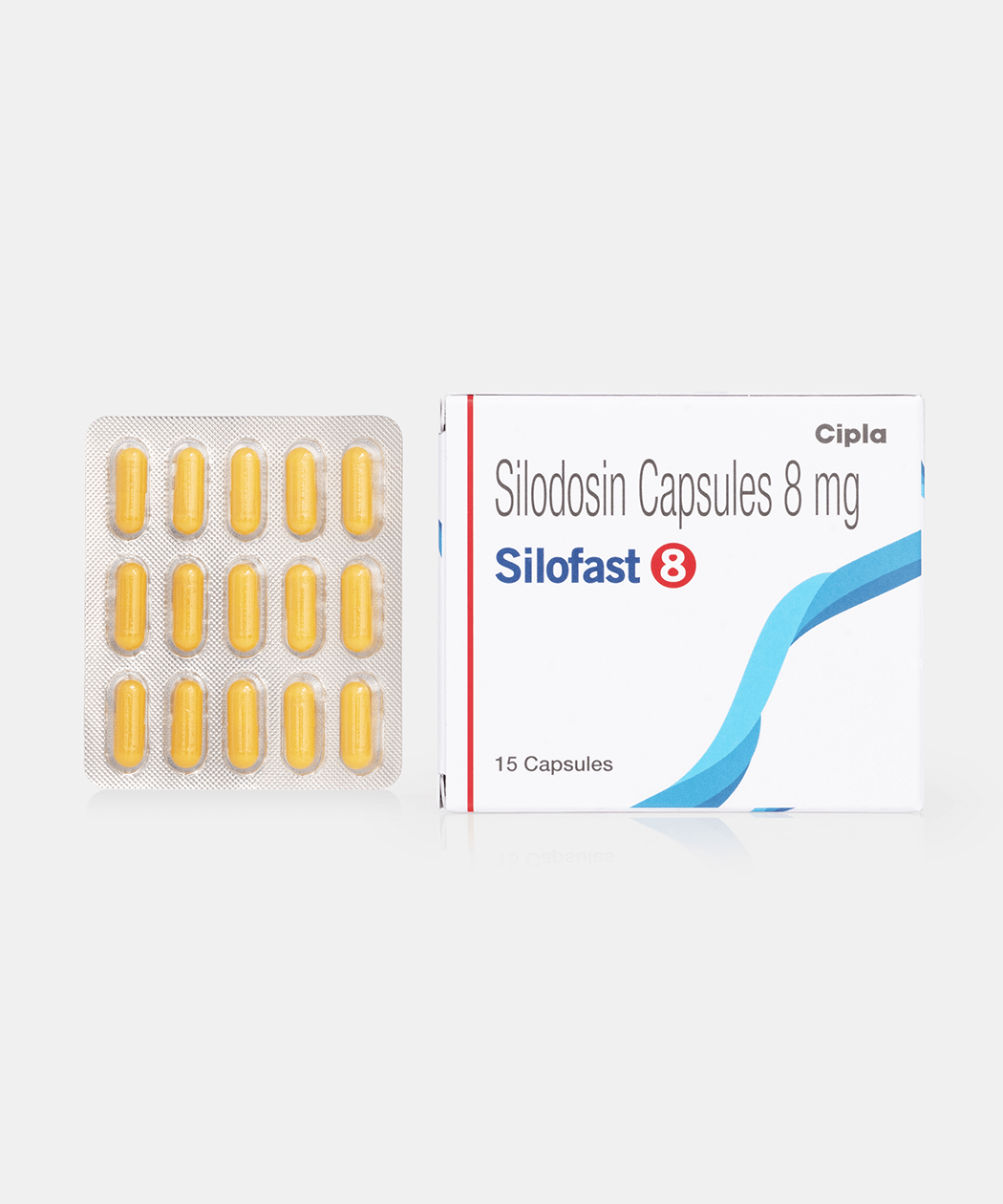
- Silodosin is among the most alpha-1A selective of all the alpha blockers, which is why it rarely lowers blood pressure.
- It was first approved in Japan in 2006, developed by Kissei Pharmaceutical, before reaching the United States as Rapaflo.
- Its most common side effect, reduced or absent ejaculation, stems directly from the same receptor selectivity that makes it easy on blood pressure.
Mechanism
Prostate, bladder neck, and urethral smooth muscle tone is maintained largely through alpha-1A receptors; when these receptors are stimulated the muscle contracts, which in an enlarged prostate worsens obstruction to urine flow [3]. Silodosin binds and blocks alpha-1A receptors with high selectivity, relaxing this smooth muscle and easing the dynamic component of bladder outlet obstruction so that urine passes more freely [1]. Its comparatively low affinity for the alpha-1B receptors that regulate vascular tone means it has less tendency to lower blood pressure than less selective alpha blockers [3]. The same blockade of alpha-1A receptors in the reproductive tract accounts for its frequent effect on ejaculation [1].
receptor fingerprint
Alpha-1A receptor in the prostate and bladder neckantagonist
Prostatic urethra smooth musclemodulates
Bladder neck smooth musclemodulates
Alpha-1D receptorantagonist
Alpha-1B receptor in blood vesselsantagonist
Dosingtypical ranges, not medical advice
interested in protocols and clinical dosages? make an account to see them! ^_^
Safetyrisks and cautions, not medical advice
Silodosin is prescription only. Its most common effect by far is abnormal or retrograde ejaculation, where semen goes into the bladder; this is harmless and reverses when the drug is stopped. Other effects include dizziness, some drop in blood pressure on standing, nasal congestion, headache and diarrhea. Anyone having cataract surgery should tell their eye surgeon, because alpha blockers can cause intraoperative floppy iris syndrome. It is avoided with strong CYP3A4 inhibitors like ketoconazole and in severe kidney or liver impairment, and it adds to the blood pressure lowering of PDE5 inhibitors and blood pressure medicines.
Interactionsdocumented pairs only, not exhaustive
Silodosin depends almost entirely on CYP3A4 for clearance and is also a P-glycoprotein substrate, and both routes can be blocked.
Strong CYP3A4 inhibitors are contraindicated. Ketoconazole raised silodosin peak concentration about 3.8 fold and total exposure about 3.2 fold in a dedicated study, and itraconazole, ritonavir and clarithromycin act the same way. Because its dose limiting effects are dizziness and orthostatic hypotension, that magnitude of increase translates into syncope risk. Potent P-glycoprotein inhibitors, including cyclosporine and ritonavir, raise exposure by the transporter route and are not recommended for the same reason.
Other alpha blockers have not been studied alongside it and would be expected to stack. PDE5 inhibitors such as sildenafil and tadalafil add vasodilation, and while measured blood pressure changes in combination studies were modest, orthostatic symptoms are the practical consequence. Antihypertensives generally deepen the postural drop.
Silodosin has no meaningful effect on digoxin or warfarin. Alpha-1A blockade is also linked to intraoperative floppy iris syndrome during cataract surgery, which surgeons plan around.
Checking a whole stack? Run it through interactions + stacks.
History
Silodosin was discovered and developed by the Japanese company Kissei Pharmaceutical, which designed it to be highly selective for the alpha-1A adrenergic receptor subtype that predominates in the prostate and bladder neck. It was first approved and launched in Japan in 2006 under the brand name Urief for the urinary symptoms of benign prostatic hyperplasia. The drug subsequently reached the United States in 2008, where it was approved as Rapaflo and marketed by Watson Pharmaceuticals, and it entered European markets as Urorec through Recordati.
Its defining rationale was uroselectivity; by preferentially blocking alpha-1A receptors while sparing the alpha-1B receptors that govern vascular tone, it aimed to relieve obstruction with less impact on blood pressure than older, less selective alpha blockers. Clinical development confirmed this profile, showing rapid symptom relief and a low rate of orthostatic effects, at the cost of a high incidence of abnormal or absent ejaculation. It has since become an established option within the uroselective alpha-blocker class.
Reputation
Silodosin has earned a solid reputation as one of the most uroselective alpha blockers available, prized for delivering fast, effective relief of bothersome urinary symptoms in men with an enlarged prostate. Its strong preference for the alpha-1A receptor translates into a notably low likelihood of dizziness and blood-pressure drops, which makes it attractive for older men and those on other cardiovascular medicines.
Clinical reviews consistently report meaningful improvements in urinary flow and symptom scores, often within days of starting treatment. This favorable cardiovascular tolerability is frequently cited as a practical advantage over less selective agents. The honest trade-off is a high rate of ejaculatory changes, most often reduced or absent ejaculate, which is generally harmless but can bother some men. For patients who prioritize reliable symptom control with minimal effect on blood pressure, silodosin remains a well-regarded choice.
Subjective profileweighing the evidence above
A good pick for an enlarged prostate when blood pressure is a worry, since the alpha-1A selectivity keeps dizziness lower than older alpha blockers and it works within days. The trade is reduced or dry ejaculation, which is common and reverses on stopping.
Where to buy

Suppliers
Vendors carrying Silodosin, with live product details and codes. Links are affiliate links that support the wiki at no cost to you.
PCT.Zone
Silodosin
Research
- 2010first citedSilodosin in the treatment of benign prostatic hyperplasia
- 2017meta-analysisSilodosin for the treatment of lower urinary tract symptoms in men with benign prostatic hyperp…
- 2019most recentEfficacy of newer medications for lower urinary tract symptoms attributed to benign prostatic h…
- 1.Silodosin for the treatment of lower urinary tract symptoms in men with benign prostatic hyperplasia
- 2.Efficacy of newer medications for lower urinary tract symptoms attributed to benign prostatic hyperplasia: a systematic review
- 3.Silodosin in the management of lower urinary tract symptoms as a result of benign prostatic hyperplasia: who are the best candidates
- 4.Safety and efficacy of silodosin for the treatment of benign prostatic hyperplasia
- 5.Silodosin in the treatment of benign prostatic hyperplasia
5 listed here; entry last updated August 2026
Reviews
My notesprivate to this device
FAQ
Why did my ejaculation change?
Silodosin very commonly causes reduced or dry ejaculation because it relaxes the muscle that normally propels semen; it is harmless and reverses if you stop.
Do I need to warn my eye surgeon?
Yes, tell any surgeon before cataract surgery, since alpha blockers can cause a floppy iris that complicates the operation.
Does it shrink the prostate?
No, it relaxes the muscle to open the flow but does not change prostate size; drugs like finasteride are what shrink the gland.
Should I take it with food?
Yes, taking it with a meal helps keep levels steady and is how it is meant to be used.
How fast does it work?
Many people notice better flow and fewer symptoms within the first few days of starting it.
Adverse effects
- abnormal or reduced ejaculation, which reverses after stopping
- dizziness or lightheadedness
- nasal congestion
- diarrhea