
spec sheet10 rows
Dimethylglycine (DMG), or N,N-dimethylglycine, is a derivative of the amino acid glycine that occurs naturally as an intermediate in one-carbon metabolism, formed as choline and betaine are broken down, and is present in small amounts in foods such as beans, liver, and cereal grains. Beyond its role as a source of methyl groups, it doubles as an electron donor to the mitochondrial respiratory chain: the enzyme dimethylglycine dehydrogenase demethylates it to sarcosine and passes the resulting electrons to the electron-transfer flavoprotein, and loss of this enzyme causes a rare inborn error marked by a fishy body odor and raised creatine kinase. DMG is sold as a dietary supplement and has been promoted for athletic performance, immune function, and autism, though controlled studies have generally not supported these claims.
- Simple methyl donor built from the amino acid glycine
- Doubles as an electron donor to the mitochondrial chain
- Long taken by athletes for exercise tolerance and endurance
- Occurs naturally in beans, liver and cereal grains
- Cheap, well tolerated and easy to add to any stack
- Occasional reports of hyperactivity or restlessness
Overview
N,N-dimethylglycine is a white, crystalline methylated amino acid formed from glycine. In the body it is a normal intermediate of one-carbon, or methyl-group, metabolism: it is produced when betaine, also called trimethylglycine, hands a methyl group to homocysteine to regenerate the amino acid methionine, and it is then progressively stripped of its remaining methyl groups to yield sarcosine and finally glycine [4][5]. Because the body makes it, DMG does not meet the definition of a vitamin.
Despite that, DMG has a colorful commercial history. Decades ago it was sold under the label pangamic acid, sometimes marketed as vitamin B15, in products whose therapeutic claims regulators disputed. It occurs at low levels in a normal diet, and modern supplements supply it as the free acid or as a salt.
Interest in DMG as a performance aid, immune stimulant, and treatment for autism spectrum conditions has not held up well in controlled testing. In a double-blind, placebo-controlled trial in children with autism and pervasive developmental disorder, improvements were seen in both the DMG and placebo groups, but the changes with DMG were not statistically greater than with placebo [1]. In animal nutrition, by contrast, dietary DMG has shown measurable effects; supplementation improved nutrient digestibility and reduced the incidence of pulmonary hypertension syndrome in broiler chickens raised under cold, high-energy conditions [2].
Much of the well-documented science on DMG concerns its place in human methyl-group metabolism rather than any supplement benefit. Plasma DMG concentrations track inversely with folate and betaine status; for example, folic acid supplementation lowers circulating DMG while raising betaine, and DMG is therefore used as a biomarker of one-carbon metabolism [3][5]. DMG is regulated as a dietary supplement rather than an approved drug, and it is available as capsules and tablets of the free acid, the hydrochloride salt, or, in animal feeds, the sodium salt.
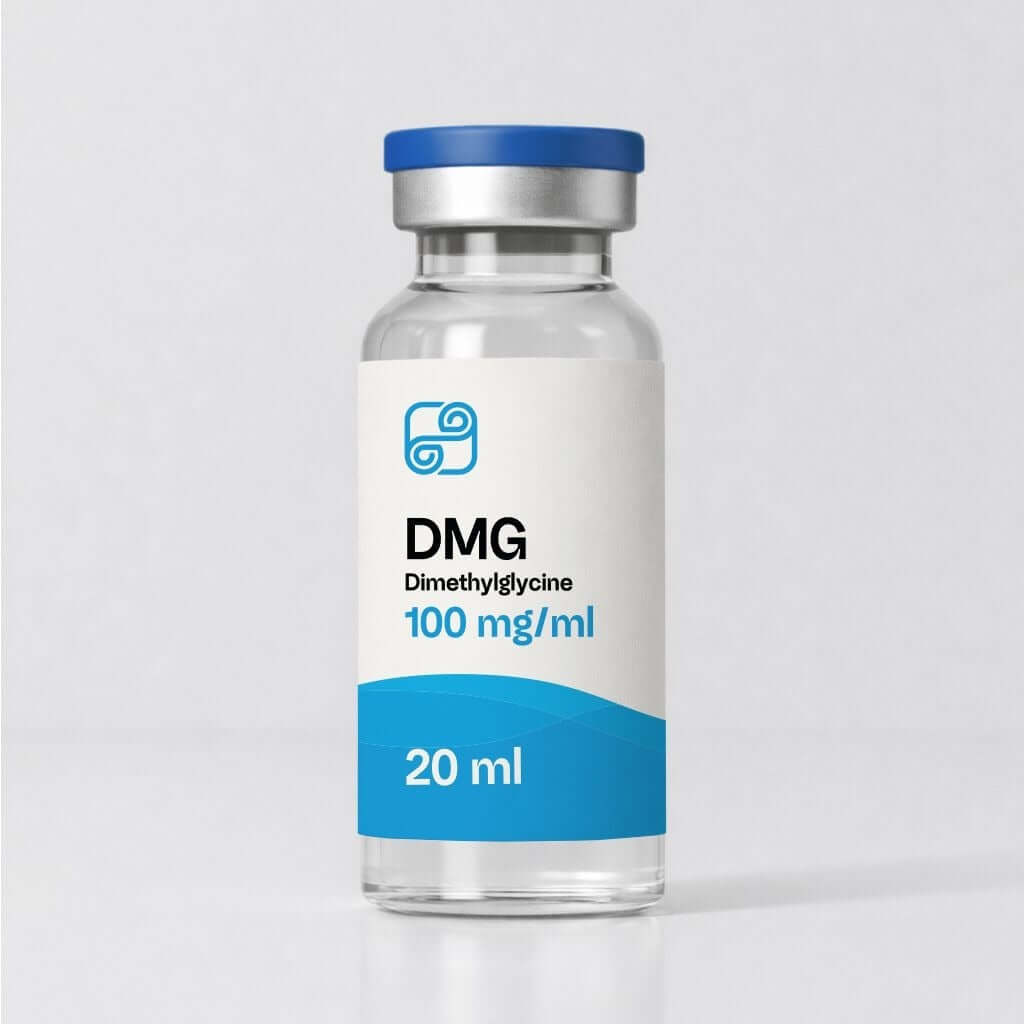
- DMG was once marketed under the misleading name 'vitamin B15' or 'pangamic acid', although it is not a vitamin and the body makes it on its own.
- It doubles as an electron donor to the mitochondrial respiratory chain; the inherited loss of the enzyme that processes it causes a rare condition featuring a distinctive fishy body odor.
- A double-blind, placebo-controlled trial in children with autism found that improvements with DMG were no greater than with placebo.
Mechanism
DMG functions within one-carbon metabolism as the product formed when betaine donates a methyl group to homocysteine to regenerate methionine, a reaction catalyzed by the enzyme betaine-homocysteine methyltransferase (BHMT); the DMG produced is then demethylated in steps to sarcosine and glycine [4][5]. Because DMG can act as an inhibitor of BHMT, its buildup, such as during folate deficiency, can slow this remethylation of homocysteine [5]. Its plasma concentration moves inversely with folate and betaine status, which is why it serves as a marker of methyl-group metabolism [3]. Some laboratory reports also describe DMG interacting with the glycine binding site of the , although this is not the basis for its use as a supplement.
receptor fingerprint
One-carbon / methyl metabolismsupplies methyl groups
Immune responsestimulates
Oxygen utilizationsupports
Safetyrisks and cautions, not medical advice
Dimethylglycine (DMG) is a naturally occurring metabolite sold as a dietary supplement and is generally well tolerated at typical intakes, with only mild, infrequent reports such as gastrointestinal upset or restlessness. Rigorous long-term human safety data are limited, and marketed health claims outpace the evidence. People who are pregnant or taking interacting medications should exercise the usual caution.
History
Dimethylglycine, or N,N-dimethylglycine, is a naturally occurring derivative of the amino acid glycine that was characterized through mid-twentieth-century research into one-carbon metabolism and the breakdown of choline and betaine. It drew popular attention largely through the work and promotion of the American biochemist Ernst Krebs Jr. and associates, who marketed related compounds and applied the misleading label 'vitamin B15' or 'pangamic acid' to preparations containing it, a designation that has no legitimate vitamin status.
As a genuine metabolic intermediate, DMG was studied for its role in regenerating methionine from homocysteine and as an electron donor to the mitochondrial respiratory chain through the enzyme dimethylglycine dehydrogenase, the loss of which causes a rare inherited disorder marked by a fishy body odor. Beginning in the 1980s and 1990s it was promoted as a dietary supplement for athletic performance, immune function, and autism, and several controlled studies were undertaken to test these claims. A frequently cited double-blind trial in children with autism, published in 2001, found no benefit over placebo, and the broader supplement claims have generally not been supported by rigorous evidence.
Reputation
Dimethylglycine has a long-standing reputation as a gentle, naturally occurring supplement, appreciated by many users as a well-tolerated metabolic support taken for energy, exercise, and general wellbeing. Because it functions as a genuine intermediate in one-carbon metabolism, supplying methyl groups and serving as an electron donor in the mitochondria, it carries an appealing rationale rooted in real biochemistry. It is inexpensive, widely available, and has a favorable safety record at typical doses, which helps explain its enduring popularity in the athletic and integrative-health communities.
Some individuals report subjective benefits in stamina and recovery, and its role as a marker of methyl-group status keeps it of interest to researchers. In the interest of accuracy, it should be said plainly that controlled studies, including a double-blind trial in autism, have generally not confirmed the performance, immune, or behavioral benefits often attributed to it, so DMG is best viewed as a low-risk supplement whose popular claims outrun the current evidence.
Subjective profileweighing the evidence above
Cheap and harmless, but the case for it is weak; the marketing runs well ahead of the human data, and the controlled autism trials came back negative. If methylation support is the actual goal, betaine or a straightforward B-vitamin approach is better grounded.
Where to buy

Suppliers
Vendors carrying DMG, with live product details and codes. Links are affiliate links that support the wiki at no cost to you.
Limitless Biochem🌐
DMG
Research
- 1981first citedImmunomodulating properties of dimethylglycine in humans
- 2021most recentOxytocin-induced increase in N,N-dimethylglycine and time course of changes in oxytocin efficac…
- 1.Effectiveness of N,N-dimethylglycine in autism and pervasive developmental disorder
- 2.Dietary N,N-dimethylglycine supplementation improves nutrient digestibility and attenuates pulmonary hypertension syndrome in broilers
- 3.Supplementation with Folic Acid, but Not Creatine, Increases Plasma Betaine, Decreases Plasma Dimethylglycine, and Prevents a Decrease in Plasma Choline in Arsenic-Exposed Bangladeshi Adults
- 4.Betaine or folate can equally furnish remethylation to methionine and increase transmethylation in methionine-restricted neonates
- 5.Effects of betaine supplementation and choline deficiency on folate deficiency-induced hyperhomocysteinemia in rats
- 6.A double-blind, placebo-controlled, crossover pilot trial of low dose dimethylglycine in patients with autistic disorder
- 7.Cloning of dimethylglycine dehydrogenase and a new human inborn error of metabolism, dimethylglycine dehydrogenase deficiency
- 8.Immunomodulating properties of dimethylglycine in humans
- 9.The effect of pangamic acid on maximal treadmill performance
- 10.Effects of N,N-dimethylglycine on cardiorespiratory function and lactate production in thoroughbred horses performing incremental treadmill exercise
- 11.Molecular basis of dimethylglycine dehydrogenase deficiency associated with pathogenic variant H109R
- 12.Structure and biochemical properties of recombinant human dimethylglycine dehydrogenase and comparison to the disease-related H109R variant
17 listed here; entry last updated August 2026
Reviews
My notesprivate to this device
FAQ
What is DMG?
DMG (dimethylglycine) is a naturally occurring compound and simple methyl donor taken as a supplement.
Why do people take it?
It is used for metabolism support and exercise tolerance, though strong human evidence is limited.
Is it well tolerated?
It is generally considered well tolerated in typical supplement use.
Is it a proven performance booster?
Evidence for meaningful performance benefits is weak and not well established.
Limitations of the evidence
- No proven benefit for autism in controlled trials
Adverse effects
- Occasional reports of hyperactivity or restlessness
Notes and cautions
- Generally well tolerated in short trials
- Not a vitamin despite past marketing