
spec sheet12 rows
Beta-alanine is a naturally occurring amino acid and the main building block the body uses to make carnosine, a compound stored in muscle that helps buffer the acid produced during hard exercise. Taken as a supplement over several weeks, it raises muscle carnosine levels and can modestly improve performance in high-intensity efforts lasting roughly one to several minutes. Its most familiar effect is a harmless skin tingling called paresthesia.
- buffers the acid burn so hard sets last longer
- loads muscle carnosine over a few weeks of daily use
- proven help for efforts lasting one to several minutes
- more total training volume, week after week
- one of the few sports supplements with real evidence
- costs almost nothing per serving
- Paresthesia, a harmless tingling or prickling of the skin, after larger single doses
Overview
Beta-alanine, chemically 3-aminopropanoic acid, is a beta-amino acid, meaning its amino group sits on the beta carbon rather than the alpha carbon found in the amino acids that make up proteins [1]. It is the only beta-amino acid that occurs commonly in nature, and unlike most amino acids it is not built into proteins and has no mirror-image forms [1]. Its importance in the body comes from a single role: it is the rate-limiting precursor of carnosine, the dipeptide beta-alanyl-L-histidine that is stored at high levels in skeletal muscle [1][3].
Because the amount of carnosine a muscle can make is limited by how much beta-alanine is available, supplementing with beta-alanine is an effective way to raise muscle carnosine, whereas taking carnosine directly is inefficient since digestion breaks it back down [1][3]. Studies using muscle biopsies and magnetic resonance spectroscopy have shown that several weeks of beta-alanine supplementation increases muscle carnosine content substantially, on the order of 40 to 80 percent [1][3]. Carnosine matters during exercise because it acts as a buffer inside the muscle, soaking up the hydrogen ions that accumulate during intense effort and thereby helping to delay the drop in pH that contributes to fatigue [3].
Beta-alanine is one of the more evidence-backed sports supplements. A meta-analysis of controlled trials found that supplementation produced a small but real improvement in exercise outcomes, with a median gain of roughly three percent, and that the benefit was concentrated in exercise lasting about one to four minutes, where acid buildup is a limiting factor, rather than in very short efforts [2]. Individual trials have documented improvements in high-intensity cycling capacity and reductions in fatigue during repeated bouts of maximal contractions [1][3]. Its use has extended from competitive and recreational athletes to military settings, where high-intensity tasks are common, and some studies have explored possible effects on cognition and resilience under stress [4].
Beta-alanine is sold as a dietary supplement, usually as a powder or capsules and often under branded forms, and is a common ingredient in pre-workout blends. Its hallmark side effect is paresthesia, a harmless tingling or prickling sensation of the skin that appears in a dose-dependent way after larger single doses and fades on its own; splitting the daily amount into smaller doses or using sustained-release forms reduces it [1]. Beyond this, it is generally well tolerated, though long-term safety data remain relatively limited [1].

Mechanism
Beta-alanine works indirectly, by supplying the raw material for carnosine rather than acting on a receptor of its own [1]. Inside muscle cells, beta-alanine combines with the amino acid histidine to form carnosine, and because histidine is plentiful while beta-alanine is scarce, the availability of beta-alanine sets the ceiling on how much carnosine can be produced [1][3]. Supplementing with it over weeks steadily loads the muscle with carnosine, raising its concentration well above baseline [1][3].
Carnosine then serves as an intracellular pH buffer: during high-intensity exercise, anaerobic metabolism releases hydrogen ions that make the muscle more acidic and impair contraction, and carnosine helps neutralize those hydrogen ions, blunting the fall in pH and delaying the onset of muscular fatigue [3].
This buffering is most useful in efforts intense enough to rely heavily on anaerobic energy and lasting long enough for acid to accumulate, which is why the performance benefit shows up mainly in exercise lasting from about one to a few minutes [2]. The tingling sensation many people feel is separate from the performance effect: it results from the transient spike in beta-alanine in the blood after a dose, which activates sensory nerves in the skin [1].
receptor fingerprint
Carnosine synthase substrateprecursor
Intramuscular pH bufferingenhances
MrgprD sensory receptorsagonist
High-intensity exercise capacityimproves
Dosingtypical ranges, not medical advice
interested in protocols and clinical dosages? make an account to see them! ^_^
Safetyrisks and cautions, not medical advice
It is very safe for most people, with the harmless skin tingling being the only common effect. Splitting the daily dose or using sustained-release forms reduces the tingling. There are no serious documented risks at normal supplemental doses.
Subjective profileweighing the evidence above
Solid, evidence-backed ergogenic for high-intensity work; one of the few sports supplements worth keeping around.
Where to buy
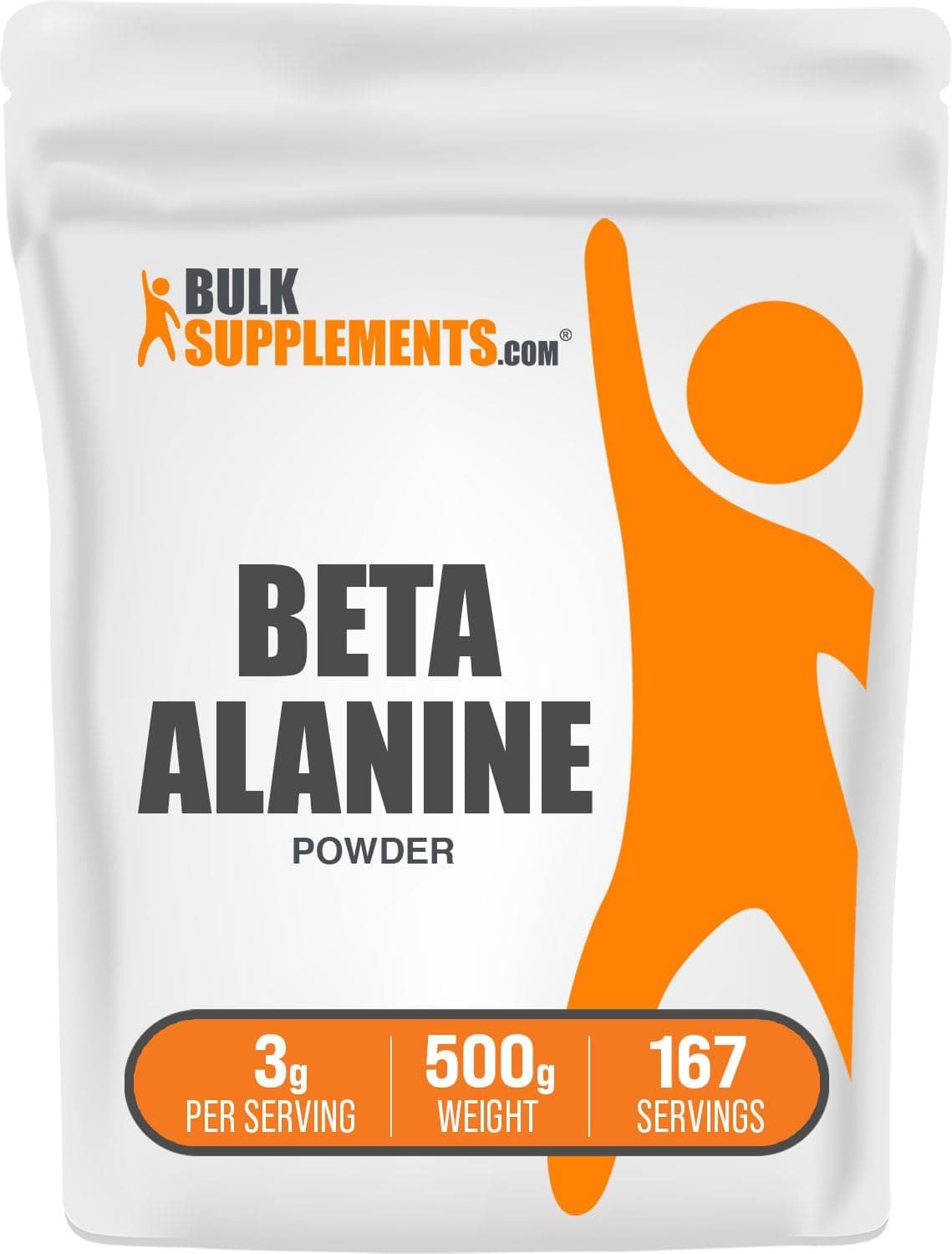
Suppliers
Vendors carrying Beta-Alanine, with live product details and codes. Links are affiliate links that support the wiki at no cost to you.
Amazon
Beta-Alanine
Research
- 2007first citedbeta-Alanine supplementation augments muscle carnosine content and attenuates fatigue during re…
- 2012meta-analysisEffects of β-alanine supplementation on exercise performance: a meta-analysis.
- 2015most recentβ-Alanine supplementation and military performance.
- 1.Effects of β-alanine supplementation on exercise performance: a meta-analysis.
- 2.Influence of beta-alanine supplementation on skeletal muscle carnosine concentrations and high intensity cycling capacity
- 3.beta-Alanine supplementation augments muscle carnosine content and attenuates fatigue during repeated isokinetic contraction bouts in trained sprinters
- 4.β-Alanine supplementation and military performance.
4 listed here; entry last updated August 2026
Reviews
My notesprivate to this device
FAQ
Why do I tingle after taking it?
It activates certain sensory nerve receptors. It is harmless and fades; split the dose to reduce it.
How long until it works?
Give it a few weeks. It works by slowly building up muscle carnosine, not acutely.
Do I need to time it around workouts?
No. Total daily intake and consistency drive the benefit, not timing.
Who benefits most?
Athletes doing repeated high-intensity efforts lasting roughly one to four minutes.
Limitations of the evidence
- Generally well tolerated, with limited long-term safety data
Adverse effects
- Paresthesia, a harmless tingling or prickling of the skin, after larger single doses
Notes and cautions
- Splitting the dose or using sustained-release forms reduces the tingling
- Benefits build gradually over weeks of consistent use rather than immediately