
spec sheet12 rows
Sodium bicarbonate is an inorganic salt with the formula NaHCO3, made up of a sodium cation and a bicarbonate anion, and is widely known as baking soda. It appears as a white crystalline powder with a faintly salty, alkaline taste and dissolves readily in water. Beyond its household and culinary roles, it is used medically as an antacid and to counter metabolic acidosis, and in sport it is taken as a buffering agent intended to improve high-intensity performance.
- a well evidenced buffer for short, all out efforts
- soaks up the acid that ends a hard set
- helps repeated sprints hold their speed
- costs pennies and sits in most kitchen cupboards
- decades of sports science behind the dosing
- bloating and abdominal discomfort
- nausea or vomiting with larger amounts
Overview
Sodium bicarbonate is a water-soluble crystalline compound, the sodium salt of carbonic acid, written as NaHCO3. It presents as an odorless white powder with a slightly alkaline, salty taste, and it readily gives up carbon dioxide when it meets acid or is heated. This gas-releasing behavior is what makes it valuable as a leavening agent in baking and as a fast-acting neutralizer of stomach acid.
The compound has a long history. Its name traces back through the Arabic word for natron to ancient Egyptian usage, reflecting the naturally occurring mineral form. The pure substance was first isolated in Berlin in 1801, and commercial production in the United States began in the mid-nineteenth century, when it was made by combining sodium carbonate with carbon dioxide and water. Today it is sold in several forms, including loose powder, compressed tablets, and effervescent preparations that fizz when dropped into water.
In medicine, sodium bicarbonate is a familiar antacid taken for heartburn and acid indigestion. Given intravenously, it is used to correct metabolic acidosis and to manage certain poisonings, including overdoses of aspirin and tricyclic antidepressants, as well as dangerously high blood potassium. It also appears in mouth rinses, nasal irrigation fluids, and topical pastes applied to insect stings.
The compound has attracted sustained scientific interest as a sports supplement, where it functions as an extracellular buffer. A position stand from the International Society of Sports Nutrition concluded that supplementation reliably enhances performance in high-intensity efforts lasting roughly half a minute to twelve minutes, spanning combat sports, cycling, running, swimming, and rowing, in both men and women [1]. An umbrella review of pooled analyses graded the evidence for benefits to anaerobic power and muscular endurance as moderate, while noting that effect sizes range from trivial to large depending on the task [2]. A separate meta-analysis focused on muscular strength and endurance found measurable gains in endurance outcomes [3]. Researchers generally attribute part of the observed benefit to a genuine physiological effect and part to expectation, since a placebo component has been documented [1].
Sodium bicarbonate is widely regarded as safe and is approved for oral and intravenous medical use; in food labeling within the European Union it carries the additive number E500. Its most common drawbacks in the setting of supplementation are gastrointestinal, including bloating, nausea, and abdominal discomfort, effects that tend to be dose-related and vary from person to person [1]. Because it contributes a substantial sodium load, it warrants caution in people who must limit sodium intake.

Mechanism
Sodium bicarbonate works chiefly as a buffer. Taken orally, it raises the concentration of bicarbonate in the blood and the extracellular fluid, which increases the capacity to absorb hydrogen ions produced during intense exercise. By steepening the gradient between muscle and blood, it helps shuttle hydrogen ions and lactate out of working muscle, delaying the fall in intramuscular pH that contributes to fatigue [1][2]. This extracellular alkalizing action is the accepted basis for its ergogenic effect in short, high-intensity efforts, although evidence indicates that a portion of the response is placebo-driven [1]. In its more traditional medical roles, the same acid-neutralizing chemistry allows it to counter excess stomach acid and to raise systemic pH in the treatment of metabolic acidosis.
receptor fingerprint
Blood bicarbonate bufferraises
Muscle hydrogen ion effluxenhances
High-intensity power outputsustains
Blood pHraises slightly
Dosingtypical ranges, not medical advice
interested in protocols and clinical dosages? make an account to see them! ^_^
Safetyrisks and cautions, not medical advice
The main issue is GI distress: bloating, nausea, cramping, and diarrhea, especially with large single doses. It also delivers a substantial sodium load, which matters for people with high blood pressure, heart, or kidney conditions. Excessive intake can cause metabolic alkalosis. Strategies like split dosing and enteric coating reduce gut problems.
Interactionsdocumented pairs only, not exhaustive
Sodium bicarbonate is reported to interact with ledipasvir/sofosbuvir (a direct-acting antiviral combination for hepatitis C), with sodium bicarbonate listed among medications associated with drug-drug interaction risk D necessitating therapy modification [4]. This is understood as a pharmacokinetic interaction in which sodium bicarbonate, by raising gastric pH, may affect the absorption of other drugs. Separation of dosing can reduce this effect. Other medications whose absorption depends on acidic conditions (certain antiretrovirals, some azole antifungals, and iron supplements) may show similar reductions in bioavailability when combined with sodium bicarbonate, though specific clinical documentation of these interactions varies; many are inferred from mechanism and studied in vitro rather than observed in patients.
Checking a whole stack? Run it through interactions + stacks.
Subjective profileweighing the evidence above
A well-evidenced buffer for short high-intensity efforts; effective and cheap, but you must dial in dosing to avoid GI disaster.
Where to buy
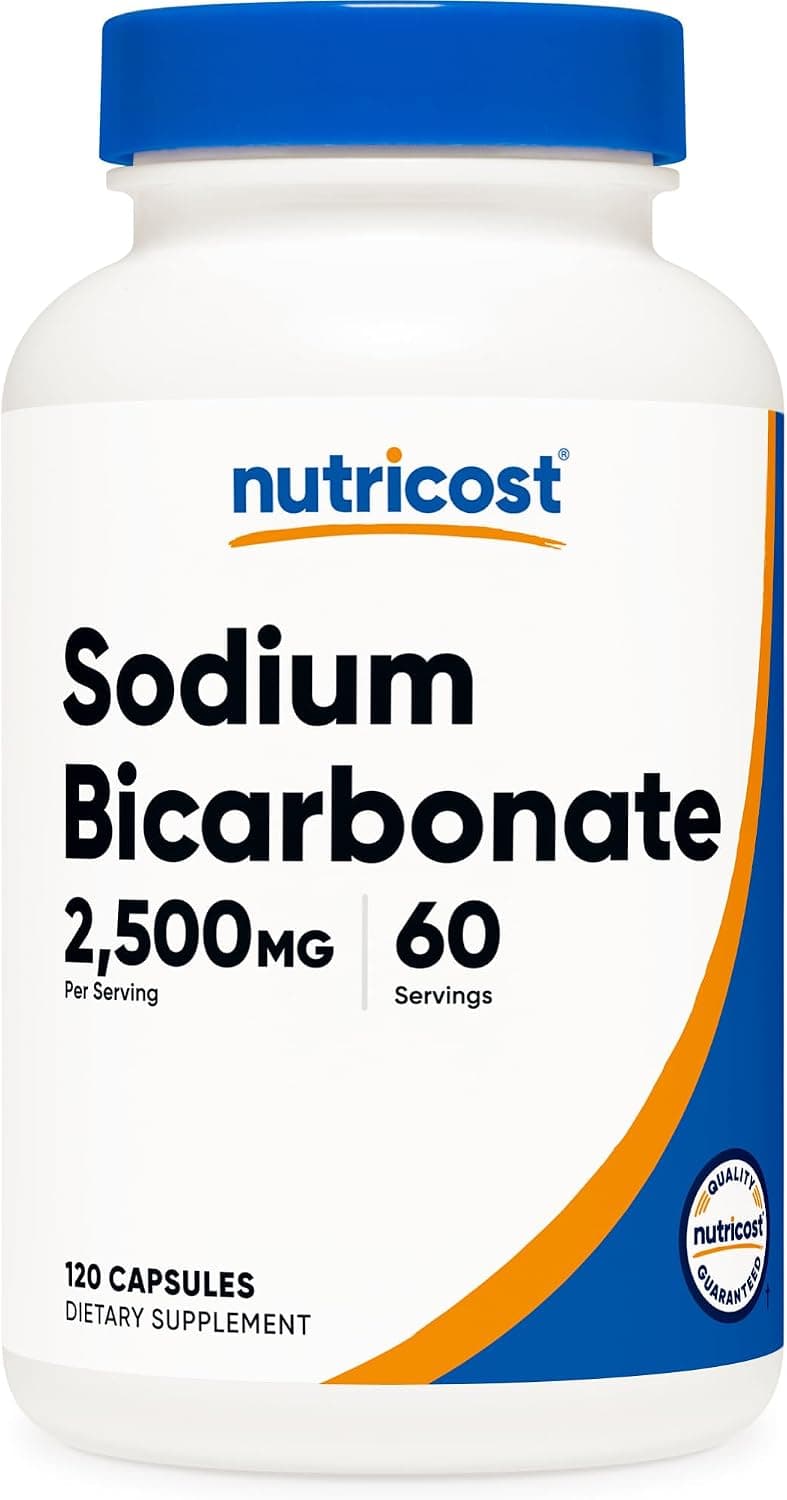
Suppliers
Vendors carrying Sodium Bicarbonate, with live product details and codes. Links are affiliate links that support the wiki at no cost to you.
Amazon
Sodium Bicarbonate
Research
- 1.International Society of Sports Nutrition position stand: sodium bicarbonate and exercise performance
- 2.Effects of sodium bicarbonate supplementation on exercise performance: an umbrella review
- 3.Effects of Sodium Bicarbonate Supplementation on Muscular Strength and Endurance: A Systematic Review and Meta-analysis
- 4.Drug-Drug Interactions in Children and Adolescents Receiving Ledipasvir/Sofosbuvir for the Treatment of Hepatitis C Virus Infection.
4 listed here; entry last updated August 2026
Reviews
My notesprivate to this device
FAQ
What exercise does it help?
High-intensity efforts limited by acidosis, roughly one to several minutes, like 400 to 1500 meter races, rowing, and repeated sprints.
Why does it upset my stomach?
Large doses react in the gut and draw water in, causing bloating and diarrhea; split dosing, food, or enteric coating helps.
How do I dose it?
Commonly 0.2 to 0.3 g per kg body weight taken one to three hours before exercise; test it in training first.
Is the sodium a problem?
It's a real consideration for people with high blood pressure or heart and kidney issues, so factor it in.
Adverse effects
- bloating and abdominal discomfort
- nausea or vomiting with larger amounts
Notes and cautions
- high sodium load, a concern on sodium-restricted diets