
spec sheet11 rows
D-ribose is a five-carbon sugar (a pentose) that forms part of the backbone of RNA and of key energy and signaling molecules, including ATP and the coenzymes NAD and FAD. The body makes its own ribose from glucose through the pentose phosphate pathway, so it is not a dietary essential. As a supplement it is promoted for restoring cellular energy in conditions such as heart failure, chronic fatigue, and fibromyalgia, though the supporting clinical evidence is limited and preliminary.
- Pentose sugar sitting inside ATP, NAD and FAD
- Speeds ATP replenishment after energy has been drained
- Studied for cardiac energy support in heart failure
- May reduce the fatigue burden in fibromyalgia
- Shines in real energy deficit states, not general training
- Well tolerated, sweet tasting, and simple to dose
- Can transiently lower blood sugar; caution with hypoglycemia
- Mild digestive upset or lightheadedness possible
Overview
D-ribose is a naturally occurring monosaccharide with five carbon atoms, which classifies it as an aldopentose [1]. It is one of the most fundamental sugars in biology because its ring forms the structural scaffold of ribonucleotides, the units that make up RNA, and of the nucleotide energy carrier adenosine triphosphate (ATP) [1]. Ribose also appears in the coenzymes NAD, NADP, and FAD and in signaling molecules such as cyclic AMP, underscoring how central it is to cellular chemistry [1].
Cells synthesize ribose from glucose by way of the pentose phosphate pathway, producing ribose-5-phosphate for building nucleotides [1]. Because the body can make what it needs, ribose is not an essential nutrient [1]. The natural D-form was recognized as the sugar in nucleic acids in the early twentieth century, following earlier chemical work on the molecule [1]. For supplement and industrial purposes, D-ribose is manufactured by bacterial fermentation of glucose [1].
Interest in ribose as a supplement rests on its role in rebuilding ATP [2]. When tissues such as the heart or skeletal muscle are stressed by inadequate blood flow or intense exertion, their pool of energy nucleotides can become depleted, and regenerating them through the normal pathway is slow [2]. Supplemental ribose is proposed to bypass the rate-limiting early steps and speed the restoration of ATP, which is the rationale for trying it in heart disease, chronic fatigue syndrome, fibromyalgia, and athletic recovery [2].
The clinical evidence remains preliminary. A small double-blind crossover study in patients with coronary artery disease and congestive heart failure reported that oral D-ribose improved measures of the heart's diastolic (filling) function and patients' quality of life compared with placebo [1]. An open-label pilot study in people with fibromyalgia and chronic fatigue syndrome found improvements in self-reported energy, sleep, and well-being, but it lacked a placebo control [3]. These early studies are small, some involve researchers connected to ribose products, and larger rigorous trials are lacking, so the benefits should be regarded as unproven [2][3].
D-ribose is generally well tolerated; because it is a sugar it can lower blood glucose transiently and may cause mild digestive upset or lightheadedness [3]. It is sold as a dietary supplement, usually as a powder or in capsules, rather than as an approved medicine, and is often marketed toward people with heart conditions, fatigue, or high training loads [2].

Mechanism
D-ribose's proposed benefit centers on the resynthesis of adenine nucleotides such as ATP [2]. Every molecule of ATP contains a ribose sugar, and when cells are energy-stressed and lose part of their nucleotide pool, they must rebuild it [2]. The body normally makes ribose-5-phosphate from glucose through the pentose phosphate pathway, but the first enzymatic steps are slow and can limit how quickly ATP is replenished [2].
Providing ribose directly is thought to skip these bottleneck steps, supplying ready-made sugar for the salvage and de novo pathways that regenerate ATP and related nucleotides, thereby supporting recovery of energy-depleted heart and muscle tissue [1][2]. Because ATP fuels the relaxation phase of the heartbeat, faster ATP recovery is the proposed explanation for the improvements in diastolic function seen in the small heart-failure study [1]. Outside these energy pathways, ribose is simply a normal metabolic building block used to construct RNA, coenzymes, and signaling nucleotides [1].
receptor fingerprint
ATP resynthesis pathwayaccelerates
Adenine nucleotide poolreplenishes
Myocardial energy in ischemiasupports
Post-exercise ATP recoverymay support
Dosingtypical ranges, not medical advice
interested in protocols and clinical dosages? make an account to see them! ^_^
Safetyrisks and cautions, not medical advice
Generally well tolerated; the main side effects are mild GI upset and, because it's a sugar, it can lower blood glucose slightly and should be used carefully by diabetics. Large single doses on an empty stomach may cause hypoglycemia-like symptoms. Long-term high-dose safety is not extensively studied.
Subjective profileweighing the evidence above
Potentially helpful in real energy-deficit conditions like heart failure or fibromyalgia, underwhelming as a general athletic booster. Context is everything.
Where to buy
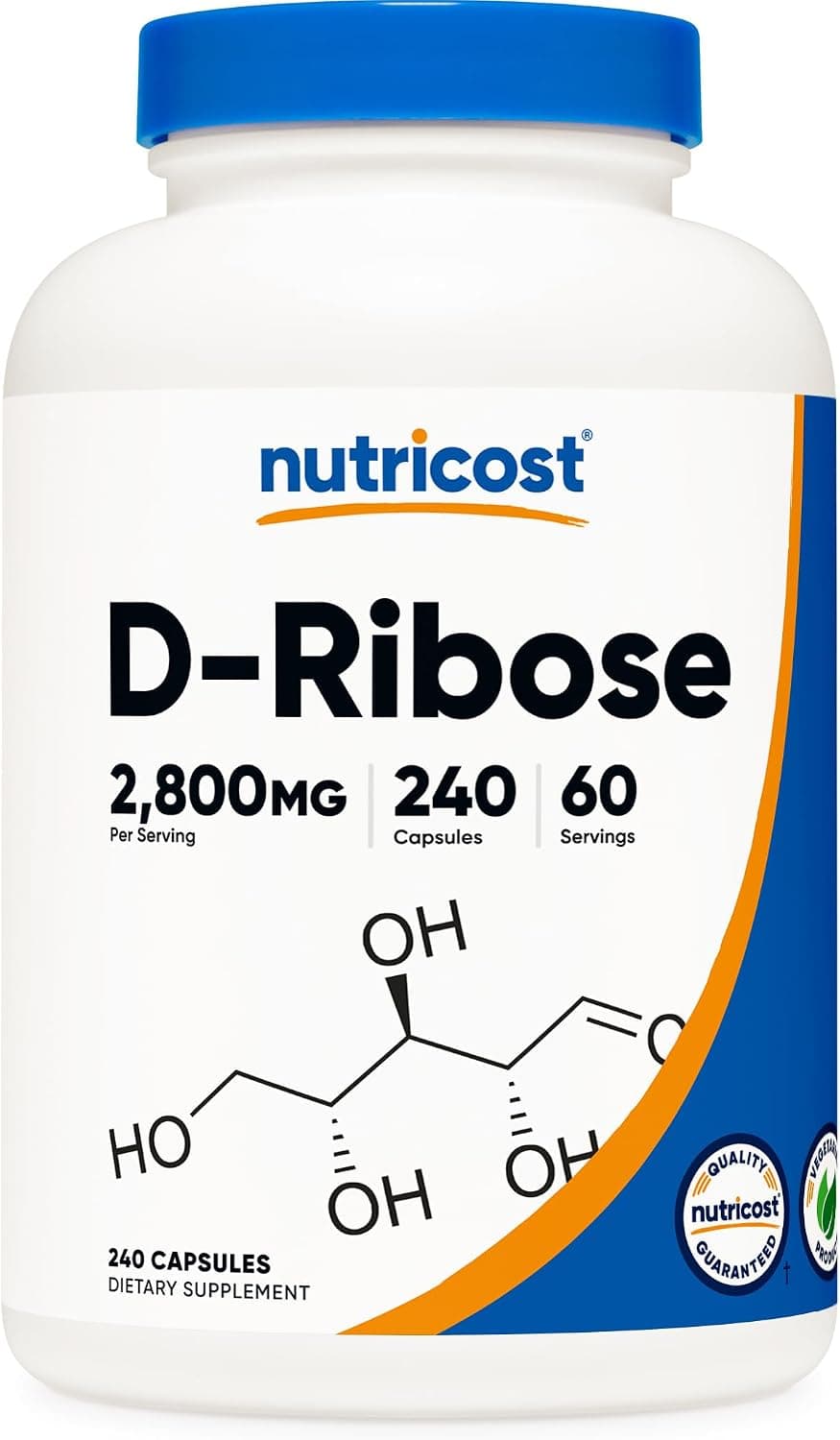
Suppliers
Vendors carrying D-Ribose, with live product details and codes. Links are affiliate links that support the wiki at no cost to you.
Amazon
D-Ribose
Research
- 2003first citedD-Ribose improves diastolic function and quality of life in congestive heart failure patients:…
- 2006most recentThe use of D-ribose in chronic fatigue syndrome and fibromyalgia: a pilot study
- 1.D-Ribose improves diastolic function and quality of life in congestive heart failure patients: a prospective feasibility study
- 2.D-ribose aids congestive heart failure patients
- 3.The use of D-ribose in chronic fatigue syndrome and fibromyalgia: a pilot study
3 listed here; entry last updated August 2026
Reviews
My notesprivate to this device
FAQ
Who benefits most from D-ribose?
People with genuinely energy-starved tissue, like heart failure or fibromyalgia, more than healthy athletes.
Will it boost my workouts?
Probably not much; healthy bodies make enough ribose on their own, so the ergogenic case is weak.
Can it lower blood sugar?
Yes, mildly, since it's a sugar that can nudge glucose down. Diabetics should be cautious and take it with food.
How do I dose it?
5 g one to three times daily is typical; heart-failure studies used more in divided doses.
Is it safe long term?
It's well tolerated short term, but long-term high-dose data is limited.
Limitations of the evidence
- Clinical evidence is small and preliminary
Adverse effects
- Can transiently lower blood sugar; caution with hypoglycemia
- Mild digestive upset or lightheadedness possible
Notes and cautions
- Generally well tolerated
- Sold as a supplement, not an approved medicine