
spec sheet12 rows
Urolithin A is a compound produced by gut bacteria from ellagitannins and ellagic acid, plant polyphenols found in foods such as pomegranates, walnuts and berries. It is not present in food itself but is formed in the gut, and people differ widely in how much they make, with some producing none. It has attracted research as an inducer of mitophagy, the recycling of damaged mitochondria, and is sold as a dietary supplement studied for mitochondrial health, muscle function and ageing [1][2].
- flips on mitophagy; clears out worn, damaged mitochondria
- real human trials show better muscle strength and endurance
- most people cannot make enough of it from food alone
- a standout in the mitochondrial health category
- anti-inflammatory support alongside the energy work
Overview
Urolithin A is a member of the urolithins, a group of organic compounds of the benzo-coumarin class that are produced when gut bacteria transform dietary ellagitannins and ellagic acid. These precursor polyphenols are found in pomegranates, strawberries, raspberries, blackberries, walnuts, muscadine grapes and oak-aged wines, but urolithin A itself is not present in any food; it is generated in the gut from those precursors by the resident microbiota, with species such as Gordonibacter implicated in the conversion [1].
A notable feature of urolithin A is that people vary greatly in their ability to make it. The efficiency with which the gut microbiome converts ellagitannins into urolithin A differs substantially between individuals, and some produce little or none, which helps explain why the health effects of ellagitannin-rich foods differ from person to person [1]. Once formed, urolithin A is absorbed and extensively conjugated by glucuronidation, methylation and sulfation before circulating and being excreted in urine [1].
Research on urolithin A has centred on the mitochondria. It has been described as a mitophagy activator, meaning it promotes the clearance of damaged mitochondria and the renewal of the mitochondrial pool, and preclinical work linked it to improved muscle function in aged animals. A first-in-human trial found that oral urolithin A was safe, reached the bloodstream and produced a molecular signature of improved mitochondrial and cellular health in elderly people [2], and a later randomised clinical trial in older adults reported that supplementation was well tolerated and improved measures of muscle endurance and certain plasma biomarkers, though some primary outcomes were not met [3].
Urolithin A is marketed as a dietary supplement, including under the brand name Mitopure, and in 2018 United States regulators recognised specific preparations as generally recognised as safe for use in foods at defined amounts. Toxicity studies have not identified specific adverse effects from dietary intake, and early human studies report good tolerability with only mild side effects [2][3].
Urolithins also show antioxidant activity in laboratory assays, though urolithin A is a comparatively weaker antioxidant than some of its relatives [4]. Overall it is best understood as a gut-derived metabolite whose most distinctive property is its action on mitochondrial quality control.

Mechanism
Urolithin A is a gut microbial whose signature action is the induction of , the selective that identifies and removes damaged or dysfunctional mitochondria. By stimulating this quality-control process, urolithin A promotes turnover of the pool and supports mitochondrial function, an effect demonstrated in laboratory models and in aged animals where it improved muscle performance [2]. In humans, oral urolithin A is absorbed and circulates as conjugated forms, and controlled studies show it can shift skeletal-muscle gene expression and plasma markers such as acylcarnitines toward a profile of improved mitochondrial and cellular health, alongside gains in muscle endurance in older adults [2][3].
As one of the urolithins, it also exhibits antioxidant activity in cell-based assays, helping to counter , although it is a weaker direct antioxidant than more hydroxylated urolithins [4]. Its production depends entirely on the gut microbiome converting dietary ellagitannins and ellagic acid, so its formation, and therefore any benefit from ellagitannin-rich foods, varies with an individual's microbial makeup; taking urolithin A directly bypasses this variability [1]. The compound is extensively metabolised by glucuronidation and related conjugation, which shapes the forms that reach the tissues [1].
receptor fingerprint
induces
biogenesissupports
Muscle functionenhances
Inflammatory markersreduces
Dosingtypical ranges, not medical advice
interested in protocols and clinical dosages? make an account to see them! ^_^
Safetyrisks and cautions, not medical advice
Human trials show it is well tolerated with a good safety profile at studied doses. Side effects are minimal and mostly mild GI. Long-term data are still accumulating. It is generally regarded as low risk.
Subjective profileweighing the evidence above
A standout mitochondrial-health compound with real human muscle data; worth considering, especially since many people can't produce it from diet alone.
Where to buy
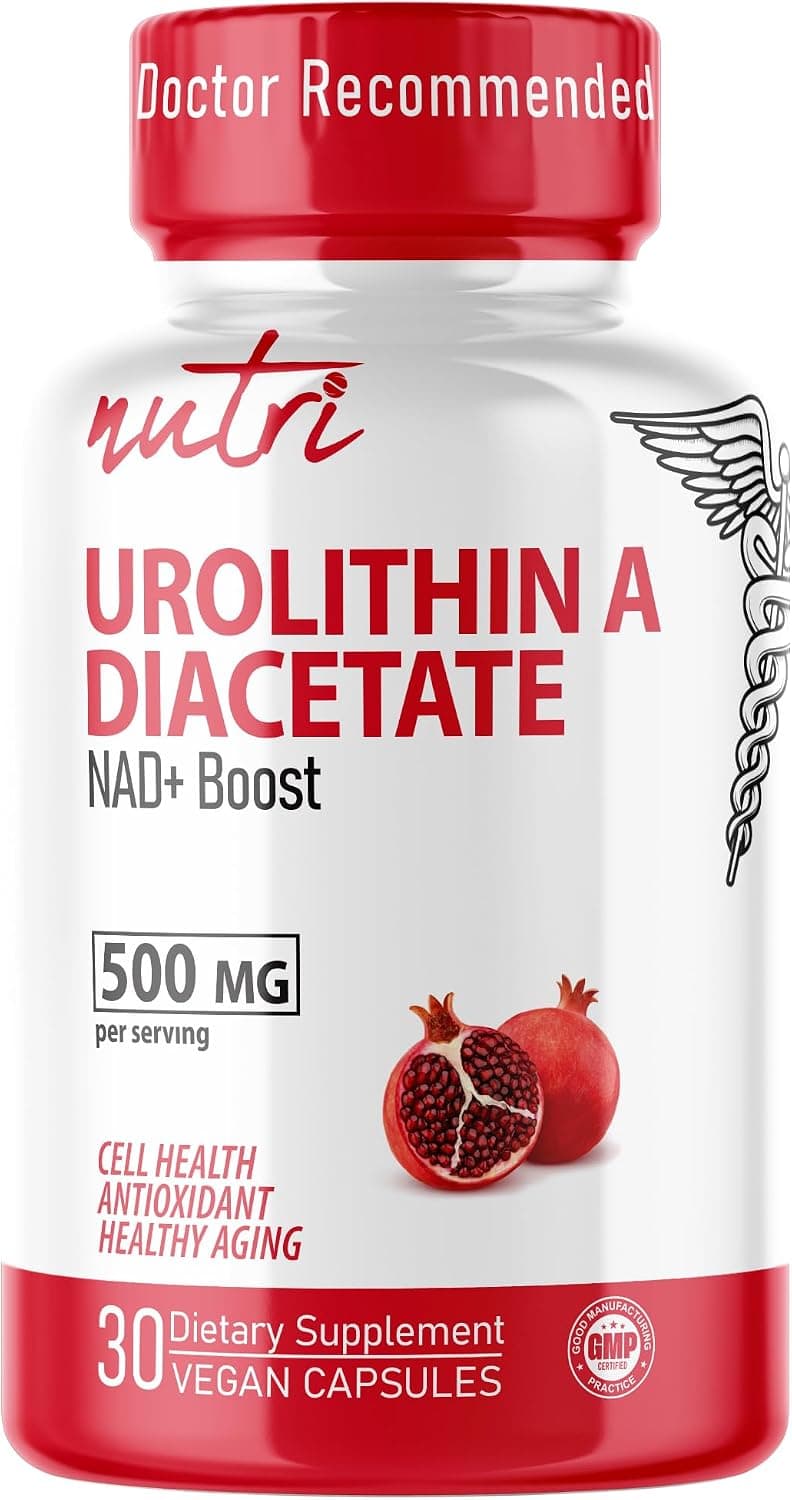
Suppliers
Vendors carrying Urolithin A, with live product details and codes. Links are affiliate links that support the wiki at no cost to you.
Amazon
Urolithin A
Research
- 2009first citedUrolithins, intestinal microbial metabolites of Pomegranate ellagitannins, exhibit potent antio…
- 2022most recentEffect of Urolithin A Supplementation on Muscle Endurance and Mitochondrial Health in Older Adu…
- 1.Biological significance of urolithins, the gut microbial ellagic acid-derived metabolites: the evidence so far
- 2.The mitophagy activator urolithin A is safe and induces a molecular signature of improved mitochondrial and cellular health in humans
- 3.Effect of Urolithin A Supplementation on Muscle Endurance and Mitochondrial Health in Older Adults: A Randomized Clinical Trial
- 4.Urolithins, intestinal microbial metabolites of Pomegranate ellagitannins, exhibit potent antioxidant activity in a cell-based assay
4 listed here; entry last updated August 2026
Reviews
My notesprivate to this device
FAQ
Why not just eat pomegranate?
You need specific gut bacteria to convert precursors into urolithin A, and many people don't have them, so direct supplementation is more reliable.
What is mitophagy?
It is the cellular cleanup process that recycles damaged mitochondria; urolithin A stimulates it.
Does it help with exercise?
Studies show improvements in muscle endurance and strength, especially in older or less active people.
Is it safe long term?
Human trials show good tolerability, though very long-term data are still being gathered.
Notes and cautions
- Generally well tolerated in studies
- Mild side effects reported in trials
- Some primary trial outcomes not met
- Gut production varies between individuals