
spec sheet11 rows
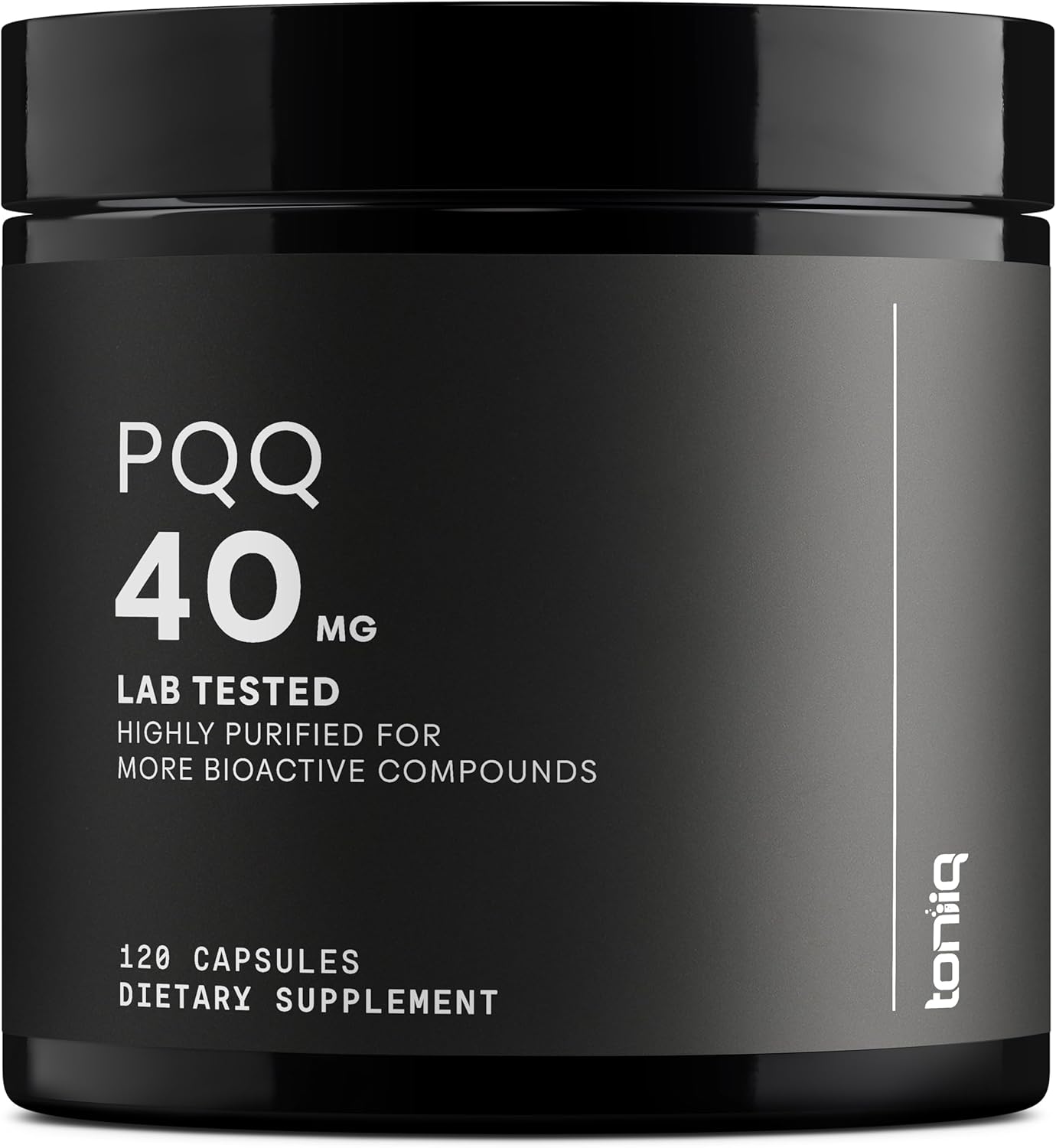
Pyrroloquinoline quinone (PQQ) is a small quinone compound that acts as a redox cofactor and antioxidant. First described in bacteria, where it serves as a cofactor for certain enzymes, it also occurs in trace amounts in many foods and in human tissues. It was proposed to be a new mammalian vitamin, a claim that remains debated, although dietary deprivation has been reported to impair growth, reproduction, and immune function in animals; it is also noted for stimulating mitochondrial biogenesis through PGC-1-alpha and for promoting nerve growth factor synthesis. It is sold as a dietary supplement and studied for effects on mitochondrial function and cognition, though it is not classed as an essential vitamin for humans.
- fires up mitochondrial biogenesis via PGC-1-alpha in cells
- a redox cofactor and antioxidant your tissues already carry
- clean tolerability record all the way up to 20 mg
- a better mechanistic case than most of that shelf
- linked to nerve growth factor synthesis in research
- low risk daily for long haul brain and energy support
- Mild stomach upset reported by some users
- Headache or drowsiness reported occasionally
Overview
Pyrroloquinoline quinone (PQQ) is a redox-active quinone that works as an electron-carrying cofactor and antioxidant. It was first recognized in bacteria in the 1960s as a novel cofactor distinct from the nicotinamide and flavin systems, and its structure was characterized in the late 1970s. In microbes it serves as the prosthetic group of quinoproteins such as certain glucose and alcohol dehydrogenases, enzymes that use PQQ to shuttle electrons during metabolism.
PQQ occurs widely at low levels in fruits, vegetables, fermented foods, and human milk, and it is present in mammalian tissues, which has prompted long-running discussion about whether it should be considered a vitamin. A 2003 report proposed it as a new mammalian vitamin, a claim that was later disputed, and it is now more often described as a beneficial dietary factor supporting long-term health rather than an essential nutrient. Commercially it is marketed as a dietary supplement, frequently promoted for energy, cognitive, and cardiovascular support [2].
Much of the scientific interest in PQQ centers on mitochondria. Laboratory studies show that PQQ can stimulate mitochondrial biogenesis, the cellular process of building new mitochondria, and small human trials have reported changes in markers linked to this process [1][2][3]. In a controlled study of untrained men, PQQ supplementation raised levels of PGC-1-alpha, a key regulator of mitochondrial biogenesis, although it did not clearly improve aerobic performance [2]. As a supplement rather than an approved medicine, PQQ is regulated as a food or dietary ingredient in most markets, and evidence for its health claims in humans remains limited [3].
Mechanism
As a redox cofactor, PQQ can cycle between oxidized and reduced states, letting it accept and donate electrons and act as an antioxidant that helps neutralize reactive oxygen species. In cells, research indicates that PQQ promotes biogenesis by activating signaling through the cyclic AMP response element-binding protein () and increasing expression of PGC-1-alpha, a master regulator that coordinates the production of new mitochondria [1]. Downstream, this pathway raises nuclear respiratory factors and transcription factors that drive mitochondrial DNA replication and the assembly of respiratory-chain components [1]. Through these actions PQQ has been reported to increase content and to protect cells against certain metabolic stressors [1][3].
receptor fingerprint
biogenesis (PGC-1alpha)activates
Reactive oxygen speciesscavenges
activates
stimulates
Dosingtypical ranges, not medical advice
interested in protocols and clinical dosages? make an account to see them! ^_^
Safetyrisks and cautions, not medical advice
PQQ has an excellent safety record, with no serious problems reported in human trials up to 20 mg a day. Bigger doses (40 mg and up) can bring a passing headache or some nausea, especially on an empty stomach. No serious contraindications are known, though if you're on blood thinners or chemo, run it by a doctor since its redox activity could in theory interfere. Legal worldwide as an OTC supplement, and not scheduled anywhere. Pregnant or breastfeeding folks should skip it for lack of data.
History
Pyrroloquinoline quinone, abbreviated PQQ, is a small redox active ortho quinone that was first identified in the 1960s and structurally characterized in the late 1970s as a novel cofactor in certain bacterial dehydrogenase enzymes, distinct from the previously known flavin and nicotinamide cofactors. Its discovery expanded the recognized classes of biological redox cofactors, and for a period it was investigated as a possible vitamin for higher organisms, a claim that remains debated. Later research focused on its presence in foods and human tissues and on its apparent ability to influence mitochondrial biogenesis and cellular energy metabolism, which drove its adoption as a dietary supplement.
Reputation
PQQ is popular among mitochondrial health and longevity enthusiasts, who value it for its purported ability to support the formation of new mitochondria and to complement coenzyme Q10, and it is frequently marketed alongside that compound. Its reputation is buoyed by intriguing cell and animal data and by a small number of human studies suggesting effects on energy, oxidative markers, and cognition. Nonetheless, critical reviewers emphasize that human evidence remains limited and often industry associated, that its status as an essential nutrient is unresolved, and that claimed benefits should be regarded as promising but not firmly established.
Subjective profileweighing the evidence above
A reasonable, low-risk daily if mitochondrial support is what you are after, with a better mechanistic case than most things on that shelf and a clean tolerability record up to 20 mg. Calibrate expectations though; the effect is subtle rather than felt, and 40 mg and up mostly buys a headache.
Where to buy
2 other outlets

Suppliers
Vendors carrying PQQ, with live product details and codes. Links are affiliate links that support the wiki at no cost to you.
Amazon
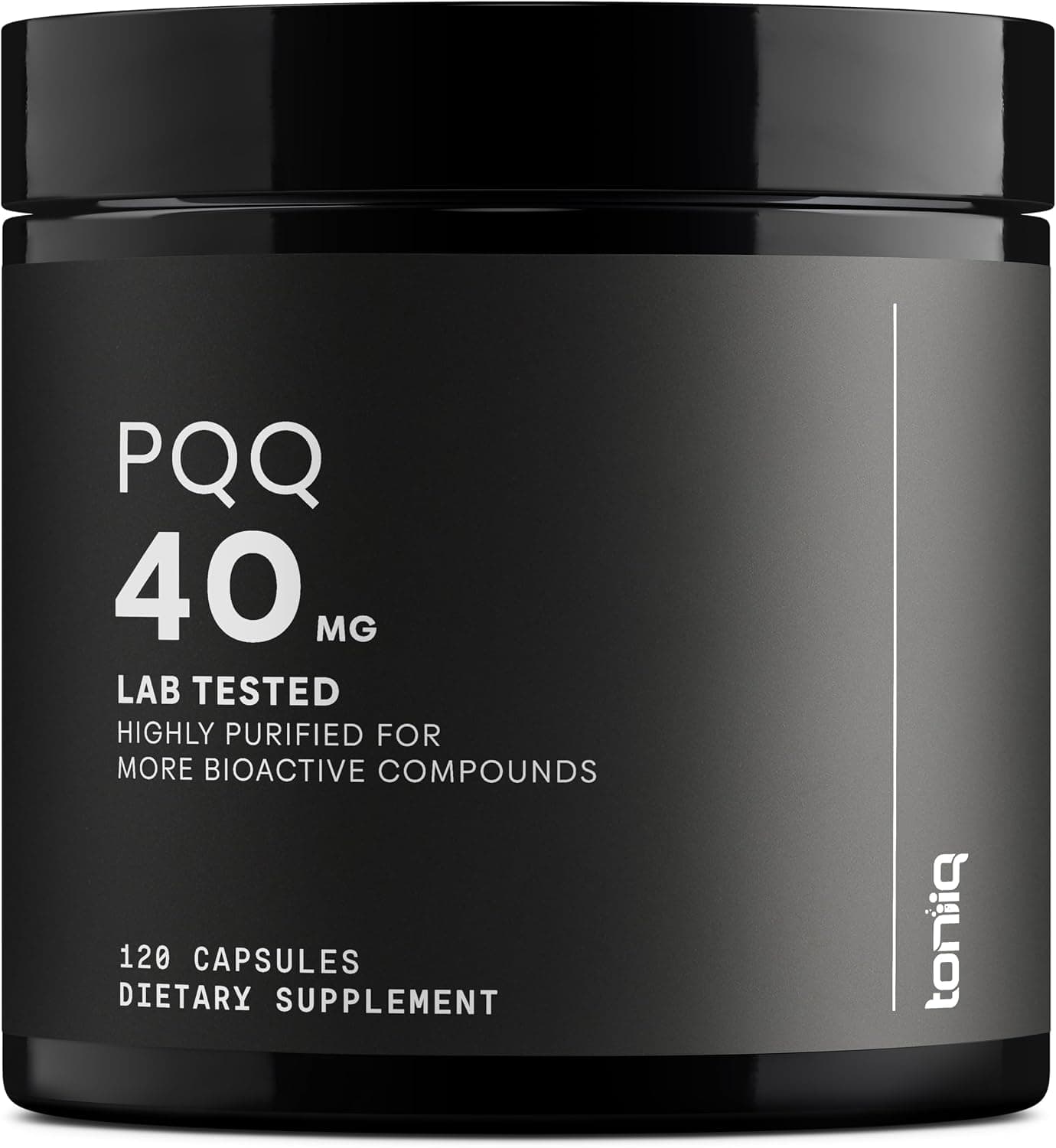
PQQ
Amazon
PQQ (20 mg)
iHerb
PQQ
Research
- 1994first citedDietary pyrroloquinoline quinone: growth and immune response in BALB/c mice
- 2020controlled trialEffects of Pyrroloquinoline Quinone (PQQ) Supplementation on Aerobic Exercise Performance and I…
- 2024most active year4 papers
- 2026most recentThe effects of pyrroloquinoline quinone and nicotinamide mononucleotide supplementation on inte…
- 1.Pyrroloquinoline quinone stimulates mitochondrial biogenesis through cAMP response element-binding protein phosphorylation and increased PGC-1alpha expression
- 2.Effects of Pyrroloquinoline Quinone (PQQ) Supplementation on Aerobic Exercise Performance and Indices of Mitochondrial Biogenesis in Untrained Men
- 3.Mechanisms Behind Pyrroloquinoline Quinone Supplementation on Skeletal Muscle Mitochondrial Biogenesis: Possible Synergistic Effects with Exercise
- 4.Effect of Dietary Pyrroloquinoline Quinone Disodium Salt on Cognitive Function in Healthy Volunteers: A Randomized, Double-Blind, Placebo-Controlled, Parallel-Group Study
- 5.The impact of six-week dihydrogen-pyrroloquinoline quinone supplementation on mitochondrial biomarkers, brain metabolism, and cognition in elderly individuals with mild cognitive impairment: a randomized controlled trial
- 6.Pyrroloquinoline quinone disodium salt improves brain function in both younger and older adults
- 7.The effects of pyrroloquinoline quinone and nicotinamide mononucleotide supplementation on interoception following acute exhaustive exercise: a randomised, double-blind, placebo-controlled study
- 8.The effects of pyrroloquinoline quinone disodium salt on brain function and physiological processes
- 9.Deep Learning-Driven Exploration of Pyrroloquinoline Quinone Neuroprotective Activity in Alzheimer's Disease
- 10.Potential physiological importance of pyrroloquinoline quinone
- 11.Recent progress in studies on the health benefits of pyrroloquinoline quinone
- 12.Pyrroloquinoline quinone protects against exercise-induced fatigue and oxidative damage via improving mitochondrial function in mice
26 listed here; entry last updated August 2026
Reviews
My notesprivate to this device
FAQ
What is PQQ?
Pyrroloquinoline quinone is a compound studied for supporting mitochondria and combating oxidative stress.
Why pair it with CoQ10?
Both support mitochondrial function, so they are often combined for energy and cellular health.
What is mitochondrial biogenesis?
It is the creation of new mitochondria, the cell's energy producers, which PQQ has been studied to promote.
Why take it with food?
Taking supplements with meals can improve tolerability and may aid absorption.
Limitations of the evidence
- Long-term safety in humans is not well established
- No mammalian PQQ-dependent enzyme has ever been established, so PQQ is not a vitamin; the 2003 Nature claim was refuted twice in 2005 and never retracted, and the error still circulates
- Essentially every positive human cognition trial was designed, funded or co-authored by a PQQ manufacturer, and no independent group has replicated them
- The mitochondrial biogenesis mechanism is a cell-culture result in mouse liver cells at 10 to 30 micromolar, not neurons and not in vivo
- EFSA describes the absorption, distribution, metabolism and excretion picture as limited, and excludes pregnant and lactating women
- A supplement dose is at least 250 times the natural dietary intake, so it has no dietary precedent
Adverse effects
- Mild stomach upset reported by some users
- Headache or drowsiness reported occasionally
Notes and cautions
- Generally well tolerated in short studies