
spec sheet10 rows
ITPP (myo-inositol trispyrophosphate) is a membrane-permeant allosteric effector of hemoglobin. Unlike the body's natural effectors, it crosses the red-cell membrane and binds within hemoglobin, lowering its oxygen affinity so that red cells release more oxygen into the tissues that need it most, an effect that adds to the physiological Bohr effect. In animal studies this raised hemoglobin's oxygen-release set point and substantially increased maximal exercise capacity in both healthy mice and mice with severe heart failure, and by relieving tissue hypoxia it also suppresses the hypoxia signal HIF-1-alpha and normalizes tumor blood vessels. It has drawn research interest across heart failure, pulmonary hypertension, and oncology, and is also noted as an athletic doping agent.
- Makes red blood cells drop more oxygen
- Endurance is the entire point
- Feeds oxygen to tissue under heavy load
- Boosted maximal exercise capacity in animals
- A hemoglobin hack, straight inside the cell
- Relieves the low oxygen alarm in tissue
Overview
ITPP, myo-inositol trispyrophosphate, is a synthetic small molecule that acts as an allosteric effector of hemoglobin. It was developed by the groups of Jean-Marie Lehn and Claude Nicolau as a membrane-permeant compound able to enter red blood cells and shift the oxygen-binding behavior of hemoglobin so that oxygen is released more readily to the tissues [1]. Chemically it is a pyrophosphate derivative of myo-inositol, related in concept to the natural red-cell effector 2,3-bisphosphoglycerate but capable of crossing the erythrocyte membrane from the outside.
The core action of ITPP is to raise the p50 of hemoglobin, the partial pressure of oxygen at which hemoglobin is half-saturated; a higher p50 means hemoglobin gives up oxygen more easily. In normal mice, ITPP produced a dose-related increase in p50 of up to 31 percent and correspondingly increased maximal exercise capacity, an effect that persisted in transgenic mice with severe heart failure [1]. Because so many diseases involve tissue hypoxia, ITPP has been investigated across a wide range of models: it restored right ventricular oxygen tension in a rat model of pulmonary hypertension [2], reduced hypoxia and normalized tumor blood vessels to promote antitumor immune responses in cancer models [3], and served as an oxygenating agent that lowered hypoxia-inducible factor levels and prevented liver failure after extended liver resection [4].
ITPP is not an approved medicine, and its striking performance effects in animals have made it a flagged substance in sport; validated methods exist to detect it in equine urine and plasma because of concerns about its covert use as a doping agent in racehorses [5]. It remains an investigational compound studied primarily in the context of hypoxia-related disease and is handled as a research chemical.
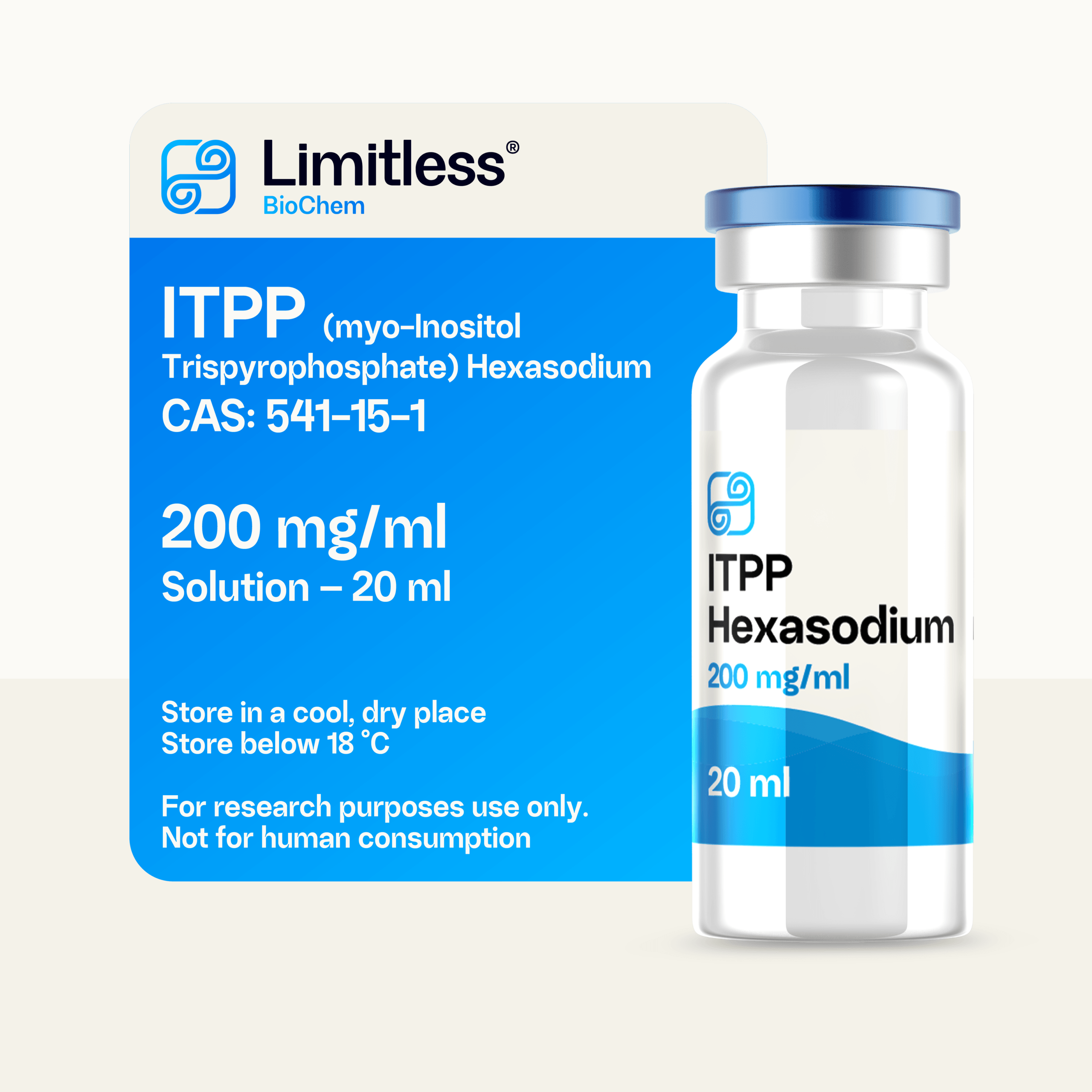
- In mice, ITPP raised hemoglobin's oxygen-release set point and increased maximal exercise capacity by roughly 57 percent, with a comparable gain in animals suffering severe heart failure.
- One of its co-inventors, Jean-Marie Lehn, is a Nobel laureate in chemistry.
Mechanism
ITPP works at the level of the red blood cell, on hemoglobin itself. Hemoglobin exists in equilibrium between a high-affinity oxygen-bound (relaxed) state and a low-affinity (tense) state; natural effectors such as 2,3-bisphosphoglycerate stabilize the low-affinity state to promote oxygen unloading in tissues. ITPP is a membrane-permeant molecule that enters erythrocytes and binds hemoglobin in the same regulatory manner, stabilizing the low-affinity conformation and thereby lowering hemoglobin's oxygen affinity. The measurable result is a rise in p50, the oxygen tension at which hemoglobin is half-saturated, so more oxygen is delivered where oxygen tension is low [1].
The quantitative effects are notable. In normal mice, intraperitoneal ITPP raised p50 by up to 31 percent in a dose-related fashion and increased maximal exercise capacity by roughly 57 percent, with a comparable 63 percent gain in transgenic mice suffering severe heart failure; oral administration in drinking water produced similar improvements [1]. Consistent with better tissue oxygenation, ITPP lowered myocardial expression of -inducible factor 1-alpha, and importantly it did so without altering cardiac contractility or arterial blood pressure [1].
These mechanisms drive the benefits observed across research settings. Improved oxygen delivery relieved right ventricular in pulmonary hypertension [2] and, in tumors, raising intratumor oxygen tension normalized pathological blood vessels through endothelial PTEN activation, reduced immunosuppressive signals such as PD-L1, and shifted the microenvironment toward an antitumor immune response [3]. In a surgical model, low-dose ITPP relieved after extended hepatectomy, restored lipid oxidation, and prevented liver failure [4]. The unifying theme is that ITPP treats directly by making the blood already in circulation give up more of its oxygen, rather than by increasing blood flow or red cell mass [1][3].
receptor fingerprint
Hemoglobin ( effector)lowers O2 affinity
Tissue reduces
Band 3 / RBC membranecrosses selectively
Dosingtypical ranges, not medical advice
interested in protocols and clinical dosages? make an account to see them! ^_^
Safetyrisks and cautions, not medical advice
ITPP is an experimental allosteric effector of hemoglobin studied only in animals and cell systems; there is no established human safety data, no approved use, and no defined dosing. Altering the oxygen affinity of hemoglobin could plausibly disturb tissue oxygen delivery and cardiovascular physiology in unpredictable ways, and the purity and content of research-grade material are not guaranteed. It is prohibited in sport by anti-doping authorities.
History
ITPP (myo-inositol trispyrophosphate) was developed in the mid-2000s by chemists including the Nobel laureate Jean-Marie Lehn and Claude Nicolau as a membrane-permeant allosteric effector of hemoglobin, designed to mimic the oxygen-releasing action of natural effectors such as 2,3-bisphosphoglycerate. Early animal work demonstrated that it lowers hemoglobin's oxygen affinity and substantially increases exercise capacity in both healthy mice and mice with severe heart failure. Because relieving tissue hypoxia has broad implications, it was subsequently investigated in pulmonary hypertension and oncology, and a Phase Ib dose-escalation trial in patients with hepatopancreatobiliary tumors was completed and reported in 2021. It continues to be studied as a hypoxia-modifying agent.
Reputation
ITPP is regarded as an elegant idea in physiology; rather than adding red cells or increasing blood flow, it coaxes the blood already in circulation to give up more of its oxygen. Its animal endurance data are notable, and its ability to normalize tumor blood vessels and improve responses to immunotherapy has drawn oncology interest. A completed Phase Ib clinical trial found it broadly tolerable, with hypercalcemia as the main and manageable side effect. Fairly noted, most efficacy evidence remains preclinical, human data are early, and it is banned in sport as a blood-oxygenation doping agent.
Subjective profileweighing the evidence above
Not worth the risk. Deliberately lowering hemoglobin's oxygen affinity is a blunt intervention on something the body regulates carefully, and it has been studied only in animals and early trials, with no established human safety, no defined dose and no way to verify research-grade material. Being banned in sport is the least of the problems.
Where to buy

1 other outlet
Suppliers
Vendors carrying ITPP, with live product details and codes. Links are affiliate links that support the wiki at no cost to you.
Kimera Chems
ITPP
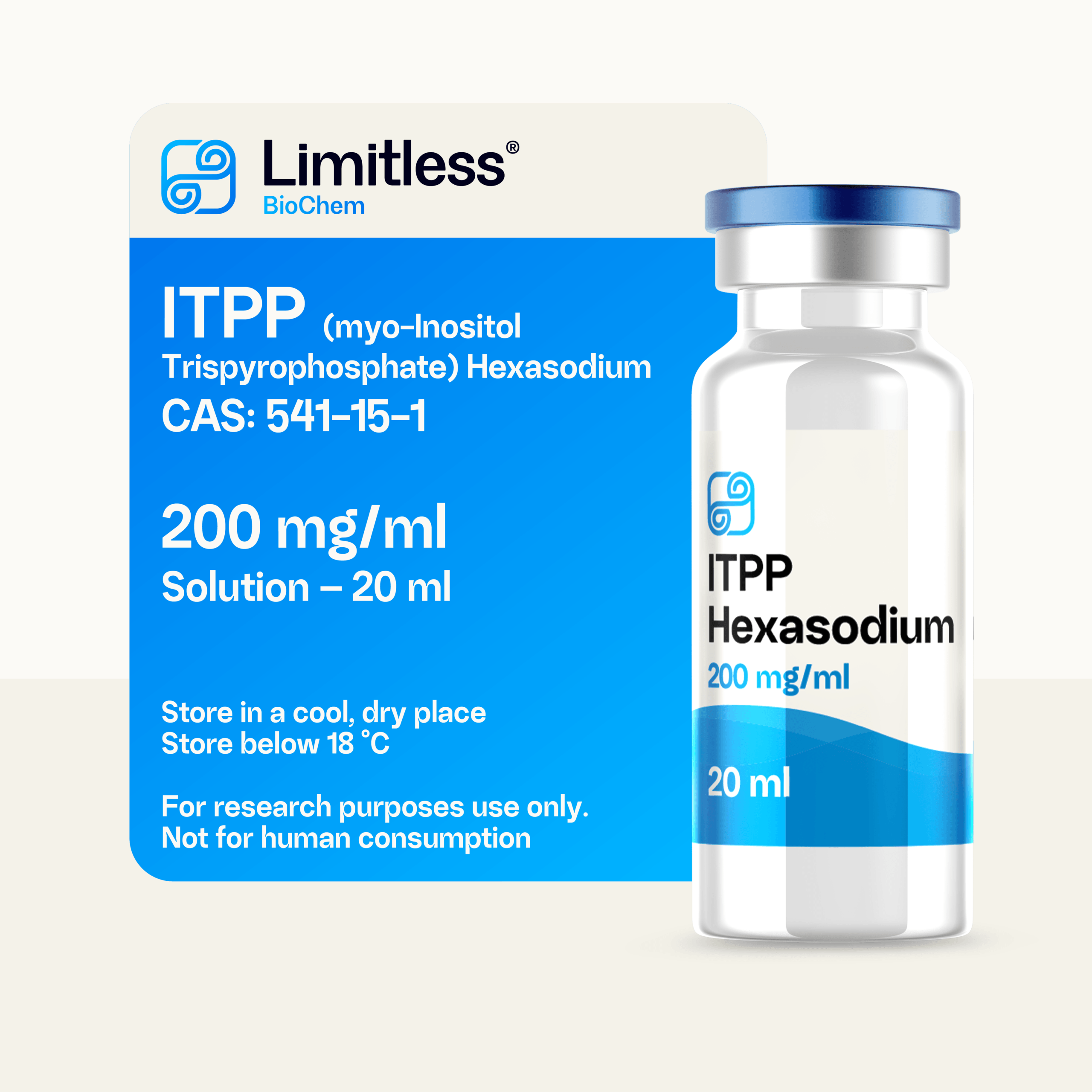
Limitless Biochem🌐
ITPP
Research
- 2006first citedSuppression of hypoxia-induced HIF-1alpha and of angiogenesis in endothelial cells by myo-inosi…
- 2021most active year5 papers
- 2025most recentModulation of the Oxygenation State and Intracellular pH of Erythrocytes by Inositol-Trispyroph…
- 1.Enhanced exercise capacity in mice with severe heart failure treated with an allosteric effector of hemoglobin, myo-inositol trispyrophosphate.
- 2.Right ventricular myocardial oxygen tension is reduced in monocrotaline-induced pulmonary hypertension in the rat and restored by myo-inositol trispyrophosphate.
- 3.Tumour angiogenesis normalized by myo-inositol trispyrophosphate alleviates hypoxia in the microenvironment and promotes antitumor immune response.
- 4.Normalization of lipid oxidation defects arising from hypoxia early posthepatectomy prevents liver failure in mouse.
- 5.Detection of myo-inositol trispyrophosphate in equine urine and plasma by hydrophillic interaction chromatography-tandem mass spectrometry.
- 6.Suppression of hypoxia-induced HIF-1alpha and of angiogenesis in endothelial cells by myo-inositol trispyrophosphate-treated erythrocytes
- 7.Anti-angiogenic properties of myo-inositol trispyrophosphate in ovo and growth reduction of implanted glioma
- 8.myo-Inositol trispyrophosphate: a novel allosteric effector of hemoglobin with high permeation selectivity across the red blood cell plasma membrane
- 9.Myo-InositolTrisPyroPhosphate treatment leads to HIF-1α suppression and eradication of early hepatoma tumors in rats
- 10.Increasing the oxygen load by treatment with myo-inositol trispyrophosphate reduces growth of colon cancer and modulates the intestine homeobox gene Cdx2
- 11.Stable tumor vessel normalization with pO₂ increase and endothelial PTEN activation by inositol trispyrophosphate brings novel tumor treatment.
- 12.Myo-inositol trispyrophosphate-mediated hypoxia reversion controls pancreatic cancer in rodents and enhances gemcitabine efficacy
27 listed here; entry last updated August 2026
Reviews
My notesprivate to this device
FAQ
How does it affect oxygen delivery?
It's thought to shift hemoglobin so red blood cells release oxygen more readily to tissues. That's the basis of the endurance angle.
Is it allowed in competition?
Compounds that manipulate oxygen delivery are generally prohibited in regulated sport. Athletes should assume it's banned.
How well studied is it in humans?
Most data come from animal and preclinical research. Human safety information is limited.
What does the name refer to?
ITPP stands for myo-inositol trispyrophosphate. It's a small molecule studied for oxygen release.
Limitations of the evidence
- An investigational compound, not an approved medicine
- Human safety data are very limited, and most evidence is from animals
- Strongly lowering hemoglobin oxygen affinity could be harmful if overdone
Notes and cautions
- It is a flagged substance in competitive sport due to its performance effects
- Purity and contents of research-chemical products are not guaranteed