
spec sheet12 rows
Meldonium, marketed as Mildronate, is a clinically established anti-ischemic and cardioprotective agent engineered in Latvia to optimize how cells generate energy under metabolic stress. By restraining carnitine biosynthesis, it steers the heart toward more oxygen-efficient glucose metabolism, a property long valued in cardiovascular medicine and closely scrutinized in elite sport. Its distinctive metabolic profile has made it one of the most discussed performance modulators of the past decade.
- Steers the heart toward oxygen efficient fuel
- Endurance favorite with real clinical history
- Shifts metabolism from fat toward glucose
- Protects tissue when oxygen runs low
- Cardioprotective by design; engineered in Latvia
- Occasional digestive upset
- Mild headache or agitation in some users
Overview
Meldonium, known widely by the brand name Mildronate and chemically as 3-(2,2,2-trimethylhydrazinium)propionate dihydrate, is a small-molecule metabolic modulator developed at the Latvian Institute of Organic Synthesis during the late Soviet era by a team associated with the chemist Ivars Kalvinsh [1][3]. Structurally it is a close analog of gamma-butyrobetaine, the natural precursor from which the body manufactures carnitine, and that mimicry sits at the center of how the compound behaves [2].
Pharmacologically, meldonium is classified as an anti-ischemic and cardioprotective drug. Its principal targets are gamma-butyrobetaine hydroxylase, the enzyme that catalyzes the final step of carnitine synthesis, and the carnitine transporter OCTN2, which governs carnitine uptake into tissues [2]. By restraining both, the compound lowers tissue carnitine and shifts cellular fuel use away from fatty acid oxidation toward glucose oxidation, a route that yields more energy per unit of oxygen and is therefore favored when blood flow is limited [1][2].
Clinically, meldonium has been used for decades across the Baltic states and other post-Soviet countries for stable angina, chronic heart failure, recovery after myocardial infarction, and disorders of cerebral circulation, where reports describe improved mood and activity alongside reduced dizziness and fatigue [3]. Reviews note that despite this long record of use, rigorous large-scale clinical trials remain relatively scarce [6].
Regulatory status is a defining feature of its story. Meldonium holds marketing authorization in several ex-Soviet republics but not in the European Union or the United States [5]. The World Anti-Doping Agency placed it on its monitoring program in 2015 and added it to the prohibited list of metabolic modulators on 1 January 2016, after which it became widely known through high-profile athletic cases [6][5]. It is typically supplied as capsules, tablets, oral syrup, and injectable solution [3].
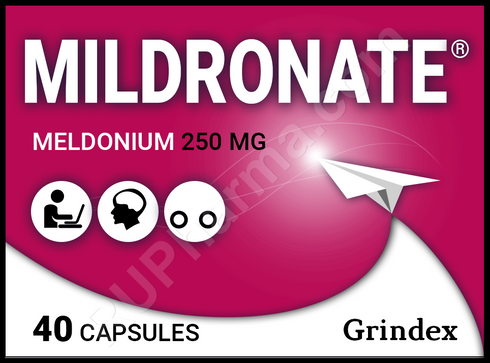
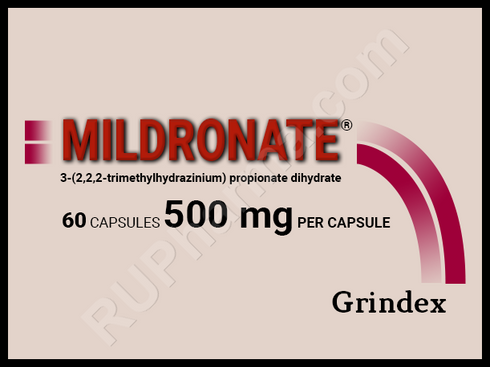
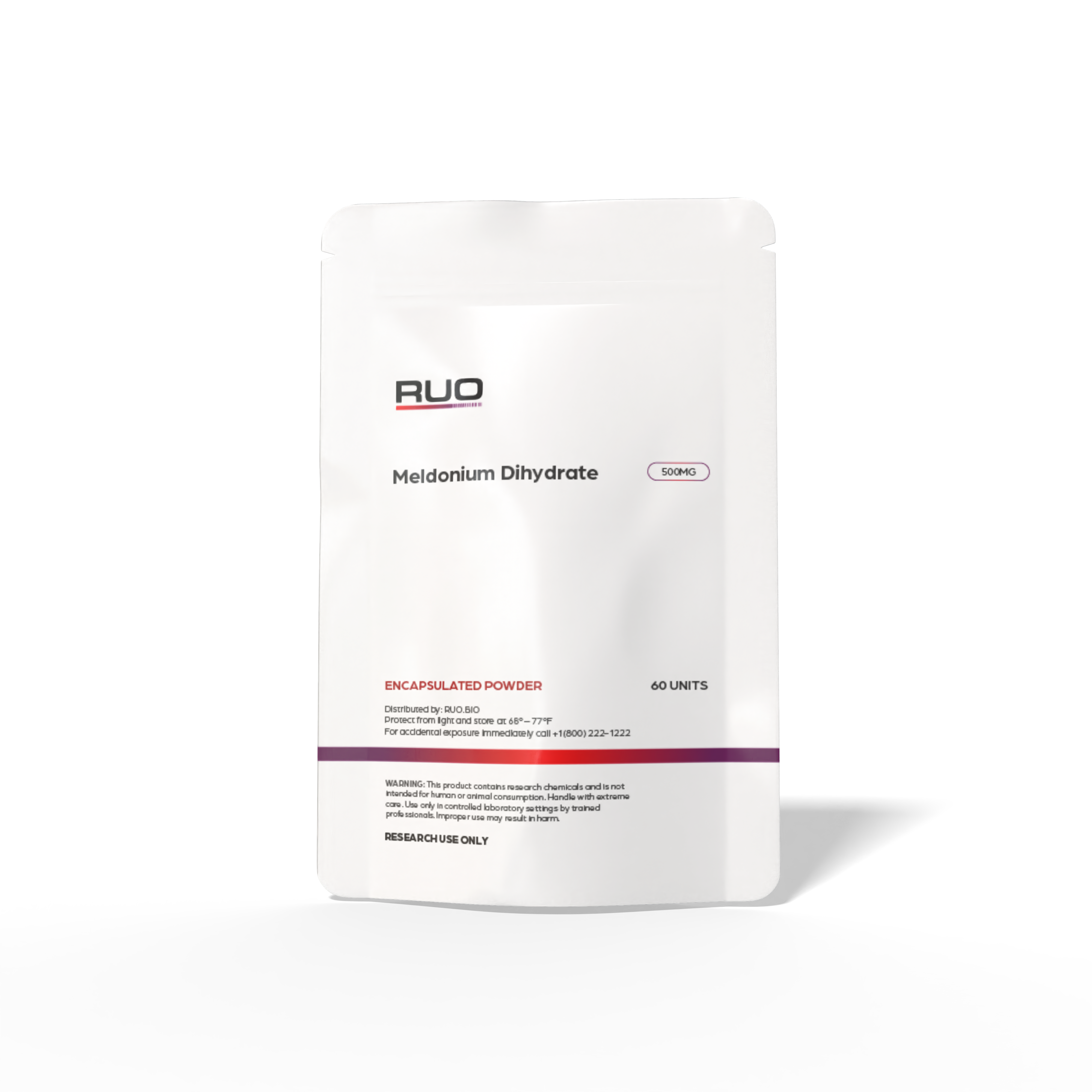
- Meldonium's carnitine-lowering effect is self-limiting; in long-term rodent studies the reduction reached a plateau after roughly four weeks of daily dosing rather than continuing to fall.
- The drug was thrust into international headlines in 2016 after a wave of positive doping tests among athletes, the same year it was added to the WADA prohibited list.
Mechanism
Meldonium works by deliberately and reversibly limiting the body's supply of L-carnitine, the shuttle molecule that carries long-chain fatty acids into mitochondria for oxidation [1][2]. It does this in two complementary ways: it inhibits gamma-butyrobetaine hydroxylase, the enzyme that performs the last step of carnitine biosynthesis, and it blocks the OCTN2 transporter that moves carnitine into cells and reabsorbs it in the kidney [2]. As carnitine declines, the heart and other tissues import fewer fatty acids and lean more heavily on glucose for fuel [1].
This metabolic switch is the crux of the cardioprotective effect. Fatty acid oxidation consumes comparatively large amounts of oxygen and, during ischemia, generates toxic intermediates such as long-chain acylcarnitines that can destabilize membranes and disturb heart rhythm; by curbing that pathway and promoting oxygen-thrifty glucose oxidation, meldonium helps cells tolerate low-flow conditions, an effect likened to pharmacological preconditioning [1][2]. Treatment also lowers circulating trimethylamine-N-oxide, a carnitine-derived associated with atherosclerosis [2]. A separate, non-carnitine mechanism has been proposed in the brain, where accumulation of gamma-butyrobetaine and its esters may stimulate production in the vascular endothelium and improve blood flow [3].
Reported benefits follow from these actions: better preserved cardiac function under ischemic stress, improved exercise tolerance, faster recovery, protection against , and, in athletes, reduced lactate accumulation with enhanced glycogen use [5]. The carnitine-lowering effect is orderly rather than open-ended; in a long-term rodent study the reduction was dose-dependent and reached a plateau after roughly four weeks of daily treatment, with no accompanying cardiac impairment or disturbance of liver function across the doses tested [4]. In people, its role in cardiovascular and rehabilitation settings has been reviewed extensively, though authors caution that robust performance-enhancement data in healthy athletes remain limited [6].
receptor fingerprint
Carnitine biosynthesis (GBB hydroxylase)inhibits
Energy metabolism (fatty acid to glucose)shifts
Mitochondria (under ischemia)protects
Dosingtypical ranges, not medical advice
interested in protocols and clinical dosages? make an account to see them! ^_^
Safetyrisks and cautions, not medical advice
Meldonium is generally well tolerated, with occasional GI upset, headache, or agitation. It is not FDA-approved and has been banned in sport by WADA since 2016. Use should follow appropriate medical guidance.
History
Meldonium was synthesized in the mid-1970s at the Institute of Organic Synthesis in Riga, Latvia, by a team associated with the chemist Ivars Kalvins, and it was marketed as Mildronate. Developed with cardiovascular applications in mind, it became a widely prescribed anti-ischemic and cardioprotective drug across the former Soviet Union and Eastern Europe. Its mechanism as an inhibitor of carnitine biosynthesis, and the resulting metabolic shift toward more oxygen-efficient glucose oxidation, was characterized largely by Latvian researchers over subsequent decades. The compound gained global attention in 2016, when the World Anti-Doping Agency added it to its list of prohibited substances following evidence of widespread use among elite athletes. It has never been approved by the United States Food and Drug Administration.
Reputation
Meldonium enjoys a solid clinical reputation in the countries where it is registered, valued as an oxygen-thrifty cardioprotective and anti-ischemic agent with an unusually well-defined metabolic mechanism. Sports scientists and clinicians alike find its carnitine-lowering, glucose-favoring action genuinely interesting, and it is among the most discussed metabolic modulators of the past decade. Its role in cardiovascular and rehabilitation settings has been reviewed extensively, though authors consistently note that rigorous performance-enhancement data in healthy athletes remain limited. The 2016 doping controversy raised its profile considerably while also underscoring that its benefits in sport are more assumed than proven. It remains unapproved in Western markets, so most discussion draws on Eastern European clinical literature.
Subjective profileweighing the evidence above
Genuinely interesting metabolic pharmacology with a real clinical history behind it, and it is well tolerated. It is not FDA approved and has been banned in sport since 2016, so competing athletes should not touch it; for everyone else the endurance case is plausible rather than settled.
Where to buy


Suppliers
Vendors carrying Meldonium, with live product details and codes. Links are affiliate links that support the wiki at no cost to you.

RUPharma🌐
Meldonium
RUPharma🌐
Meldonium
RUO
Meldonium
Kimera Chems
Meldonium
Research
- 2002first citedMildronate: cardioprotective action through carnitine-lowering effect.
- 2016most active year4 papers
- 2026most recentMeldonium and human sport performance: a narrative review evaluating the evidence for ergogenic…
- 1.Mildronate: cardioprotective action through carnitine-lowering effect.
- 2.Pharmacological effects of meldonium: Biochemical mechanisms and biomarkers of cardiometabolic activity.
- 3.Mildronate: an antiischemic drug for neurological indications.
- 4.Effects of long-term mildronate treatment on cardiac and liver functions in rats.
- 5.Meldonium Supplementation in Professional Athletes: Career Destroyer or Lifesaver?
- 6.Story behind meldonium-from pharmacology to performance enhancement: a narrative review.
- 7.Meldonium (Mildronate): A Performance-Enhancing Drug?
- 8.Meldonium and human sport performance: a narrative review evaluating the evidence for ergogenic potential.
- 9.Meldonium use by athletes at the Baku 2015 European Games.
- 10.Mildronate (Meldonium) in professional sports - monitoring doping control urine samples using hydrophilic interaction liquid chromatography - high resolution/high accuracy mass spectrometry.
- 11.Meldonium long-term excretion period and pharmacokinetics in blood and urine of healthy athlete volunteers.
- 12.Pharmacokinetics and pharmacodynamics of meldonium in exercised thoroughbred horses.
25 listed here; entry last updated August 2026
Reviews
My notesprivate to this device
FAQ
Why was it banned in sport?
It was added to the prohibited list for potential performance-enhancing effects on endurance and recovery, leading to several high-profile cases.
How does it work?
It shifts cellular metabolism away from fatty acids toward glucose, which is thought to improve energy efficiency under stress like low oxygen.
Is it approved everywhere?
It's prescribed for cardiovascular conditions in some countries but is not approved in many others, including the US.
Who uses it medically?
It's used clinically in parts of Eastern Europe for heart-related conditions rather than as a general supplement.
Adverse effects
- Occasional digestive upset
- Mild headache or agitation in some users
Notes and cautions
- Prohibited in competitive sport since 2016
- Not approved for use in the EU or US