
spec sheet14 rows
Methylene Blue is a century-old phenothiazine compound that has been reinvented as one of the most intriguing metabolic and cognitive agents in modern research. At low concentrations it functions as a mitochondrial electron cycler, boosting cellular energy production while acting as an antioxidant, effects that underpin growing interest in brain performance and neuroprotection. Backed by an FDA-recognized clinical heritage in emergency medicine, it occupies a rare position bridging established pharmacology and frontier nootropic science.
- Mitochondrial electron carrier at low dose
- Supports cellular energy production
- Studied for sharper cognition
- Solid antioxidant activity
- Real neuroprotective interest
- A century of clinical heritage behind it
- Occasional nausea
Overview
Methylene Blue, chemically methylthioninium chloride, is a phenothiazine dye and one of the oldest synthetic drugs in continuous medical use. It was first prepared in 1876 within the German dye industry and soon gained scientific fame in the laboratory of Paul Ehrlich, who used it as a biological stain and an early antimalarial, making it a landmark in the birth of modern chemotherapy. Its deep blue color and its ability to shuttle electrons have kept it relevant across cell biology, medicine, and, more recently, cognitive research [2][3].
Chemically the molecule is redox-active: it exists in equilibrium between an oxidized blue form and a colorless reduced form called leuco-methylthioninium, and this reversible electron carrying underlies most of its biological effects [5]. Inside mitochondria it can accept electrons from NADH and donate them further along the respiratory chain, supporting cellular energy metabolism and cytochrome c oxidase activity [2][3].
In clinical medicine, Methylene Blue is a recognized treatment for methemoglobinemia, where it helps convert oxidized hemoglobin back to its functional form, and it has been used in emergency settings for conditions such as vasoplegic syndrome and certain drug toxicities [6]. In neuroscience, low-dose administration has been studied for memory and attention in both animals and healthy humans, and the closely related tau aggregation inhibitor known as leuco-methylthioninium has advanced into clinical trials for Alzheimer's disease [1][5].
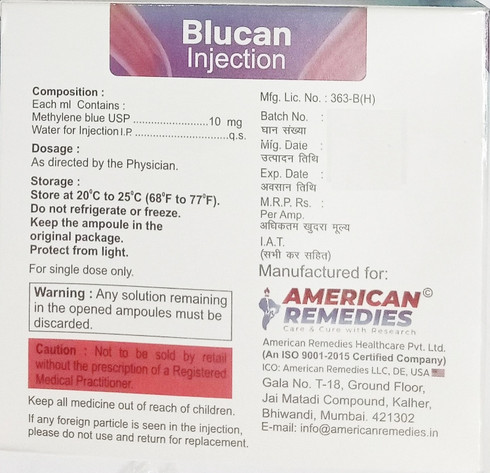
From a regulatory standpoint, pharmaceutical-grade Methylene Blue USP is an established, long-marketed medicine, while its use as a low-dose nootropic remains investigational and off-label. It is available as a sterile injectable solution and as oral pharmaceutical preparations, and observers stress that only pharmaceutical-grade material, never industrial dye, is appropriate for human use [6].
- Synthesized in 1876, Methylene Blue is frequently described as the first fully synthetic drug used in medicine.
- Paul Ehrlich used it in 1891 as one of the first synthetic compounds employed to treat malaria in patients.
Mechanism
Methylene Blue is best understood as an electron cycler. Because it moves easily between oxidized and reduced states, it can pick up electrons from NADH and hand them directly to cytochrome c and complex IV of the respiratory chain, effectively creating an alternative route for electron flow that bypasses complexes I and III [2][3]. By supporting the terminal steps of oxidative phosphorylation, it can raise oxygen consumption, increase the activity of cytochrome c oxidase, and enhance cellular ATP production, which is the leading explanation for its energizing and neuroprotective effects in the brain [3].
A defining feature is a biphasic, hormetic dose-response: at low concentrations the compound behaves as an antioxidant and metabolic enhancer, whereas at higher concentrations it can auto-oxidize, generate reactive oxygen species, reverse its own benefit, and inhibit monoamine oxidase, the last of which explains the risk of toxicity when it is combined with serotonergic drugs [2]. It also inhibits synthase and soluble guanylate cyclase, the basis for its use as a vasopressor in vasoplegic states [6]. In red blood cells it accelerates the reduction of methemoglobin back to functional hemoglobin, its classic clinical action [6].
The functional benefits reported for low doses center on cognition, cerebral blood flow, and cellular resilience. In a randomized, double-blinded, placebo-controlled trial in healthy adults, a single low oral dose increased functional MRI responses during attention and short-term memory tasks and was associated with a 7% increase in correct responses during memory retrieval [1]. Complementary imaging work found that Methylene Blue modulated resting-state and task-related connectivity across memory and perception networks [4]. In neurodegeneration research, its tau-aggregation-inhibiting derivative has been evaluated in a 24-week Phase II study in 321 patients with mild to moderate Alzheimer's disease, with signals of possible benefit that motivated larger follow-up trials [5].
receptor fingerprint
electron transport (cytochrome c oxidase)donates electrons
Brain oxidative metabolismenhances
Antioxidant (low dose)supports
Dosingtypical ranges, not medical advice
interested in protocols and clinical dosages? make an account to see them! ^_^
Safetyrisks and cautions, not medical advice
The big safety issue is its MAO-A inhibition, and because the risk is entirely a question of dose, the numbers are worth having rather than a bare warning.
Methylene blue is a potent, tight-binding, reversible inhibitor of MAO-A [25]. Measured against the human enzyme its IC50 is around 0.07 micromolar, which is a potent value rather than a marginal one, and the same work found it far weaker at MAO-B; that asymmetry is why the hazard here is specifically serotonergic rather than the tyramine pressor reaction people associate with the classic MAOIs [26].
What turns that laboratory number into a clinical one is how little it takes to reach it. An intravenous dose of only 0.75 mg per kg produces a peak plasma concentration near 1.6 micromolar, comfortably past the level that inhibits MAO-A, and a review of fourteen reported cases of methylene blue CNS toxicity found thirteen of them met the Hunter criteria for serotonin toxicity, at doses from about 1 mg per kg upward [27].
Read that against the cognitive dose given on this page, roughly 0.5 to 1 mg per kg, and it is the same range; the interaction is not theoretical at the dose a reader here would actually take. A true microdose of one or two milligrams total is perhaps twenty times lower and is a different exposure question, but that is not what most protocols use and it is not the dose the cognitive evidence was generated at.
So the rule stands and it is not a cautious hedge: combined with SSRIs, SNRIs, tricyclics, MAO inhibitors or other serotonergic drugs, methylene blue can trigger serotonin toxicity, and that combination should be avoided. The exceptions are emergencies where the alternative is worse, such as life-threatening methemoglobinemia or ifosfamide encephalopathy, and those are decisions made in a hospital.
The rest is more ordinary. It stains urine and sometimes the tongue a harmless blue-green. People with G6PD deficiency should avoid it, because it can cause hemolysis. Keep the dose low, since the whole benefit lives in that low-dose window and high doses turn pro-oxidant and cause nausea. Purity is non-negotiable; only human-grade product belongs anywhere near this.
Interactionsdocumented pairs only, not exhaustive
Methylene blue is a potent reversible inhibitor of monoamine oxidase A, and the FDA has issued a drug-safety communication warning that giving it to patients on serotonergic drugs can precipitate serious, potentially fatal serotonin syndrome; the concern applies to SSRIs, SNRIs, tricyclics, MAO inhibitors, and other serotonergic agents. Because of this MAOI activity it should generally not be given with these drugs except in emergencies such as ifosfamide encephalopathy or life-threatening methemoglobinemia.
It is contraindicated in glucose-6-phosphate dehydrogenase (G6PD) deficiency, where it can trigger severe hemolytic anemia, and it is paradoxically ineffective and hazardous there for treating methemoglobinemia. Methylene blue also inhibits CYP1A2, CYP2C19, and CYP2D6 in vitro, which may raise levels of drugs metabolized by these enzymes. This is research information, not medical advice.
Checking a whole stack? Run it through interactions + stacks.
History
Methylene Blue was first synthesized in 1876 by the German chemist Heinrich Caro at the dye company BASF, originally as a textile dye; it is often cited as the first fully synthetic compound to be used as a medicine. Paul Ehrlich adopted it as a biological stain and, together with Paul Guttmann, tested it in 1891 as one of the earliest synthetic drugs used to treat malaria in patients, an experiment that helped seed the concept of targeted chemotherapy. Over the twentieth century it became the standard antidote for methemoglobinemia and found further uses in surgery and diagnostics. In recent decades it has been reinvestigated as a low-dose metabolic and cognitive agent, and it remains on the World Health Organization list of essential medicines.
Reputation
Methylene Blue occupies a rare and celebrated position, bridging more than a century of established clinical pharmacology with frontier interest in brain performance and neuroprotection. Enthusiasts and researchers are drawn to its role as a mitochondrial electron cycler that can raise cellular energy production while acting as an antioxidant at low concentrations, effects linked in controlled studies to improved memory-related brain activity. Its long safety heritage in emergency medicine lends it credibility that few nootropic candidates can claim. Honesty requires respecting its quirks: it follows a hormetic dose-response in which higher doses reverse the benefit, it inhibits monoamine oxidase and can cause serotonin toxicity when combined with serotonergic drugs, and it visibly stains tissues and urine blue.
Subjective profileweighing the evidence above
Genuinely interesting at low doses, roughly 0.5 to 1 mg per kg, where the mitochondrial and antioxidant effects live and where more is plainly worse. The serious catch is MAO-A inhibition: with SSRIs, SNRIs or other serotonergics it can cause serotonin toxicity. Avoid entirely with G6PD deficiency.
Where to buy



Suppliers
Vendors carrying Methylene Blue, with live product details and codes. Links are affiliate links that support the wiki at no cost to you.
| supplier | size | price | $/mg |
|---|---|---|---|
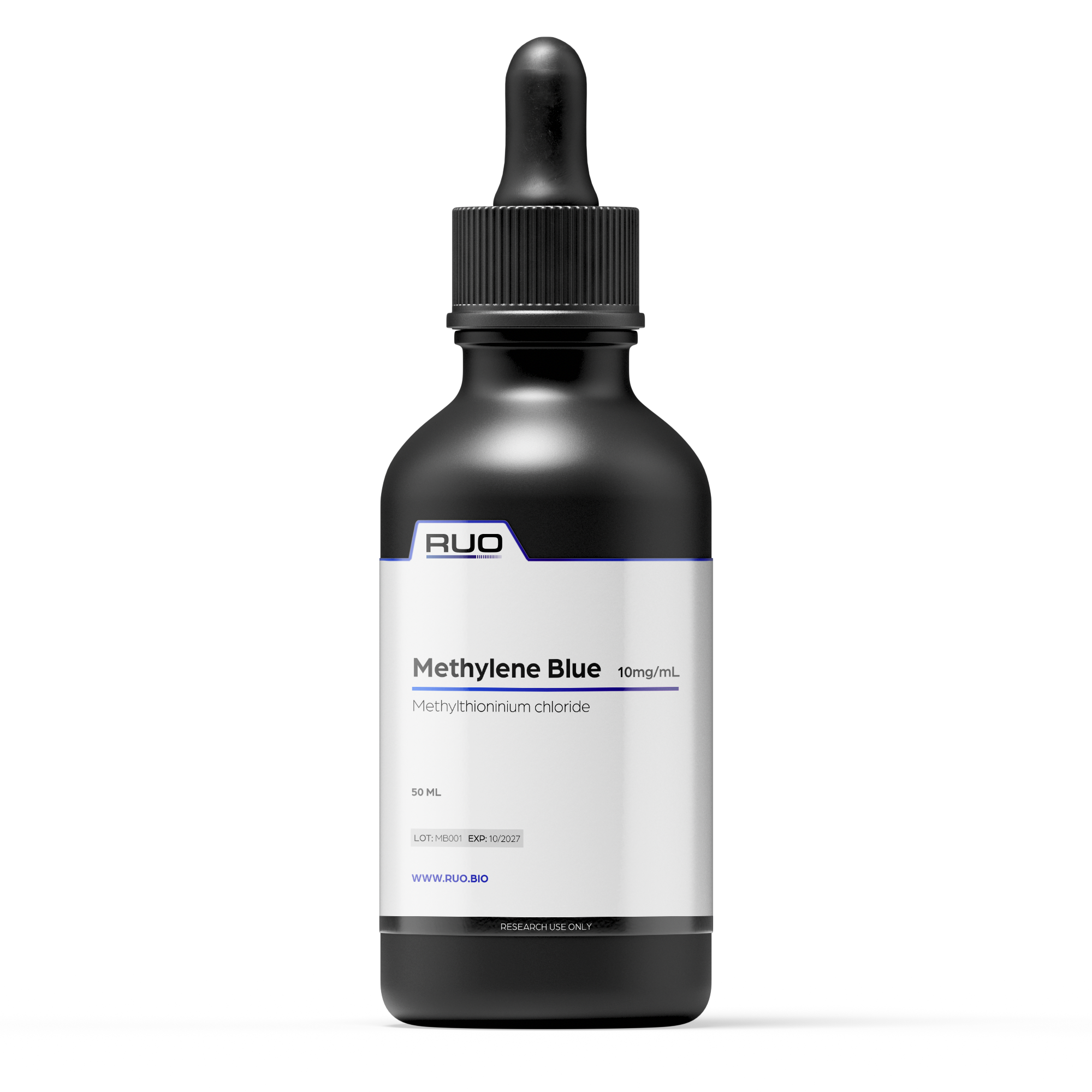
| RUOlowest | 10mg | $16.00 | $1.60/mg |
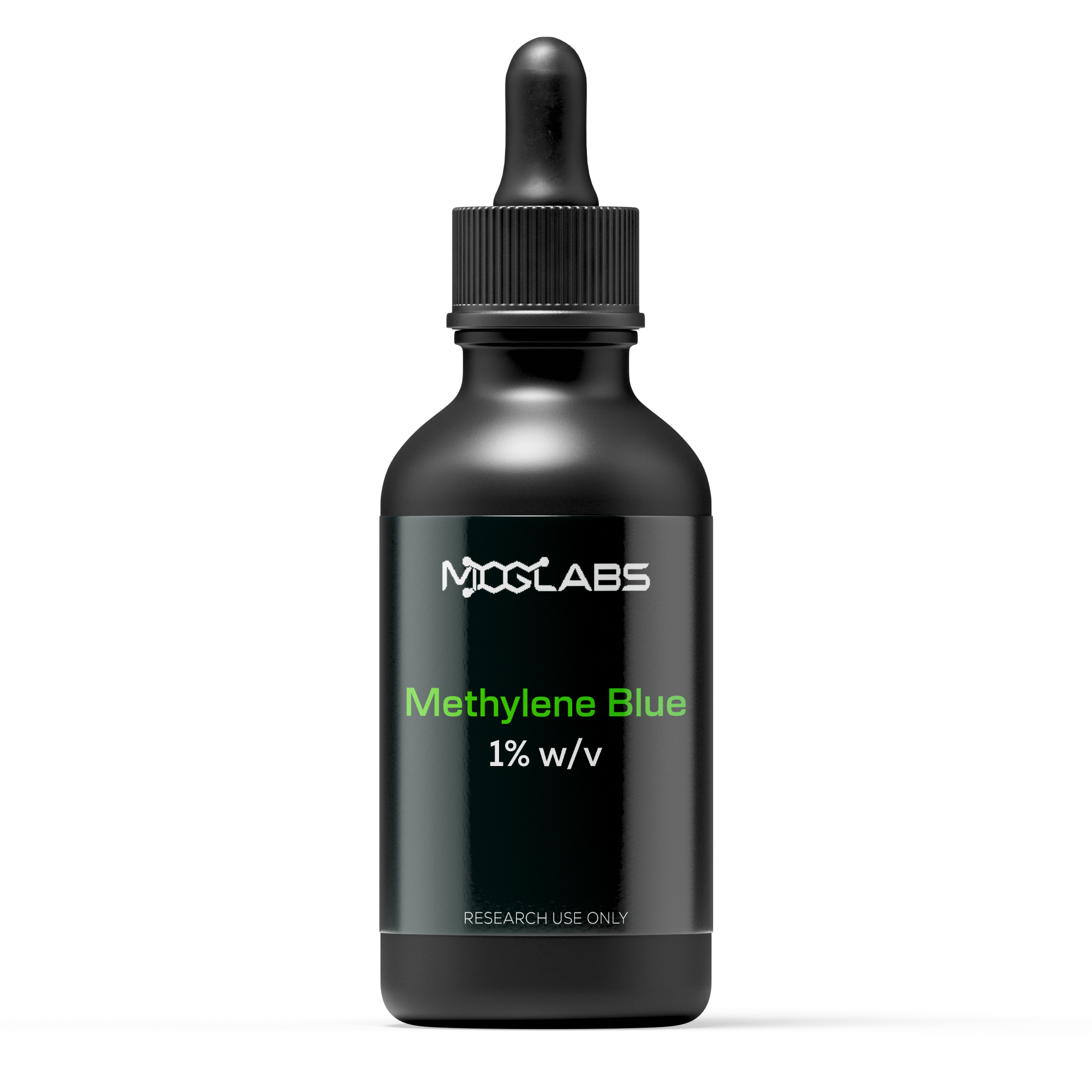
| Moglabs | 10mg | $18.00 | $1.80/mg |
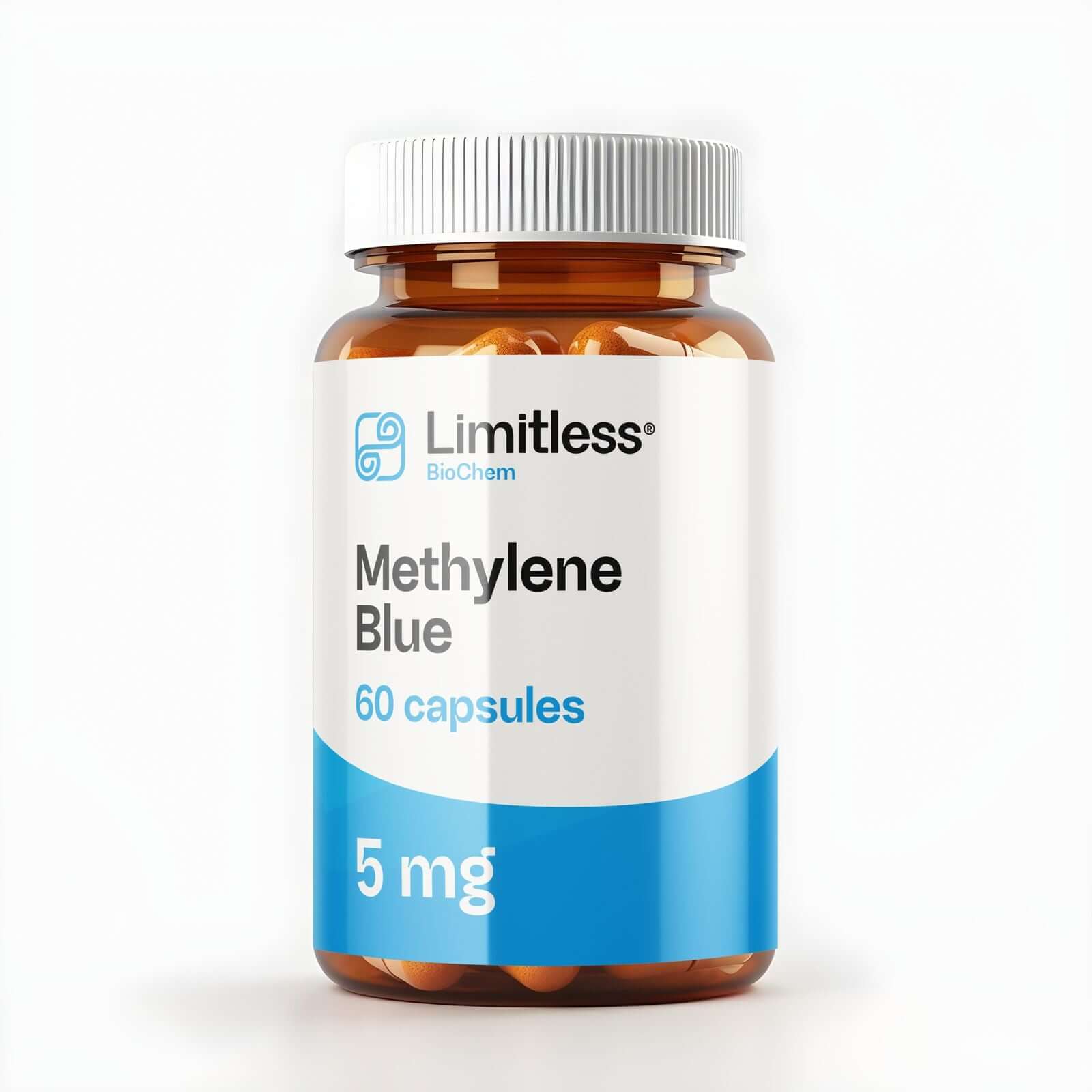
| Limitless Biochem | 5 mg | $64.20 | $12.84/mg |
RUPharma🌐
Methylene Blue
RUO
Methylene Blue
Moglabs
Methylene Blue
Kimera Chems
Methylene Blue
Limitless Biochem🌐
Methylene Blue
Research
- 1997first citedStimulation of respiration by methylene blue in rat liver mitochondria.
- 2016most active year3 papers
- 2025most recentEffect of intraoperative methylene blue on postoperative delirium in elderly patients undergoin…
- 1.Multimodal Randomized Functional MR Imaging of the Effects of Methylene Blue in the Human Brain.
- 2.Mitochondrial respiration as a target for neuroprotection and cognitive enhancement.
- 3.Protective role of methylene blue in Alzheimer's disease via mitochondria and cytochrome c oxidase.
- 4.Methylene blue modulates functional connectivity in the human brain.
- 5.Tau-directed approaches for the treatment of Alzheimer's disease: focus on leuco-methylthioninium.
- 6.Methemoglobinemia: pathogenesis, diagnosis, and management.
- 7.From Mitochondrial Function to Neuroprotection-an Emerging Role for Methylene Blue.
- 8.Neurometabolic mechanisms for memory enhancement and neuroprotection of methylene blue.
- 9.Stimulation of respiration by methylene blue in rat liver mitochondria.
- 10.Methylene blue does not bypass Complex III antimycin block in mouse brain mitochondria.
- 11.Molecular Mechanisms of the Neuroprotective Effect of Methylene Blue.
- 12.Methylene blue offers neuroprotection after intracerebral hemorrhage in rats through the PI3K/Akt/GSK3β signaling pathway.
27 listed here; entry last updated August 2026
Reviews
- Good for cutting phases
My energy levels stayed mostly the same, because I don’t have any deficiency but I could go even in a more aggressive cut on it. Usually my aggressive cutting calories where around 1700-1800 and I could go down to 1200 while feeling the same. Also in the first few hours I’ve had clearer vision and kinda felt like I could see colours better. While I was doing cardio being an 10km easy run my body did feel more sore than usual while running might also be because of the high deficit I was running but this is what I felt.
0 - solid, good for mood and energy
helped a lot with my energy levels and mood while on a steep deficit. i wasn't gassing out as much at the gym, but it did extend my stimulant (because it's a MAOi) and made it harder to sleep initially, but methylene blue has been great all around for me. amazing energy and brainfog boost
0
My notesprivate to this device
FAQ
Why does it turn urine blue?
Methylene blue is a dye, so a harmless blue-green tint to urine is a common and expected effect.
Why do low and high doses differ?
At low amounts it tends to act as an electron cycler supporting mitochondria and as an antioxidant, while higher amounts can have pro-oxidant effects.
Are there dangerous interactions?
Yes, and this is the one interaction to take seriously. Methylene blue is a potent reversible MAO-A inhibitor, and the dose used for cognition is already high enough to inhibit the enzyme, so combining it with an SSRI, SNRI, tricyclic or any other serotonergic drug risks serotonin toxicity. That combination should be avoided rather than managed.
Is pharmaceutical grade important?
Purity matters a great deal, since industrial-grade dye can contain contaminants not meant for human use.
Adverse effects
- Occasional nausea
Notes and cautions
- Harmless blue-green tint to the urine
- Risk of serotonin toxicity when combined with serotonergic antidepressants
- Effects reverse at high doses, so low amounts are used