
spec sheet13 rows
Paraxanthine is what caffeine mostly becomes. Around 70 to 80 percent of a caffeine dose is converted by the liver enzyme CYP1A2 into paraxanthine, so for most of the time a coffee is working, the compound doing the work is this one [14]. Selling it directly is an attempt to skip a step that varies enormously between people: CYP1A2 activity differs several-fold across individuals, which is a large part of why the same espresso is pleasant for one person and unpleasant for another. Human trials are small but real, and they point at improved cognition at modest doses with less of the sleep disruption caffeine causes [4][6]. It is the most credible caffeine alternative on this site, and the evidence base behind it is still thin and largely tied to the company selling it.
- The molecule caffeine turns into, roughly 75 percent of every dose
- Clean energy and sharp focus, straight to the active form
- Skips the CYP1A2 lottery that makes caffeine unpredictable
- Less sleep disruption than caffeine in a head to head crossover
- Beat caffeine on cognition after endurance exercise
- Well tolerated up to 300 mg in the human trials so far
- Jitteriness or restlessness
- Faster heart rate
- Difficulty sleeping if taken late in the day
Overview
Paraxanthine, chemically 1,7-dimethylxanthine, is the major human metabolite of caffeine. CYP1A2 demethylates caffeine into three products, and paraxanthine accounts for roughly 70 to 80 percent of them; the ratio of paraxanthine to caffeine in blood, saliva or urine is used as a standard biomarker of how fast an individual's CYP1A2 runs [14][15]. That variability is the practical argument for taking paraxanthine directly rather than caffeine: a slow metaboliser holds onto parent caffeine far longer, which is where much of the jitteriness and the disturbed sleep comes from.
Pharmacologically it is an adenosine receptor antagonist like its parent, and human work from 1995 comparing the two found paraxanthine produced sympathomimetic effects at least as strong as caffeine's [8]. Where it appears to differ is in what else it touches. It has been linked to nitric oxide signalling in the brain, a route caffeine does not share to the same degree [10], it raises intracellular calcium in skeletal muscle in a dose-dependent way [11], and it promotes cysteine uptake for glutathione synthesis [13].
The human trial record is small but not absent. A double-blind placebo-controlled crossover trial found dose-dependent improvements in cognitive function [4]; a later trial found greater cognitive improvement than caffeine after a 10 km run [5]; and a randomized crossover comparison against caffeine on rowing performance also measured sleep quality, which is the outcome that matters most for a caffeine substitute [6]. In rats it enhanced memory and neuroplasticity measures more than caffeine did [9]. A dedicated safety review compared it against caffeine and did not identify a worse profile [7].

- When coffee is working, caffeine mostly is not. Around 70 to 80 percent of a caffeine dose is converted to paraxanthine, so for much of the duration the compound acting is the metabolite rather than the thing that was drunk [14].
- The paraxanthine-to-caffeine ratio is a standard laboratory test, used to phenotype how fast an individual's CYP1A2 enzyme runs; it can be read from plasma, saliva, urine or even hair [15][16].
- It is not purely a stimulant mechanism. Paraxanthine promotes cysteine uptake for glutathione synthesis, which is an antioxidant pathway with no obvious relationship to adenosine blockade [13].
Mechanism
Paraxanthine antagonises receptors, which is the same primary mechanism as caffeine and the reason the subjective effect is recognisably similar. Direct human comparison found its sympathomimetic effects at least equal to caffeine's at comparable exposure, so it is not a gentler drug in the sense of being weaker [8].
The more useful difference is upstream of pharmacology. Caffeine is a in practical terms: CYP1A2 converts most of it to paraxanthine, and CYP1A2 activity varies several-fold between people for genetic and environmental reasons, which is why the paraxanthine-to-caffeine ratio is used as a phenotyping marker for that enzyme [14][15]. Taking paraxanthine directly removes that conversion step, and with it the pool of unconverted parent caffeine that a slow metaboliser carries for hours.
Several secondary actions have been described that caffeine does not obviously share. Paraxanthine has been connected to neurotransmission in the brain [10], it increases intracellular calcium in skeletal muscle dose-dependently, a plausible route to an effect on muscle contractility [11], and it promotes cysteine uptake for glutathione synthesis, which is an antioxidant rather than a stimulant mechanism [13]. In mice, supplementation increased muscle mass, strength and endurance [12]. How much any of this contributes at human supplement doses is not established.
receptor fingerprint
receptorsantagonist
CYP1A2 (as substrate)the product of caffeine demethylation; taking it directly bypasses several-fold personal variation in conversion
PDE9inhibits
/ raises
neurotransmissionmodulates, a route not shared with caffeine to the same degree
Skeletal muscle calciumraises intracellular calcium dose-dependently
increases
Glutathione synthesispromotes cysteine uptake
Dosingtypical ranges, not medical advice
interested in protocols and clinical dosages? make an account to see them! ^_^
Safetyrisks and cautions, not medical advice
Paraxanthine is not a novel molecule to the body; anyone who drinks coffee already produces it in quantity, which is a genuinely reassuring starting point and not the whole answer, since the exposure pattern differs from the one produced by drinking caffeine.
A dedicated safety assessment comparing paraxanthine against caffeine did not find a worse profile, and the older methylxanthine toxicology literature places it alongside its relatives rather than apart from them [7][17]. In trials the reported effects are the familiar stimulant ones at the upper end: raised heart rate, restlessness, and the possibility of disturbed sleep if taken late, though a crossover comparison that measured sleep quality directly is the reason it is discussed as the gentler option [6].
The caveats are about coverage rather than signal. Trials are short, sample sizes are small, and there is no long-term human safety data at supplement doses. Anyone sensitive to stimulants should treat it as a stimulant, because human comparison found its sympathomimetic effects at least as strong as caffeine's [8]. It stacks with every other source of caffeine in a day rather than replacing them automatically. Pregnancy is a reasonable reason to avoid it; paraxanthine crosses into human milk and maternal levels have been studied in relation to pregnancy outcomes, which is a signal to defer to a clinician rather than a demonstrated harm [18][19].
Interactionsdocumented pairs only, not exhaustive
Paraxanthine is the primary demethylation metabolite of caffeine and is itself cleared largely by hepatic CYP1A2; strong CYP1A2 inhibitors such as fluvoxamine, ciprofloxacin and oral contraceptives are documented to slow the clearance of caffeine and its dimethylxanthine metabolites, so co-exposure can be expected to raise and prolong paraxanthine levels. As a nonselective adenosine A1/A2A receptor antagonist that shares caffeine's pharmacology, additive stimulant, pressor and diuretic effects with caffeine or other methylxanthines are pharmacologically expected rather than benign.
Because caffeine and paraxanthine compete for the same CYP1A2 pathway, concurrent caffeine intake can slow paraxanthine metabolism. Any documented xanthine interaction that lowers seizure threshold or antagonizes adenosine (for example with adenosine used diagnostically) is a mechanistic concern shared by this metabolite. This is research information, not medical advice.
Checking a whole stack? Run it through interactions + stacks.
History
Paraxanthine spent most of its scientific life as an analyte rather than an ingredient. It was characterised as the principal metabolite of caffeine during the mid-century work on methylxanthine metabolism, and for decades the interest in measuring it was diagnostic: the ratio of paraxanthine to caffeine in plasma, saliva, urine or hair is a convenient readout of CYP1A2 activity, and assays for that purpose have been refined repeatedly [15][14][16].
Its pharmacology was studied in that period too, but as a way of understanding caffeine rather than as a candidate in its own right. The 1995 human comparison of sympathomimetic effects [8], the 2000 finding that it raises intracellular calcium in skeletal muscle [11] and the work connecting it to nitric oxide neurotransmission [10] all belong to that tradition.
The shift to a supplement is recent. Paraxanthine was brought to market as a branded ingredient in the early 2020s, and the trial programme that followed is the modern evidence base: a dose-response crossover trial on cognitive function [4], preclinical work on muscle mass and endurance [12], a comparison against caffeine on cognition after endurance exercise [5], and a randomized crossover against caffeine measuring both performance and sleep [6]. A dedicated safety comparison was published alongside [7].
Reputation
Paraxanthine arrived with an unusually good story, and the story is mostly true, which is rarer in this category than it should be. The claim is that it is caffeine without the tail: same alertness, less jitter, less damage to sleep. The mechanism behind that claim is real and checkable, because caffeine genuinely is converted to paraxanthine by an enzyme whose speed varies several-fold between people [14].
The reasonable scepticism is about who produced the evidence rather than about whether the evidence exists. The human trials are small, short, and clustered around the group that developed the branded ingredient, which is the normal pattern for a new supplement and a reason to hold the effect sizes loosely rather than to dismiss them. The claims that travel furthest ahead of the data are the muscle ones; those results are from mice [12], and they are quoted in marketing as though they were human findings.
Among readers who arrive here from a stimulant-alternatives list, the practical read is straightforward. If caffeine already works and does not cost sleep, the case for paying more is weak. If caffeine reliably produces anxiety or a ruined night, the pharmacokinetic argument for switching is the strongest one available in this aisle.
Subjective profileweighing the evidence above
Worth trying if caffeine works for you but the jitters and anxiety do not; trials so far are small but favorable and it was well tolerated up to 300 mg. It is still a stimulant, so late doses wreck sleep, and the long-term data simply is not there yet.
Where to buy
Suppliers
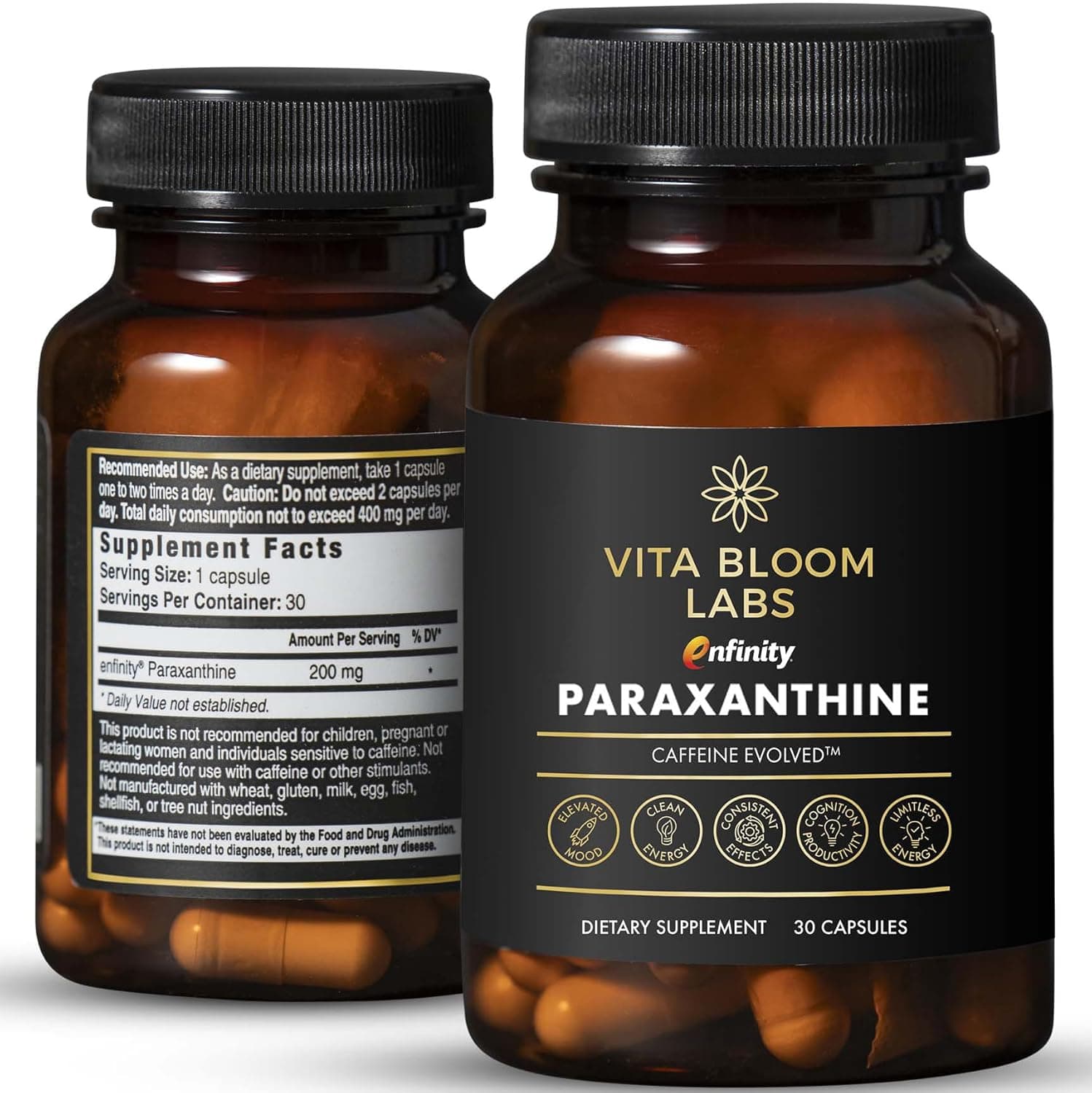
Vendors carrying Paraxanthine, with live product details and codes. Links are affiliate links that support the wiki at no cost to you.
Amazon
Paraxanthine
Research
- 1988first citedMethylxanthines: toxicity to humans. 3. Theobromine, paraxanthine and the combined effects of m…
- 2021controlled trialDose-Response of Paraxanthine on Cognitive Function: A Double Blind, Placebo Controlled, Crosso…
- 2026most recentComparative effects of caffeine and paraxanthine on rowing performance and sleep quality: a ran…
- 1.Psychostimulant pharmacological profile of paraxanthine, the main metabolite of caffeine in humans
- 2.Paraxanthine, the primary metabolite of caffeine, provides protection against dopaminergic cell death via stimulation of ryanodine receptor channels
- 3.Antagonism of adenosine receptors by caffeine and caffeine metabolites in equine forebrain tissues
- 4.Dose-Response of Paraxanthine on Cognitive Function: A Double Blind, Placebo Controlled, Crossover Trial
- 5.Paraxanthine provides greater improvement in cognitive function than caffeine after performing a 10-km run
- 6.Comparative effects of caffeine and paraxanthine on rowing performance and sleep quality: a randomized crossover study
- 7.Paraxanthine safety and comparison to caffeine
- 8.Sympathomimetic effects of paraxanthine and caffeine in humans
- 9.Paraxanthine enhances memory and neuroplasticity more than caffeine in rats
- 10.Paraxanthine: Connecting Caffeine to Nitric Oxide Neurotransmission
- 11.Paraxanthine, a caffeine metabolite, dose dependently increases [Ca(2+)](i) in skeletal muscle
- 12.Paraxanthine Supplementation Increases Muscle Mass, Strength, and Endurance in Mice
19 listed here; entry last updated August 2026
Reviews
My notesprivate to this device
FAQ
What is paraxanthine?
It is the main metabolite your body makes from caffeine, and it shares many of caffeine's stimulant effects.
Why might it feel smoother than caffeine?
Some users and studies report similar energy and focus with less jitter and anxiety.
Why avoid it late in the day?
Like other stimulants it can interfere with sleep if taken too close to bedtime.
Is it the same as caffeine?
No, it is a distinct molecule, though it is closely related and produced from caffeine metabolism.
Is this just an expensive way to buy caffeine?
Not quite, and the difference is pharmacokinetic rather than marketing. Roughly 70 to 80 percent of caffeine is converted by CYP1A2 into paraxanthine, and CYP1A2 activity varies several-fold between people, which is why the paraxanthine-to-caffeine ratio is used as a test of that enzyme [14]. Taking paraxanthine directly skips the conversion and the pool of unconverted caffeine a slow metaboliser carries for hours. Whether that is worth the price depends entirely on whether caffeine currently causes you problems.
Will it keep me awake at night the way coffee does?
Less, on the evidence available. A randomized crossover comparison against caffeine measured sleep quality alongside performance, and that outcome is the main reason paraxanthine is discussed as the gentler option [6]. It is still a stimulant with sympathomimetic effects at least as strong as caffeine's at comparable exposure [8], so taking it in the evening gives back the advantage it was chosen for.
Does it actually do anything for focus, or is that marketing?
There is a real trial. A double-blind, placebo-controlled crossover study found dose-dependent improvement in cognitive function [4], and a separate trial found greater cognitive improvement than caffeine following a 10 km run [5]. Both are small, short and connected to the group that developed the ingredient, which is a reason to hold the effect sizes loosely rather than to dismiss the finding.
Will it build muscle?
That claim is being carried further than its evidence. Paraxanthine increased muscle mass, strength and endurance in mice [12], and it raises intracellular calcium in skeletal muscle in a dose-dependent way, which is a plausible mechanism [11]. Neither is a human result, and marketing frequently presents the mouse data as though it were one.
Is it safe?
The starting point is favourable: anyone who drinks coffee already produces it in quantity, and a dedicated safety assessment comparing it against caffeine did not find a worse profile [7]. The limits are about coverage rather than warning signs; trials are short, samples are small, and there is no long-term human data. Treat it as a stimulant, count it toward the day's total, and defer to a clinician during pregnancy [18].
Limitations of the evidence
- The human trials are small, short and clustered around the group that developed the branded ingredient
- The muscle mass, strength and endurance results are from mice, and are frequently quoted as though they were human findings [12]
- No long-term human safety or efficacy data exists at supplement doses
- Human comparison found sympathomimetic effects at least as strong as caffeine's, so it is not a weaker stimulant [8]
Adverse effects
- Jitteriness or restlessness
- Faster heart rate
- Difficulty sleeping if taken late in the day
- Headache, similar to caffeine
- Long-term human safety data remain limited
Notes and cautions
- Counts toward the day's total stimulant load rather than replacing other caffeine automatically
- Sold as a branded ingredient at a substantial premium over caffeine