
spec sheet11 rows
Theobromine is a bitter methylxanthine alkaloid and the principal stimulant compound of the cacao plant (Theobroma cacao), giving chocolate and cocoa much of their mild pharmacological activity. Chemically it is 3,7-dimethylxanthine, an isomer of theophylline and a close relative of caffeine, and it also forms in the human body as a major breakdown product of caffeine [1][3]. It has gentle effects on the heart, blood vessels, airways, and kidneys, and unlike caffeine produces little central-nervous-system stimulation; it is well tolerated in people but is toxic to dogs and some other animals [1].
- the smooth stimulant hiding inside chocolate
- a lift without the jitter caffeine brings
- opens blood vessels for better blood flow
- longer acting and gentler than caffeine
- the perfect partner to soften a caffeine dose
- well tolerated in people at normal intakes
- Sweating, trembling, or headache at very high intake
- Toxic to dogs and other pets
Overview
Theobromine is one of the methylxanthines, a group of purine-derived alkaloids that also includes caffeine and theophylline. Its molecular formula is C7H8N4O2, and its structure, 3,7-dimethylxanthine, differs from caffeine by a single methyl group. The compound takes its name from Theobroma, the genus of the cacao tree, a word built from Greek roots meaning food of the gods, though the chemical name itself contains no bromine. It is a white, bitter-tasting solid with limited solubility in water.
Theobromine is found most abundantly in cocoa and chocolate, with dark chocolate containing considerably more than milk chocolate, and it is also present in tea, kola nut, guarana, and yerba mate [1]. Besides being consumed directly, it is generated inside the body: the liver converts a substantial share of ingested caffeine into theobromine, so it circulates as one of caffeine's main metabolites [3]. After intake it reaches peak blood levels within a few hours and is cleared more slowly than caffeine, giving it a longer duration of action.
Pharmacologically, theobromine acts as a mild stimulant, a vasodilator that widens blood vessels, a diuretic, and a relaxant of smooth muscle, including in the airways. Compared with caffeine, its effects on the central nervous system are weak, so it causes less jitteriness while still contributing to the pleasant, mildly stimulating experience of cocoa [1]. It has been studied as a cough suppressant: in a randomized, placebo-controlled human study, theobromine reduced capsaicin-induced coughing without adverse effects, and laboratory work traced this to a direct calming of sensory nerve activity in the airways [2]. Researchers have also examined possible roles in dental health, blood pressure, and mood, though many proposed benefits remain under investigation [1].
A well-known feature of theobromine is its danger to animals. Dogs, cats, and some other species metabolize it far more slowly than humans, so the amounts in chocolate can build up to toxic and even lethal levels, which is why chocolate is hazardous to pets. In humans the compound is generally safe, with fewer unwanted effects than caffeine, although very high intakes can cause sweating, trembling, and headache [1]. Theobromine is not a controlled substance; it occurs naturally in common foods and is also used as a flavor component and studied as a starting point for medicines such as cough treatments [2].

Mechanism
Theobromine's actions rest on two main molecular mechanisms shared across the methylxanthines. First, it blocks receptors: adenosine normally promotes drowsiness, dilates certain vessels, and dampens neural activity, and by antagonizing its receptors theobromine produces mild stimulation and cardiovascular effects, though its comparatively weak entry into and action within the brain leave it a much gentler central stimulant than caffeine [1][3]. Second, it inhibits phosphodiesterase enzymes, which break down the intracellular messenger cyclic AMP; slowing this breakdown raises cyclic AMP levels and contributes to relaxation of smooth muscle, such as widening of the airways and blood vessels [1].
Through these pathways theobromine acts as a bronchodilator, a vasodilator, a mild cardiac stimulant, and a diuretic. Its antitussive, or cough-suppressing, effect appears to work by a different, peripheral route: experiments showed theobromine directly inhibits activation and depolarization of airway sensory nerves in response to irritants, reducing the reflex that triggers coughing rather than acting centrally like opioid cough medicines [2].
Because much of the theobromine in the body derives from caffeine metabolism, some of the lingering effects felt after caffeine intake are attributed to theobromine, which persists longer in the circulation [3]. The stark difference in how quickly humans and animals such as dogs clear the compound explains why doses harmless to people can poison pets [1].
receptor fingerprint
receptorsantagonist
Vascular smooth musclerelaxes
Bronchial smooth musclerelaxes
Phosphodiesteraseinhibits
Dosingtypical ranges, not medical advice
interested in protocols and clinical dosages? make an account to see them! ^_^
Safetyrisks and cautions, not medical advice
Well tolerated at dietary doses, with possible headache, nausea, or increased urination at higher amounts. It can affect heart rate and is famously toxic to dogs and cats because they metabolize it slowly. Very high doses could cause sleep disruption or palpitations in sensitive people.
Subjective profileweighing the evidence above
An underrated smooth stimulant. It earns its place mostly for softening caffeine rather than as a standalone, and it does that job well.
Where to buy
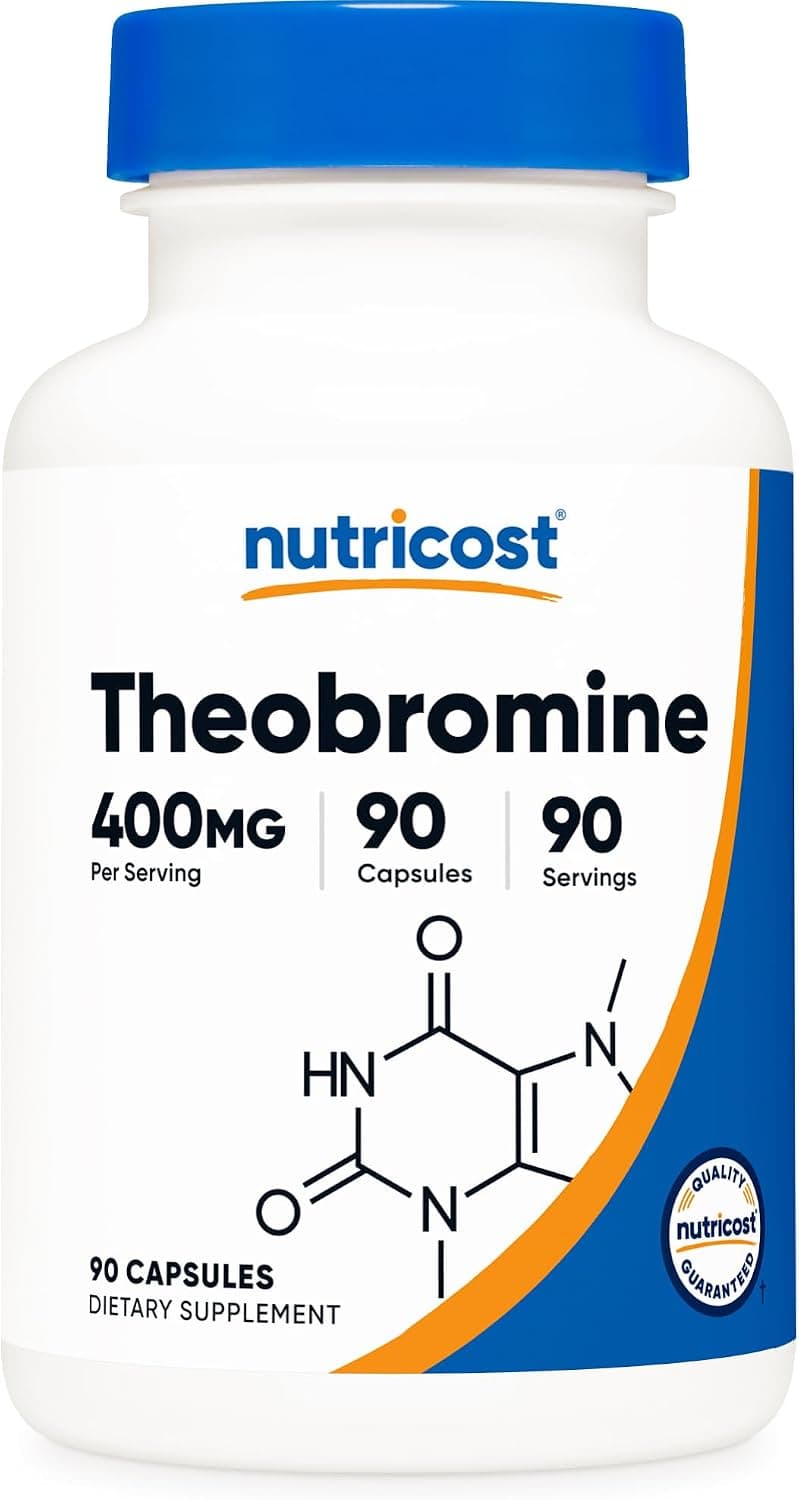
Suppliers
Vendors carrying Theobromine, with live product details and codes. Links are affiliate links that support the wiki at no cost to you.
Amazon
Theobromine
Research
- 2005first citedTheobromine inhibits sensory nerve activation and cough.
- 2024most recentThe complexity of coffee and its impact on metabolism.
- 1.The relevance of theobromine for the beneficial effects of cocoa consumption.
- 2.Theobromine inhibits sensory nerve activation and cough.
- 3.The complexity of coffee and its impact on metabolism.
3 listed here; entry last updated August 2026
Reviews
My notesprivate to this device
FAQ
Is theobromine like caffeine?
Chemically yes, but it is milder and longer-acting with less central stimulation and jitter.
Is this what makes chocolate feel good?
It is a big part of it, alongside a small amount of caffeine and other compounds in cacao.
Why is chocolate bad for dogs?
Dogs metabolize theobromine very slowly, so it builds up to toxic levels; the same goes for cats.
Can I stack it with caffeine?
Yes, many people find it smooths out caffeine's edge and extends the effect.
Will it keep me awake?
It is gentler than caffeine, but sensitive people should still avoid large doses late in the day.
Adverse effects
- Sweating, trembling, or headache at very high intake
- Toxic to dogs and other pets
Notes and cautions
- Mild stimulation
- Diuretic effect with increased urination
- Longer-lasting effect than caffeine