
spec sheet12 rows
Tesofensine is a triple monoamine reuptake inhibitor, originally investigated for Parkinson's and Alzheimer's disease, that produced some of the largest weight losses reported for an appetite-suppressing drug. By simultaneously blocking the reuptake of dopamine, noradrenaline, and serotonin it curbs hunger and increases satiety, and it additionally silences appetite-driving GABAergic neurons in the hypothalamus. In a phase 2 obesity trial it produced weight loss roughly twice that of the obesity medications approved at the time, though that trial has carried an expression of concern over its adverse-effect reporting since 2013; it remains investigational, with cardiovascular effects among the safety considerations.
- Powerful appetite suppression
- Produced some of the largest weight losses reported
- Real fullness instead of constant hunger
- Triple threat: dopamine, noradrenaline, serotonin
- Sharpens focus and motivation
- Silences appetite-driving neurons in the hypothalamus
- Commonly causes dry mouth, insomnia, and constipation
- Can raise heart rate, so cardiovascular monitoring is relevant
- Stimulant-like effects may include restlessness or anxiety
Overview
Tesofensine, originally coded NS2330, is a synthetic triple monoamine reuptake inhibitor, meaning it blocks the presynaptic reuptake of three neurotransmitters at once: dopamine, noradrenaline (norepinephrine), and serotonin [1][3]. Chemically it belongs to the phenyltropane family and is structurally related to other tropane reuptake inhibitors. It was first developed by the Danish company NeuroSearch as a candidate treatment for neurodegenerative conditions, including Alzheimer's disease and Parkinson's disease [3].
When those neurological programs did not succeed, an unexpected observation redirected its development: patients tended to lose weight. This prompted repurposing of tesofensine as an anti-obesity agent [7]. Its pivotal evaluation was a phase 2, randomized, double-blind, placebo-controlled trial in obese patients conducted at Danish obesity centres, which reported striking dose-dependent weight loss and generated wide interest in the compound [1].
Tesofensine subsequently advanced toward phase 3 development and has been widely discussed in reviews of the obesity drug pipeline as one of the more potent centrally acting candidates [6][7]. It has also been formulated in combination with the beta-blocker metoprolol, under the name Tesomet, in an effort to blunt its cardiovascular effects, and this combination has been studied in specialized conditions such as hypothalamic obesity [5]. As of the present, tesofensine is not approved for general use in the United States or Europe and is taken orally in clinical studies; much of the detailed mechanistic work continues in animal models [4][6].
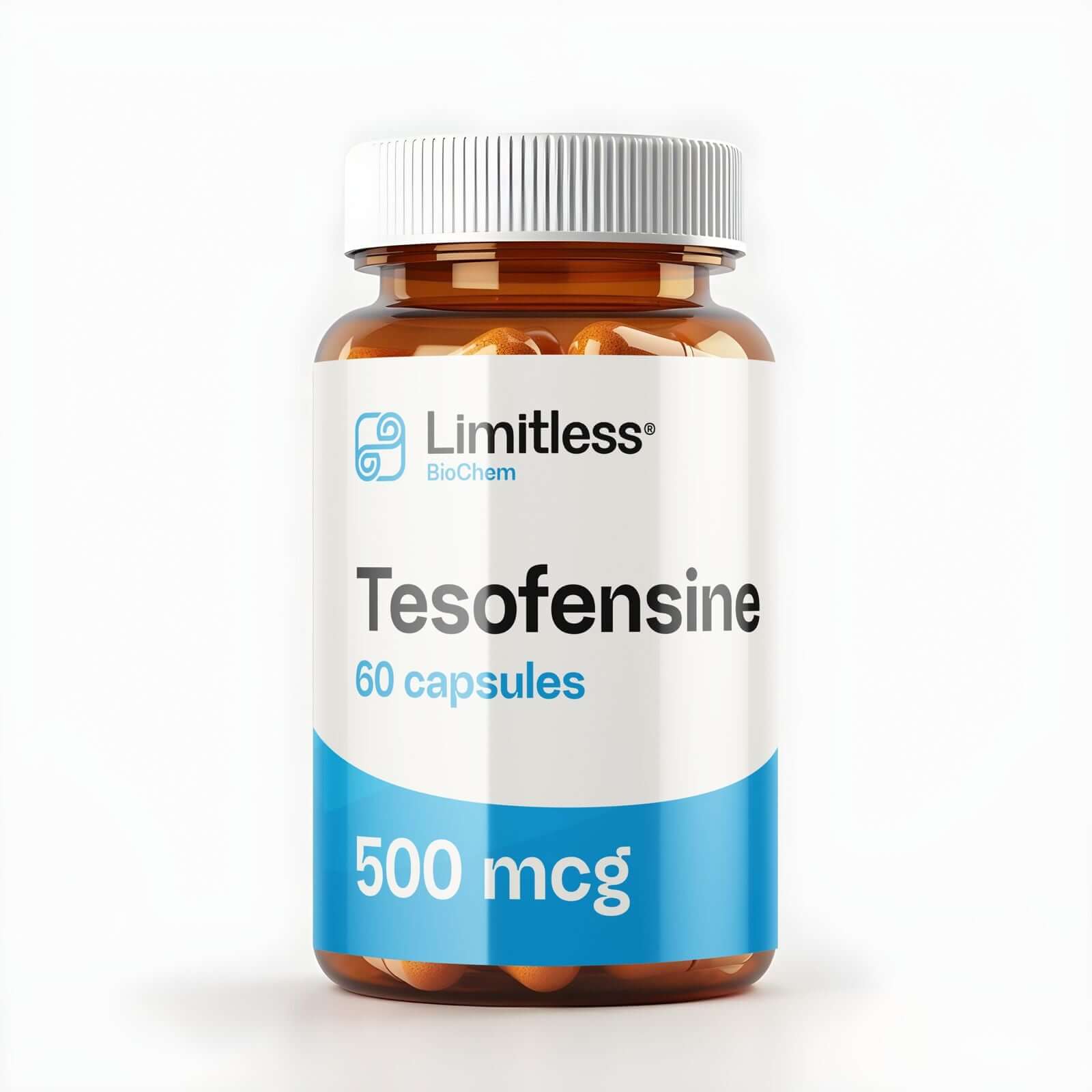
- Tesofensine was not designed as a diet drug at all; it emerged from failed trials for Parkinson's and Alzheimer's disease, where its unexpected weight-loss effect redirected the entire program.
- Human PET imaging measured striatal dopamine transporter occupancy of up to about 77 percent at higher doses, and the authors linked this enhanced dopamine signaling directly to the weight loss.
Mechanism
Tesofensine works in the brain as a triple monoamine . By blocking the transporters that clear , noradrenaline, and from the cleft, it raises the synaptic concentration and prolongs the signaling of all three neurotransmitters simultaneously [1][3]. A positron emission tomography study in humans quantified this action at the , showing a dose-dependent striatal dopamine transporter occupancy that ranged from about 18 percent to 77 percent, with a maximum achievable occupancy near 80 percent; the authors concluded that enhanced dopaminergic signaling contributes materially to the weight loss [3]. Raising and noradrenaline further amplifies the appetite-suppressing, energy-mobilizing effect [1].
The behavioral consequence is a powerful reduction in hunger and an increase in satiety. In the pivotal phase 2 trial, tesofensine increased a composite satiety score in a dose-dependent way, and this early enhancement of satiety correlated with the weight loss that followed [2]. Newer preclinical work has refined the picture: tesofensine inhibits a subset of neurons in the lateral that normally promote feeding, produces greater weight loss in obese than in lean animals, and, notably, blocks the body-weight rebound that often follows weight loss [4].
The efficacy is what set tesofensine apart. In the phase 2 randomized controlled trial, diet plus placebo produced about 2 percent weight loss over 24 weeks, whereas the middle and higher doses of tesofensine produced mean losses of roughly 9 percent and 11 percent, respectively, a magnitude the investigators noted was about twice that of the obesity drugs approved at the time [1]. That trial has carried an expression of concern from the Lancet since 2013, still in force, raised over the reporting of its adverse effects; the weight-loss figures above are its own, and the safety picture it describes is the part the notice puts in question [1]. In a separate trial in hypothalamic obesity, the tesofensine and metoprolol combination produced an additional weight reduction of about 6 percent versus placebo [5]. These monoaminergic actions also underlie the drug's characteristic side effects, which include dry mouth, insomnia, and an increase in heart rate; the same phase 2 trial reported that its middle dose raised heart rate by about 7 beats per minute without a significant rise in blood pressure [1].
receptor fingerprint
/ / transporterstriple reuptake inhibitor
Satiety / energy expenditureraises
Hypothalamic neuronssilences
Dosingtypical ranges, not medical advice
interested in protocols and clinical dosages? make an account to see them! ^_^
Safetyrisks and cautions, not medical advice
Tesofensine is investigational and never made it to market, so there is no formal safety sign-off. The main concerns are cardiovascular and stimulant-like: it raises heart rate (about 7 bpm at 0.5 mg) and can bump blood pressure, so it is a poor fit for anyone with heart disease, arrhythmia, or uncontrolled hypertension, and keeping an eye on both is smart. Dry mouth, insomnia, nausea, constipation, and headache are the usual complaints, mostly dose-dependent and easing over the first few weeks. Because it also raises serotonin, do not combine it with MAOIs or other serotonergic drugs given the serotonin syndrome risk, and watch for mood changes or agitation. The long half-life means side effects linger if you overshoot, which is the whole reason to start low. This is educational, not medical advice.
Interactionsdocumented pairs only, not exhaustive
Tesofensine inhibits the reuptake of serotonin, noradrenaline and dopamine, so combining it with monoamine oxidase inhibitors is a recognized pharmacological contraindication; the pairing risks hypertensive crisis and serotonin syndrome, and a washout on the order of two weeks is the standard precaution for agents of this class. Co-administration with other serotonergic drugs such as SSRIs, SNRIs, triptans or tramadol carries a theoretical serotonin syndrome risk from additive serotonergic tone.
Because trials consistently showed dose-dependent rises in heart rate and blood pressure, combining it with sympathomimetic stimulants or decongestants would be expected to be additive on cardiovascular load, and it may blunt the effect of antihypertensive medication. Clinical-trial protocols accordingly excluded MAOIs and other centrally acting monoaminergic agents. This is research information, not medical advice.
Checking a whole stack? Run it through interactions + stacks.
History
Tesofensine was developed by the Danish company NeuroSearch and was originally investigated as a treatment for neurodegenerative conditions, including Parkinson's and Alzheimer's disease, on the basis of its triple monoamine reuptake inhibition. When those trials produced disappointing neurological results but conspicuous weight loss, its development pivoted toward obesity. In a widely noted phase II trial reported in 2010, the higher doses produced mean weight losses of roughly nine to eleven percent over twenty-four weeks, about twice that of obesity drugs approved at the time. It has continued to be studied for obesity and related conditions such as hypothalamic obesity, but it remains investigational and unapproved, with cardiovascular effects among the principal safety considerations.
Reputation
Tesofensine holds a notable place in obesity pharmacology because its phase II results were among the largest weight losses reported for an appetite-suppressing drug, a headline figure of roughly double the efficacy of contemporaneously approved medications that still draws attention. Its mechanism is well characterized, with human PET imaging quantifying its dopamine-transporter occupancy and newer preclinical work identifying its silencing of appetite-driving hypothalamic neurons and its ability to blunt post-diet weight rebound. The balanced view keeps its impressive efficacy in context: it is a potent triple monoamine reuptake inhibitor whose stimulant-like profile raises heart rate and can cause dry mouth and insomnia, and it has not completed the trials needed for approval. It remains one of the more intriguing centrally acting weight-loss candidates.
Subjective profileweighing the evidence above
The weight-loss numbers are among the largest ever recorded for an appetite suppressant, and it never reached market, which is the whole problem: no approval, no formal safety sign-off, and a stimulant profile that raises heart rate and blood pressure. A bad fit for anyone with heart disease.
Where to buy

1 other outlet
Suppliers
Vendors carrying Tesofensine, with live product details and codes. Links are affiliate links that support the wiki at no cost to you.
Kimera Chems
Tesofensine
Limitless Biochem🌐
Tesofensine
Research
- 2007first citedExpression of brain derived neurotrophic factor, activity-regulated cytoskeleton protein mRNA,…
- 2008most active year4 papers
- 2026most recentInvestigations Into the Metabolism and Elimination of Tesofensine in Human Urine.
- 1.Effect of tesofensine on bodyweight loss, body composition, and quality of life in obese patients: a randomised, double-blind, placebo-controlled trialexpression of concernexpression of concern, Lancet 2013 (PMID 23561987); still in force, and the concern is under-reported adverse effects
- 2.The effect of tesofensine on appetite sensations
- 3.Tesofensine, a novel triple monoamine re-uptake inhibitor with anti-obesity effects: dopamine transporter occupancy as measured by PET
- 4.Tesofensine, a novel antiobesity drug, silences GABAergic hypothalamic neurons
- 5.Randomized controlled trial of Tesomet for weight loss in hypothalamic obesity
- 6.Centrally Acting Agents for Obesity: Past, Present, and Future
- 7.Future Pharmacotherapy for Obesity: New Anti-obesity Drugs on the Horizon
- 8.Tesofensine, a novel triple monoamine reuptake inhibitor, induces appetite suppression by indirect stimulation of alpha1 adrenoceptor and dopamine D1 receptor pathways in the diet-induced obese rat.
- 9.The novel triple monoamine reuptake inhibitor tesofensine induces sustained weight loss and improves glycemic control in the diet-induced obese rat: comparison to sibutramine and rimonabant.
- 10.Tesofensine induces appetite suppression and weight loss with reversal of low forebrain dopamine levels in the diet-induced obese rat.
- 11.Triple monoamine inhibitor tesofensine decreases food intake, body weight, and striatal dopamine D2/D3 receptor availability in diet-induced obese rats.
- 12.Anti-hypertensive treatment preserves appetite suppression while preventing cardiovascular adverse effects of tesofensine in rats.
27 listed here; entry last updated August 2026
Reviews
My notesprivate to this device
FAQ
How does tesofensine work?
It inhibits the reuptake of dopamine, norepinephrine, and serotonin, keeping these neurotransmitters active longer.
What was it studied for?
It was investigated primarily for weight loss and showed notable appetite-suppressing effects.
Why is its half-life so long?
It clears slowly from the body, so effects can build up over days of consistent use.
Does it affect sleep?
Because it is stimulating, taking it late in the day can interfere with sleep for many people.
Adverse effects
- Commonly causes dry mouth, insomnia, and constipation
- Can raise heart rate, so cardiovascular monitoring is relevant
- Stimulant-like effects may include restlessness or anxiety
- Mood or sleep changes are possible given its monoamine activity
Notes and cautions
- Not approved for general use in the US or Europe; long-term safety is not fully established