
spec sheet11 rows
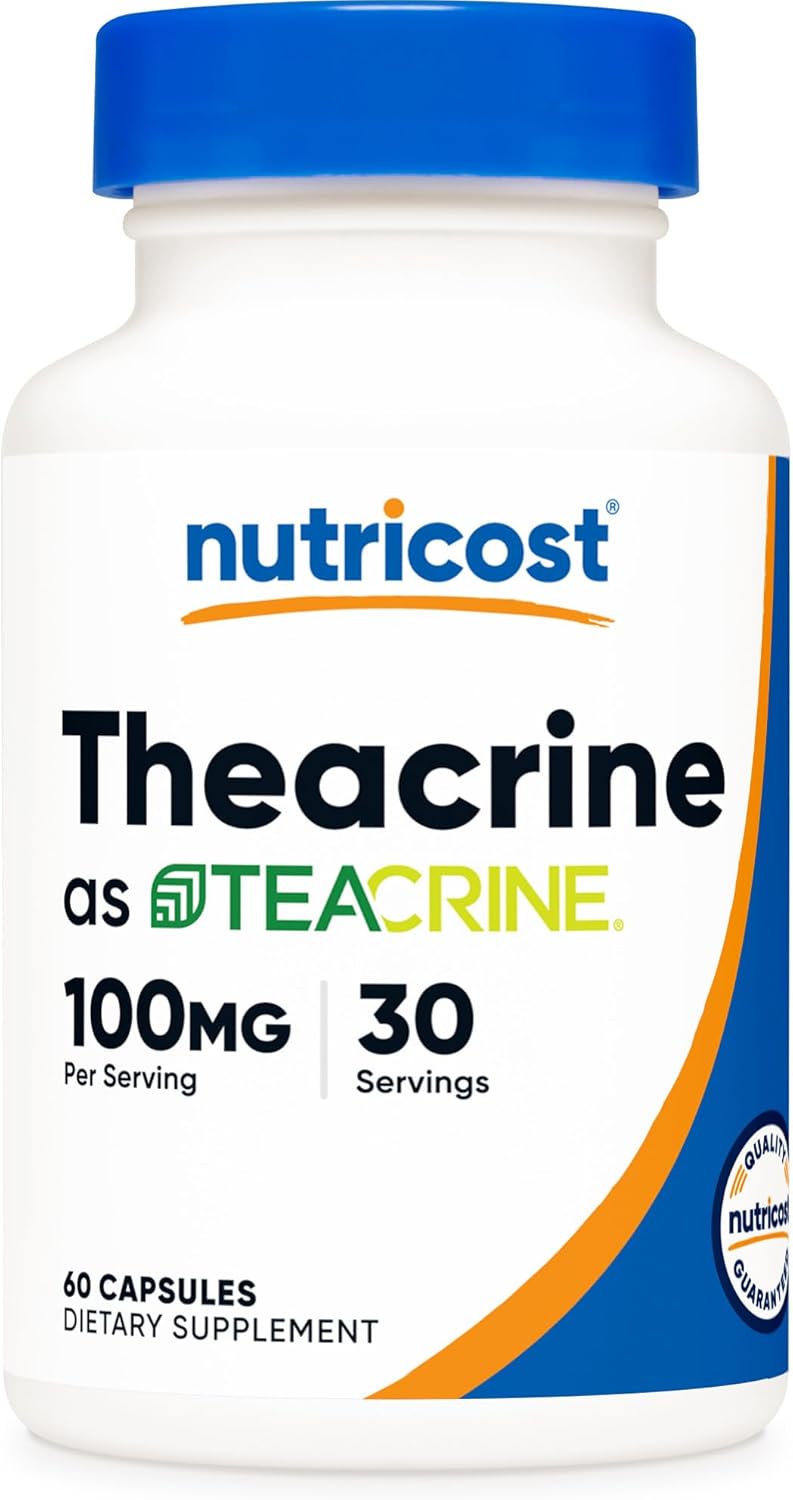
Theacrine is a naturally occurring purine alkaloid, chemically 1,3,7,9-tetramethyluric acid, that is closely related to caffeine and found in the leaves of kucha tea (Camellia assamica var. kucha) and in the cupuacu fruit. It has stimulant-like properties and, like caffeine, acts on adenosine and dopamine signaling to influence energy, alertness, and locomotor activity [1]. Sold as a dietary supplement, often under the trade name TeaCrine, it has drawn attention as a longer-acting alternative to caffeine that appears less prone to tolerance with repeated use [2].
- Caffeine's smoother cousin, energy without the sharp crash
- Slower to build tolerance than caffeine with daily use
- Long duration; it carries an afternoon, not half an hour
- Focus, motivation and a mild lift in mood
- Stacks beautifully with a small dose of caffeine
- Works on adenosine and dopamine signalling, as caffeine does
Overview
Theacrine is a purine alkaloid belonging to the same broad chemical family as caffeine and theobromine. Its systematic name is 1,3,7,9-tetramethyluric acid, and it has the molecular formula C9H12N4O3; structurally it can be viewed as a methylated derivative of uric acid that closely resembles caffeine. It occurs naturally in a bitter Chinese tea known as kucha, made from Camellia assamica var. kucha, and in the pulp of the Amazonian cupuacu fruit and certain coffee species. In the kucha plant, theacrine is thought to be produced from caffeine through a short biosynthetic pathway [2].
Research on theacrine has examined a range of activities, from central-nervous-system stimulation to effects on metabolism and inflammation. In rodents, theacrine increased spontaneous movement and activity in a way that did not fade with repeated dosing, and it was reported to have anti-inflammatory and pain-relieving properties [1]. In a high-fat-diet model, it lessened fatty liver and improved energy expenditure by activating the mitochondrial enzyme SIRT3 and enhancing fatty-acid oxidation [3], and in laboratory studies of breast cancer cells it interfered with a cellular program tied to metastasis [4]. Much of this evidence comes from cell and animal experiments, with a smaller body of human data focused on the supplement setting.
As a supplement, theacrine is marketed for feelings of energy, focus, and motivation, frequently in pre-workout and nootropic products and sometimes combined with caffeine. A controlled study in healthy adults taking a nature-identical form of theacrine daily for eight weeks found that clinical safety markers, including heart rate, blood pressure, and blood tests of liver, kidney, and immune function, stayed within normal limits, and that its perceived energizing effects did not diminish over time, suggesting little of the habituation seen with caffeine [2]. It also has a notably long half-life, on the order of a day, which is longer than that of caffeine.
Theacrine is regulated as a dietary supplement ingredient rather than as an approved medicine, so it is not intended to diagnose, treat, or prevent disease. It is not a controlled substance. Although the available safety data over several weeks are reassuring, long-term human studies remain limited, and, as with other stimulants, its combination with caffeine or other active ingredients in commercial products means effects can vary. People who are sensitive to stimulants or who take related medications are generally advised to use caution.
Mechanism
Theacrine's stimulant-like effects are attributed mainly to its actions on the and systems, the same broad targets that underlie caffeine's effects. Adenosine is a signaling molecule that builds up during wakefulness and promotes drowsiness by acting on its receptors; theacrine appears to work as an adenosine receptor , blocking these receptors so that the sedative influence of adenosine is reduced.
In rodent experiments, theacrine reversed the drop in movement caused by A1 and A2A receptor agonists, consistent with it opposing adenosine signaling, and its activating effect was blunted by blockers of and receptors, showing that dopamine pathways are also involved [1]. The compound raised activity when infused into the nucleus accumbens, a brain region central to motivation and reward, and, importantly, did not produce tolerance or sensitization after repeated exposure in these models [1].
This resistance to tolerance is echoed in human supplement research, where the perceived energy effects held steady over weeks of daily use [2]. Beyond the nervous system, theacrine engages metabolic pathways: it has been shown to activate SIRT3, a deacetylase that raises the activity of long-chain acyl-CoA dehydrogenase and thereby promotes fat oxidation, an action linked to its protective effects on the liver [3].
Additional laboratory work points to anti-inflammatory activity and effects on cell-signaling programs in cancer cells [4]. Because its structure is so close to caffeine yet its receptor kinetics and duration differ, theacrine is often described as offering caffeine-like stimulation with a longer, smoother profile, though the full picture rests largely on animal and cell studies [1][3].
receptor fingerprint
A1/A2A receptorsantagonist
signalingmodulates
Caffeine toleranceslower tachyphylaxis
Perceived energy/focusenhances
Dosingtypical ranges, not medical advice
interested in protocols and clinical dosages? make an account to see them! ^_^
Safetyrisks and cautions, not medical advice
Well tolerated in short human trials at typical doses, with no major changes in heart rate or blood pressure reported in several studies. Because it's a stimulant, sensitive people can still get restlessness or trouble sleeping if taken late. Long-term and high-dose safety data are limited, so megadosing it is unwise. As with any stimulant, people with cardiovascular conditions or on other stimulants should be careful.
History
Theacrine (1,3,7,9-tetramethyluric acid) is a naturally occurring purine alkaloid first detected as a minor component of Camellia sinensis by Johnson in 1937, and later found in comparatively high abundance in the leaves of kucha (Camellia assamica var. kucha), a bitter wild tea from Yunnan province in China. Biosynthetic work established that theacrine is derived from caffeine through a methyluric-acid intermediate, marking it as a downstream oxidation product of the caffeine pathway.
Kucha itself has a long history of local use as a bitter tonic tea, and the alkaloid drew broader scientific interest for stimulant-like and hepatoprotective effects in rodent studies. In the 2010s the ingredient was commercialized in synthetic form under the trademark TeaCrine by Compound Solutions, positioned as a longer-lasting, lower-crash energy and focus ingredient for supplements. It is sold as a dietary ingredient rather than an approved drug.
Subjective profileweighing the evidence above
A genuinely nice stimulant option, smoother than caffeine and slower to tolerance; best value is stacking a small dose with caffeine rather than replacing it.
Where to buy
Suppliers
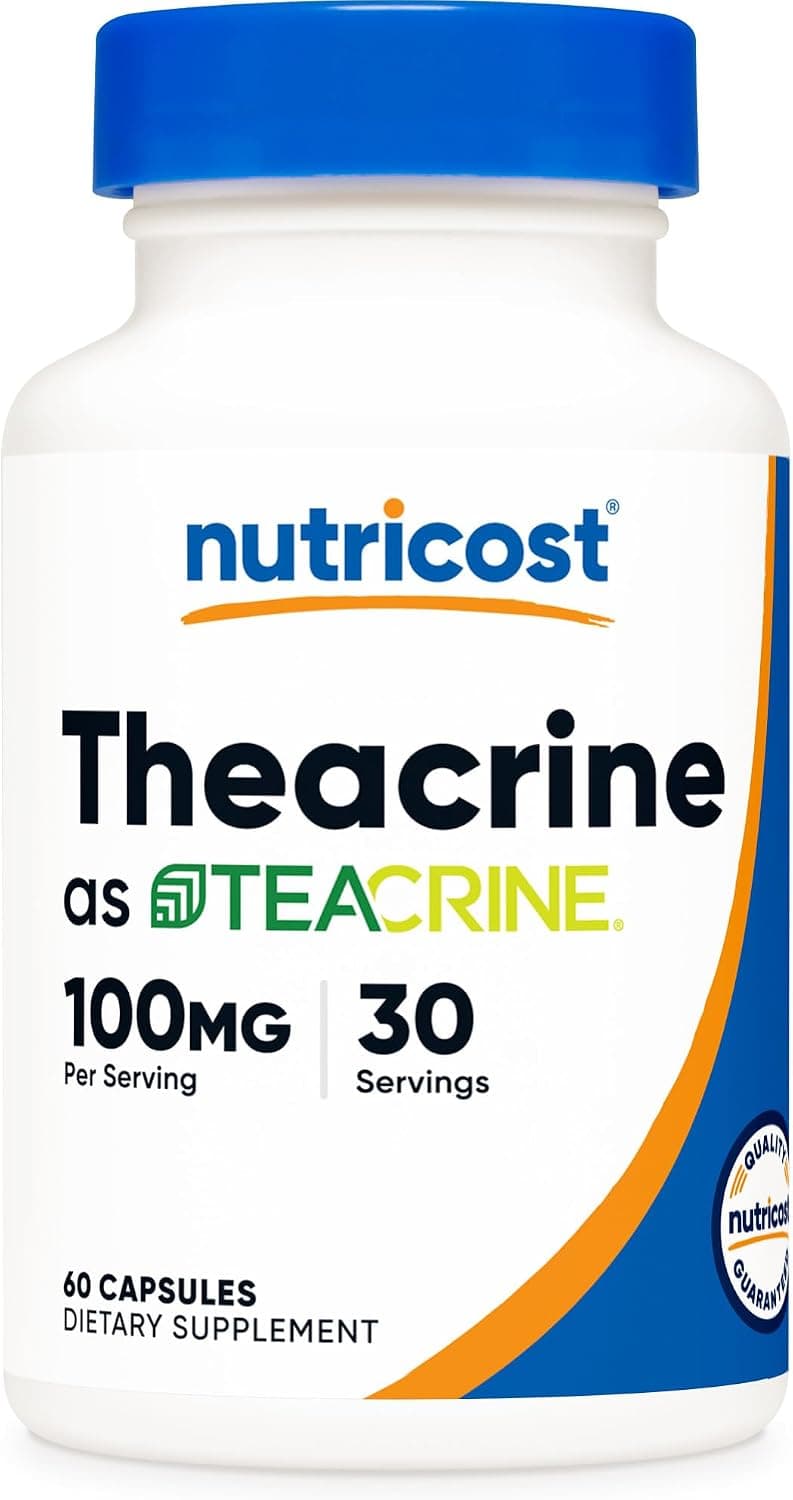
Vendors carrying Theacrine, with live product details and codes. Links are affiliate links that support the wiki at no cost to you.
Amazon
Theacrine
Research
- 2012first citedLocomotor activation by theacrine, a purine alkaloid structurally similar to caffeine: involvem…
- 2016controlled trialSafety of TeaCrine, a non-habituating, naturally-occurring purine alkaloid over eight weeks of…
- 2019most recentTheacrine attenuates epithelial mesenchymal transition in human breast cancer MDA-MB-231 cells.
- 1.Locomotor activation by theacrine, a purine alkaloid structurally similar to caffeine: involvement of adenosine and dopamine receptors.
- 2.Safety of TeaCrine, a non-habituating, naturally-occurring purine alkaloid over eight weeks of continuous use.
- 3.Theacrine protects against nonalcoholic fatty liver disease by regulating acylcarnitine metabolism.
- 4.Theacrine attenuates epithelial mesenchymal transition in human breast cancer MDA-MB-231 cells.
4 listed here; entry last updated August 2026
Reviews
My notesprivate to this device
FAQ
How is theacrine different from caffeine?
It hits similar adenosine pathways but also touches dopamine, comes on slower, lasts longer, and seems to build tolerance more slowly. The feel is smoother.
Can I stack it with caffeine?
Yes, and that's arguably the best use. Caffeine may even improve theacrine's absorption, and the combo gives clean, extended energy.
Will I build tolerance?
Some studies suggest less tolerance than caffeine over a week of daily use, but cycling it is still the safer way to keep it working.
Does it raise heart rate or blood pressure?
Human trials at normal doses generally show no meaningful change, but it's still a stimulant so individual responses vary.
When should I take it?
Earlier in the day, because its long half-life means an afternoon dose can linger into the night.
Limitations of the evidence
- Limited long-term human safety data
Notes and cautions
- Stimulant-like effects such as heightened alertness
- Long duration owing to slow clearance
- Possible restlessness or trouble sleeping
- Effects may add to those of caffeine