
spec sheet11 rows
Bemethyl, also known as bemitil, is a synthetic benzimidazole developed in the Soviet Union and classified as an actoprotector, a drug intended to boost physical working capacity and resistance to stress. Rather than scavenging free radicals directly, it works largely by increasing the cell's own synthesis of antioxidant and gluconeogenic enzymes, an RNA- and protein-synthesis-based mechanism that also supports energy metabolism and heat and hypoxia tolerance. Marketed in Russia under names such as Metaprot and reportedly used by Soviet athletes and cosmonauts, it is little known in Western medicine and is monitored, though not banned, in sport.
- Soviet actoprotector built for work capacity
- Stamina climbs and recovery speeds up
- Trains cells to build their own antioxidants
- Heat, hypoxia and fatigue lose their grip
- Mood holds steadier under real pressure
- Reportedly fueled cosmonauts and Soviet athletes
Overview
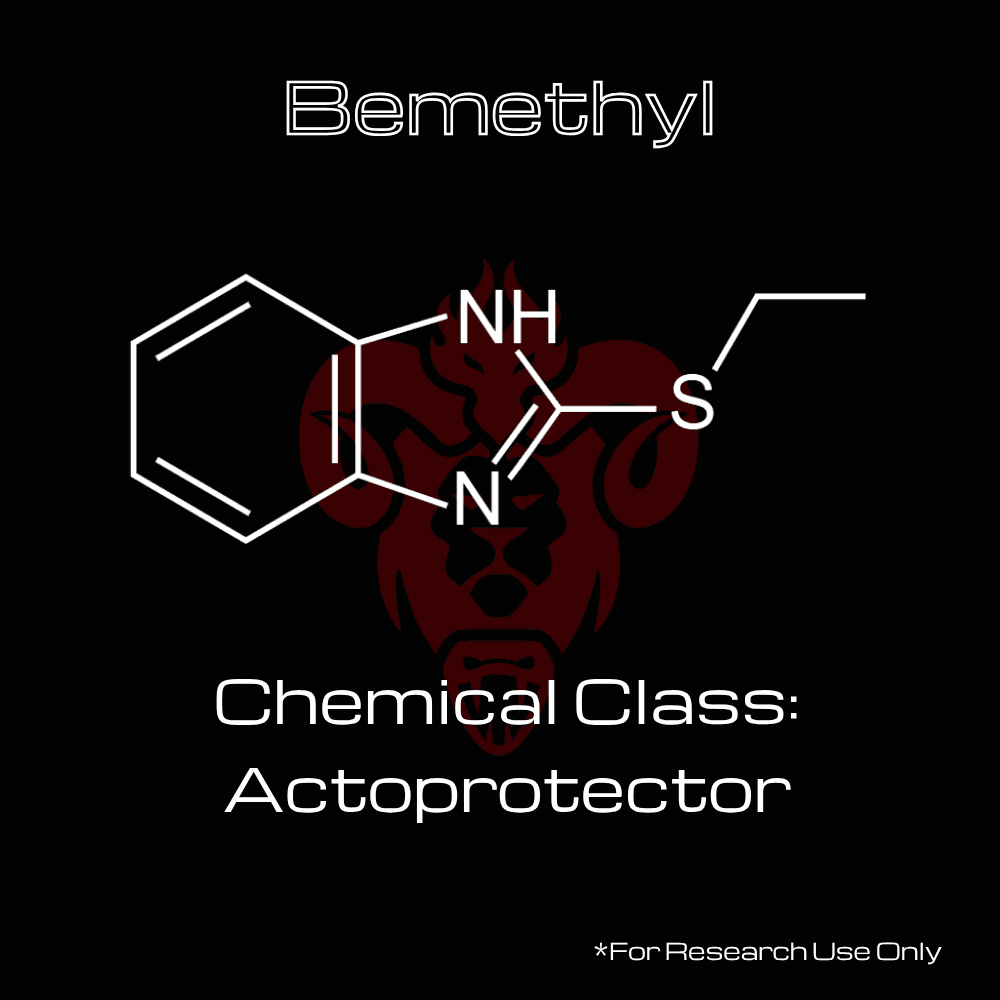
Bemethyl, commonly called bemitil and sold under trade names including Metaprot, is a synthetic drug of the benzimidazole class, chemically 2-ethylthiobenzimidazole, usually supplied as its hydrobromide salt [1]. It belongs to a group of compounds known as actoprotectors, sometimes described as synthetic adaptogens, which are intended to increase the body's physical working capacity and its stability under demanding conditions without raising oxygen consumption or heat production [1]. Alongside this actoprotective role, bemethyl is characterized as an antihypoxant, an antioxidant, and an antimutagenic agent [1][2].
The compound was developed in the Soviet Union in the 1970s, with the work associated with the Military Medical Academy in Leningrad (now St. Petersburg) and the pharmacologist V. M. Vinogradov [1]. Reflecting the priorities of Soviet performance research, it was applied in settings that demanded endurance under stress, and it has been reported as used by cosmonauts and by Soviet athletes around the 1980 period [1]. It remains best known in Russia and neighboring countries, where it is available as a medicine, and is largely unfamiliar in Western clinical practice [1].
Bemethyl has been studied mainly for improving physical performance, speeding recovery from exertion, and helping the body adapt to low-oxygen environments such as high altitude, as well as for treating asthenia, a state of abnormal weakness and fatigue [1]. Experimental work in animals reported that it strengthens the adaptive changes produced by intermittent hypoxic training and enhances resistance to hypoxia with a long-lasting effect [2]. Other studies describe antimutagenic and protective effects, and clinical reports from its region of use have explored roles as varied as supporting recovery in skin infections in military personnel [1][4]. Human pharmacokinetic work has characterized the absorption of its active substance, ethylthiobenzimidazole, after oral dosing [3]. Much of this literature is in Russian and consists of relatively small studies, so the evidence base is limited by Western standards [1].
The precise way bemethyl works is not fully established. The leading explanation is that it stimulates the synthesis of proteins, including enzymes involved in gluconeogenesis, the body's production of glucose, thereby improving energy supply during and after exertion, an action complemented by antioxidant activity [1]. In terms of regulation, bemethyl is an approved medicine in Russia but is not approved in most Western countries; in sport, the World Anti-Doping Agency placed it on its Monitoring Program in 2018 to watch for possible misuse, though it is not currently a prohibited substance [1].
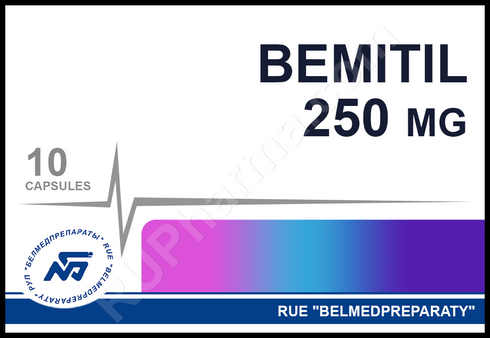
- Bemethyl belongs to a drug class called actoprotectors, a category coined by Soviet scientists for agents that boost physical working capacity without raising the body's oxygen consumption.
- It is reported to have been used by Soviet athletes and cosmonauts, and unlike many performance aids it is monitored rather than outright banned in sport.
Mechanism
Bemethyl is classified as an actoprotector, and its defining feature is that it raises physical working capacity without increasing the body's oxygen consumption or heat output, which sets it apart from ordinary stimulants [1]. Although the full mechanism is not settled, the most cited explanation is metabolic: bemethyl is thought to stimulate protein synthesis, particularly the production of enzymes that drive gluconeogenesis, the manufacture of glucose from non-carbohydrate sources [1]. By supporting gluconeogenesis and the regeneration of energy substrates, it is proposed to improve stamina and to speed recovery after heavy exertion, effectively helping cells sustain energy production when demand is high [1].
Bemethyl also shows antioxidant and antihypoxant activity: in animal studies it potentiated the adaptive, protective changes brought about by repeated low-oxygen (hypoxic) training and increased resistance to , with effects that outlasted the dosing period [2]. These combined metabolic and antioxidant actions are believed to underlie its use as an aid to endurance, recovery, and adaptation to physically stressful, low-oxygen conditions [1][2]. Because much of the supporting research is preclinical or drawn from small regional studies, these mechanistic accounts remain provisional [1].
receptor fingerprint
Gluconeogenesis / protein synthesisboosts
efficiency (antihypoxant)improves
Antioxidant defensesupports
Dosingtypical ranges, not medical advice
interested in protocols and clinical dosages? make an account to see them! ^_^
Safetyrisks and cautions, not medical advice
Bemethyl (bemitil) is a Russian-developed actoprotector used to improve endurance and recovery, with limited safety data outside older Russian-language studies; it is sold as a research chemical in most markets. Reported effects include nausea, gastrointestinal discomfort and occasional allergic reactions, and because it acts on protein synthesis and metabolism its long-term safety and drug interactions are not well characterized.
History
Bemethyl, also called bemitil, was developed in the Soviet Union during the 1970s at the Military Medical Academy in Leningrad, where the pharmacologist Vladimir Vinogradov and colleagues investigated benzimidazole derivatives as agents to sustain physical and mental performance under stress. It became the prototype of a drug class the Soviet researchers named actoprotectors, meaning compounds that protect and enhance working capacity without the overstimulation of classical stimulants. It was reportedly used to support Soviet athletes, cosmonauts, and military personnel operating in extreme conditions, and it has been marketed in Russia under names such as Metaprot. Much of the primary research remains in Russian-language literature and preclinical studies, so its mechanisms and clinical evidence are only partly documented in the wider international scientific record.
Reputation
Bemethyl is regarded with a mixture of curiosity and respect as one of the better-characterized products of the Soviet actoprotector research program, a field largely unknown in Western medicine. Endurance athletes and biohackers value the idea of a compound that raises stamina and speeds recovery by working through the body's own protein synthesis rather than by direct central stimulation, which is said to make its effects feel steady rather than jittery. Its reported role in supporting cosmonauts and athletes lends it a distinctive mystique. At the same time, honest observers note that much of the supporting evidence is preclinical or drawn from small regional studies, so its reputation rests as much on its intriguing history as on large modern trials.
Subjective profileweighing the evidence above
One of the more interesting Soviet performance compounds, with a real metabolic rationale for endurance and heat tolerance rather than a stimulant kick. The catch is that nearly all the evidence is old, Russian and hard to verify, so treat it as a promising experiment rather than a proven ergogenic.
Where to buy

Suppliers
Vendors carrying Bemethyl, with live product details and codes. Links are affiliate links that support the wiki at no cost to you.
RUPharma🌐
Bemethyl
Limitless Biochem🌐
Bemethyl
Kimera Chems
Bemethyl
Research
- 1988first cited[Use of the new psychotropic preparation bemitil in treating asthenic disorders (clinico-pharma…
- 1997controlled trial[Experimental bases of the use of pharmacologic agents aimed at higher heat resistance of human…
- 2021most recentInvestigation of Bemethyl Biotransformation Pathways by Combination of LC-MS/HRMS and In Silico…
- 1.The pharmacology of actoprotectors: practical application for improvement of mental and physical performance
- 2.Bemithyl potentiates the antioxidant effect of intermittent hypoxic training
- 3.[Pharmacokinetics of domestic actoprotector drug Metaprot in healthy volunteers].
- 4.A new approach to the therapy of pyoderma in servicemen: the use of the actoprotector bemitil
- 5.[Effect of bemethyl on the glutathione system in the rat liver in acute hypoxia]
- 6.Effects of the 2-ethylthiobenzimidazole hydrobromide (bemithyl) on carbohydrate metabolism in cirrhotic rat liver
- 7.[Effects of bemethyl, ethomersol, and yakton on the liver regeneration after partial hepatectomy]
- 8.[Antihypoxic and antioxidative properties of bemitil]
- 9.[Membrane mechanisms of effects of antihypoxic agents bemethyl and almide on neurons of Mollusca]
- 10.[Modification of impulse activity of cat brainstem monoaminergic cells caused by bemitil]
- 11.[Studying the hepatoprotector effect of bemithyl on a model of chronic toxic liver damage]
- 12.[Protective effects of metaprot and ethomerzol in carbophos intoxications]
20 listed here; entry last updated August 2026
Reviews
My notesprivate to this device
FAQ
What is an actoprotector?
It is a class of compounds studied in Russia for improving physical work capacity and resistance to fatigue and stress.
Does it build up over time?
Bemethyl is often described as having cumulative effects, with benefits reported over repeated use rather than a single dose.
Is it a classic stimulant?
It has performance-supporting effects but is generally described as smoother than typical stimulants, though it can still disrupt sleep.
Is it widely studied?
Most research is older and from Russian sources, so broad clinical evidence is limited.
Limitations of the evidence
- Long-term human safety data are limited
Notes and cautions
- Studied mostly in small, older, regional trials, so its safety profile is not well defined by Western standards
- Not approved as a medicine in most Western countries
- Monitored by anti-doping authorities, so athletes should watch for changes in its status
- As a metabolic, stimulant-adjacent compound, overstimulation or sleep disruption is plausible with heavy use