
spec sheet10 rows
Guarana is a climbing plant native to the Amazon basin, classified as Paullinia cupana in the soapberry family Sapindaceae, whose seeds are prized for an unusually high caffeine content. Indigenous peoples of the region, including the Sateré-Mawé, have long processed the seeds into a dried paste used to brew a stimulating beverage. Today the seed powder and its extracts are used chiefly as a caffeine source in soft drinks, energy drinks, and dietary supplements.
- Amazon seed caffeine with a smoother, longer feel
- clean alertness and focus without the sharp spike
- faster reaction time in testing
- mild appetite blunting and a small metabolic nudge
- centuries of Sateré-Mawé preparation behind it
- an easy swap for coffee; just count the total caffeine
- Restlessness or jitteriness
- Difficulty sleeping
- Faster heart rate
Overview
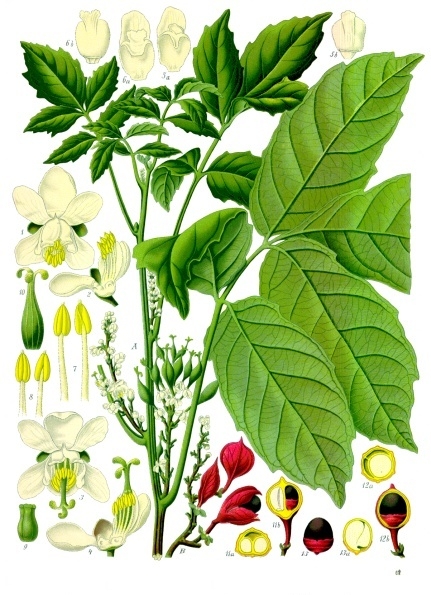
Guarana (Paullinia cupana) is a woody climbing vine of the family Sapindaceae that grows in the Amazon basin, with cultivation concentrated in the Brazilian states of Amazonas and Bahia [1]. The plant bears clustered fruits that ripen from brown to red and split open to reveal black seeds partly wrapped in a white aril, an appearance often likened to eyes [1]. It is the seed, rather than the fruit pulp, that carries the plant's characteristic stimulant chemistry.
The dried seed is notable for its caffeine concentration, which can reach roughly six percent by weight, well above the level found in coffee beans [1]. Alongside caffeine, the seeds hold smaller amounts of the related methylxanthines theobromine and theophylline, together with substantial tannins and a range of polyphenols including catechins and epicatechins [1][6]. In the living plant these purine alkaloids serve a protective role, deterring insects and herbivores, a function shared across caffeine-producing species [5]. The heavy tannin content is thought to shape how the seed's caffeine is released and absorbed.
The plant carries a long ethnobotanical history among Amazonian peoples. Its name traces to the Sateré-Mawé word for the plant, and communities traditionally shell, wash, and dry the seeds before grinding them into a powder that is kneaded into a dough and formed into hard cylinders for storage and later grating into water [1]. Guarana also appears in indigenous mythology, where the fruit's eye-like seeds are explained through origin stories.
In modern commerce the great majority of Brazil's guarana harvest is directed toward the soft-drink and energy-drink industries, with the remainder sold as powder or capsules or supplied as raw material to the pharmaceutical and cosmetics sectors [1]. Interest in guarana as a cognitive aid has produced a body of human trials; controlled studies have reported quicker reaction times and improved alertness after supplementation, in some cases even following strenuous exercise [3][4]. A systematic review and meta-analysis of acute dosing, however, found only a small effect that was limited to response speed rather than accuracy, and could not clearly separate the contribution of caffeine from that of the seed's other constituents [2].
Regulatory treatment reflects guarana's status as a botanical rather than an approved drug. In the United States the fruit powder and seed extract have not been evaluated as generally recognized as safe, yet are permitted as food additives for flavoring purposes [1]. Commercially it is encountered as whole seed powder, standardized extracts, capsules, and as an ingredient blended into beverages and multi-ingredient supplements.

Mechanism
Guarana's stimulant activity is attributed primarily to caffeine, a purine alkaloid that acts as a competitive at receptors in the central nervous system [1][5]. Under normal conditions accumulates during waking hours and promotes drowsiness by binding these receptors; by occupying them without activating them, caffeine suppresses that fatigue signal and raises arousal, alertness, and perceived energy [1]. Because the seed is rich in tannins, caffeine from guarana is thought to be released and absorbed more gradually than caffeine taken in isolation, which may lengthen and smooth the stimulant effect [1].
The minor methylxanthines theobromine and theophylline, along with the seed's catechins and other polyphenols, add further pharmacological activity, and human studies have not fully separated how much of guarana's measured effect on reaction time and alertness comes from caffeine versus these accompanying compounds [2][6]. Reported cognitive outcomes in controlled trials have centered on faster responding and heightened alertness rather than gains in memory accuracy [2][4].
receptor fingerprint
receptors (A1/A2A)antagonist
signalingincreases
releaseincreases
Phosphodiesteraseinhibits
Lipolysisincreases
Dosingtypical ranges, not medical advice
interested in protocols and clinical dosages? make an account to see them! ^_^
Safetyrisks and cautions, not medical advice
Because guarana is caffeine-dense, it's easy to overshoot and get jitters, anxiety, racing heart, and insomnia if you don't respect the dose. Avoid stacking it with other caffeine sources, and skip it late in the day. People with heart arrhythmias, high blood pressure, or anxiety disorders should be cautious.
Where to buy
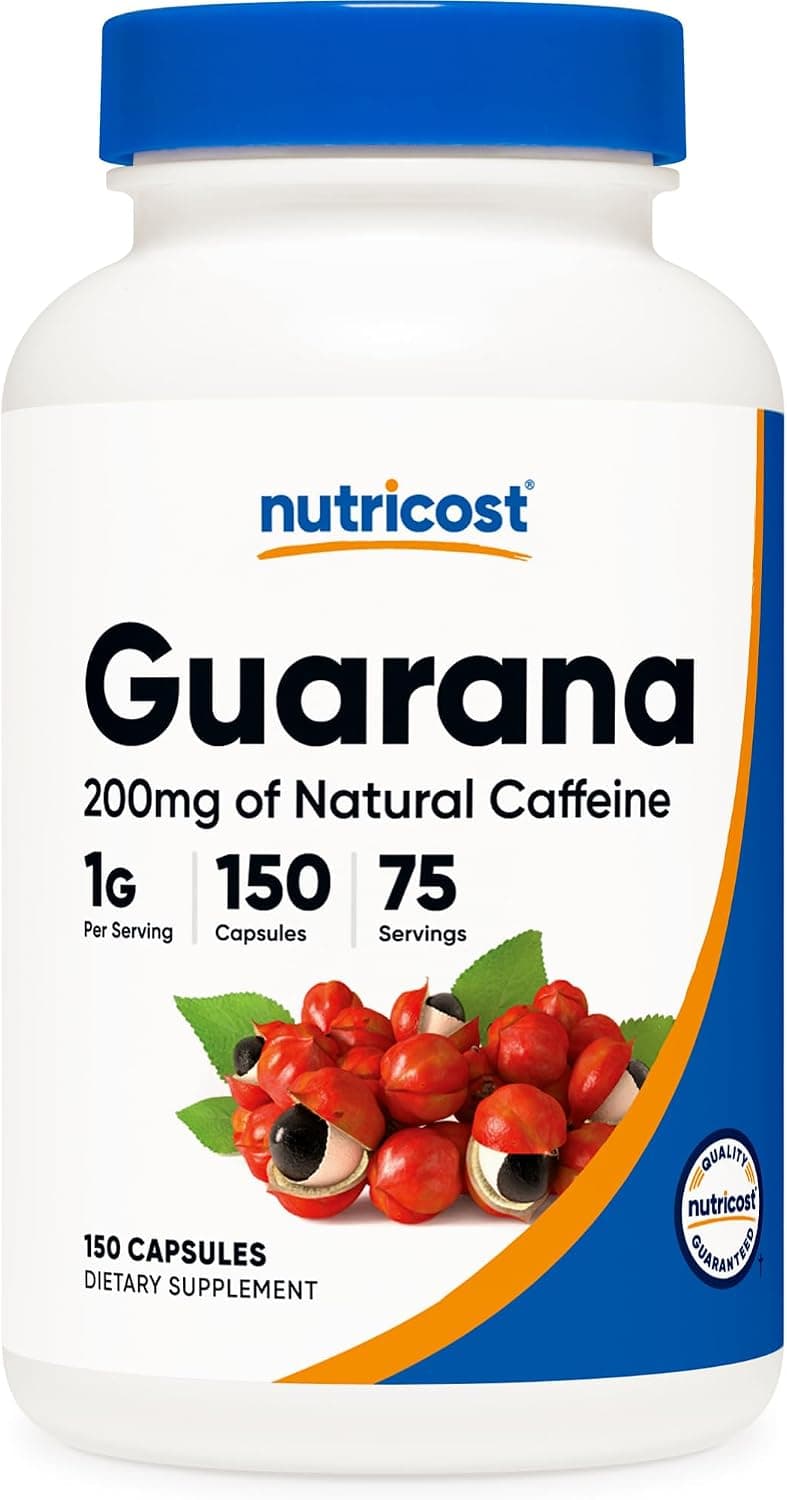
Suppliers
Vendors carrying Guarana, with live product details and codes. Links are affiliate links that support the wiki at no cost to you.
Amazon
Guarana
Research
- 1998first citedLiquid chromatographic determination of methylxanthines and catechins in herbal preparations co…
- 2023most recentEffect of Guarana (Paullinia cupana) on Cognitive Performance: A Systematic Review and Meta-Ana…
- 1.Guarana: revisiting a highly caffeinated plant from the Amazon
- 2.Effect of Guarana (Paullinia cupana) on Cognitive Performance: A Systematic Review and Meta-Analysis
- 3.Heart rate variability and cognitive function following a multi-vitamin and mineral supplementation with added guarana (Paullinia cupana)
- 4.Cognitive effects of guarana supplementation with maximal intensity cycling
- 5.Caffeine and related purine alkaloids: biosynthesis, catabolism, function and genetic engineering
- 6.Liquid chromatographic determination of methylxanthines and catechins in herbal preparations containing guaraná.
6 listed here; entry last updated August 2026
Reviews
My notesprivate to this device
FAQ
Is guarana stronger than coffee?
By weight the seed is more caffeine-dense, but the actual dose depends on the extract, so read the label for standardized caffeine.
Does it cause a crash?
Less of one for most people because the tannins slow release, but a big dose can still leave you flat later.
Can I take it with coffee?
Not a good idea; you'll likely overshoot your caffeine and feel wired.
Will it help me lose weight?
Only marginally, through the usual caffeine metabolism bump. It's not a real weight-loss tool on its own.
Is it addictive?
You can build caffeine tolerance and get withdrawal headaches, same as coffee.
Adverse effects
- Restlessness or jitteriness
- Difficulty sleeping
- Faster heart rate
- Headache
- Stomach upset