
spec sheet14 rows
Yohimbine is an indole alkaloid obtained mainly from the bark of the West African tree Pausinystalia johimbe (yohimbe). Pharmacologically it acts chiefly as an antagonist of alpha-2 adrenergic receptors, and it has a long history as a purported aphrodisiac and a treatment for erectile dysfunction. It is available in some countries as a prescription drug and elsewhere as a dietary supplement, though its stimulant-like cardiovascular effects and inconsistent product quality have raised safety concerns.
- Goes after the stubborn fat that diet alone leaves behind
- Blocks alpha 2 receptors, the brake on fat release
- A long standing reputation for libido and erectile function
- Best taken fasted, where its fat burning edge is sharpest
- Sharp, unmistakable energy and alertness
- Can raise blood pressure and heart rate; not advisable for people with hypertension or heart disease
- Commonly causes anxiety, restlessness, tremor, and insomnia, especially at higher doses
- May interact dangerously with stimulants, some antidepressants such as MAO inhibitors, and tyramine-rich foods
Overview
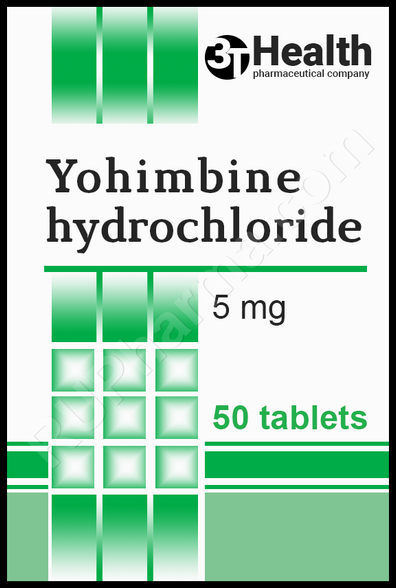
Yohimbine is a naturally occurring indole alkaloid, structurally a cyclized tryptamine derivative, obtained principally from the bark of the yohimbe tree, Pausinystalia johimbe, an evergreen native to central and western Africa; related alkaloids occur in Rauwolfia and in the South American tree Aspidosperma quebracho-blanco [1]. In whole yohimbe bark, yohimbine is only one of many indole alkaloids present and makes up a minor fraction of the total, which is one reason herbal preparations vary so much in strength [1][4].
The compound has a long ethnobotanical history as an aphrodisiac in West Africa, and purified yohimbine was marketed in Europe from around the turn of the twentieth century [1]. Its best-studied medical use is for erectile dysfunction; a meta-analysis of randomized, placebo-controlled trials concluded that yohimbine used on its own was more effective than placebo and that serious adverse reactions were infrequent, although the evidence predates modern PDE5 inhibitor drugs [3]. Yohimbine is also used in veterinary medicine to reverse the sedative xylazine, and it serves as a research tool to provoke anxiety and to probe noradrenergic systems [1].
Regulatory treatment of yohimbine is inconsistent. In the United States, yohimbine hydrochloride has a history as an approved prescription medicine, while yohimbe bark extracts are also sold in dietary supplements; regulators have warned that marketing supplements with drug claims is not permitted [1]. Several countries restrict or ban yohimbe in supplements [1]. Analyses of the US supplement market have found that labeled yohimbine content is frequently inaccurate and that some products contain pharmaceutical-level quantities, which complicates safe use [4]. Reported adverse effects include elevated blood pressure, rapid heartbeat, anxiety, tremor, and, at high doses or with drug interactions, more serious cardiovascular events [1].
Mechanism
Yohimbine's defining pharmacological action is competitive antagonism of alpha-2 receptors, for which it has high affinity across the alpha-2A, alpha-2B, and alpha-2C subtypes [1][2]. Alpha-2 receptors normally act as inhibitory autoreceptors that restrain the release of noradrenaline; by blocking them, yohimbine increases sympathetic outflow and raises noradrenaline levels, which accounts for its stimulant-like effects on heart rate, blood pressure, and arousal, and for the anxiety it can provoke [1][2]. In the setting of erectile function, reduced alpha-2 tone can favor penile blood flow, the rationale behind its traditional use [1].
Yohimbine is not selective for alpha-2 receptors alone. Binding and functional studies show meaningful activity at receptors, where it behaves as a partial at and as an at 5-HT1B and 5-HT1D sites, and at and D3 receptors, with weaker effects at alpha-1 receptors [1][2]. In animals, these combined actions raise cortical and noradrenaline while lowering , a profile that has prompted interest in mood and cognition research [2]. The same amplification of sympathetic activity underlies its cardiovascular risks, and its effects can be intensified by interactions with stimulants, certain antidepressants, and tyramine-containing foods [1].
receptor fingerprint
Alpha-2 receptorantagonist
Noradrenaline releaseincreases
Adipose lipolysispromotes
Erectile blood flowenhances
Dosingtypical ranges, not medical advice
interested in protocols and clinical dosages? make an account to see them! ^_^
Safetyrisks and cautions, not medical advice
This one has a real side-effect profile: anxiety, panic, tremor, elevated heart rate and blood pressure, and sweating. It can be dangerous for people with hypertension, heart conditions, or anxiety disorders, and it interacts with MAOIs, stimulants, and many antidepressants. Start low and avoid late-day dosing.
Interactionsdocumented pairs only, not exhaustive
Yohimbine is an alpha-2 adrenergic antagonist that raises central and peripheral noradrenergic tone, so its most established concern is combination with monoamine oxidase inhibitors; MAOIs plus yohimbine can provoke hypertensive and sympathetic overstimulation and this pairing is classically contraindicated. It antagonizes the blood-pressure-lowering effect of clonidine and other alpha-2 agonists and can blunt or oppose antihypertensive therapy generally. Case reports and pharmacology reviews describe additive pressor and anxiogenic effects when yohimbine is combined with tricyclic antidepressants, sympathomimetic stimulants, and other agents that increase noradrenergic signaling. Concurrent use with serotonergic or stimulant drugs has been associated with anxiety, tachycardia, and elevated blood pressure. This is research information, not medical advice.
Checking a whole stack? Run it through interactions + stacks.
History
Yohimbine is an indole alkaloid isolated from the bark of the West African tree Pausinystalia johimbe, whose bark had a long folk reputation as an aphrodisiac before Western chemists took interest. The pure alkaloid was isolated in the closing years of the nineteenth century, with Leopold Spiegel commonly credited for characterizing it around 1896. In twentieth-century medicine it was used as an alpha-2 adrenergic antagonist and reached the United States as the prescription product Yocon for erectile dysfunction, an indication later eclipsed by PDE5 inhibitors. Today yohimbine and crude yohimbe bark extracts circulate mostly as over-the-counter and grey-market supplements marketed for fat loss and libido rather than as a mainstream prescription drug.
Where to buy
Suppliers
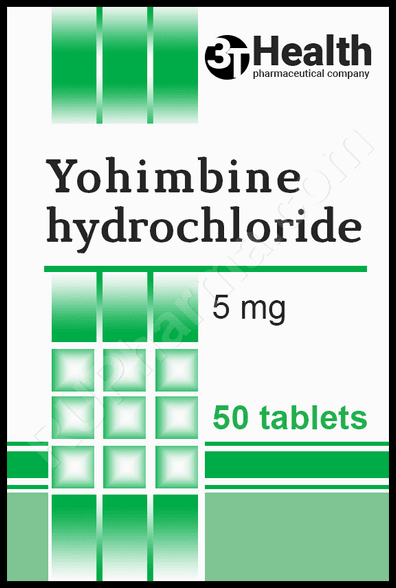
Vendors carrying Yohimbine, with live product details and codes. Links are affiliate links that support the wiki at no cost to you.
RUPharma🌐
Yohimbine
Research
- 1989first citedYohimbine's anxiogenic action: evidence for noradrenergic and dopaminergic sites.
- 1998meta-analysisYohimbine for erectile dysfunction: a systematic review and meta-analysis of randomized clinica…
- 2022most active year3 papers
- 2025most recentThe anxiogenic drug yohimbine is a reinforcer in male and female rats.
- 1.Manipulation of norepinephrine metabolism with yohimbine in the treatment of autonomic failure.
- 2.Agonist and antagonist actions of yohimbine as compared to fluparoxan at alpha(2)-adrenergic receptors (AR)s, serotonin (5-HT)(1A), 5-HT(1B), 5-HT(1D) and dopamine D(2) and D(3) receptors. Significance for the modulation of frontocortical monoaminergic transmission and depressive states.
- 3.Yohimbine for erectile dysfunction: a systematic review and meta-analysis of randomized clinical trials
- 4.Pharmaceutical quantities of yohimbine found in dietary supplements in the USA
- 5.A literature perspective on the pharmacological applications of yohimbine.
- 6.Yohimbine's anxiogenic action: evidence for noradrenergic and dopaminergic sites.
- 7.Endothelium-dependency of yohimbine-induced corpus cavernosum relaxation.
- 8.Multifaced Nature of Yohimbine-A Promising Therapeutic Potential or a Risk?
- 9.Yohimbine treatment of organic erectile dysfunction in a dose-escalation trial.
- 10.Effectiveness of yohimbine in the treatment of erectile disorder: four meta-analytic integrations.
- 11.Yohimbine in the treatment of erectile disorder.
- 12.Yohimbine in erectile dysfunction: would an orphan drug ever be properly assessed?
22 listed here; entry last updated August 2026
Reviews
My notesprivate to this device
FAQ
Why take it fasted?
Insulin blocks its fat-loss effect, so eating carbs beforehand largely cancels it out.
Who should avoid it?
Anyone with high blood pressure, heart disease, anxiety or panic disorders, or on MAOIs and many antidepressants.
How is it different from yohimbe bark?
Yohimbine HCl is a standardized dose; crude yohimbe bark has unpredictable content and is riskier.
Can I stack it with caffeine?
People do, but it compounds the stimulant load and cardiovascular effects, so be careful.
Does it work for libido?
It has modest evidence for erectile function through its adrenergic effects.
Adverse effects
- Can raise blood pressure and heart rate; not advisable for people with hypertension or heart disease
- Commonly causes anxiety, restlessness, tremor, and insomnia, especially at higher doses
- May interact dangerously with stimulants, some antidepressants such as MAO inhibitors, and tyramine-rich foods
- Supplement products often carry inaccurate labels, so actual doses can be unpredictable
- Banned or restricted in supplements in several countries