
spec sheet13 rows
Conjugated estrogens, best known by the brand name Premarin, are a medication made from a mixture of estrogen hormones extracted from the urine of pregnant mares [1][2]. They are used mainly as menopausal hormone therapy, to relieve hot flashes and vaginal dryness and to help prevent osteoporosis, and also to treat other conditions of low estrogen [1][2]. Introduced in the 1940s, they act on estrogen receptors throughout the body; landmark trials later clarified that, like other hormone therapies, they carry risks including blood clots, stroke and, in combination with a progestogen, breast cancer [1][3].
- Relieves hot flashes and vaginal dryness in menopause
- Helps prevent osteoporosis as part of menopausal hormone therapy
- Treats other conditions of low estrogen
- Acts on estrogen receptors throughout the body
- Available in oral and vaginal forms
- Trusted since the 1940s under the brand name Premarin
- Nausea, bloating and breast tenderness
- Headache
- Increased risk of blood clots in the legs or lungs
Overview
Conjugated estrogens, also called conjugated equine estrogens, are not a single hormone but a standardised blend of many estrogen compounds obtained from the urine of pregnant horses; the brand name Premarin is drawn from that source [1][2]. The main ingredients are the sulfate salts of estrone and of equilin, an estrogen that is characteristic of horses and not normally found in humans, along with a number of other related equine estrogens [1][2]. The estrogens are present in a conjugated form, meaning they are attached to a sulfate group; this makes them water-soluble and inactive until the body removes the sulfate to release the active hormone [2].
The preparation was introduced in North America in the early 1940s and went on to become one of the most widely prescribed medications of the twentieth century, marketed for the symptoms of menopause [1]. For decades it was a mainstay of hormone replacement therapy, and it appears on the World Health Organization Model List of Essential Medicines [1].
Conjugated estrogens are prescribed chiefly for menopausal hormone therapy, where they ease vasomotor symptoms such as hot flashes and night sweats and treat the vaginal dryness and thinning that can follow menopause [1][2]. They are also used to prevent osteoporosis, to treat low estrogen states caused by ovarian failure or removal of the ovaries, and historically in the palliative management of certain hormone-sensitive cancers [1]. In women who still have a uterus, an estrogen is combined with a progestogen, because estrogen given on its own stimulates the lining of the uterus and raises the risk of endometrial cancer, an effect that the added progestogen offsets [1][3].
Understanding of the risks of this therapy was reshaped by the Women's Health Initiative, a large randomised trial whose combined estrogen-plus-progestin arm was stopped early in 2002 when the data showed that the risks outweighed the benefits for its purpose of preventing chronic disease [3]. That study reported increases in invasive breast cancer, coronary heart disease, stroke and blood clots in the lungs, alongside reductions in colorectal cancer and hip fracture [3]. These findings caused prescriptions to fall sharply and led to a lasting shift toward using the lowest effective dose for the shortest suitable time, particularly around the start of menopause [1][3]. Because conjugated estrogens are taken by mouth and pass first through the liver, they raise the production of clotting factors more than estrogen absorbed through the skin, which adds to the risk of venous clots [1][4].
Conjugated estrogens are prescription-only medicines available as tablets, vaginal creams and an injectable form, sometimes combined with a progestogen in a single product [1]. Their use is individualised, weighing the relief of menopausal symptoms and the protection of bone against the recognised risks [1][3].
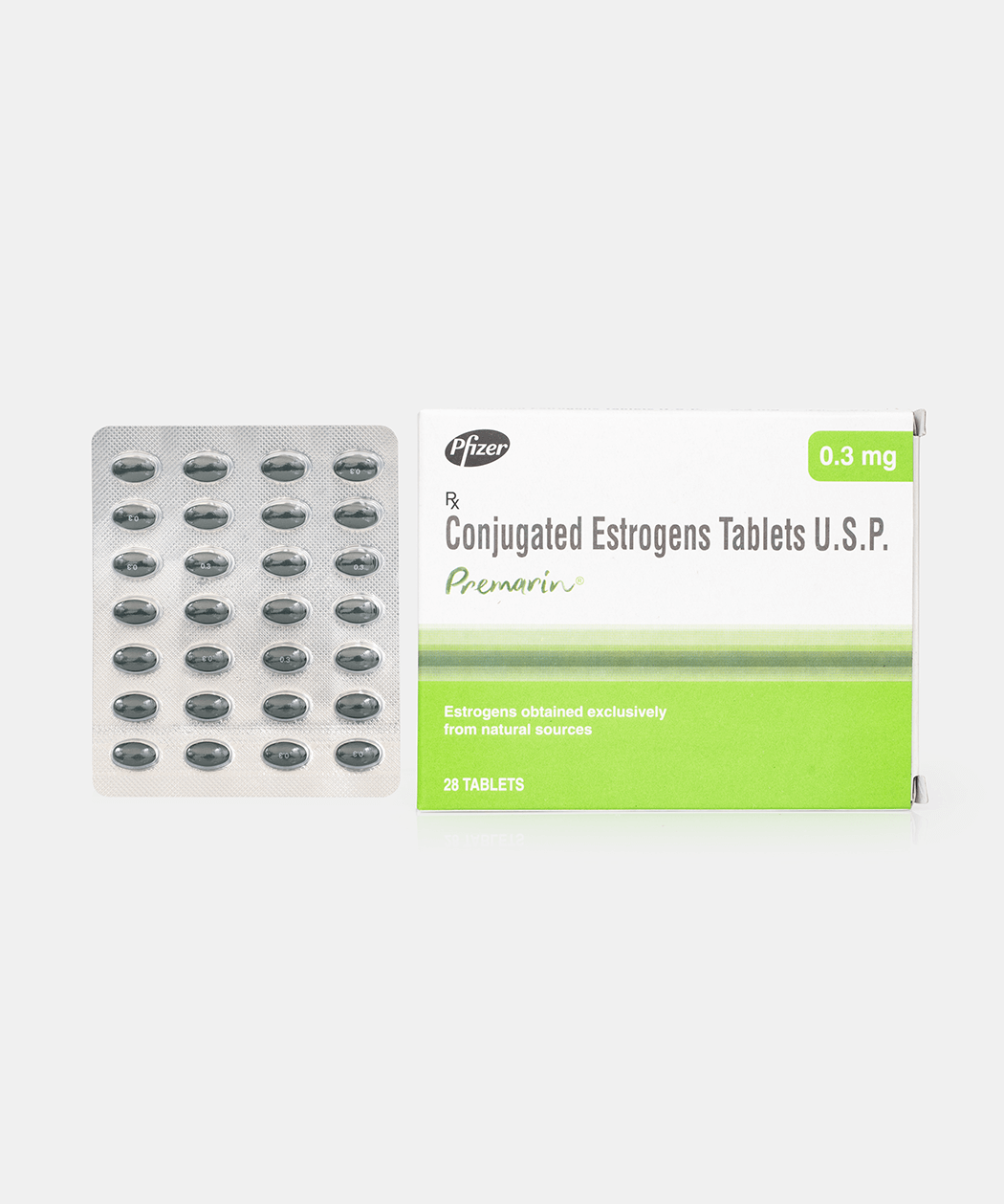

- The brand name Premarin is a contraction of PREgnant MAre uRINe, the natural source of the estrogen mixture.
- For many years it was among the most frequently dispensed prescription medications in the United States.
- The 2002 Women's Health Initiative trial of estrogen plus progestin was stopped ahead of schedule when the data safety board found that harms, led by invasive breast cancer, outweighed the benefits, a result that changed hormone-therapy practice worldwide.
Mechanism
Conjugated estrogens work as agonists of the receptors, the same protein switches through which the body's own estrogen acts [1][2]. After the conjugated, sulfated hormones are swallowed, enzymes in the body strip away the sulfate groups to release active estrogens, and estrone in particular serves as a reservoir that is converted into estradiol, the most potent human [1][2].
These estrogens then bind receptors in tissues throughout the body, including the brain, bone, blood vessels, breast and reproductive organs, switching on estrogen-regulated genes; this restores the hormonal signalling that declines at menopause, which is why the treatment relieves hot flashes, protects bone density and reverses vaginal thinning [1][2].
The horse-specific ring B unsaturated estrogens such as equilin add their own activity and act preferentially through one of the two main receptor subtypes [2]. The same broad activation of receptors, together with the effects of oral estrogen on the liver, underlies the therapy's influence on breast tissue, the uterine lining and blood clotting that accounts for its principal risks [1][3][4].
receptor fingerprint
receptor alphaagonist
Hypothalamic thermoregulationmodulates
Bone osteoclastsinhibits
Endometrial liningactivates
Vaginal and urethral epitheliumactivates
receptor betaagonist
Dosingtypical ranges, not medical advice
interested in protocols and clinical dosages? make an account to see them! ^_^
Safetyrisks and cautions, not medical advice
Conjugated estrogens are prescription only and carry boxed warnings. Taken without a progestogen in a woman who still has her uterus, estrogen raises the risk of endometrial cancer, so a progestogen is added for uterine protection. Large studies in the Women's Health Initiative showed that estrogen, particularly combined with a progestin, increases the risk of blood clots, stroke, and, with the combination, breast cancer, though estrogen alone in women without a uterus did not raise and in some analyses lowered breast cancer risk. It is generally avoided in people with a history of clots, stroke, estrogen-sensitive cancers, unexplained vaginal bleeding, or active liver disease. The guidance is to use the lowest effective dose for the shortest reasonable time.
Interactionsdocumented pairs only, not exhaustive
The interaction most often missed is with thyroid replacement. Oral conjugated estrogens raise thyroxine binding globulin, which sequesters circulating thyroxine and lowers the free fraction. Someone with an intact thyroid compensates; someone dependent on levothyroxine cannot, so TSH climbs and the thyroid hormone requirement goes up. This was shown directly in hypothyroid postmenopausal women given conjugated estrogens, where a substantial minority needed more thyroxine. The same binding globulin shift also distorts total thyroid hormone results, so the numbers look abnormal before anything clinical has changed.
Oral estrogens are cleared through CYP3A4. Inducers such as rifampin, carbamazepine, phenytoin, phenobarbital and St John's wort lower exposure and can bring back vasomotor symptoms or cause breakthrough bleeding, while inhibitors such as ketoconazole, itraconazole, clarithromycin, ritonavir and grapefruit juice raise it.
Estrogens increase several clotting factors and reduce antithrombin, so thrombotic risk adds to that of other prothrombotic exposures. Selective estrogen receptor modulators and aromatase inhibitors oppose the estrogen effect directly.
Checking a whole stack? Run it through interactions + stacks.
History
Conjugated estrogens were developed by the pharmaceutical company Wyeth (originally Ayerst) and introduced in 1941 under the brand name Premarin, a name derived from PREgnant MAre uRINe, the source from which the hormone mixture is extracted. The product answered an early demand for an orally active estrogen preparation to relieve the symptoms of menopause, and it became one of the most widely prescribed medications in the United States through the latter half of the twentieth century. For decades it was promoted for a broad range of purported benefits, and combined estrogen-progestogen therapy was widely believed to protect the heart.
That picture was decisively revised by the Women's Health Initiative, a large randomized trial whose estrogen-plus-progestin arm was halted early in 2002 after finding that overall risks, including breast cancer, stroke, and blood clots, exceeded the benefits. These landmark findings reshaped prescribing worldwide, and conjugated estrogens are now used more selectively, at lower doses and for clear indications, while remaining a reference estrogen preparation and appearing on the World Health Organization's list of essential medicines.
Reputation
Conjugated estrogens hold an enduring reputation as an effective and time-tested therapy for the symptoms of menopause, particularly hot flashes and vaginal dryness, and as a means of helping to preserve bone density. As one of the most thoroughly studied hormone preparations in medicine, it offers clinicians a well-characterized option with decades of clinical experience behind it.
Its story is also a landmark in evidence-based medicine, because the Women's Health Initiative transformed how the profession weighs the benefits and risks of hormone therapy and ushered in an era of more individualized, lower-dose prescribing. Used thoughtfully for appropriate patients, especially women with bothersome symptoms near the onset of menopause, it can substantially improve quality of life. That value is best appreciated alongside an honest accounting of its risks, including breast cancer with combined therapy, stroke, and venous clots, which is why shared decision-making guides its modern use.
Subjective profileweighing the evidence above
Effective for hot flashes, vaginal dryness and bone loss, with an unusually well quantified risk ledger to weigh against it: clots, stroke, and endometrial cancer if taken without a progestogen when the uterus is intact. A prescription decision made with a doctor, not a wellness purchase.
Where to buy

1 other outlet
Suppliers
Vendors carrying Conjugated Estrogens, with live product details and codes. Links are affiliate links that support the wiki at no cost to you.
| supplier | size | price | $/mg |
|---|---|---|---|
| PCT.Zonelowest | 0.625MG | $16.53 | $26.45/mg |
| PCT.Zone | 0.3MG | $13.88 | $46.27/mg |

PCT.Zone
Conjugated Estrogens
PCT.Zone
Conjugated Estrogens
Research
- 1985first citedTransport of equine estrogens: binding of conjugated and unconjugated equine estrogens with hum…
- 2022most recentBazedoxifene plus conjugated estrogens improve menopausal symptoms in postmenopausal women…
- 1.Bazedoxifene plus conjugated estrogens improve menopausal symptoms in postmenopausal women: a systematic review and meta-analysis.
- 2.Pharmacology of conjugated equine estrogens: efficacy, safety and mechanism of action.
- 3.Risks and benefits of estrogen plus progestin in healthy postmenopausal women: principal results From the Women's Health Initiative randomized controlled trial.
- 4.Pharmacology of estrogens and progestogens: influence of different routes of administration.
- 5.Effects of conjugated equine estrogen in postmenopausal women with hysterectomy: the Women's Health Initiative randomized controlled trial
- 6.Structure activity relationships and differential interactions and functional activity of various equine estrogens mediated via estrogen receptors (ERs) ERalpha and ERbeta
- 7.Pharmacokinetics and pharmacodynamics of conjugated equine estrogens: chemistry and metabolism
- 8.Transport of equine estrogens: binding of conjugated and unconjugated equine estrogens with human serum proteins
- 9.Comparison of the ligand binding specificity and transcript tissue distribution of estrogen receptors alpha and beta
9 listed here; entry last updated August 2026
Reviews
My notesprivate to this device
FAQ
Why do I need a progestogen with it?
If you still have your uterus, estrogen alone thickens the uterine lining and raises endometrial cancer risk, so a progestogen is added to protect it.
Does it cause breast cancer?
The combination with a progestin raised breast cancer risk in large trials, while estrogen alone in women without a uterus did not, and in some analyses slightly lowered it.
Where does Premarin come from?
The name reflects its source; it is a standardized mixture of estrogens originally obtained from pregnant mares' urine.
How long should I stay on it?
Guidance is to use the lowest effective dose for the shortest time that controls symptoms, with periodic reviews with your clinician.
Can I use it just for vaginal symptoms?
Yes; a low-dose vaginal cream treats local dryness and discomfort with much less hormone reaching the rest of the body.
Adverse effects
- Nausea, bloating and breast tenderness
- Headache
- Increased risk of blood clots in the legs or lungs
- Increased risk of stroke
Notes and cautions
- Vaginal bleeding or spotting
- With long-term combined use, an increased risk of breast cancer; estrogen taken without a progestogen raises the risk of endometrial cancer in women who have a uterus
- The equine oestrogens in this preparation are not simply weaker estradiol; they differ in how they engage the two oestrogen receptors [6], in how they are carried in blood [8], and in how they are cleared [7].