
spec sheet12 rows
Danazol is a synthetic steroid, chemically derived from ethisterone, that behaves as a weak androgen and suppresses the body's reproductive hormone signaling. Introduced in the 1970s under brand names such as Danocrine, it was the first drug approved in the United States specifically for endometriosis and has also been used for fibrocystic breast disease and, notably, for the long-term prevention of attacks in hereditary angioedema. It is a prescription medicine taken by mouth, and although effective, its androgenic side effects have led newer therapies to replace it as a first choice for several of its uses.
- Prevents attacks in hereditary angioedema over the long term
- The first drug ever approved specifically for endometriosis
- Eases endometriosis pain and fibrocystic breast lumps
- Quiets estrogen driven tissue growth and heavy bleeding
- Still valuable enough to survive newer options
- Simple oral steroid with decades of clinical use
- Acne, oily skin, and unwanted hair growth
- Weight gain and unfavorable changes in blood lipids
- Liver effects with long-term use
Overview
Danazol is an androstane steroid derived from the progestogen ethisterone. Pharmacologically it is a weak androgen and anabolic steroid that also has antigonadotropic activity, meaning it damps down the pituitary hormones that drive the ovaries [2]. This combination of a mild androgenic effect with suppression of the reproductive axis underlies most of its medical uses.
The drug was synthesized in 1963 by scientists at Sterling Winthrop and approved by the U.S. Food and Drug Administration in 1971 as the first agent specifically indicated for endometriosis. It has been marketed under Danocrine and numerous other brand names.
In endometriosis, danazol produces a low-estrogen, mildly androgenic internal state that shrinks endometrial implants and relieves pelvic pain; in a network meta-analysis of treatments for endometriosis-related pain it appears among the available options, although hormonal contraceptives, progestins, and GnRH agonists are now generally preferred [1]. Preclinical work in animal models likewise shows danazol reducing the size of endometriotic lesions [4]. The drug has additionally been used for benign fibrocystic breast disease, heavy menstrual bleeding, and immune thrombocytopenia.
Danazol also has an established role in hereditary angioedema, where it is one of the attenuated androgens long used for long-term prophylaxis to lower the frequency of swelling attacks. Because of its androgenic burden, current guidance increasingly places it as a second-line option behind newer C1-inhibitor replacement and targeted therapies, and recent expert consensus focuses specifically on how to monitor patients on danazol and when to discontinue it [2][3].
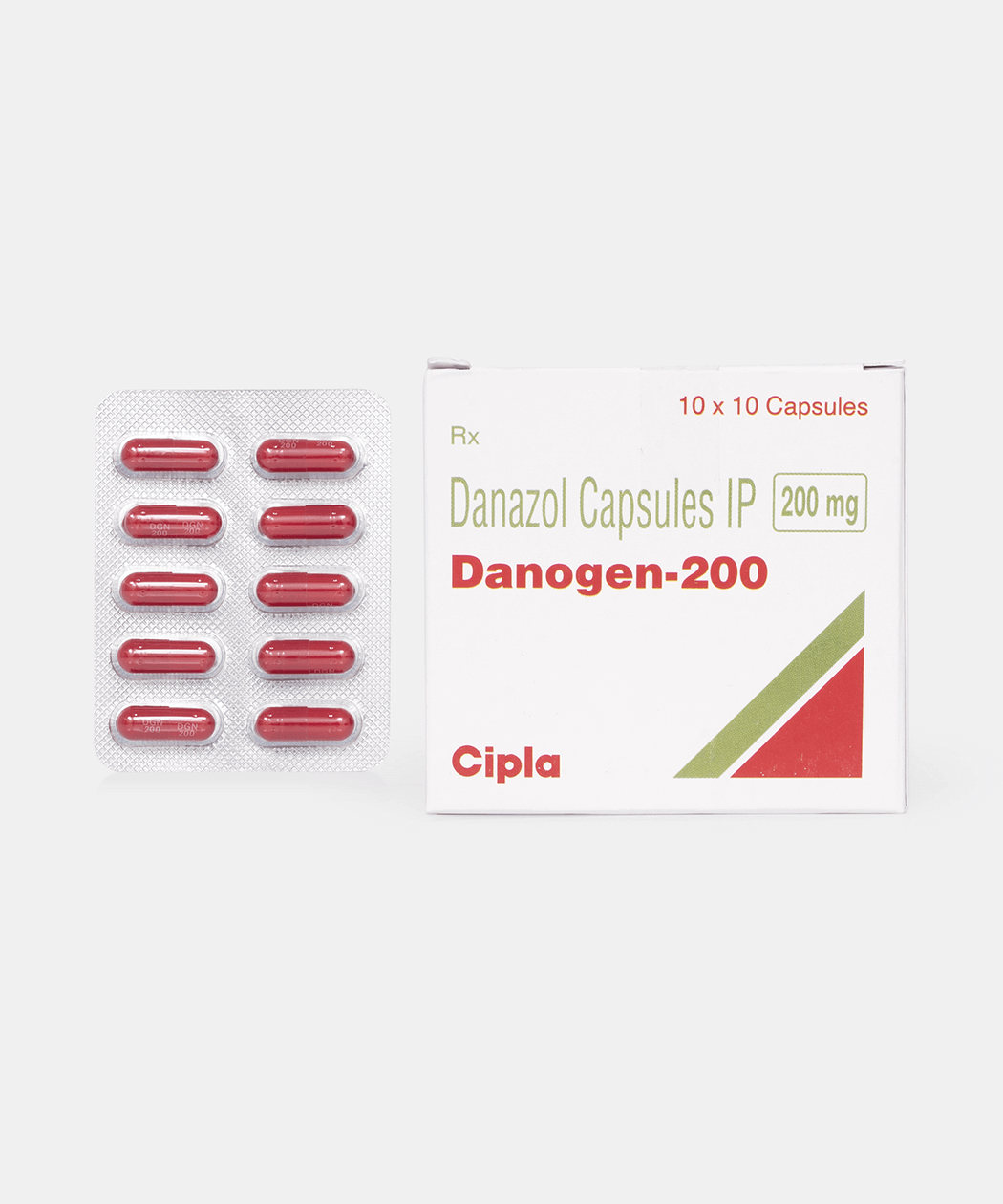
The drug's androgenic effects, which include acne, unwanted hair growth, weight gain, unfavorable blood lipid changes, potential liver effects, and irreversible deepening of the voice, are the main constraint on its use, and it is contraindicated in pregnancy because it can masculinize a female fetus [2][3]. Danazol is a prescription-only medicine supplied as oral capsules.
- Danazol was the first medication approved in the United States specifically for endometriosis.
- In a 2016 National Institutes of Health trial, patients with inherited telomere diseases who took danazol showed telomere lengthening, with nearly all evaluable participants gaining telomere length at 24 months.
- For hereditary angioedema its protective effect comes from prompting the liver to make more C1 esterase inhibitor, the very protein that is deficient in the disease.
Mechanism
Danazol acts chiefly by suppressing the hypothalamic-pituitary-gonadal axis: it inhibits release of the pituitary gonadotropins LH and FSH, blunts the mid-cycle surge, and lowers ovarian production, creating a low-estrogen environment in which endometrial tissue atrophies [1][2]. It also binds directly to androgen, progesterone, and glucocorticoid receptors, inhibits several enzymes of steroid synthesis, and displaces sex steroids from the carrier protein sex hormone-binding globulin, together giving it a mildly androgenic profile [2]. In hereditary angioedema, its benefit is attributed largely to increasing the liver's production of C1 esterase inhibitor, the complement-regulating protein that is deficient or dysfunctional in that disease [3].
receptor fingerprint
Pituitary gonadotropins (LH and FSH)inhibits
C1 esterase inhibitor synthesisactivates
agonist
Progesterone receptoragonist
Sex hormone binding globulinmodulates
Dosingtypical ranges, not medical advice
interested in protocols and clinical dosages? make an account to see them! ^_^
Safetyrisks and cautions, not medical advice
Danazol is prescription only and its androgenic effects limit its use. Women may notice weight gain, acne, oily skin, unwanted hair growth, and, less reversibly, deepening of the voice, so it is stopped if voice changes begin. It must not be used in pregnancy because it can masculinize a female fetus, and effective non-hormonal contraception is advised. It can raise liver enzymes, cause liver tumors or peliosis with long use, worsen lipid profiles, and promote fluid retention, so it is used cautiously in heart, kidney, or liver disease. It interacts dangerously with statins by raising the risk of muscle breakdown, and it can increase the effect of warfarin and carbamazepine.
Interactionsdocumented pairs only, not exhaustive
Danazol is a strong inhibitor of CYP3A4, and that single property drives most of its interactions. It raises cyclosporine and tacrolimus concentrations enough to bring on nephrotoxicity, and it pushes carbamazepine toward the toxic range. Statins that depend on CYP3A4, including simvastatin, lovastatin and atorvastatin, accumulate alongside it; myopathy and frank rhabdomyolysis have been reported from the combination.
Anticoagulation is the other serious pairing. Danazol prolongs prothrombin time in people stabilized on warfarin, acting partly on clotting factor synthesis rather than metabolism alone, and bleeding has followed. INR shifts can appear days after danazol is started or stopped.
Danazol also worsens insulin resistance, so glucose control in diabetes tends to drift upward while it is being taken. Its hepatotoxicity is dose related and additive with other liver-toxic drugs, which matters most for anyone already on methotrexate or an azole antifungal.
Checking a whole stack? Run it through interactions + stacks.
History
Danazol is a synthetic steroid derived from ethisterone, developed by the pharmaceutical company Sterling-Winthrop and first described in the scientific literature in the early 1970s. It reached the United States market in 1976 under the brand name Danocrine and holds the distinction of being the first drug approved in that country specifically for the treatment of endometriosis. Its capacity to suppress reproductive hormone signaling and create a low-estrogen environment made it useful for endometriosis and fibrocystic breast disease, while a separate property, its ability to raise the liver's production of C1 esterase inhibitor, established it as a valuable long-term prophylactic against attacks of hereditary angioedema.
In more recent years researchers have explored a striking new use: because sex hormones can up-regulate the telomerase gene, a landmark 2016 study from the United States National Institutes of Health showed that danazol could lengthen telomeres and improve blood counts in patients with inherited telomere diseases. Although its androgenic side effects have led newer agents to replace it for several classic indications, danazol remains a clinically important medicine with an evolving profile.
Reputation
Danazol carries the reputation of a versatile, historically important medicine, remembered as the first agent approved in the United States specifically for endometriosis and still valued for uses that few alternatives address as well. In hereditary angioedema it has long provided reliable protection against dangerous swelling attacks by boosting a key regulatory protein, a benefit that keeps it relevant despite the arrival of newer therapies.
Its most remarkable modern chapter is in the field of aging and bone-marrow failure, where a National Institutes of Health trial demonstrated that it could actually lengthen telomeres and restore blood counts in patients with rare telomere disorders, an outcome that has drawn wide scientific interest. Clinicians appreciate that it is taken orally and is well characterized after decades of use. A candid assessment recognizes that its androgenic side effects, such as acne, muscle cramps, and altered lipids, mean it is now used selectively and with appropriate monitoring.
Subjective profileweighing the evidence above
Still genuinely valuable for preventing hereditary angioedema attacks, which is why it survives despite newer options elsewhere. The androgenic cost is real, including voice deepening that may not reverse, liver effects and worsened lipids, and it must never be used in pregnancy.
Where to buy

Suppliers
Vendors carrying Danazol, with live product details and codes. Links are affiliate links that support the wiki at no cost to you.
PCT.Zone
Danazol
Research
- 2016first citedDanazol Treatment for Telomere Diseases.
- 2025most recentPARP-2 acts on ILK signaling and pharmacological targeting of PARP-2 ameliorate endometriosis i…
- 1.Comparative Analysis of Medical Interventions to Alleviate Endometriosis-Related Pain: A Systematic Review and Network Meta-Analysis
- 2.Delphi Consensus on Attenuated Androgen Use for Long-Term Prophylaxis in Hereditary Angioedema: AURA Project
- 3.Real-world treatment patterns and burden-of-disease of sub-optimally controlled hereditary angioedema
- 4.PARP-2 acts on ILK signaling and pharmacological targeting of PARP-2 ameliorate endometriosis in a mouse model.
- 5.Danazol Treatment for Telomere Diseases.
5 listed here; entry last updated August 2026
Reviews
My notesprivate to this device
FAQ
Why does it cause male-type side effects?
Danazol is a synthetic androgen, so it can produce acne, oily skin, hair growth, and voice changes; the voice change may not reverse, so it is stopped if that starts.
Can I get pregnant on it?
You should not conceive while taking it because it can masculinize a female fetus; use reliable non-hormonal birth control, and it is started during a period to confirm you are not pregnant.
What is it used for besides endometriosis?
It prevents swelling attacks in hereditary angioedema and treats fibrocystic breast disease by calming hormone-driven tissue.
Do I need liver tests?
Yes; danazol can raise liver enzymes and, rarely, cause liver tumors with long use, so liver function is monitored.
Why can't I take it with a statin?
Danazol can raise statin levels and increase the risk of serious muscle breakdown, so that combination is avoided.
Adverse effects
- Acne, oily skin, and unwanted hair growth
- Weight gain and unfavorable changes in blood lipids
- Liver effects with long-term use
Notes and cautions
- Possible irreversible deepening of the voice
- Contraindicated in pregnancy