
spec sheet13 rows
Exemestane is a steroidal aromatase inhibitor used chiefly to treat hormone-receptor-positive breast cancer in postmenopausal women. Sold under the brand name Aromasin, it lowers the body's estrogen supply by permanently inactivating aromatase, the enzyme that builds estrogen, and is taken as a once-daily oral tablet. It is also used off-label, mainly by men, to keep estrogen levels in check.
- Shuts down estrogen production at the enzyme
- Permanently inactivates aromatase rather than just blocking it
- Steroidal design; no cross resistance with nonsteroidal inhibitors
- Once daily oral tablet
- Used clinically under the brand name Aromasin
- Keeps estrogen in check for off label users
- Joint and muscle pain
- Fatigue
- Insomnia
Overview
Exemestane is an orally active steroidal aromatase inhibitor within the antiestrogen family of hormonal anticancer drugs [1]. Structurally it is a close relative of the natural steroid androstenedione, carrying a methylidene group at the 6 position and an added ring double bond; this steroidal skeleton sets it apart from the non-steroidal aromatase inhibitors anastrozole and letrozole [1]. Because the steroidal and non-steroidal families engage the enzyme differently, exemestane can still work in some tumors that have become resistant to a non-steroidal agent [1].
The compound was brought to market under the brand name Aromasin and was cleared for medical use in the United States in 1999 [1]. It is dispensed as an oral tablet; after absorption it is broken down mainly in the liver and eliminated in roughly equal amounts through urine and feces [1]. Ovarian estrogen production can override the drug, so in premenopausal patients it is combined with ovarian suppression rather than used on its own [1].
Clinically, exemestane treats estrogen-dependent breast cancer in women who have reached menopause [1]. The Intergroup Exemestane Study reported that switching to exemestane after two to three years of tamoxifen improved disease-free survival compared with completing five years of tamoxifen [2]. The MAP.3 prevention trial found that exemestane substantially lowered the rate of invasive breast cancer in postmenopausal women at increased risk relative to placebo [3]. In advanced, hormone-receptor-positive disease, the BOLERO-2 trial showed that pairing exemestane with the mTOR inhibitor everolimus extended progression-free survival in tumors that had progressed on a non-steroidal aromatase inhibitor [4].
Exemestane is a prescription-only medicine in the United States, the United Kingdom and many other countries, and it is not to be used during pregnancy or breastfeeding [1]. It is listed as a prohibited substance by the World Anti-Doping Agency, since altering estrogen can shift pituitary hormone output; this same property underlies its unapproved use by some bodybuilders to manage estrogen during anabolic steroid cycles [1].
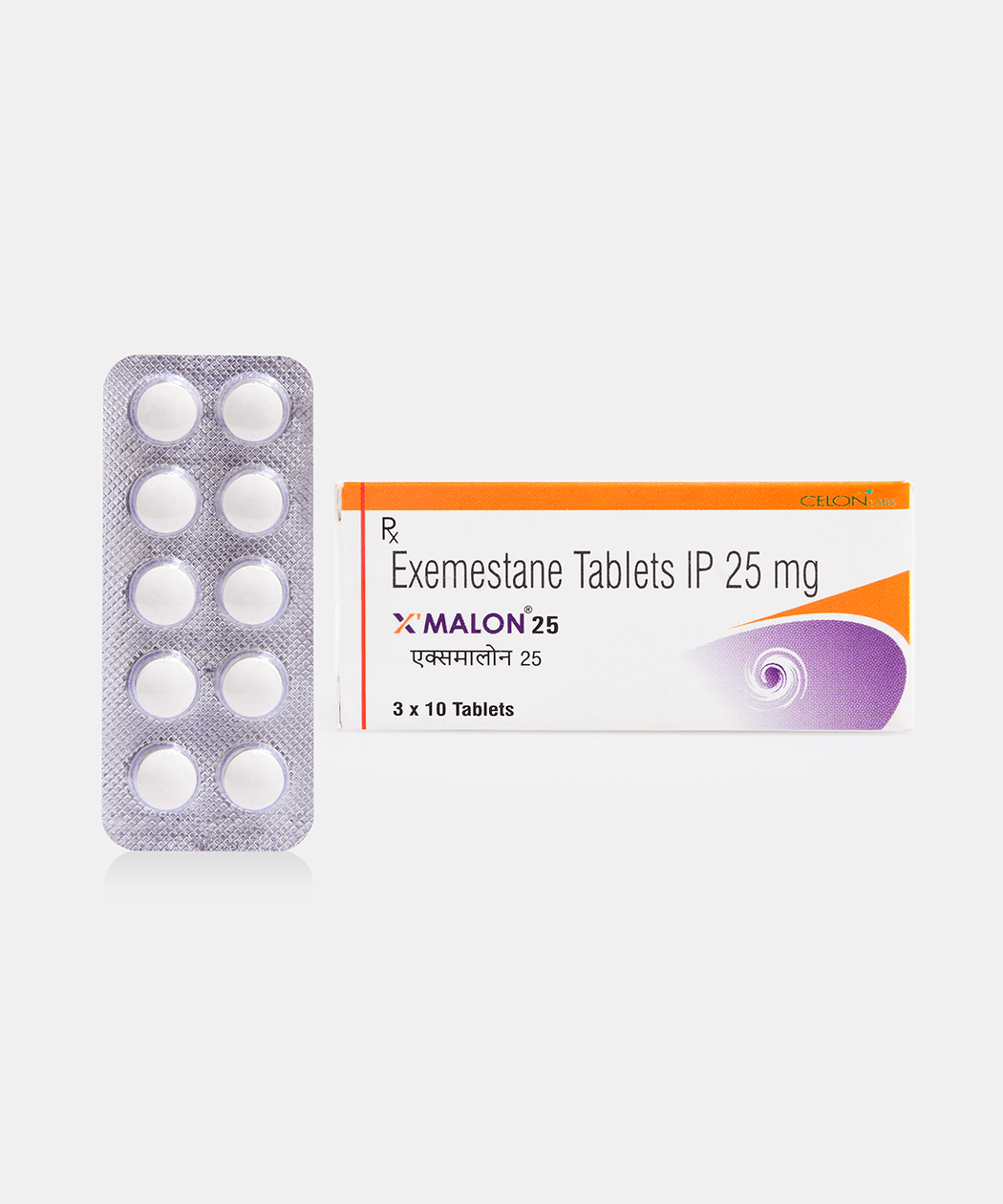

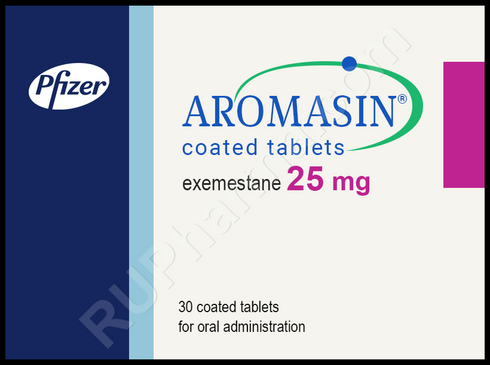
- Exemestane is a suicide inhibitor; it tricks aromatase into processing it, then bonds to the enzyme permanently, retiring that molecule of aromatase for good.
- In the MAP.3 prevention trial it cut the incidence of invasive breast cancer in high-risk postmenopausal women by roughly 65 percent versus placebo.
- Because it is a steroid modeled on androstenedione, it carries faint androgenic character, unlike the non-steroidal inhibitors anastrozole and letrozole.
Mechanism
Exemestane is a mechanism-based, or suicide, inhibitor of aromatase, the cytochrome P450 enzyme (CYP19) that converts androgens such as androstenedione and testosterone into estrogens [1]. Because it closely mimics the enzyme's natural substrate, aromatase accepts it into the active site and begins to process it, but the reaction generates a reactive intermediate that bonds covalently and permanently to the enzyme, taking that molecule of aromatase out of action for good [1]. Shutting down aromatase in peripheral tissues such as fat and muscle sharply reduces the amount of estradiol and estrone in circulation, which deprives hormone-dependent breast tumors of the that fuels their growth [1]. As a steroid, exemestane has mild intrinsic androgenic character and, unlike the non-steroidal inhibitors, binds irreversibly, so the two classes do not fully cross-resist [1].
receptor fingerprint
Aromatase (CYP19)inhibits
Estradiol and estrone synthesisblocks
Androgen-to- conversionblocks
receptor signalingmodulates
activates
Dosingtypical ranges, not medical advice
interested in protocols and clinical dosages? make an account to see them! ^_^
Safetyrisks and cautions, not medical advice
Exemestane is prescription only. Common effects include hot flashes, joint and muscle pain, fatigue, insomnia and sweating. By lowering estrogen it speeds bone loss and raises fracture risk, so bone density should be monitored and calcium and vitamin D supported, and it can nudge cholesterol upward. It only works in postmenopausal women; in premenopausal women the ovaries override it unless they are also suppressed. Off-label use by men is unmonitored and can crash estrogen too low, which harms lipids, mood, libido, joints and bone.
Interactionsdocumented pairs only, not exhaustive
Exemestane is metabolized primarily by CYP3A4 to inactive metabolites, yet paradoxically, complete CYP3A4 deficiency does not significantly alter its systemic exposure or clearance, indicating very low pharmacokinetic interaction liability with CYP3A4 inhibitors [6]. However, potent CYP3A4 inducers do reduce exemestane levels; enzalutamide, a strong inducer, decreases exemestane plasma exposure by approximately 50 percent, necessitating an exemestane dose increase from 25 mg to 50 mg daily when the two are combined [7]. This is a pharmacokinetic interaction in which the inducer accelerates exemestane clearance. The lack of sensitivity to CYP3A4 inhibition contrasts sharply with its sensitivity to induction, suggesting an alternative clearance pathway may partially compensate when CYP3A4 is blocked; interactions with most CYP3A4 inhibitors remain clinically undocumented.
Checking a whole stack? Run it through interactions + stacks.
History
Exemestane was developed by the Italian pharmaceutical firm Farmitalia Carlo Erba, later absorbed into Pharmacia and then Pfizer, during the late 1980s and 1990s as a third-generation aromatase inhibitor. It was deliberately designed as a steroidal, mechanism-based inhibitor built from the natural substrate androstenedione, which set it apart from the non-steroidal agents anastrozole and letrozole developed in the same era. The United States Food and Drug Administration approved it under the brand name Aromasin in 1999 for advanced breast cancer in postmenopausal women whose disease had progressed on tamoxifen.
Subsequent large randomized trials, including the Intergroup Exemestane Study and MA.27, established its value in the adjuvant treatment of early hormone-receptor-positive breast cancer. In 2011 the NCIC CTG MAP.3 chemoprevention trial reported that exemestane substantially lowered the incidence of invasive breast cancer in high-risk postmenopausal women, extending its documented usefulness beyond treatment into prevention.
Reputation
Exemestane holds a well-earned reputation as one of the most reliable aromatase inhibitors in oncology, backed by decades of clinical trials and inclusion in major breast cancer guidelines. Clinicians value its irreversible, mechanism-based action, which fully and durably shuts down aromatase and does not fully cross-resist with the non-steroidal inhibitors, giving it a useful second option when those agents fail.
Its steroidal structure lends a mild androgenic character that some data suggest is comparatively gentle on blood lipids. This same profile has made it a favored off-label tool among men seeking tight control of estrogen, where its potency and once-daily dosing are appreciated. Honesty requires noting that, like all aromatase inhibitors, it can accelerate bone mineral density loss and provoke joint aches, so its powerful estrogen suppression is best respected rather than taken lightly.
Subjective profileweighing the evidence above
A serious oncology drug that reliably does its job in hormone-receptor-positive breast cancer, at the predictable cost of joint pain, fatigue, insomnia and faster bone loss. The off-label estrogen control by men is the risky part; pulling estrogen down has its own bone and lipid bill.
Where to buy

Suppliers
Vendors carrying Exemestane, with live product details and codes. Links are affiliate links that support the wiki at no cost to you.
| supplier | size | price | $/mg |
|---|---|---|---|
| PCT.Zonelowest | 25MG | $9.33 | $0.373/mg |
| PCT.Zone | 25MG | $14.00 | $0.560/mg |
| PCT.Zone | 25MG | $20.00 | $0.800/mg |
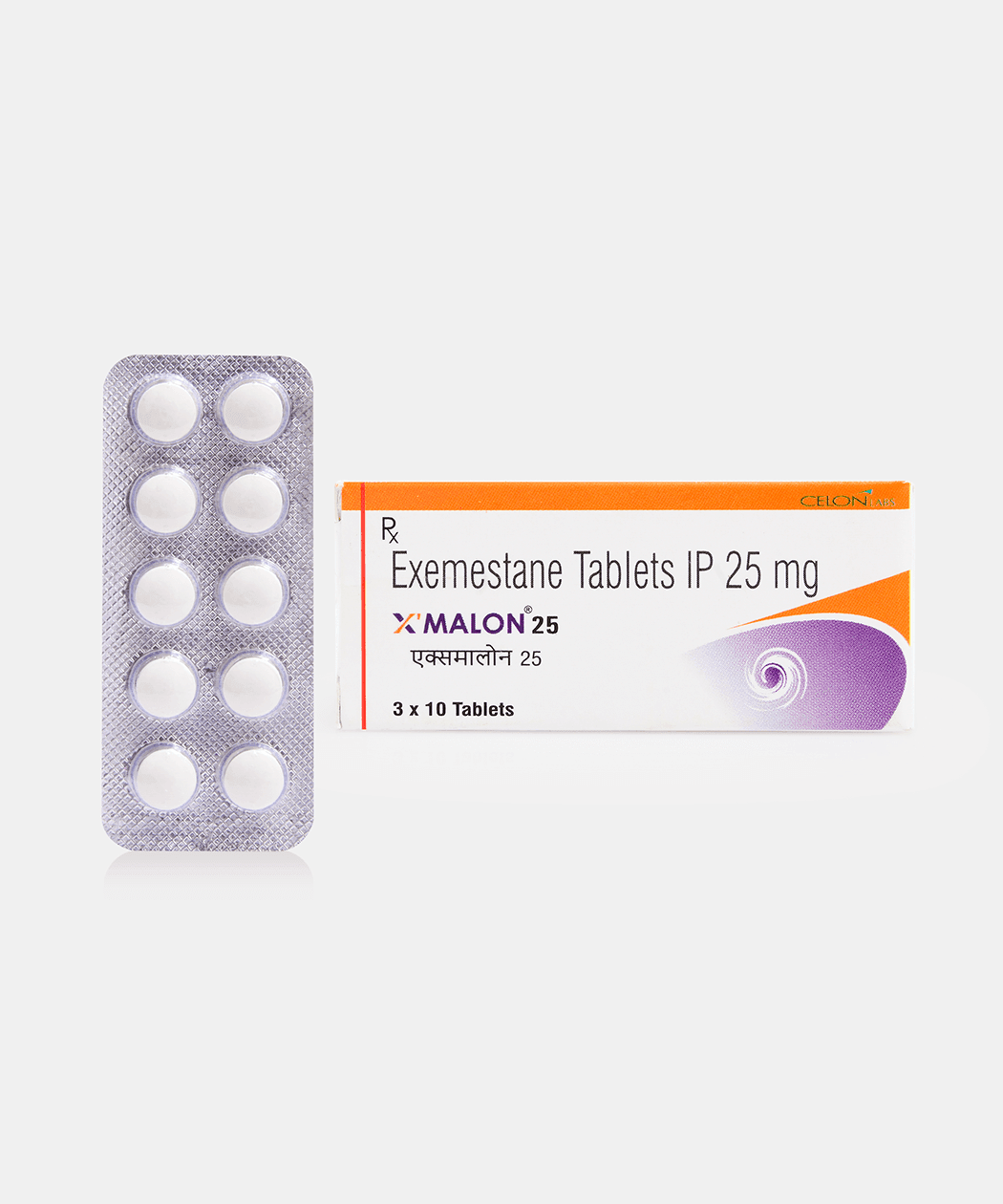
PCT.Zone
Exemestane
PCT.Zone
Exemestane
PCT.Zone
Exemestane

RUPharma🌐
Exemestane
RUPharma🌐
Exemestane
Research
- 1974first citedUtilization of oxygen and reduced nicotinamide adenine dinucleotide phosphate by human placenta…
- 2004controlled trialA randomized trial of exemestane after two to three years of tamoxifen therapy in postmenopausa…
- 2025most recentDetermination and Disposition of the Aromatase Inhibitor Exemestane in CYP3A-Deficient Mice.
- 1.Aromatase Inhibitors (StatPearls)
- 2.A randomized trial of exemestane after two to three years of tamoxifen therapy in postmenopausal women with primary breast cancer
- 3.Exemestane for breast-cancer prevention in postmenopausal women.
- 4.Everolimus in postmenopausal hormone-receptor-positive advanced breast cancer.
- 5.Effects of adjuvant exemestane versus anastrozole on bone mineral density for women with early breast cancer (MA.27B): a companion analysis of a randomised controlled trial
- 6.Determination and Disposition of the Aromatase Inhibitor Exemestane in CYP3A-Deficient Mice.
- 7.A Phase I/Ib Study of Enzalutamide Alone and in Combination with Endocrine Therapies in Women with Advanced Breast Cancer.
- 8.Exemestane (FCE 24304), a new steroidal aromatase inhibitor
- 9.Structural basis for androgen specificity and oestrogen synthesis in human aromatase
- 10.Utilization of oxygen and reduced nicotinamide adenine dinucleotide phosphate by human placental microsomes during aromatization of androstenedione
10 listed here; entry last updated August 2026
Reviews
My notesprivate to this device
FAQ
How is exemestane different from anastrozole or letrozole?
It is steroidal and inactivates aromatase permanently, while those are non-steroidal and bind reversibly; the two types do not fully cross-resist.
Does it work in premenopausal women?
Not on its own; the ovaries override it, so it is used only after menopause or together with ovarian suppression.
Why do my joints ache on it?
Low estrogen commonly causes joint and muscle pain; staying active, vitamin D and sometimes switching agents can help.
Should bone health be watched?
Yes; it speeds bone loss, so calcium, vitamin D and bone density monitoring are advised.
Is off-label use for bodybuilding safe?
It is not medically endorsed; crashing estrogen too low harms lipids, joints, mood and bone.
Adverse effects
- Joint and muscle pain
- Fatigue
- Insomnia
- Increased sweating
Notes and cautions
- Hot flashes
- Loss of bone density with long-term use