
spec sheet12 rows
Estradiol valerate is an estrogen medication and an ester prodrug of estradiol, the main natural estrogen. Once in the body it is split by enzymes into estradiol and valeric acid, so its effects are essentially those of estradiol itself. It is used in menopausal hormone therapy, as part of some hormonal contraceptives, in feminizing hormone therapy for transgender women, and, historically, in the palliative treatment of prostate cancer. It is taken by mouth as a tablet or given as a long-acting oil injection into muscle.
- Menopausal hormone therapy that eases hot flashes
- Calms night sweats and vaginal dryness
- Helps hold onto bone density
- Long acting depot injection or simple oral tablet
- Core of feminizing hormone therapy for transgender women
- Body converts it straight into natural estradiol
- Breast tenderness or enlargement, nausea, headache, and fluid retention
Overview
Estradiol valerate is an estrogen ester, formed by attaching a valeric acid group to the estradiol molecule [1][3]. It is classed as a prodrug because it has little activity of its own; after administration it is rapidly hydrolyzed to release natural 17β-estradiol, which is the active hormone [1][2]. Because part of the molecule's weight is the valerate group, a given mass of estradiol valerate delivers somewhat less estradiol than the same mass of estradiol [1]. It is regarded as a bioidentical estrogen because the hormone it releases is identical to the body's own estradiol [1].
Estradiol valerate was first described around 1940 and introduced for clinical use in the 1950s by the pharmaceutical company Schering [1]. It is marketed in oral form under names such as Progynova and as long-acting oil-based injections under names such as Delestrogen and Progynon Depot [1][3]. Oral tablets provide a once-daily dose, whereas intramuscular injections release the hormone slowly over one to several weeks depending on the amount given [1].
The most common use of estradiol valerate is menopausal hormone therapy, where it treats hot flashes, vaginal atrophy, and other symptoms of low estrogen, often combined with a progestogen such as dienogest to protect the lining of the uterus [1][2]. It is also used in feminizing hormone therapy and appears in some combined oral contraceptives; comparative reviews note that estradiol and its valerate ester are weaker than, and may stimulate the liver's production of clotting proteins less than, the synthetic estrogen ethinylestradiol traditionally used in the pill [3]. Pharmacokinetic studies confirm that oral estradiol valerate is converted to estradiol and estrone in the blood and that different formulations can be made bioequivalent [4]. Historically it was also given in high doses to treat prostate cancer [1].
Estradiol valerate is a prescription medicine available as a generic in many countries [1][4]. Its side effects are those of estrogen therapy in general and include breast tenderness and enlargement, nausea, headache, and fluid retention; higher doses can raise the risk of blood clots and affect blood lipids, insulin sensitivity, and prolactin levels [1]. As with other estrogens, use is individualized and, in women with a uterus, generally paired with a progestogen [1][2].
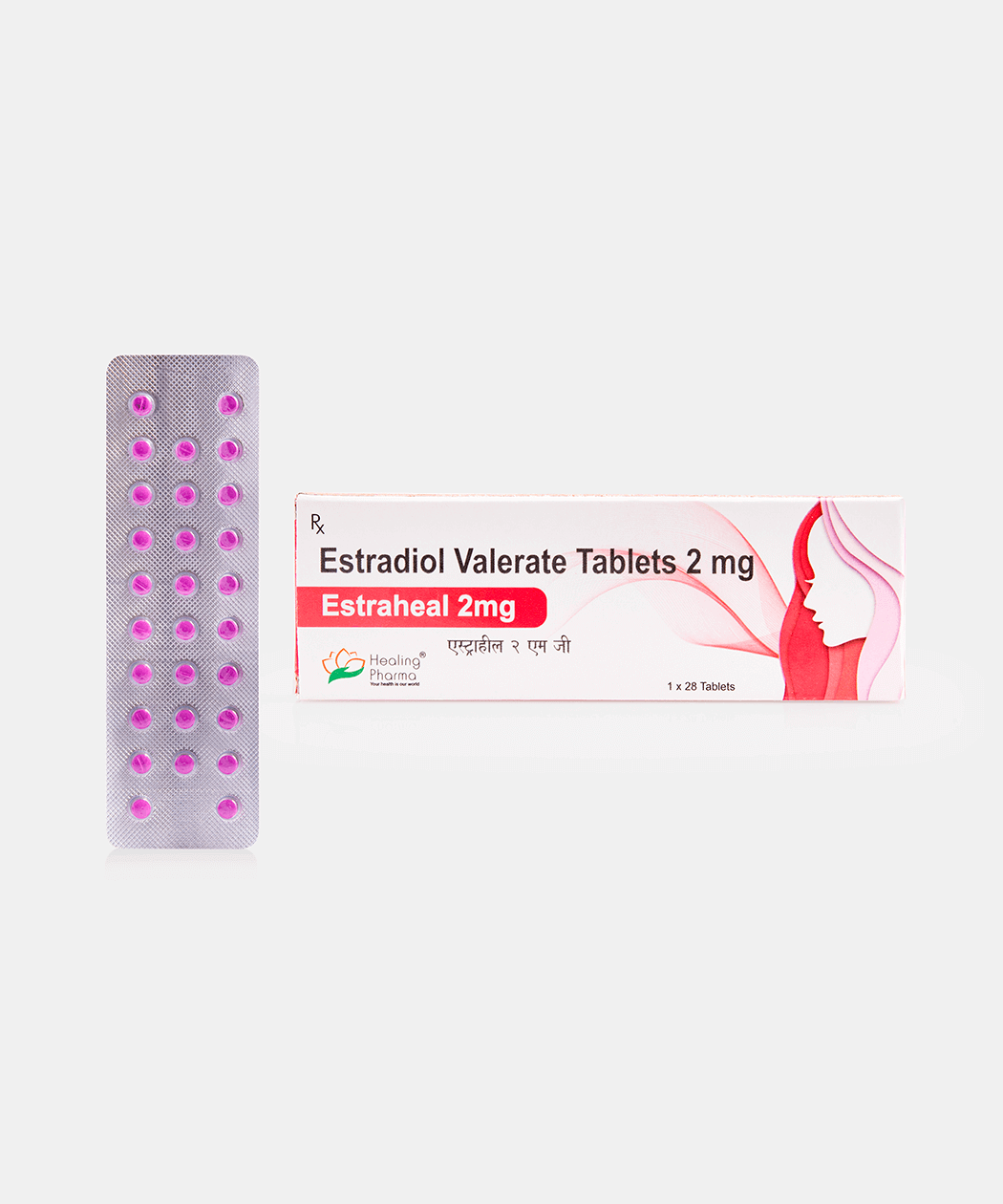

- Estradiol valerate is itself largely inactive; it is simply estradiol with a fatty acid attached, and the body's esterase enzymes snip that chain off to release the working hormone.
- Given as an oil-based injection, its fat-soluble ester forms a depot in the muscle that trickles out estradiol over days to weeks, which is why injections can be spaced far apart.
- It was chosen as the estrogen in one of the first birth control pills to use bioidentical estradiol instead of the long-standard synthetic ethinylestradiol.
Mechanism
Estradiol valerate itself is largely inactive and works by serving as a delivery form of estradiol [1][2]. After it is swallowed or injected, enzymes called esterases, present in the blood, liver, and other tissues, cleave off the valerate group, releasing 17β-estradiol and valeric acid [1][2]. The liberated estradiol then behaves exactly as the natural hormone does, binding receptors inside target cells and regulating the genes that govern the reproductive tissues, bone, and other estrogen-responsive systems [1]. Formulating estradiol as its valerate ester chiefly changes how the hormone is delivered and how long it lasts: the ester makes the molecule more fat-soluble, so an oil-based injection can form a depot in the muscle that releases estradiol gradually over days to weeks [1][3].
receptor fingerprint
Plasma and hepatic esterasesmodulates
receptor alphaagonist
Bone remodelinginhibits
receptor betaagonist
Hypothalamic pituitary axismodulates
Hepatic protein synthesismodulates
Dosingtypical ranges, not medical advice
interested in protocols and clinical dosages? make an account to see them! ^_^
Safetyrisks and cautions, not medical advice
Estradiol valerate is prescription only and shares the safety profile of estradiol. Common effects include breast tenderness, nausea, headache, bloating, and breakthrough bleeding. The important risks are blood clots and stroke, which run higher with oral estrogen than with skin delivery, gallbladder problems, and overgrowth or cancer of the womb lining if it is used without a progestogen in someone with a womb. Long term combined therapy adds a small breast cancer risk. It is avoided in estrogen sensitive cancers, unexplained vaginal bleeding, active clots, and serious liver disease, and caution is needed in smokers and those with clotting risk factors.
Interactionsdocumented pairs only, not exhaustive
Estradiol is cleared largely by CYP3A4, so inducers of that enzyme drop estrogen levels. Rifampin, rifabutin, carbamazepine, phenytoin, phenobarbital and St John's wort all reduce exposure enough to cause breakthrough bleeding and, where the product is used for contraception, contraceptive failure. Strong CYP3A4 inhibitors push the other way and raise estrogen levels along with the thrombotic and vascular risks that follow.
The sharpest documented problem is with hepatitis C regimens containing ombitasvir, paritaprevir and ritonavir. Combining those with ethinylestradiol caused marked ALT elevations, and ethinylestradiol containing products are contraindicated with them; estradiol and estradiol valerate carry a lower but still flagged risk.
Estrogens raise thyroxine binding globulin, which lowers the free fraction of thyroid hormone and increases the thyroxine requirement in people treated for hypothyroidism. The same shift in binding proteins distorts cortisol and sex hormone binding globulin measurements, so laboratory results taken during estrogen therapy can mislead.
Checking a whole stack? Run it through interactions + stacks.
History
Estradiol valerate is an ester prodrug of estradiol, the principal natural estrogen, created by attaching a valeric acid chain to the hormone to make it more fat-soluble and longer-acting. It was introduced by the German pharmaceutical company Schering in the 1950s and has since been marketed under names including Progynova for oral use and Delestrogen for long-acting oil injection into muscle.
The chemistry is elegant in its simplicity: once in the body, esterase enzymes in the blood and tissues cleave off the valerate group, releasing plain estradiol that behaves exactly as the natural hormone does. Over the decades it has been employed in menopausal hormone therapy, in feminizing hormone therapy for transgender women, and, historically, in the palliative treatment of prostate cancer. It later became notable as the estrogen component of one of the first combined oral contraceptives to use estradiol rather than a synthetic estrogen.
Reputation
Estradiol valerate is valued as a versatile and time-tested way to deliver bioidentical estradiol, appreciated for the fact that its effects are essentially those of the body's own estrogen rather than a synthetic substitute. Its ester design gives clinicians flexibility, allowing either a convenient daily tablet or a long-acting depot injection that releases hormone gradually over days to weeks.
In feminizing hormone therapy it is one of the mainstays for developing and maintaining estrogen-dependent characteristics, and in menopausal care it addresses the symptoms and bone effects of estrogen loss. Its long clinical history means its behavior is well understood, though the usual considerations that apply to all estrogen therapy, including effects on clotting risk, remain important and warrant individualized assessment. Because it is metabolized straight into estradiol, many prefer it precisely for that predictability and its bioidentical nature.
Subjective profileweighing the evidence above
A well-established prescription estrogen whose effects and risks are simply estradiol's, with the practical advantage of a long-acting depot injection. Clot and stroke risk runs higher with oral dosing than with skin delivery, and it needs a progestogen alongside it in anyone who still has a uterus.
Where to buy

1 other outlet
Suppliers
Vendors carrying Estradiol Valerate, with live product details and codes. Links are affiliate links that support the wiki at no cost to you.
| supplier | size | price | $/mg |
|---|---|---|---|
| PCT.Zonelowest | 2MG | $4.02 | $2.01/mg |
| PCT.Zone | 2MG | $7.94 | $3.97/mg |

PCT.Zone
Estradiol Valerate
PCT.Zone
Estradiol Valerate
Research
- 1993first citedPharmacokinetics of estradiol, free and total estrone, in young women following single intraven…
- 2012most active year3 papers
- 2013meta-analysisCombination injectable contraceptives for contraception
- 2024most recentPharmacokinetics and safety of estradiol valerate tablet and its generic: a phase 1 bioequivale…
- 1.Steroids pretreatment in assisted reproduction cycles.
- 2.Estradiol valerate/dienogest
- 3.Comparison of estrogenic components used for hormonal contraception
- 4.Pharmacokinetics and safety of estradiol valerate tablet and its generic: a phase 1 bioequivalence study in healthy Chinese postmenopausal female subjects
- 5.Estradiol valerate/dienogest: a novel combined oral contraceptive
- 6.Evaluation of a new estradiol oral contraceptive: estradiol valerate and dienogest
- 7.Normalization of blood loss in women with heavy menstrual bleeding treated with an oral contraceptive containing estradiol valerate/dienogest
- 8.Efficacy and Safety of Estradiol Valerate/Dienogest for the Management of Heavy Menstrual Bleeding: A Multicenter, Double-Blind, Randomized, Placebo-Controlled, Phase III Clinical Trial
- 9.Effective treatment of heavy and/or prolonged menstrual bleeding with an oral contraceptive containing estradiol valerate and dienogest: a randomized, double-blind Phase III trial
- 10.Bioavailability and pharmacodynamics of two 10-mg estradiol valerate depot formulations following IM single dose administration in healthy postmenopausal volunteers
- 11.Estradiol prodrugs (EP) for efficient oral estrogen treatment and abolished effects on estrogen modulated liver functions
- 12.Endometrial safety and tolerability of triphasic sequential hormone replacement estradiol valerate/medroxyprogesterone acetate therapy regimen
18 listed here; entry last updated August 2026
Reviews
My notesprivate to this device
FAQ
How is estradiol valerate different from estradiol?
It is estradiol with a fatty tail attached, which slows release and improves oral uptake; the body clips it off to give plain estradiol.
How often are the injections given?
The oily depot form is usually injected into muscle every one to four weeks, depending on dose and response.
Do I need a progestogen with it?
Yes, if you still have your womb; a progestogen protects the lining from the overgrowth estrogen alone can cause.
Is the tablet as risky for clots as other oral estrogens?
Any oral estrogen raises clot risk more than skin routes because it passes through the liver, so this is discussed if you have clotting risk factors.
Can I switch between the tablet and a patch?
Yes, under medical guidance; doses are matched so symptom control stays steady during the switch.
Adverse effects
- Breast tenderness or enlargement, nausea, headache, and fluid retention
Notes and cautions
- Higher doses can increase the risk of blood clots
- A progestogen is usually added when the uterus is present
- Effects are essentially those of estradiol, into which it converts