
spec sheet12 rows
Epoetin alfa is a recombinant form of human erythropoietin, the hormone that drives red blood cell production, and it belongs to the class of drugs known as erythropoiesis-stimulating agents. Manufactured through recombinant DNA technology, it is given by injection to treat anemia arising from chronic kidney disease, cancer chemotherapy, certain HIV treatments, and other conditions. It is sold under brand names including Epogen and Procrit and appears on the World Health Organization's List of Essential Medicines.
- Corrects the anemia of chronic kidney disease
- Spares people repeated blood transfusions
- Eases chemotherapy driven anemia
- Raises hemoglobin steadily, so energy and stamina return
- Supports red cell recovery around surgery
- Recombinant human erythropoietin on the essential medicines list
- Can raise blood pressure
- Associated with a higher risk of blood clots, particularly at higher hemoglobin targets
- Headache and injection-site reactions are among the more common effects
Overview
Epoetin alfa is a laboratory-made version of erythropoietin, the glycoprotein hormone the body normally produces mainly in the kidneys to regulate the formation of red blood cells [1][4]. It is classified as an erythropoiesis-stimulating agent, and it is a biologic medicine, meaning it is grown in living cell cultures using recombinant DNA technology rather than assembled by chemical synthesis [4]. Its amino acid sequence corresponds to that of natural human erythropoietin [4].
The therapeutic use of recombinant erythropoietin grew out of biotechnology work at the company Amgen, which cloned the erythropoietin gene. The hormone was first shown to correct anemia in a landmark clinical trial reported by Eschbach and colleagues in 1987, in which dialysis patients given the recombinant protein raised their red blood cell counts and largely stopped needing transfusions [1]. It entered medical use in the late 1980s, and a version was later authorized in the European Union in 2007 [1][4]. It is marketed under names such as Epogen, Procrit, and Eprex [4].
Epoetin alfa is used chiefly to treat the anemia of chronic kidney disease, where it can reduce or remove the need for blood transfusions [1][4]. Other approved uses include anemia caused by cancer chemotherapy, anemia in people taking the HIV medicine zidovudine, and lowering the need for transfusion around certain surgeries [4]. Its role in critically ill patients has been tested; a large randomized trial by Corwin and colleagues found that epoetin alfa did not reduce the number of patients requiring transfusion and was linked to a higher rate of clot-related events, although a possible survival benefit appeared in trauma patients [2]. Researchers have also examined how fully anemia should be corrected: a trial in chronic kidney disease found that pushing hemoglobin all the way into the normal range with erythropoiesis-stimulating therapy did not lower the rate of cardiovascular events [3].
The drug is a prescription-only biologic administered by injection, either under the skin or into a vein [4]. In several regions its labeling carries prominent safety warnings, because aiming for higher hemoglobin levels has been associated with greater risks of death, cardiovascular and clot-related events, and, in some cancer settings, faster tumor progression [2][4]. Raised blood pressure and headache are among the more frequent effects, and treatment is generally paired with attention to the body's iron stores so that the marrow has the raw material it needs [3][4].
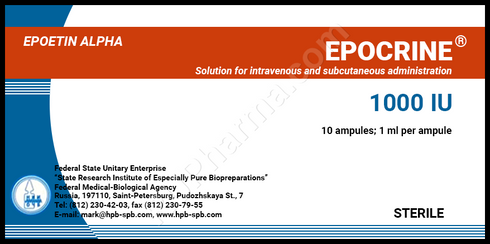

- The gene for human erythropoietin was cloned at Amgen in the 1980s, and the resulting drug became one of the biotechnology industry's first true commercial blockbusters.
- Because it boosts the oxygen-carrying capacity of blood, recombinant erythropoietin became notorious as a blood-doping agent in endurance sports, prompting dedicated anti-doping tests.
- A key clinical insight came from learning that pushing hemoglobin all the way to normal was not safer but riskier, which reshaped dosing toward more conservative targets.
Mechanism
Epoetin alfa reproduces the action of the body's own erythropoietin [1][4]. It binds to the erythropoietin receptor on the surface of immature red blood cell precursors in the bone marrow, and this binding sets off internal signaling that promotes their survival, multiplication, and maturation into circulating red blood cells [4]. By amplifying this process, known as erythropoiesis, the drug raises the hemoglobin concentration and the red cell count, correcting anemia [1]. Because a growing red cell mass thickens the blood and can push blood pressure upward, and because the response involves tissues beyond the marrow, driving hemoglobin too high is thought to contribute to the elevated risk of hypertension and clot-related complications observed with the drug [2][3].
receptor fingerprint
Erythropoietin receptoragonist
JAK2 kinaseactivates
STAT5 pathwayactivates
Erythroid progenitor cells (BFU-E and CFU-E)activates
Hemoglobin and hematocritmodulates
Anti-apoptotic signaling in progenitorsmodulates
Dosingtypical ranges, not medical advice
interested in protocols and clinical dosages? make an account to see them! ^_^
Safetyrisks and cautions, not medical advice
Epoetin alfa is prescription only and carries a boxed warning. Driving hemoglobin too high, generally above about 11 g/dL, increases the risk of blood clots, stroke, heart attack, and death, and can speed tumor growth in some cancers, so doses are kept to the lowest level that avoids transfusion. The most common side effects are raised blood pressure, headache, and injection site reactions, and high blood pressure can occasionally trigger seizures. A rare but serious problem is pure red cell aplasia caused by antibodies against the drug. It should be used carefully in people with uncontrolled hypertension or a history of clots, and iron levels should be checked and repleted so the marrow has raw material to work with.
History
Epoetin alfa is a recombinant form of human erythropoietin, the kidney hormone that drives red blood cell production, and its creation was one of the defining achievements of the early biotechnology era. The human erythropoietin gene was cloned by scientists at Amgen in the mid-1980s, an effort led by Fu-Kuen Lin, which made it possible to manufacture the hormone in cultured cells rather than extract it from urine. Epoetin alfa received United States Food and Drug Administration approval in 1989, initially to treat the anemia of chronic kidney disease in dialysis patients, and it was marketed as Epogen and later Procrit. Its indications broadened over time to include anemia arising from cancer chemotherapy and certain HIV treatments. It became one of the first blockbuster biotech medicines and now appears on the World Health Organization's List of Essential Medicines.
Reputation
Epoetin alfa transformed the lives of countless patients with chronic kidney disease, replacing repeated blood transfusions with a manufactured version of the body's own hormone and freeing many from the fatigue of severe anemia. Its arrival is widely regarded as a landmark in medicine, demonstrating that a scarce human protein could be produced at scale through recombinant DNA technology and delivered as a practical therapy.
For dialysis patients and those undergoing chemotherapy, the ability to raise hemoglobin and restore energy without transfusion represented a genuine leap forward in quality of life. Experience has also taught an important lesson about restraint, since driving hemoglobin too high was found to increase the risk of hypertension and clotting complications, which is why treatment now aims for a moderate rather than a normal target. Used thoughtfully within those guardrails, epoetin alfa remains a foundational and highly effective treatment for anemia.
Subjective profileweighing the evidence above
A real fix for the anemia of kidney disease and chemotherapy, and it spares people transfusions. It also carries a boxed warning: pushing hemoglobin too high raises clots, stroke and death and can speed some tumors, which is why doses are kept low. Hospital medicine, never a performance shortcut.
Where to buy
1 other outlet

Suppliers
Vendors carrying Epoetin Alfa, with live product details and codes. Links are affiliate links that support the wiki at no cost to you.
RUPharma🌐
Epoetin Alfa
PCT.Zone
Epoetin Alfa
Research
- 1987first citedCorrection of the anemia of end-stage renal disease with recombinant human erythropoietin: resu…
- 2015most recentMortality risk of darbepoetin alfa versus epoetin alfa in patients with CKD: systematic review…
- 1.Correction of the anemia of end-stage renal disease with recombinant human erythropoietin: results of a combined phase I and II clinical trial
- 2.Efficacy and safety of epoetin alfa in critically ill patients
- 3.Normalization of hemoglobin level in patients with chronic kidney disease and anemia.
- 4.Mortality risk of darbepoetin alfa versus epoetin alfa in patients with CKD: systematic review and meta-analysis.
- 5.The effects of normal as compared with low hematocrit values in patients with cardiac disease who are receiving hemodialysis and epoetin
- 6.Anemia management and chronic renal failure progression
6 listed here; entry last updated August 2026
Reviews
My notesprivate to this device
FAQ
How is epoetin alfa given?
It is an injection under the skin or into a vein, usually a few times a week, often at a dialysis center or clinic. Some patients are taught to inject it at home.
How long until I feel better?
Hemoglobin usually starts climbing within two to six weeks, and energy improves as it rises. It is not a quick fix and needs steady dosing plus adequate iron.
Why is the dose kept conservative?
Pushing hemoglobin too high raises the risk of clots, stroke, and heart problems, so doctors aim for the lowest dose that keeps you out of the transfusion range rather than a normal level.
Do I need iron with it?
Usually yes. The marrow needs plenty of iron to build red cells, and many people on epoetin become iron deficient, so iron is often given by mouth or vein alongside it.
Why is it banned in sports?
By boosting red cells it increases oxygen delivery and endurance, which is considered blood doping. It also thickens the blood and raises clot risk, making unsupervised use dangerous.
Adverse effects
- Can raise blood pressure
- Associated with a higher risk of blood clots, particularly at higher hemoglobin targets
- Headache and injection-site reactions are among the more common effects
Notes and cautions
- Adequate iron stores are usually needed for it to work well