
spec sheet12 rows
Elagolix is an orally active, non-peptide antagonist of the gonadotropin-releasing hormone (GnRH) receptor. By suppressing the ovaries' production of estrogen and progesterone, it is used to manage moderate to severe pain from endometriosis and, in combination with hormonal add-back therapy, to control heavy menstrual bleeding caused by uterine fibroids. It is taken as a tablet and is marketed under brand names including Orilissa.
- Manages moderate to severe endometriosis pain
- Controls heavy menstrual bleeding from uterine fibroids
- Eases painful periods by dialing estrogen down
- A tablet, not an injection, which matters daily
- Dose adjusts to how deep an effect is needed
- A real advance for endometriosis pain
- Hot flushes and night sweats
- Reduced bone mineral density with longer use
- Headache
Overview
Elagolix is a small-molecule, orally available GnRH receptor antagonist developed by AbbVie together with Neurocrine Biosciences. Unlike the older injectable GnRH agonists, which first stimulate and then desensitize the pituitary, elagolix blocks the GnRH receptor directly and produces a rapid, dose-dependent, and reversible fall in the pituitary hormones that drive the ovaries [1]. Chemically it is a fluorinated, pyrimidine-based compound.
Its first approved use, granted in the United States in 2018, is for the management of moderate to severe pain associated with endometriosis, an estrogen-dependent condition. Two large phase 3 trials (Elaris EM-I and EM-II) showed that elagolix reduced menstrual pain and non-menstrual pelvic pain compared with placebo, with the higher dose giving greater relief; extension studies confirmed that these benefits were sustained over a full year of treatment [1][2].
Elagolix is also used, in a fixed combination with low-dose estradiol and norethindrone acetate (an approach called add-back therapy), to treat heavy menstrual bleeding from uterine fibroids. In phase 3 trials, elagolix with add-back therapy markedly reduced menstrual blood loss compared with placebo, while the added hormones offset some of the bone-density loss and hot flushes caused by low estrogen [3].
Because elagolix lowers estrogen, its characteristic side effects are hypoestrogenic ones: hot flushes, reduced bone mineral density, and changes in blood lipids, which limit how long it can be taken without add-back therapy [1][3]. It is available as oral tablets, sold as Orilissa for endometriosis and as a co-packaged product with estradiol and norethindrone under the name Oriahnn for fibroids.
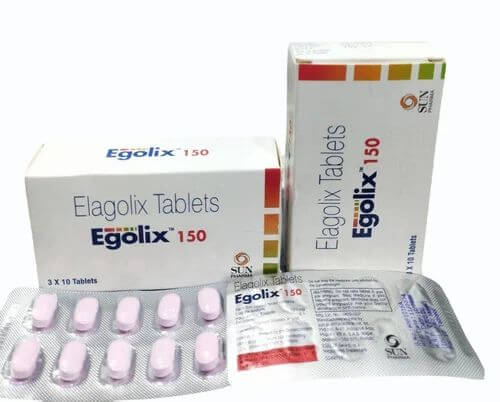
- Elagolix was the first oral GnRH antagonist approved in the United States for endometriosis-associated pain.
- Because its estrogen suppression is dose-dependent, doctors can dial the dose up or down to match a patient's symptoms.
- Unlike the older injectable GnRH agonists, it lowers hormones without the initial flare surge and its effect reverses quickly once stopped.
Mechanism
Elagolix competitively blocks the receptor for gonadotropin-releasing hormone (GnRH) on the pituitary gland. GnRH normally prompts the pituitary to release luteinizing hormone (LH) and follicle-stimulating hormone (FSH), which in turn drive the ovaries to make and progesterone. By occupying the GnRH receptor, elagolix reduces LH and FSH secretion and thereby lowers circulating estrogen and progesterone [1]. Unlike GnRH agonists, it does not cause an initial hormone surge (flare), and its effect is quickly reversible once the drug is stopped. The degree of suppression is dose-dependent, which allows lower doses to be used for pain relief and higher doses, paired with hormonal add-back, for heavy bleeding [1][3]. Because endometriosis lesions and uterine fibroids depend on , lowering estrogen reduces their activity and eases symptoms.
receptor fingerprint
GnRH receptor (pituitary)antagonist
Ovarian estradiol productionblocks
Hypothalamic-pituitary-gonadal axismodulates
Progesterone secretionblocks
Dosingtypical ranges, not medical advice
interested in protocols and clinical dosages? make an account to see them! ^_^
Safetyrisks and cautions, not medical advice
Elagolix is a prescription hormone-blocking pill, and its side effects come from lowering estrogen. Expect menopause-like symptoms such as hot flashes, night sweats, headache, and mood changes, along with lighter periods or none at all. The big concern with longer use is bone thinning, so treatment length is capped and calcium and vitamin D are encouraged; the fibroid version adds hormonal add-back partly to protect bone. It can raise liver enzymes and is avoided in severe liver disease and osteoporosis. Because it can allow pregnancy early in a cycle yet is unsafe in pregnancy, non-hormonal contraception is advised.
Interactionsdocumented pairs only, not exhaustive
Elagolix is a weak inhibitor of the hepatic enzyme CYP2C19. When elagolix 300 mg is given twice daily, it increases exposure of the CYP2C19 substrate omeprazole by 1.8-fold overall, with 2-2.5-fold increases in CYP2C19 extensive and intermediate metabolizers and a 40% decrease in poor metabolizers, a pharmacokinetic interaction where elagolix changes omeprazole metabolism [6].
Elagolix also inhibits the intestinal uptake transporter OATP2B1; this inhibition causes reductions in the bioavailability of OATP2B1 substrates like rosuvastatin, with AUC decreases of 40-50%, a distinct pharmacokinetic mechanism from CYP inhibition [7]. CYP2C19 substrate medications may require dosage adjustment when initiated with elagolix. Interactions not comprehensively documented include effects on other CYP enzyme systems at clinically relevant doses, long-term effects with extended elagolix therapy, and multi-drug interactions in patients taking multiple CYP2C19 or OATP2B1 substrates simultaneously.
Checking a whole stack? Run it through interactions + stacks.
History
Elagolix was discovered by Neurocrine Biosciences as part of a search for orally active, non-peptide antagonists of the gonadotropin-releasing hormone (GnRH) receptor, and it was subsequently developed in partnership with AbbVie. Its defining innovation was that, unlike the injectable GnRH agonists that had long been used to suppress reproductive hormones, elagolix could be taken as a tablet and produced a rapid, dose-dependent, and readily reversible reduction in estrogen without the initial hormone surge, or flare, characteristic of the older agents.
This dose-tunable suppression allowed lower doses for pain and higher doses, combined with hormonal add-back, for heavy bleeding. In July 2018 the United States Food and Drug Administration approved it under the brand name Orilissa for moderate to severe pain associated with endometriosis, making it the first oral GnRH antagonist cleared for the condition. A combination product adding hormonal add-back therapy was later approved for heavy menstrual bleeding due to uterine fibroids. The pivotal endometriosis trials were reported by Taylor and colleagues in the New England Journal of Medicine in 2017.
Reputation
Elagolix is valued as a meaningful advance for women with endometriosis, offering an oral, flexible, and quickly reversible way to lower estrogen and reduce the disease's often debilitating pelvic pain and painful periods. Its dose-adjustable design lets treatment be tailored to the severity of symptoms, and the avoidance of the hormonal flare seen with older GnRH agonists is a practical benefit at the start of therapy.
Randomized trials have documented significant improvements in both menstrual and non-menstrual pelvic pain. The candid trade-off is that lowering estrogen produces menopause-like effects such as hot flashes and, importantly, a reduction in bone mineral density that limits how long the higher doses can be used without add-back therapy. Prescribed thoughtfully and with appropriate monitoring, it represents a genuinely useful, patient-friendly option in a field where effective oral treatments have historically been scarce.
Subjective profileweighing the evidence above
A real advance for endometriosis pain and heavy fibroid bleeding, and being a pill rather than an injection matters more than it sounds. Suppressing estrogen has a price, though: hot flushes now and bone density later, which is why treatment length is capped.
Where to buy
Suppliers
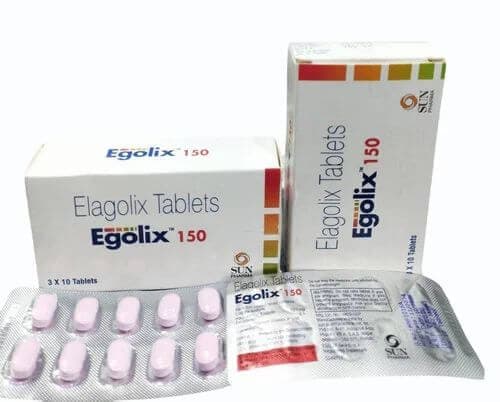
Vendors carrying Elagolix, with live product details and codes. Links are affiliate links that support the wiki at no cost to you.
PCT.Zone
Elagolix
Research
- 2008first citedDiscovery of sodium R-(+)-4-{2-[5-(2-fluoro-3-methoxyphenyl)-3-(2-fluoro-6-[trifluoromethyl]ben…
- 2017controlled trialTreatment of Endometriosis-Associated Pain with Elagolix, an Oral GnRH Antagonist
- 2025most recentSignificance of gut breast cancer resistance protein versus organic anion transporting polypept…
- 1.Treatment of Endometriosis-Associated Pain with Elagolix, an Oral GnRH Antagonist
- 2.Long-Term Outcomes of Elagolix in Women With Endometriosis: Results From Two Extension Studies
- 3.Elagolix for Heavy Menstrual Bleeding in Women with Uterine Fibroids
- 4.Discovery of sodium R-(+)-4-{2-[5-(2-fluoro-3-methoxyphenyl)-3-(2-fluoro-6-[trifluoromethyl]benzyl)-4-methyl-2,6-dioxo-3,6-dihydro-2H-pyrimidin-1-yl]-1-phenylethylamino}butyrate (elagolix), a potent and orally available nonpeptide antagonist of the human gonadotropin-releasing hormone receptor.
- 5.Efficacy, tolerability, and bone density outcomes of elagolix with add-back therapy for endometriosis-associated pain: twelve months of an ongoing randomized phase 3 trial
- 6.Effects of elagolix on the pharmacokinetics of omeprazole and its metabolites in healthy premenopausal women.
- 7.Significance of gut breast cancer resistance protein versus organic anion transporting polypeptide 2B1 inhibition on rosuvastatin clinical drug-drug interactions.
7 listed here; entry last updated August 2026
Reviews
My notesprivate to this device
FAQ
Will elagolix stop my periods?
It often makes periods much lighter or stops them while you take it, which is part of how it reduces pain and bleeding.
Why is treatment limited in length?
Lowering estrogen can thin bone over time, so the pain dose is capped at up to 24 months and the higher dose at 6 months.
Do I still need birth control?
Yes; it is not a reliable contraceptive and is unsafe in pregnancy, so non-hormonal birth control is recommended.
What is add-back therapy?
For fibroid bleeding, a small amount of hormone is added back alongside elagolix to ease hot flashes and protect bone while still controlling symptoms.
How soon does it help endometriosis pain?
Many women notice less menstrual and pelvic pain within the first few months of treatment.
Adverse effects
- Hot flushes and night sweats
- Reduced bone mineral density with longer use
- Headache
- Nausea
- Changes in blood cholesterol
- Mood changes