
spec sheet10 rows
Cyproterone Acetate + Ethinylestradiol Cyproterone acetate / ethinylestradiol is a combination medication that pairs cyproterone acetate, a progestin with strong antiandrogen activity, with ethinylestradiol, a synthetic estrogen. Sold under brand names such as Diane-35 and Dianette, it is used mainly to treat androgen-related skin conditions in women, including moderate to severe acne, seborrhea, and excess hair growth (hirsutism), while also acting as a hormonal contraceptive. Because it carries a higher risk of blood clots than some other combined pills, its use is generally reserved for these specific indications rather than contraception alone.
- Clears the stubborn hormonal acne that creams leave behind
- Slows unwanted facial and body hair growth
- Cuts oily skin and seborrhea at the hormonal source
- Reliable contraception built into the same daily pill
- Steadies the menstrual cycle
- Prescription strength results, usually within a few months
- Increased risk of venous blood clots
- Headache, nausea, and mood changes possible
Overview
This medicine combines two hormones in a single daily tablet. Cyproterone acetate is a synthetic progestogen that also blocks the androgen (male hormone) receptor, while ethinylestradiol is a potent synthetic estrogen widely used in combined oral contraceptives [1]. Together they suppress ovulation and lower the activity of androgens, which is why the product is used both to prevent pregnancy and to treat conditions driven by androgens [1][3]. The combination is sometimes called co-cyprindiol and is marketed under many names, most famously Diane-35 and Dianette [1].
Its principal approved use is in women with androgen-sensitive skin problems, especially moderate to severe acne with or without seborrhea, and hirsutism [1]. Reviews of the substantial trial literature report that it is highly effective for these symptoms, although improvement in unwanted hair growth typically requires several months of treatment [1][4]. It is also widely used in women with polycystic ovary syndrome, where it can address hyperandrogenic skin symptoms, regulate menstrual cycles, and reduce the risk of endometrial overgrowth, while at the same time providing contraception [2].
The estrogen and antiandrogen pairing was developed in the 1970s, with the original Diane formulation using a higher estrogen dose and the later Diane-35 version lowering it [1]. Cyproterone acetate itself has a long history as an antiandrogen used for conditions ranging from hirsutism and acne to prostate disease [4].
A defining concern with this combination is the risk of venous thromboembolism, or blood clots in the veins. Like other combined hormonal contraceptives it raises this risk above baseline, and some analyses have placed it toward the higher end among such products, although the evidence has been debated [3]. Because of the clot risk, European regulators restricted its use, recommending it chiefly for androgen-related skin conditions and generally not for contraception alone; it is prescription-only and is not marketed in some countries, including the United States [1][2].
Common side effects include menstrual changes, breast tenderness, headache, nausea, mood changes, and reduced libido, in line with other combined pills [1]. It is taken as an oral tablet in a cyclic monthly pattern [1].
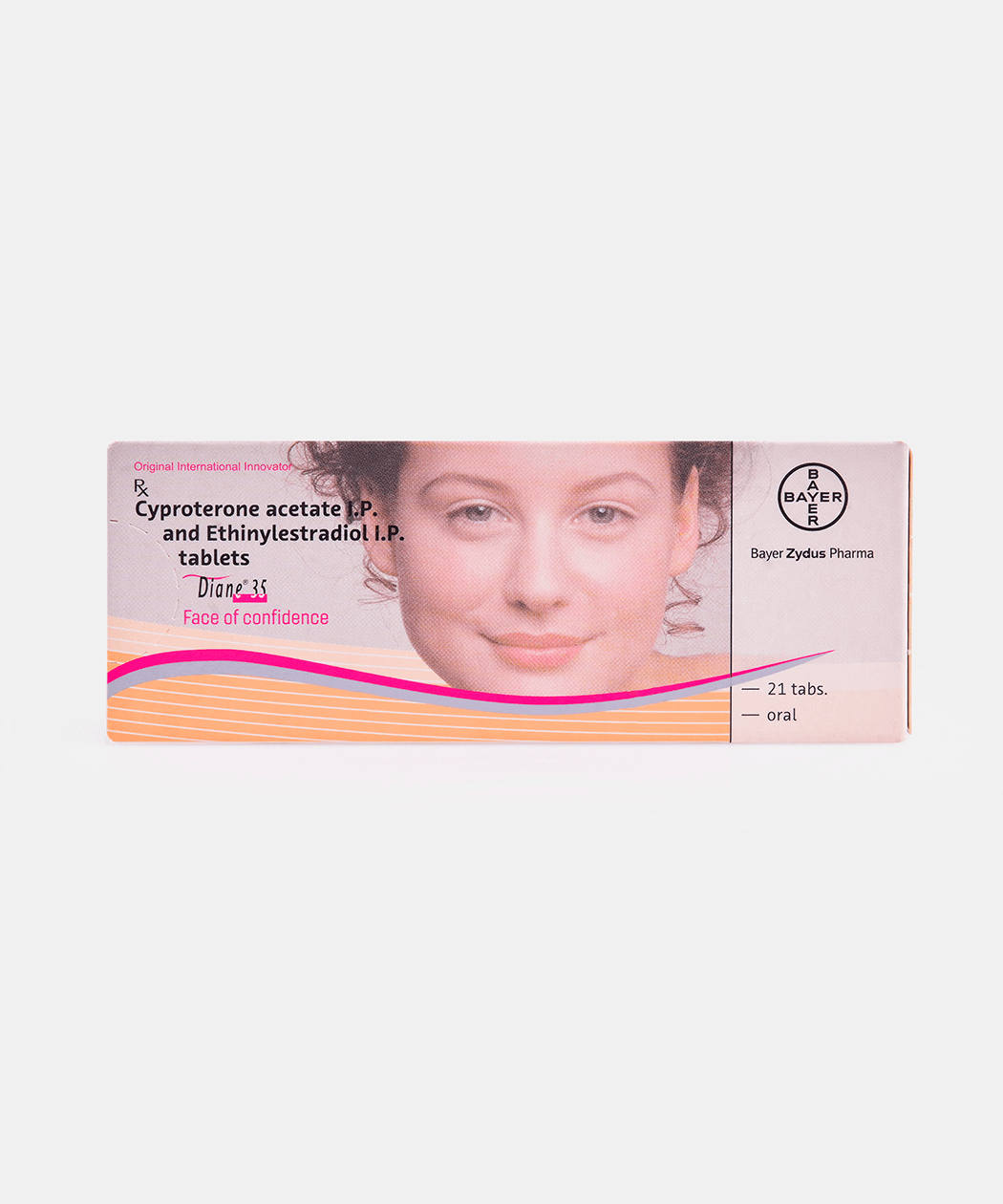
- Cyproterone acetate, first made in 1961, was among the first drugs able to directly block the androgen receptor.
- Sold as Diane-35 and Dianette, the combination is used as much for skin and hair conditions as for contraception.
- It is frequently chosen for women with polycystic ovary syndrome because it treats hyperandrogenic acne and hirsutism while also lowering the elevated endometrial-cancer risk associated with irregular cycles.
Mechanism
The combination works through the complementary hormonal actions of its two components [1]. Cyproterone acetate competitively blocks the , preventing testosterone and dihydrotestosterone from acting on tissues such as the skin's oil glands and hair follicles, which reduces acne, seborrhea, and excess hair growth [4]. As a progestogen it also suppresses the pituitary release of gonadotropins, curbing the ovaries' production of androgens and preventing ovulation [1].
Ethinylestradiol, the component, reinforces ovulation suppression and, importantly, raises blood levels of sex-hormone-binding globulin, a carrier protein that binds circulating testosterone and lowers the amount of free, active androgen reaching tissues [1][2]. The same -driven changes in clotting factors that accompany combined hormonal contraceptives underlie the elevated risk of venous thromboembolism associated with the product [3].
receptor fingerprint
antagonist
Pituitary gonadotropins (LH and FSH)inhibits
receptoragonist
Sex hormone binding globulinactivates
Sebaceous gland activityinhibits
Dosingtypical ranges, not medical advice
interested in protocols and clinical dosages? make an account to see them! ^_^
Safetyrisks and cautions, not medical advice
This is a prescription hormonal product and shares the risks of combined pills, but with an even higher chance of venous blood clots, so it is not a first-choice contraceptive. It should be avoided in women with a history of clots, certain migraines, uncontrolled high blood pressure, or a high clot risk, and smoking over age 35 sharply raises the danger. Because of that clot risk, it is usually stopped a few months after acne or hirsutism clears rather than continued indefinitely. Common effects include nausea, breast tenderness, mood changes, headache, and breakthrough bleeding. It must not be used in pregnancy, and active liver disease is a contraindication.
History
The active antiandrogen in this combination, cyproterone acetate, was first synthesized in 1961 by the German chemist Rudolf Wiechert at Schering AG, and it became one of the earliest clinically useful blockers of the androgen receptor. Recognizing that combining its antiandrogen and progestogen actions with an estrogen could both treat androgen-related skin disease and provide cycle control, Schering developed the fixed-dose product pairing cyproterone acetate with the synthetic estrogen ethinylestradiol.
It was introduced under the brand name Diane, later reformulated at a lower estrogen dose as Diane-35, and marketed in various countries as Dianette and under the generic term co-cyprindiol. Over the following decades it became a widely used treatment for moderate to severe acne, seborrhea, and hirsutism in women, and it is also employed in the management of polycystic ovary syndrome. Because combined hormonal products of this type carry a higher risk of venous blood clots than some other pills, several European regulators reviewed and restricted its use in 2013, reaffirming its role for androgen-related conditions rather than contraception alone.
Reputation
This combination has a well-established reputation as an effective treatment for the skin and hair manifestations of androgen excess, offering meaningful relief for women troubled by stubborn acne, oily skin, and unwanted hair growth. By attacking the problem on two fronts, blocking the androgen receptor directly while lowering the amount of free, active testosterone in the blood, it addresses the underlying hormonal drivers rather than merely the symptoms.
Many patients also value the added benefit of reliable cycle regulation and contraception, and reviews highlight its positive effect on quality of life and confidence in those with visible androgen-related conditions. It is regarded as a particularly useful option in polycystic ovary syndrome, where hyperandrogenic skin symptoms are common. A balanced view acknowledges that its elevated clot risk means it is generally reserved for these specific indications and prescribed after weighing individual risk factors.
Subjective profileweighing the evidence above
It genuinely clears androgen-driven acne and excess hair while working as contraception, which is why it stays in use. The venous clot risk is higher than an ordinary combined pill, so it is a second-line option meant to be stopped a few months after the skin settles, and it is off the table for smokers over 35.
Where to buy

Suppliers
Vendors carrying Cyproterone Acetate + Ethinylestradiol, with live product details and codes. Links are affiliate links that support the wiki at no cost to you.
PCT.Zone
Cyproterone Acetate + Ethinylestradiol
Research
- 1986first citedTreatment of hirsutism and acne with cyproterone acetate
- 2024most recentGiant Intracranial Meningiomas Requiring Surgery in 2 Transgender Women Treated With Cyproteron…
- 1.The use of cyproterone acetate/ethinylestradiol in hyperandrogenic skin symptoms: a review
- 2.Use of cyproterone acetate/ethinylestradiol in polycystic ovary syndrome: rationale and practical aspects
- 3.Cyproterone acetate with ethinylestradiol as a risk factor for venous thromboembolism: an epidemiological evaluation
- 4.Treatment of hirsutism and acne with cyproterone acetate
- 5.Giant Intracranial Meningiomas Requiring Surgery in 2 Transgender Women Treated With Cyproterone Acetate
5 listed here; entry last updated August 2026
Reviews
My notesprivate to this device
FAQ
Is this the same as a normal birth control pill?
It is a combined hormonal pill, but the cyproterone gives it stronger anti-androgen effects and a higher clot risk, so it is aimed at acne and hirsutism rather than routine contraception.
How long until my acne improves?
Skin usually takes about three months to respond, and full benefit can take several cycles; it is not an overnight fix.
Why is it stopped after symptoms clear?
Because of the higher clot risk, doctors often stop it a few cycles after acne or hair growth settles rather than continuing it long term.
Who should not take it?
Women with a history of blood clots, certain migraines, uncontrolled high blood pressure, liver disease, or heavy smoking over age 35 should avoid it.
Does it double as contraception?
Yes; it reliably prevents pregnancy, which is convenient since it should not be used during pregnancy anyway.
Adverse effects
- Increased risk of venous blood clots
- Headache, nausea, and mood changes possible
Notes and cautions
- Menstrual changes and breast tenderness common
- Reduced libido reported in some users
- Use restricted mainly to androgen-related skin conditions