
spec sheet10 rows
Choriogonadotropin alfa is a recombinant form of human chorionic gonadotropin (hCG), a glycoprotein hormone used in reproductive medicine. Rather than being extracted from the urine of pregnant women, it is manufactured with recombinant DNA technology, and it is given by injection to trigger the final maturation and release of an egg during fertility treatment. It is marketed under brand names such as Ovidrel and Ovitrelle.
- Triggers final egg maturation and release in fertility treatment
- Restarts the testes and testosterone in men
- Highly pure recombinant hormone, not extracted from urine
- Ready to use subcutaneous pen, no mixing
- Supports sperm production alongside testosterone recovery
- A precise prescription tool that does its job well
- Headache
- Abdominal pain or bloating
- Nausea
Overview
Choriogonadotropin alfa is a laboratory-made version of human chorionic gonadotropin, a glycoprotein hormone naturally produced by placental trophoblast cells during pregnancy. Like the other gonadotropins, the hormone is built from two subunits, an alpha chain shared across the glycoprotein hormone family and a beta chain that gives it its specific identity, and it is structurally and functionally close to luteinizing hormone (LH) [1].
Historically, hCG for medical use was purified from the urine of pregnant women, which yielded a variable and impurity-laden product. Choriogonadotropin alfa is instead expressed in cultured mammalian cells through recombinant DNA technology, producing a highly consistent, high-purity hormone that can be dosed by mass and delivered as a ready-to-use subcutaneous injection [3].
Its main role is in assisted reproduction. During controlled ovarian stimulation for procedures such as in vitro fertilization, a single injection stands in for the body's natural mid-cycle LH surge, prompting the final maturation of the egg before it is retrieved; the hormone is also used for ovulation induction and to help support the luteal phase [1][3]. A phase III trial in Japanese women undergoing ovulation induction found that recombinant hCG was non-inferior to traditional urinary hCG for triggering ovulation, with a comparable safety profile [2].
Choriogonadotropin alfa is a prescription biologic approved by drug regulators including the United States Food and Drug Administration and the European Medicines Agency. It is supplied as a prefilled solution for subcutaneous injection and is administered under medical supervision as part of a structured fertility protocol.
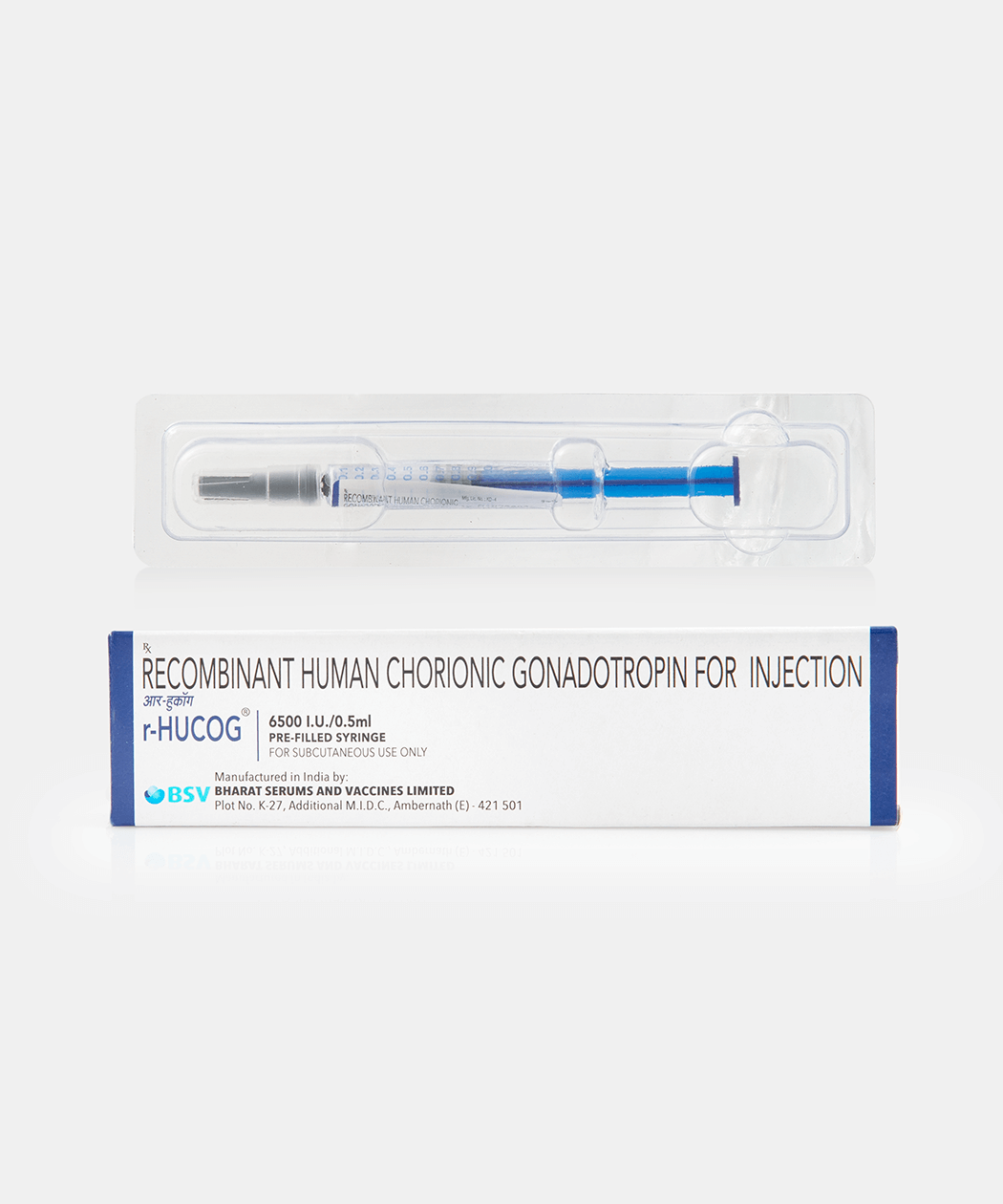
- Human chorionic gonadotropin and luteinizing hormone act on the very same receptor, which is why a dose of hCG can stand in for the body's natural mid-cycle LH surge to trigger ovulation.
- The recombinant version was created so that clinics no longer had to rely on hormone purified from the collected urine of pregnant women, the traditional source of hCG.
Mechanism
Human chorionic gonadotropin and luteinizing hormone act on the same target, the LHCG receptor, and choriogonadotropin alfa takes advantage of this overlap by imitating the natural mid-cycle LH surge. Binding to LHCG receptors on the granulosa and theca cells of the ovary activates the stimulatory G protein and cyclic AMP signaling, which drives the final maturation of the oocyte, rupture of the mature follicle at ovulation, and the transformation of the emptied follicle into a corpus luteum that secretes progesterone to support a possible pregnancy [1][3]. The same receptor is present on testicular Leydig cells, where hCG stimulates testosterone production, the basis for the hormone's use in some male endocrine conditions [1].
receptor fingerprint
Luteinizing hormone / hCG receptor (LHCGR)agonist
Leydig cell testosterone productionactivates
Ovarian theca and granulosa steroidogenesisactivates
Ovulation triggeractivates
Corpus luteum progesteroneactivates
Dosingtypical ranges, not medical advice
interested in protocols and clinical dosages? make an account to see them! ^_^
Safetyrisks and cautions, not medical advice
Choriogonadotropin alfa is prescription only. In women undergoing fertility treatment the main risk is ovarian hyperstimulation syndrome, which can cause swollen painful ovaries, fluid buildup and in severe cases clotting and breathing problems, and there is a raised chance of multiple pregnancy. Injection site reactions, headache and abdominal discomfort are common. In men it raises estrogen as testosterone climbs, which can bring on breast tenderness or gynecomastia. It should be avoided in hormone sensitive cancers, primary gonadal failure and undiagnosed abnormal genital bleeding, and it is timed carefully with monitoring during stimulation cycles.
History
Choriogonadotropin alfa is a recombinant form of human chorionic gonadotropin developed to replace the traditional product extracted and purified from the urine of pregnant women. Manufactured using recombinant DNA technology in cultured mammalian cells, it was introduced around the turn of the millennium by Serono under the brand names Ovidrel in the United States and Ovitrelle in Europe, gaining approval in the United States in 2000.
The recombinant approach offered a highly consistent, well-characterized product delivered by a convenient subcutaneous injection, in contrast to the intramuscular injections typical of the older urinary preparations. In reproductive medicine it is used to imitate the natural mid-cycle surge of luteinizing hormone, triggering the final maturation and release of the egg. Its arrival was part of a broader shift in fertility treatment toward recombinant gonadotropins that reduced reliance on donated human urine as a raw material.
Reputation
Choriogonadotropin alfa is well regarded in assisted reproduction as a clean, reliable trigger for final oocyte maturation, appreciated for its manufacturing consistency and the comfort of a ready-to-use subcutaneous injection. Comparative clinical work has found that recombinant hCG performs as effectively as the older urinary product for triggering follicular maturation, with similar numbers of oocytes retrieved and comparable pregnancy rates, which reassured clinicians adopting it.
Because it acts on the same LHCG receptor as natural luteinizing hormone, it faithfully reproduces the physiological signal that drives ovulation and formation of the progesterone-secreting corpus luteum. The same receptor activity in testicular Leydig cells underlies its use in certain male endocrine settings. Its standing reflects both proven equivalence to established therapy and the practical and safety advantages of a recombinant, animal-source-free product.
Subjective profileweighing the evidence above
A precise prescription tool doing a precise job, and it does it well: triggering ovulation in fertility treatment and restarting the testes in men. The ready-to-use pen is convenient, but ovarian hyperstimulation and multiple pregnancy are why this stays a clinician's decision, not a self-directed one.
Where to buy
Suppliers
Vendors carrying Choriogonadotropin Alfa, with live product details and codes. Links are affiliate links that support the wiki at no cost to you.
PCT.Zone
Choriogonadotropin Alfa
Research
- 2006first citedAge-matched comparison of recombinant and urinary HCG for final follicular maturation
- 2016most recentPhase III trial comparing the efficacy and safety of recombinant- or urine-derived human chorio…
- 1.New discoveries on the biology and detection of human chorionic gonadotropin
- 2.Phase III trial comparing the efficacy and safety of recombinant- or urine-derived human chorionic gonadotropin for ovulation triggering in Japanese women diagnosed with anovulation or oligo-ovulation and undergoing ovulation induction with follitropin-alfa.
- 3.Gonadotropin preparations: past, present, and future perspectives
- 4.Age-matched comparison of recombinant and urinary HCG for final follicular maturation
4 listed here; entry last updated August 2026
Reviews
My notesprivate to this device
FAQ
What is choriogonadotropin alfa used for?
In women it triggers ovulation during fertility treatment; in men it stimulates the testes to make testosterone and sperm.
How is it different from urinary hCG?
It is made recombinantly in cell cultures, so it is more pure and consistent and is given under the skin rather than into muscle.
What is the biggest risk in fertility use?
Ovarian hyperstimulation syndrome, where the ovaries swell and fluid shifts; your clinic monitors follicles to reduce that risk.
Why is it used after steroid cycles?
Anabolic steroids shut down the natural testicular signal, and hCG mimics that signal to wake the testes back up.
Does it raise estrogen in men?
Yes; as it boosts testosterone, some of that converts to estrogen, which can cause breast tenderness, so estrogen is sometimes watched.
Adverse effects
- Headache
- Abdominal pain or bloating
- Nausea
- Risk of ovarian hyperstimulation syndrome
Notes and cautions
- Injection site reactions