
spec sheet13 rows
Torsemide, also spelled torasemide, is a loop diuretic used to treat fluid overload and swelling associated with heart failure, kidney disease, and liver disease, as well as high blood pressure [1]. It increases urine output by blocking salt reabsorption in the kidney, and compared with the older loop diuretic furosemide it is more completely absorbed and longer acting [1]. Marketed under names such as Demadex, it appears on the World Health Organization's List of Essential Medicines.
- Treats fluid overload and swelling in heart failure
- Clears swelling from kidney and liver disease too
- Lowers high blood pressure as well
- Absorbed more completely and predictably than furosemide
- Longer acting, so the effect holds
- On the WHO essential medicines list
- Can cause dizziness, headache, and dehydration if fluid loss is excessive
- May lower potassium and other electrolytes, so blood levels are sometimes monitored
- Excess use can reduce blood pressure and strain kidney function
Overview
Torsemide is a high-ceiling loop diuretic, a class of medicines that promote the excretion of salt and water by acting on the kidney's loop of Henle [1]. Chemically it is a pyridine-sulfonylurea compound bearing a sulfonamide group, with the molecular formula C16H20N4O3S. It was patented in the 1970s and introduced into clinical use in the early 1990s, and it is now widely available as a generic medicine [1].
The drug is used to relieve edema, the buildup of excess fluid, in conditions such as congestive heart failure, chronic kidney disease, and cirrhosis of the liver, and at lower doses it also helps lower blood pressure [1]. Torsemide is often compared with furosemide, the most commonly prescribed loop diuretic. Its oral absorption is more reliable, approaching complete bioavailability, and its effect lasts longer, while it tends to cause somewhat less potassium loss [1]. Earlier observational studies and meta-analyses suggested that torsemide might improve functional status and reduce heart failure hospitalizations and cardiac deaths compared with furosemide [2][4]. However, the large randomized TRANSFORM-HF trial, published in 2023, found no significant difference in all-cause mortality between torsemide and furosemide among patients discharged after a heart failure hospitalization, which tempered the earlier enthusiasm [3].
Torsemide is prescription-only and is supplied for both oral and intravenous administration, marketed under brand names including Demadex [1]. Its inclusion on the World Health Organization's List of Essential Medicines reflects its role in managing fluid overload. Common side effects relate to its diuretic action and include increased urination, headache, dizziness, and excess loss of potassium and other electrolytes [1]. Unlike some other loop diuretics, torsemide has not shown clear evidence of hearing-related toxicity in humans at usual doses [1].
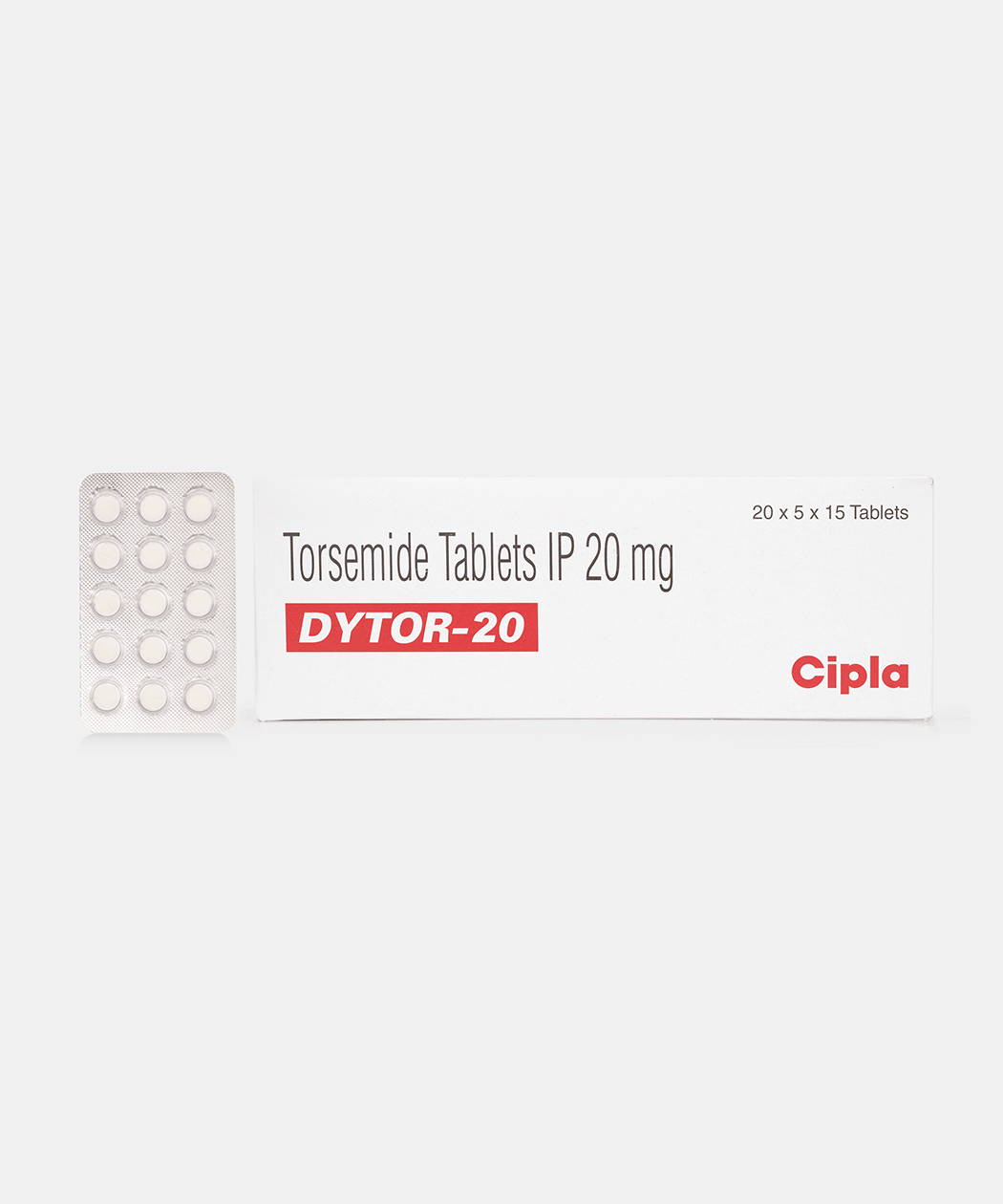
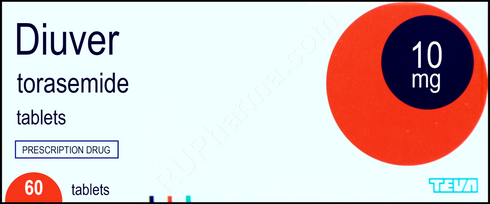
- Torsemide is absorbed far more consistently than furosemide, with oral bioavailability around eighty to ninety percent, which is why doses do not need to be roughly doubled when switching from an intravenous route.
- Beyond simply flushing out salt and water, torsemide appears to interfere with the hormone aldosterone, a property that set it apart from older loop diuretics.
- The landmark TRANSFORM-HF trial enrolled nearly three thousand heart-failure patients to settle whether torsemide beats furosemide on survival; it found the two essentially equivalent.
Mechanism
Torsemide produces its diuretic effect by acting on the thick ascending limb of the loop of Henle, a segment of the kidney tubule where a large share of filtered sodium is normally reclaimed [1]. There it inhibits the sodium-potassium-chloride cotransporter, the protein that moves these ions out of the tubular fluid and back into the body [1]. By blocking this transporter, torsemide keeps sodium and chloride in the tubule, and the retained salt draws water with it, so more fluid is excreted as urine and the body's excess volume falls [1].
Because the delivery of sodium and potassium to later parts of the nephron is altered, loop diuretics can increase urinary loss of potassium, although torsemide causes comparatively less potassium wasting than equivalent doses of furosemide [1]. Torsemide also has properties that set it apart from furosemide: it is more completely and predictably absorbed by mouth, it has a longer duration of action, and at higher doses it appears to blunt the effects of the hormone aldosterone, which may contribute to its electrolyte profile and has been proposed as one reason for possible benefits in heart failure [1]. It is extensively bound to plasma proteins and cleared largely by liver metabolism, with a that lengthens in liver disease [1].
receptor fingerprint
Na-K-2Cl cotransporter (NKCC2)inhibits
Thick ascending limb of loop of Henleblocks
Urinary sodium and water excretionactivates
Aldosterone activitymodulates
Safetyrisks and cautions, not medical advice
Torsemide is a prescription diuretic, so most of its risks come from flushing out too much fluid and salt. It can cause dehydration, low blood pressure, dizziness, and drops in potassium, sodium, and magnesium, so blood tests are checked periodically. It raises uric acid and can trigger gout, and at very high doses or given quickly it carries a small risk of hearing effects. It should be used carefully alongside other blood-pressure drugs, and people allergic to sulfonamides may react to it. Frequent urination is expected, so morning dosing is usual.
Interactionsdocumented pairs only, not exhaustive
Torsemide is a loop diuretic cleared largely by CYP2C9, and it interacts both through that enzyme and through the physiology it changes.
NSAIDs are the common problem: they blunt the diuretic and antihypertensive response by suppressing renal prostaglandins, and the combination has been linked to acute renal failure. Probenecid and other organic anions compete for the tubular secretion that delivers torsemide to its site of action, so the diuretic effect drops.
Lithium is the dangerous one. Diuretic induced sodium loss increases proximal lithium reabsorption, and levels can climb into the toxic range. Potassium loss from torsemide also sensitizes the heart to digoxin and adds to the hypokalemia caused by corticosteroids and amphotericin B.
On the enzyme side, CYP2C9 inhibitors such as fluconazole and amiodarone slow torsemide clearance and raise exposure, while torsemide can itself affect narrow therapeutic index CYP2C9 substrates including warfarin and phenytoin. Cholestyramine binds torsemide in the gut and reduces its absorption.
Checking a whole stack? Run it through interactions + stacks.
History
Torsemide, also spelled torasemide, is a loop diuretic developed by the German company Boehringer Mannheim, with the core patent dating to the 1970s and clinical development proceeding through the 1980s. It reached the United States market in 1993 under the brand name Demadex, entering a field long dominated by the older loop diuretic furosemide. From the outset it was distinguished by more complete and predictable oral absorption and a longer duration of action, properties that made it attractive for treating fluid overload in heart failure, kidney disease, and liver disease, as well as hypertension.
Interest in whether these pharmacological advantages translated into better clinical outcomes culminated in the large pragmatic TRANSFORM-HF trial, which randomized patients hospitalized with heart failure to torsemide or furosemide. That study, and its subsequent analyses, found no overall difference in survival between the two agents, helping to define torsemide's evidence-based role. It is marketed today under names including Demadex and, in an extended formulation, Soaanz.
Reputation
Torsemide is well respected as a dependable, arguably more polished loop diuretic, especially for patients in whom the erratic absorption of furosemide is a problem. Clinicians often reach for it when gut congestion or unpredictable response undermines other diuretics, since its bioavailability is high and consistent regardless of food or fluid status.
Its longer action and comparatively gentler effect on potassium are frequently cited as practical advantages, and some evidence suggests it may blunt aldosterone activity, a theoretical bonus in heart failure. It is only fair to note that the definitive TRANSFORM-HF trial found it did not extend survival compared with furosemide, tempering earlier hopes that it would prove clearly superior. Even so, its reliability and favorable absorption keep it a valued tool, and it remains a sensible choice for many patients who need effective, steady diuresis.
Subjective profileweighing the evidence above
A sensible loop diuretic when one is called for, and absorbed more predictably than furosemide, which genuinely matters in heart failure. The risks all come from overdoing it; dehydration, low potassium and sodium, gout flares, and strain on the kidneys. Prescription and monitoring, not a water-weight tool.
Where to buy
1 other outlet
Suppliers
Vendors carrying Torsemide, with live product details and codes. Links are affiliate links that support the wiki at no cost to you.
PCT.Zone
Torsemide
RUPharma🌐
Torsemide
Research
- 1995first citedTorasemide. An update of its pharmacological properties and therapeutic efficacy.
- 2020meta-analysisMeta-Analysis Comparing Torsemide Versus Furosemide in Patients With Heart Failure.
- 2026most recentDiuretic Resistance Risk and the Efficacy of Torsemide vs Furosemide: A Post-Hoc Analysis of th…
- 1.Torasemide. An update of its pharmacological properties and therapeutic efficacy.
- 2.Meta-Analysis Comparing Torsemide Versus Furosemide in Patients With Heart Failure.
- 3.Effect of Torsemide vs Furosemide After Discharge on All-Cause Mortality in Patients Hospitalized With Heart Failure: The TRANSFORM-HF Randomized Clinical Trial.
- 4.Comparative Analysis of Long-Term Outcomes of Torasemide and Furosemide in Heart Failure Patients in Heart Failure Registries of the European Society of Cardiology.
- 5.Diuretic Resistance Risk and the Efficacy of Torsemide vs Furosemide: A Post-Hoc Analysis of the TRANSFORM-HF Trial
5 listed here; entry last updated August 2026
Reviews
My notesprivate to this device
FAQ
When should I take torsemide?
Take it in the morning so the increased urination happens during the day and does not disrupt your sleep.
How is it different from furosemide?
Torsemide is absorbed more reliably, lasts longer, and has a mild anti-aldosterone effect, so its action tends to be smoother and more predictable.
Do I need blood tests on it?
Yes; your doctor checks potassium, sodium, kidney function, and sometimes uric acid because diuretics can shift these.
Will it lower my blood pressure?
It can; torsemide is used both to remove excess fluid and to help control high blood pressure.
Should I worry about potassium?
It can lower potassium, so your doctor may check levels and sometimes recommend potassium-rich foods or a supplement.
Adverse effects
- Can cause dizziness, headache, and dehydration if fluid loss is excessive
- May lower potassium and other electrolytes, so blood levels are sometimes monitored
- Excess use can reduce blood pressure and strain kidney function
Notes and cautions
- Increased urination is expected and is the intended effect
- Hearing-related effects, seen with some loop diuretics, have not been clearly demonstrated with torsemide at usual doses