
spec sheet13 rows
Furosemide is a loop diuretic medication used to remove excess fluid from the body in conditions such as heart failure, cirrhosis of the liver, and kidney disease, and to lower high blood pressure. It works in the kidney by blocking the reabsorption of salt in a segment of the nephron called the loop of Henle, producing a strong increase in urine output. Sold for decades under the brand name Lasix, it is one of the most widely prescribed medicines and appears on the World Health Organization's List of Essential Medicines. It can be taken by mouth or given by injection when a rapid effect is needed.
- fast, powerful removal of excess fluid
- relief from swelling and fluid related breathlessness
- works quickly when speed genuinely matters
- decades of use on the WHO essential medicines list
- helps bring high blood pressure down
- oral or injectable, whichever the situation calls for
- Can cause dehydration and low blood pressure from fluid loss
- Loss of potassium, sodium, magnesium, and calcium in the urine, requiring monitoring
- May raise uric acid and blood sugar
Overview
Furosemide is a potent diuretic of the loop class, the group of agents that act on the ascending limb of the loop of Henle and produce the largest urine output of any diuretic type [1][2]. Chemically it is an anthranilic acid derivative carrying a sulfonamide group, with the molecular formula C12H11ClN2O5S [1]. When swallowed its absorption is notably variable and often incomplete, so the amount reaching the bloodstream can differ considerably from one person, or even one occasion, to the next; in the blood it is almost entirely bound to the protein albumin, and it is carried to its site of action in the kidney by a transport system that actively secretes organic acids into the urine [2]. Its diuretic effect tracks the amount of drug reaching the urine rather than its level in the blood, and because it acts and clears quickly its action is relatively brief [2].
The drug was patented in 1959 and came into medical use during the 1960s, receiving approval in the United States in 1964 [1]. It has remained a mainstay of treatment ever since and is marketed under many names, the best known being Lasix [1]. It is among the most commonly prescribed medications; in the United States it ranked among the thirty most prescribed drugs in the early 2020s, and it is included on the World Health Organization's List of Essential Medicines [1].
Furosemide is used chiefly to relieve the fluid overload, or oedema, that accompanies heart failure, kidney disease including the nephrotic syndrome, and cirrhosis of the liver, and it is also used to treat high blood pressure [1][2]. Because it can be given into a vein for a fast effect, it has a role in urgent situations such as fluid on the lungs, and it is sometimes used to help manage a high blood calcium level [1]. Long the default loop diuretic, it was compared directly with the related drug torsemide in the large TRANSFORM-HF trial in patients discharged after hospitalisation for heart failure; over the following year the two produced no significant difference in deaths, supporting the continued first-line use of furosemide [3]. A recognised practical drawback is the erratic and incomplete absorption of the oral form, which can make the response to a given dose hard to predict [2].
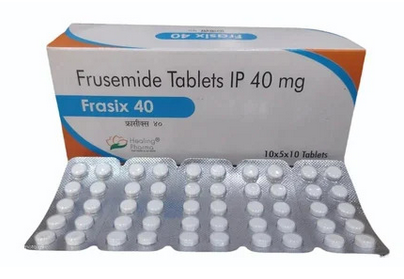
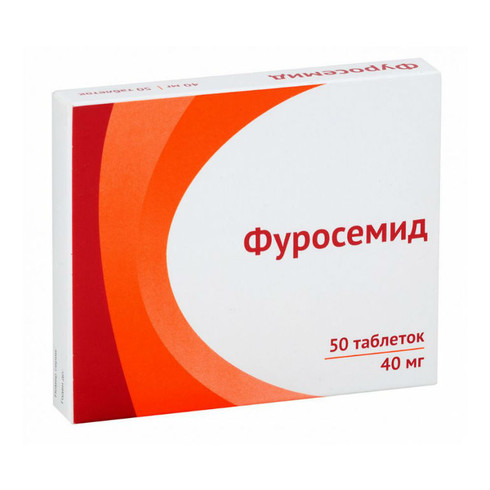
Most of furosemide's adverse effects are direct extensions of its powerful action on salt and water [2]. By driving off fluid it can cause dehydration and low blood pressure, and by increasing the loss of electrolytes in the urine it can lower blood levels of potassium, sodium, magnesium, and calcium, disturbances that call for monitoring [1][2]. It can also raise uric acid, sometimes provoking gout, and increase blood sugar [1]. A particular concern is ototoxicity; at high doses or when infused rapidly the drug can cause ringing in the ears or hearing loss, usually reversible, and a long-term population study linked loop diuretic use to a modestly increased risk of hearing loss in older adults [1][4]. Furosemide is available as tablets, an oral solution, and a solution for injection into a vein or muscle, so the route can be matched to how quickly an effect is needed [1].

- The brand name Lasix is widely said to come from lasts six hours, a nod to its duration of action.
- Furosemide is prohibited in competitive sport and horse racing, both because it can mask other drugs and because it causes rapid fluid loss.
- It is potent enough to produce a strong diuresis even in patients whose kidney function is significantly reduced, a situation where thiazide diuretics often fail.
Mechanism
Furosemide produces its diuretic effect by acting from within the kidney tubule on the thick ascending limb of the loop of Henle [1][2]. There it blocks the sodium-potassium-chloride cotransporter, the carrier protein known as NKCC2 that normally moves sodium, potassium, and chloride together out of the tubular fluid and back into the body [1]. By shutting this transporter down, furosemide prevents the reabsorption of a large fraction of the filtered salt, so that sodium and chloride, and the water that follows them by osmosis, are carried out of the body in the urine instead [1][2].
The loop of Henle is where a substantial share of filtered sodium is normally reclaimed, which is why blocking it yields such a pronounced diuresis compared with diuretics that act further along the nephron [1]. Because the drug must reach the fluid inside the tubule to work, it depends on being secreted into the urine by the organic acid transport system, and its effect follows its concentration in the urine rather than in the blood [2]. A secondary consequence of interrupting salt reabsorption in this segment is that more sodium is delivered to the downstream parts of the nephron, where it is exchanged for potassium and hydrogen ions, which accounts for much of the potassium loss seen during treatment [1][2].
receptor fingerprint
Na-K-2Cl cotransporter (NKCC2, loop of Henle)inhibits
Sodium / water excretionraises
Safetyrisks and cautions, not medical advice
Furosemide is a potent loop diuretic, and its main risks are volume depletion, dehydration, and electrolyte disturbances, notably low potassium, sodium, and magnesium, which can cause weakness, cramps, and cardiac arrhythmias. It can lower blood pressure, worsen kidney function if over-diuresed, raise uric acid and blood glucose, and cause dose-related hearing effects (ototoxicity) at high or rapid intravenous doses. Electrolytes, hydration, and kidney function should be monitored during use.
Interactionsdocumented pairs only, not exhaustive
Furosemide interacts with NSAIDs and ACE inhibitors through pharmacodynamic mechanisms centered on renal function and electrolyte balance. NSAIDs reduce furosemide's diuretic and natriuretic effects by inhibiting prostaglandin synthesis, and concomitant use increases the risk of acute kidney injury [20]. This is a pharmacodynamic interaction where the NSAID dampens furosemide's renal effects. ACE inhibitors or angiotensin receptor blockers combined with furosemide increase nephrotoxicity risk, particularly in patients with renal impairment or diabetes [21]; this interaction arises because ACE inhibitors reduce aldosterone secretion.
Both interactions are clinically relevant; the risk depends on baseline renal function and serum electrolytes. Loop diuretics including furosemide also increase ototoxicity risk when used with aminoglycoside antibiotics or cisplatin, though this is poorly studied at modern doses. Interactions with other diuretics (spironolactone) affecting sodium and potassium levels remain incompletely characterized in controlled studies.
Checking a whole stack? Run it through interactions + stacks.
History
Furosemide was synthesised in 1962 by researchers at the German company Hoechst, who were exploring sulfonamide derivatives in the search for more powerful diuretics. It was introduced clinically in 1964 under the brand name Lasix, a name commonly said to derive from the phrase lasts six hours, a reference to its duration of action. Acting on the thick ascending limb of the loop of Henle, it proved far more potent than the thiazide diuretics that preceded it, capable of producing a brisk diuresis even in patients with impaired kidney function. This power quickly made it indispensable for conditions marked by fluid overload, from acute pulmonary oedema to heart failure, cirrhosis, and kidney disease. Decades later furosemide remains one of the most widely prescribed medicines in the world and appears on the World Health Organization's List of Essential Medicines.
Reputation
Furosemide is regarded as a true workhorse of medicine, trusted for its speed and reliability; given intravenously it can relieve the breathlessness of acute pulmonary oedema within minutes, an effect few other drugs can match. Its long track record, low cost, and flexibility across oral and intravenous routes have kept it central to the management of fluid overload for more than half a century. Physicians are nonetheless clear-eyed about its liabilities: it can deplete potassium, sodium, and magnesium, its oral absorption varies considerably between patients, and very high or rapidly infused doses carry a risk of hearing damage. It is also banned in many sports and in horse racing, both as a masking agent and for rapid weight loss. Handled with appropriate monitoring, however, it remains one of the most valuable and dependable tools in clinical practice.
Subjective profileweighing the evidence above
Indispensable in the right setting and genuinely dangerous outside it. For heart failure or fluid overload under medical care it works fast and reliably; taken for water weight it strips potassium, sodium and magnesium and can drive dehydration and arrhythmia. Prescription only, for good reason.
Where to buy

Suppliers
Vendors carrying Furosemide, with live product details and codes. Links are affiliate links that support the wiki at no cost to you.
PCT.Zone
Furosemide
RUPharma🌐
Furosemide
RUPharma🌐
Furosemide
Research
- 1982first citedPathophysiology of furosemide ototoxicity
- 2020most active year4 papers
- 2025most recentSubcutaneous furosemide in heart failure: a systematic review.
- 1.Subcutaneous furosemide in heart failure: a systematic review.
- 2.Furosemide (frusemide). A pharmacokinetic/pharmacodynamic review (Part I)
- 3.Effect of Torsemide vs Furosemide After Discharge on All-Cause Mortality in Patients Hospitalized With Heart Failure: The TRANSFORM-HF Randomized Clinical Trial
- 4.The Contribution of Ototoxic Medications to Hearing Loss Among Older Adults
- 5.Bioavailability, pharmacokinetics, and pharmacodynamics of torsemide and furosemide in patients with congestive heart failure
- 6.Population-based meta-analysis of furosemide pharmacokinetics
- 7.A comprehensive review of the loop diuretics: should furosemide be first line?
- 8.Diuretic Therapy for Patients With Heart Failure: JACC State-of-the-Art Review
- 9.Diuretics in States of Volume Overload: Core Curriculum 2022
- 10.Diuretic strategies in patients with acute decompensated heart failure
- 11.Diuretic Strategies in Acute Decompensated Heart Failure: A Narrative Review
- 12.A perspective on diuretic resistance in chronic congestive heart failure
21 listed here; entry last updated August 2026
Reviews
My notesprivate to this device
FAQ
Why is it called a loop diuretic?
It acts on the loop of Henle in the kidney, a segment where it blocks sodium and chloride reabsorption. This makes it one of the more potent diuretic classes.
Why do people monitor potassium with it?
It can increase urinary loss of potassium and other electrolytes. Clinicians often track these levels during use.
Why take it earlier in the day?
It works quickly and increases urine output for several hours. Taking it earlier reduces nighttime bathroom trips.
Does it affect hydration?
Because it removes fluid, it can contribute to dehydration if fluid balance isn't managed. Signs like dizziness or thirst are worth noting.
Adverse effects
- Can cause dehydration and low blood pressure from fluid loss
- Loss of potassium, sodium, magnesium, and calcium in the urine, requiring monitoring
- May raise uric acid and blood sugar
Notes and cautions
- Ringing in the ears or hearing loss, mainly at high doses or with rapid infusion