
spec sheet7 rows
Brinzolamide is a topical carbonic anhydrase inhibitor instilled twice or three times daily to lower intraocular pressure in open angle glaucoma and ocular hypertension.
- Dependable intraocular pressure control in open angle glaucoma
- A topical drop dosed twice daily
- Adds pressure reduction on top of a first line drop
- Carbonic anhydrase inhibition delivered straight to the eye
- Also an option in ocular hypertension
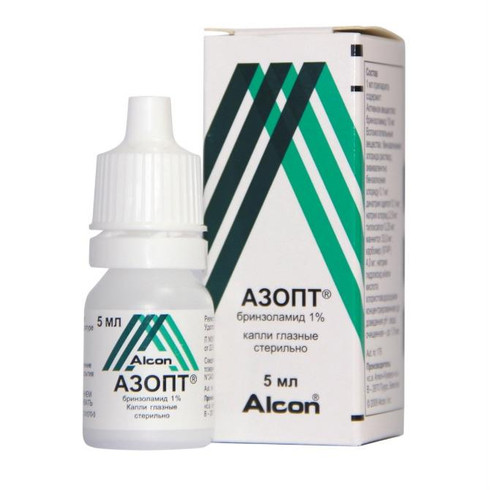
- Brinzolamide (Azopt) is a topical carbonic anhydrase inhibitor FDA-approved in 1998 for elevated intraocular pressure in ocular hypertension and open-angle glaucoma; it is formulated as a suspension at near-neutral pH, which is why it stings far less than dorzolamide.
- The 2015 network meta-analysis quantifies where it sits: brinzolamide lowered IOP by 2.42 mmHg at 3 months (95% credible interval 1.62 to 3.23), placing it near the bottom of the first-line agents, against bimatoprost at 5.61 mmHg and latanoprost at 4.85 mmHg [1].
- That ranking is the single most useful fact about the drug: it is a genuinely effective but comparatively weak agent, best used as adjunct or where prostaglandins and beta-blockers are contraindicated.
- The fixed brinzolamide/brimonidine combination (Simbrinza) performed comparably to the two drugs given separately, supporting its use for adherence rather than potency [3].
- It has randomized evidence in paediatric glaucoma, where options are limited [4][5].
Mechanism
It inhibits carbonic anhydrase II in the ciliary epithelium, cutting the bicarbonate production that drives the osmotic gradient behind aqueous humour secretion, so less fluid is made and pressure falls. It is formulated as a suspension rather than a solution, which is why the bottle has to be shaken and why it blurs vision briefly after instillation.
receptor fingerprint
Carbonic anhydrase II (CA2) in ciliary body non-pigmented epitheliumTopically applied zinc-binding sulfonamide that inhibits ciliary CA-II, cutting bicarbonate formation and therefore aqueous humour secretion
Carbonic anhydrase I (CA1) in erythrocytesSystemically absorbed drug partitions into red cells and binds CA-I and CA-II, which is where most of the systemic dose resides
Aqueous humour inflow rate (physiological endpoint)Reduces inflow rather than increasing outflow, unlike prostaglandin analogues
Safetyrisks and cautions, not medical advice
a sulfonamide derived carbonic anhydrase inhibitor; sulfonamide hypersensitivity reactions including Stevens-Johnson syndrome have been reported even from the eye drop
Subjective profileweighing the evidence above
Being an eye drop is not a safety argument, and this is the drug that demonstrates it. Enough sulfonamide reaches the circulation for the full range of hypersensitivity reactions to have been reported, including Stevens-Johnson syndrome; rare, and serious enough that a rash appearing in the first weeks is not something to watch and wait on. As a pressure lowering agent it is dependable rather than powerful, and it is usually an addition rather than the first drop chosen. An unshaken suspension delivers less than the label promises, and the brief blur after instillation is the formulation rather than a warning sign.
Where to buy
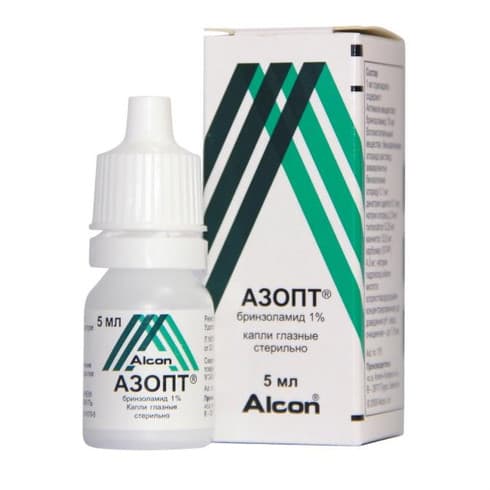
Suppliers
Vendors carrying Brinzolamide, with live product details and codes. Links are affiliate links that support the wiki at no cost to you.
RUPharma🌐
Brinzolamide
Research
- 2005first citedIntraocular pressure-lowering effects of all commonly used glaucoma drugs: a meta-analysis of r…
- 2015meta-analysisComparative Effectiveness of First-Line Medications for Primary Open-Angle Glaucoma: A Systemat…
- 2020most recentMedical management of pediatric glaucoma: lessons learned from randomized clinical trials
- 1.Comparative Effectiveness of First-Line Medications for Primary Open-Angle Glaucoma: A Systematic Review and Network Meta-analysis
- 2.Intraocular pressure-lowering effects of all commonly used glaucoma drugs: a meta-analysis of randomized clinical trials
- 3.Randomized trial of brinzolamide/brimonidine versus brinzolamide plus brimonidine for open-angle glaucoma or ocular hypertension
- 4.Efficacy of brinzolamide and levobetaxolol in pediatric glaucomas: a randomized clinical trial
- 5.Medical management of pediatric glaucoma: lessons learned from randomized clinical trials
5 listed here; entry last updated August 2026
Reviews
My notesprivate to this device
Notes and cautions
- Although applied topically, brinzolamide is a sulfonamide and is systemically absorbed enough to carry the full sulfonamide class warnings: Stevens-Johnson syndrome, toxic epidermal necrolysis, fulminant hepatic necrosis, agranulocytosis and aplastic anaemia have been reported with sulfonamides and mandate immediate discontinuation on any rash or unexplained systemic reaction.
- It is not recommended in severe renal impairment (creatinine clearance below 30 mL/min) because of the risk of accumulation and metabolic acidosis.
- Transient blurred vision after instillation is common because it is a suspension, and bitter or unusual taste from nasolacrimal drainage affects a substantial minority.
- It should not be combined with an oral carbonic anhydrase inhibitor such as acetazolamide, since the systemic effects are additive without additional IOP benefit.