
spec sheet7 rows
Proxymetacaine is a fast acting topical ester anaesthetic instilled to numb the eye for tonometry, foreign body removal and other brief procedures; it is designed for single use in a clinic, not for repeat dosing at home.
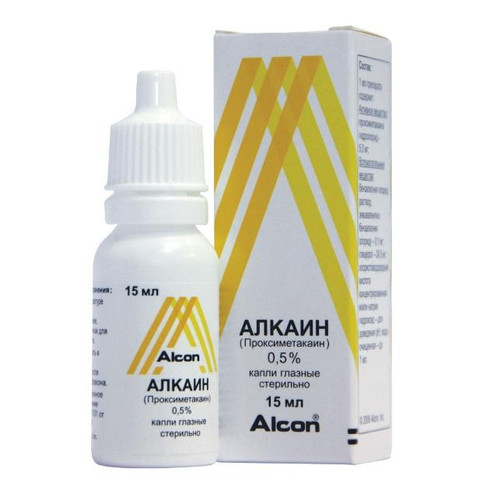
- Proxymetacaine is the INN; proparacaine is the US adopted name for the same molecule, an ester topical ocular anaesthetic used at 0.5%, with onset in about 20 seconds and duration of roughly 10 to 20 minutes.
- In randomised head-to-head comparison proparacaine causes substantially less stinging on instillation than tetracaine while giving equivalent anaesthesia [1], which is why it is the preferred agent for tonometry, foreign-body removal and paediatric examination.
- Comparative tolerability testing of unit-dose preservative-free topical ocular anaesthetics confirms proxymetacaine's superior comfort profile within the class [2].
- The long-standing rule that topical anaesthetics must never be dispensed for home use rests on well-documented anaesthetic abuse causing ring-shaped stromal keratopathy, corneal ulceration, melting and permanent vision loss.
- That rule is now contested for short courses: a multicentre randomised trial of dilute proparacaine for acute corneal injury [3] and a systematic review with meta-analysis [4] found 24 to 48 hour use relieved pain without a clear increase in complications.
- The 2023 Cochrane review of topical ophthalmic anaesthetics for corneal abrasions reached the same direction of effect but rated the certainty of evidence as low and did not endorse routine outpatient dispensing [5].
Mechanism
It blocks voltage gated sodium channels in corneal sensory nerve endings so the action potential that would signal pain cannot propagate. The same block suppresses the protective blink reflex and slows epithelial cell migration, which is exactly why repeated use stops the cornea from healing.
receptor fingerprint
Voltage-gated sodium channels in corneal and conjunctival free nerve endings (nociceptive C and A-delta fibres of the ophthalmic trigeminal division)Blocker
Corneal epithelial cells (mitosis and migration)Directly inhibited; cytotoxic with repeated exposure
Ocular and plasma esterases (including butyrylcholinesterase)Substrate; ester hydrolysis
Corneal blink and tearing reflex arcAbolished during anaesthesia
Safetyrisks and cautions, not medical advice
repeated self application of a topical ocular anaesthetic causes corneal epithelial toxicity, stromal melting and permanent vision loss, and it removes the pain that would otherwise send someone for care
Subjective profileweighing the evidence above
Documented here rather than sourced, and the reason is one of the ugliest patterns in ophthalmology: people who get hold of a topical eye anaesthetic and keep using it lose the eye. Repeated instillation strips the corneal epithelium, softens the stroma and removes the pain that would otherwise have driven someone to a clinic while there was still something to save. Inside a clinic it is a single use instrument for a two minute procedure, handled by whoever is holding the slit lamp; there is no version of home use that ends well.
Resources
No suppliers are provided for compounds like this. This entry is here for reference.
Research
- 1994first citedA comparison of proparacaine and tetracaine eye anesthetics
- 2015meta-analysisSafety and Effectiveness of Topical Anesthetics in Corneal Abrasions: Systematic Review and Met…
- 2023most recentTopical ophthalmic anesthetics for corneal abrasions
- 1.A comparison of proparacaine and tetracaine eye anesthetics
- 2.Comparison of the tolerability and efficacy of unit-dose, preservative-free topical ocular anaesthetics
- 3.Dilute proparacaine for the management of acute corneal injuries in the emergency department
- 4.Safety and Effectiveness of Topical Anesthetics in Corneal Abrasions: Systematic Review and Meta-Analysis
- 5.Topical ophthalmic anesthetics for corneal abrasions
5 listed here; entry last updated August 2026
Reviews
My notesprivate to this device
Notes and cautions
- Proxymetacaine carries no boxed warning, but the governing safety rule is that topical ocular anaesthetics are for clinician-administered diagnostic and short procedural use and must not be given to patients for ongoing self-administration outside a supervised short protocol.
- Repeated or prolonged use is directly toxic to the corneal epithelium, inhibiting mitosis and migration and producing delayed healing, ring-shaped stromal infiltrate, persistent epithelial defect, corneal melting, perforation and permanent visual loss; anaesthetic abuse cases are well documented, often in patients who obtained the drop after an initial legitimate use.
- An anaesthetised eye has lost its protective blink and tearing reflexes, so patients must not rub the eye and should be shielded until sensation returns, and contact-lens wear must be deferred.
- As an ester it can cause true allergic contact reactions, and cross-sensitivity with other ester anaesthetics should be assumed.
- Systemic toxicity from ocular use is essentially unheard of at normal doses, and the recent trial and review evidence supporting brief 24 to 48 hour use for simple abrasions (PMID 20880433, PMID 37555621) is rated low-certainty and does not overturn the ban on unsupervised long-term use.