
spec sheet6 rows
Propofol is the intravenous anaesthetic used to induce and maintain general anaesthesia and to sedate ventilated patients in intensive care.
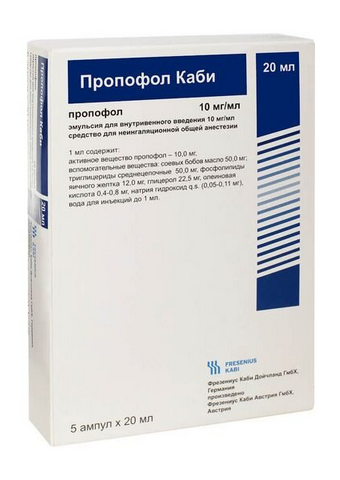
- The beta3(N265M) knock-in mouse is the decisive mechanistic experiment: a single point mutation in the GABA-A receptor beta3 subunit almost abolishes propofol's immobilising and hypnotic actions in a living animal, proving the beta3-containing GABA-A receptor is the principal site of action [3].
- PROPOFOL INFUSION SYNDROME (PRIS) is the defining hazard: a rare but frequently fatal constellation of otherwise unexplained metabolic acidosis, rhabdomyolysis, hyperkalaemia, hyperlipidaemia, hepatomegaly, acute kidney injury, refractory bradycardia and asystolic cardiac arrest, caused by impaired mitochondrial fatty-acid oxidation and electron transport.
- PRIS was first described in critically ill children by Bray in 1998 [1], then in adult head-injured patients by Cremer, whose Lancet series linked it explicitly to prolonged high-dose infusion [2].
- The structured review of published PRIS case reports identifies the consistent risk factors: infusion rate above roughly 4 mg/kg/h (67 mcg/kg/min), duration beyond about 48 hours, young age, critical illness or head injury, low carbohydrate intake, and concurrent catecholamine or corticosteroid administration [4].
- Propofol and midazolam produce comparable sedation quality in adult ICU patients, with propofol favoured mainly for shorter time to extubation rather than for outcome benefit [5].
- Meta-analysis of total intravenous anaesthesia versus inhalational anaesthesia found no convincing mortality difference between the techniques, which tempers claims that propofol-based anaesthesia improves hard outcomes [6].
Mechanism
It is a positive modulator at -A receptors, binding a site distinct from the benzodiazepine site and, at higher concentrations, opening the channel directly. That direct gating is why there is no ceiling: the dose response runs straight through sedation into apnoea with no plateau and no to reverse it.
receptor fingerprint
-A receptor, beta2/beta3 subunit transmembrane pocket (residue Asn265 of beta3)Positive allosteric modulator at low concentrations; direct channel agonist at higher concentrations
Glycine receptor (GLRA1)Positive allosteric modulator
HCN1 hyperpolarisation-activated channels and voltage-gated sodium channelsInhibited/modulated
electron transport chain (complexes I and II) and carnitine palmitoyltransferase 1Impaired, uncoupling fatty-acid oxidation from ATP production
CYP2B6 and CYP2C9 plus UGT1A9 glucuronidationSubstrate
Safetyrisks and cautions, not medical advice
a general anaesthetic with no reversal agent and effectively no gap between the sedating dose and the dose that stops breathing; it requires someone able to manage an airway, and there is a documented pattern of fatal self-administration for insomnia
Subjective profileweighing the evidence above
No amount of this produces sleep without also producing the possibility of apnoea; the curve runs from sedation straight into stopped breathing, with no plateau and no antagonist to pull anyone back. That is why the refusal here is absolute rather than cautious, and why no supplier will be named: it takes a second person whose only job is the airway. The people who have died using it for insomnia at home included clinicians who knew exactly what it does.
Resources
No suppliers are provided for compounds like this. This entry is here for reference.
Research
- 1998first citedPropofol infusion syndrome in children
- 2021meta-analysisA systematic review and meta-analysis of propofol versus midazolam sedation in adult intensive…
- 2024most recentMortality and morbidity after total intravenous anaesthesia versus inhalational anaesthesia: a…
- 1.Propofol infusion syndrome in children
- 2.Long-term propofol infusion and cardiac failure in adult head-injured patients
- 3.General anesthetic actions in vivo strongly attenuated by a point mutation in the GABA(A) receptor beta3 subunit
- 4.Propofol infusion syndrome: a structured literature review and analysis of published case reports
- 5.A systematic review and meta-analysis of propofol versus midazolam sedation in adult intensive care (ICU) patients
- 6.Mortality and morbidity after total intravenous anaesthesia versus inhalational anaesthesia: a systematic review and meta-analysis
6 listed here; entry last updated August 2026
Reviews
My notesprivate to this device
Notes and cautions
- Propofol has no boxed warning in the US label but is restricted to administration by people trained in general anaesthesia and airway management who are not simultaneously performing the procedure, because apnoea, loss of airway and dose-dependent hypotension are expected effects rather than rare complications.
- Propofol infusion syndrome is the toxicity that defines the drug: an often fatal syndrome of unexplained metabolic acidosis, rhabdomyolysis, hyperkalaemia, hyperlipidaemia, hepatomegaly, renal failure, refractory bradycardia and asystole, driven by impaired mitochondrial fatty-acid oxidation and associated with rates above about 4 mg/kg/h, durations beyond 48 hours, young age, head injury and concurrent catecholamines or steroids; the response is to avoid prolonged high-dose sedation, monitor creatine kinase, lactate, triglycerides and acid-base status, and stop the infusion immediately at the first unexplained metabolic acidosis or new bradyarrhythmia.
- The lipid emulsion vehicle supplies roughly 1.1 kcal/mL and must be counted as nutrition, supports rapid bacterial growth so strict aseptic technique and discarding within 12 hours of spiking are required, and can cause hypertriglyceridaemia and pancreatitis.
- Propofol provides no analgesia, causes injection pain, and has documented abuse and diversion potential among healthcare workers.