
spec sheet12 rows
Hydrochlorothiazide, often abbreviated HCTZ, is a thiazide diuretic used chiefly to treat high blood pressure and fluid retention. Introduced in the late 1950s, it remains one of the most widely prescribed antihypertensive drugs and appears on the World Health Organization's list of essential medicines. It acts on the kidney to increase the excretion of sodium and water, lowering blood volume and, in turn, blood pressure.
- lowers blood pressure at a price almost nothing beats
- clears the fluid retention that swells ankles and legs
- steady, gentle daily diuresis rather than a rush
- on the WHO essential medicines list for good reason
- decades of first line data behind every tablet
- takes load off the heart every single day
- Low blood potassium
- Dizziness or lightheadedness
- Increased urination
Overview
Hydrochlorothiazide is a small-molecule drug of the thiazide class of diuretics, agents that promote the loss of salt and water through the kidneys [1]. First made commercially available in 1959, it has stayed a cornerstone of blood-pressure management for more than six decades and ranks among the most frequently dispensed medicines in many countries [1][2]. It is taken by mouth and is available in inexpensive generic form.
Its principal use is in the treatment of hypertension, either on its own or, more often, combined with other antihypertensive drugs in fixed-dose products [1]. It is also used to reduce edema, the swelling caused by fluid accumulation in conditions such as heart failure, and it carries more specialized roles, among them lowering urinary calcium to help prevent certain kidney stones and managing some forms of diabetes insipidus [1][4]. Large evidence syntheses have found that low-dose thiazide therapy used as a first-line treatment reduces death, stroke, and other cardiovascular events in people with moderate to severe hypertension [2].
Pharmacologically, hydrochlorothiazide acts on a specific salt-handling protein in the kidney tubule to limit sodium reabsorption, which in turn draws water into the urine [1]. Because it shifts the body's balance of electrolytes, it can lower potassium while raising calcium and uric acid, effects that shape both its therapeutic use and its side effects [1][4].
The drug is generally well tolerated but carries recognized risks. Common concerns include low blood potassium and other electrolyte disturbances, elevated blood sugar and lipids, raised uric acid that can provoke gout, and photosensitivity of the skin [1][4]. Long-term, high cumulative use has been linked in epidemiological studies to an increased risk of non-melanoma skin cancers, particularly squamous cell carcinoma, an association attributed in part to the drug's photosensitizing property [3]. International cancer authorities have since reviewed and classified the compound with respect to this risk [3].
Hydrochlorothiazide is a prescription medicine worldwide and is listed by the World Health Organization as an essential medicine [1]. It is supplied as oral tablets and capsules, both as a single agent and in numerous combination formulations paired with drugs such as angiotensin-converting-enzyme inhibitors, angiotensin-receptor blockers, and potassium-sparing diuretics [1][2].
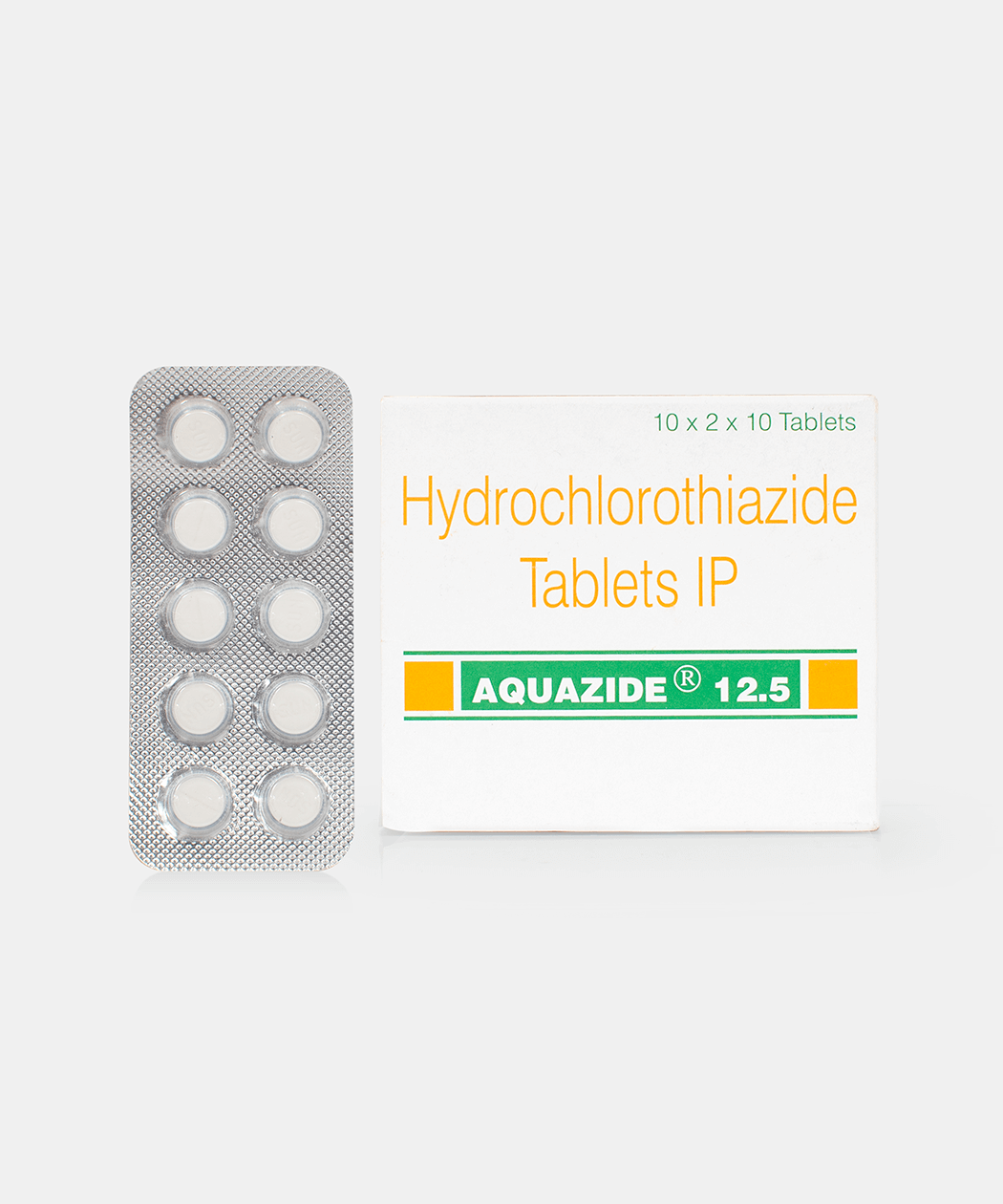
- The thiazide diuretics arose from research on sulfonamide carbonic anhydrase inhibitors; chlorothiazide was introduced in 1958, and hydrochlorothiazide followed almost immediately.
- Hydrochlorothiazide appears on the World Health Organization's List of Essential Medicines and is among the most prescribed antihypertensives ever.
- Unlike most diuretics, thiazides reduce calcium excretion, which is why they are used to help prevent calcium-based kidney stones.
Mechanism
Hydrochlorothiazide produces its diuretic effect by inhibiting the sodium-chloride cotransporter located in the distal convoluted tubule of the kidney nephron [1]. This transporter normally reabsorbs a portion of the sodium and chloride filtered by the kidney; by blocking it, the drug leaves more sodium and chloride in the tubular fluid, and water follows osmotically, increasing urine output and reducing circulating blood volume [1]. Over time the fall in blood volume, together with effects on vascular resistance, lowers arterial blood pressure [1][2].
The greater delivery of sodium to the downstream collecting duct enhances sodium-potassium exchange there, so potassium is lost into the urine, which explains the tendency toward hypokalemia [1][4]. In contrast, thiazides reduce calcium excretion, lowering urinary calcium while raising the chance of higher blood calcium, the basis for their use against calcium-containing kidney stones [1][4]. The drug also tends to raise serum uric acid and can alter glucose and lipid handling, accounting for several of its metabolic side effects [1][4].
receptor fingerprint
Na-Cl cotransporter (NCC, distal tubule)inhibits
Sodium reabsorptionreduces
Calcium excretionlowers
Safetyrisks and cautions, not medical advice
Hydrochlorothiazide is a thiazide diuretic whose main risks are electrolyte disturbances, especially low potassium, sodium, and magnesium and elevated calcium, along with dehydration and low blood pressure. It can raise blood glucose, uric acid (precipitating gout), and lipids, cause photosensitivity, and long-term use has been associated with an increased risk of non-melanoma skin cancer. Electrolytes should be monitored, and it should be used cautiously in those with sulfonamide sensitivity.
Interactionsdocumented pairs only, not exhaustive
Hydrochlorothiazide increases serum lithium concentrations through a pharmacokinetic mechanism by reducing renal lithium clearance, leading to lithium toxicity [21]. Thiazide diuretics produce the largest effect among diuretic classes, typically increasing lithium levels by 25 to 40 percent after initiation [21]. Case reports demonstrate that HCTZ combined with other antihypertensives like valsartan can precipitate symptomatic lithium toxicity including parkinsonism and severe hypothyroidism in elderly patients [22]; animal models show HCTZ accelerates progression of lithium-induced nephropathy and renal failure [23]. NSAIDs, ACE inhibitors, and other medications that affect renal function may potentiate this interaction. No systematic study of HCTZ with non-lithium mood stabilizers or other psychiatric medications has established clinically relevant interactions.
Checking a whole stack? Run it through interactions + stacks.
History
Hydrochlorothiazide belongs to the thiazide class of diuretics, whose discovery grew out of mid-twentieth-century research on sulfonamide carbonic anhydrase inhibitors at Merck, where Karl Beyer and colleagues developed chlorothiazide, introduced in 1958. Hydrochlorothiazide followed almost immediately as a more potent derivative and reached the market around 1959, sold under names such as Esidrix and HydroDIURIL. The thiazides quickly transformed the management of hypertension and edema, offering effective oral blood-pressure control at a time when options were scarce. Over the following decades hydrochlorothiazide became one of the most widely prescribed antihypertensive agents in the world and earned a place on the World Health Organization's List of Essential Medicines. It remains a foundational drug in cardiovascular medicine more than sixty years after its introduction.
Reputation
Hydrochlorothiazide is one of the most enduring and widely trusted medicines in cardiovascular care, a low-cost oral drug that has helped control blood pressure for generations of patients. Its mechanism is well understood: by inhibiting the sodium-chloride cotransporter in the distal tubule it increases sodium and water excretion, reducing blood volume and, over time, arterial pressure. Decades of clinical use and inclusion on the WHO essential medicines list attest to its value, and it is frequently combined with other agents in fixed-dose antihypertensive tablets.
A useful secondary property is that it reduces urinary calcium, which makes it helpful in preventing calcium-containing kidney stones. Honesty calls for noting its predictable metabolic effects, including potassium loss, and raised uric acid, glucose, and lipids, which require monitoring; even so, its affordability, simplicity, and long safety record keep it a first-line staple worldwide.
Subjective profileweighing the evidence above
Cheap, effective and still a reasonable first-line blood pressure drug decades on. The costs are manageable but real: potassium loss, higher uric acid that can set off gout, and a documented association with non-melanoma skin cancer over long use, which makes sun protection and skin checks part of taking it.
Where to buy
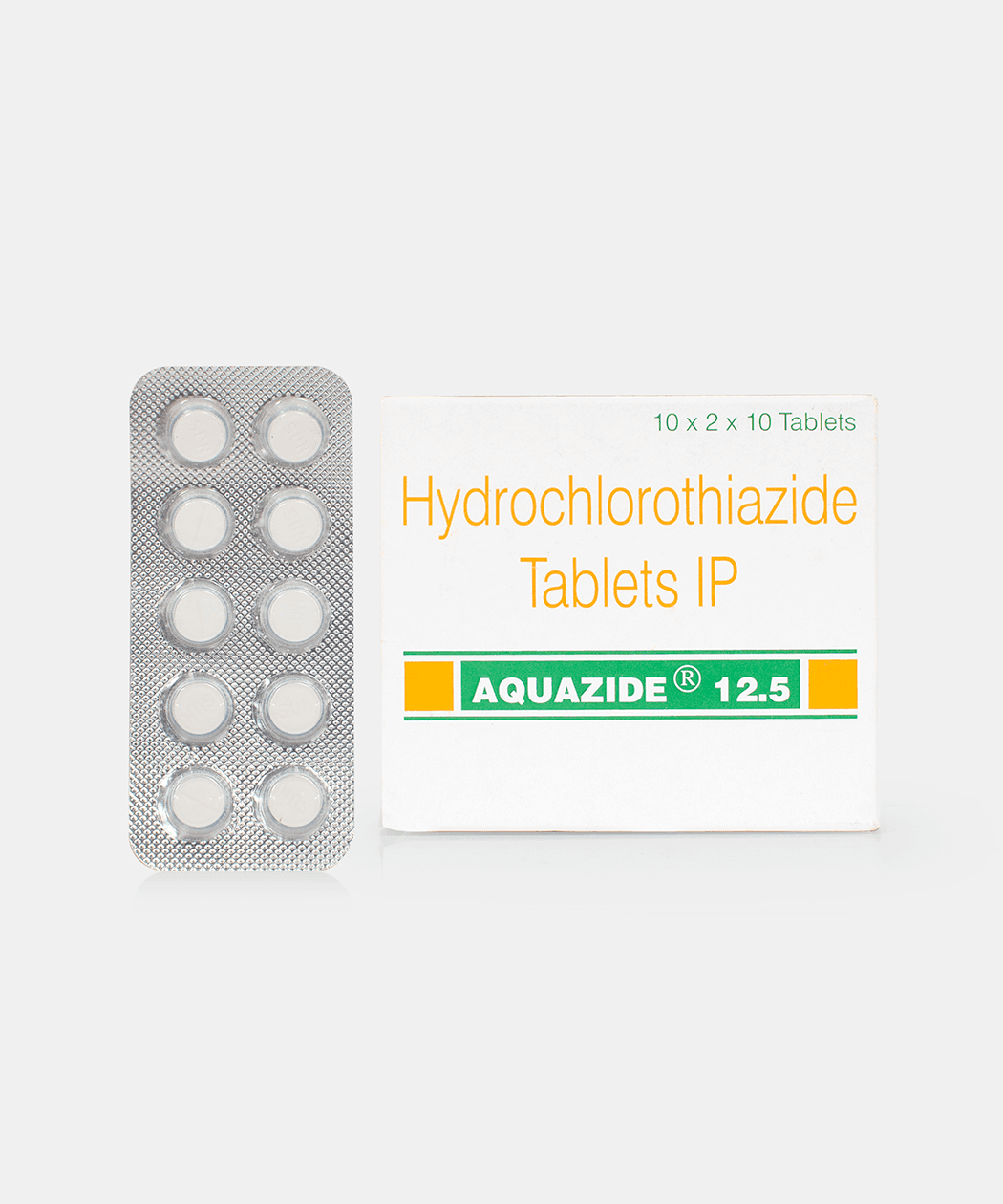
Suppliers
Vendors carrying HCTZ, with live product details and codes. Links are affiliate links that support the wiki at no cost to you.
PCT.Zone
HCTZ
Research
- 1995first citedClinical relevance of drug interactions with lithium.
- 2018meta-analysisFirst-line drugs for hypertension.
- 2025most recentComparison of Cardiovascular Outcomes Between Chlorthalidone and Hydrochlorothiazide in Hyperte…
- 1.Thiazide and the Thiazide-Like Diuretics: Review of Hydrochlorothiazide, Chlorthalidone, and Indapamide
- 2.First-line drugs for hypertension.
- 3.Hydrochlorothiazide use and risk of nonmelanoma skin cancer: A nationwide case-control study from Denmark
- 4.Diuretics in pediatrics
- 5.Comparison of Cardiovascular Outcomes Between Chlorthalidone and Hydrochlorothiazide in Hypertensive Patients
- 6.Chlorthalidone versus hydrochlorothiazide: major cardiovascular events, blood pressure, left ventricular mass, and adverse effects
- 7.Head-to-head comparisons of hydrochlorothiazide with indapamide and chlorthalidone: antihypertensive and metabolic effects
- 8.Hydrochlorothiazide versus chlorthalidone: evidence supporting their interchangeability
- 9.Chlorthalidone compared with hydrochlorothiazide in reducing cardiovascular events: systematic review and network meta-analyses
- 10.Chlorthalidone versus hydrochlorothiazide for the treatment of hypertension in older adults: a population-based cohort study
- 11.Major outcomes in high-risk hypertensive patients randomized to angiotensin-converting enzyme inhibitor or calcium channel blocker vs diuretic: The Antihypertensive and Lipid-Lowering Treatment to Prevent Heart Attack Trial (ALLHAT)
- 12.Major cardiovascular events in hypertensive patients randomized to doxazosin vs chlorthalidone: the antihypertensive and lipid-lowering treatment to prevent heart attack trial (ALLHAT). ALLHAT Collaborative Research Group.
23 listed here; entry last updated August 2026
Reviews
My notesprivate to this device
FAQ
How does a thiazide differ from a loop diuretic?
Thiazides act on the distal tubule and are generally milder and longer-acting than loop diuretics. They're widely used for blood pressure.
Why take it in the morning?
It increases urine output, so morning dosing reduces nighttime bathroom trips. This is a common practical tip.
Why monitor electrolytes?
It can lower potassium and sodium, so levels are often checked during use. Clinicians watch for imbalances.
Does it affect sun sensitivity?
Some people become more sensitive to sunlight while taking it. Sun protection is a reasonable precaution.
Adverse effects
- Low blood potassium
- Dizziness or lightheadedness
- Increased urination
- Raised uric acid, which can trigger gout
- Sun sensitivity of the skin