
spec sheet7 rows
Dorzolamide is a topical carbonic anhydrase inhibitor instilled to lower intraocular pressure in open angle glaucoma and ocular hypertension.
- Lowers intraocular pressure with a simple eye drop
- Cuts aqueous humour production at the source
- Used in open angle glaucoma and ocular hypertension
- A dependable addition to other glaucoma drops
- Topical, so the dose stays at the eye
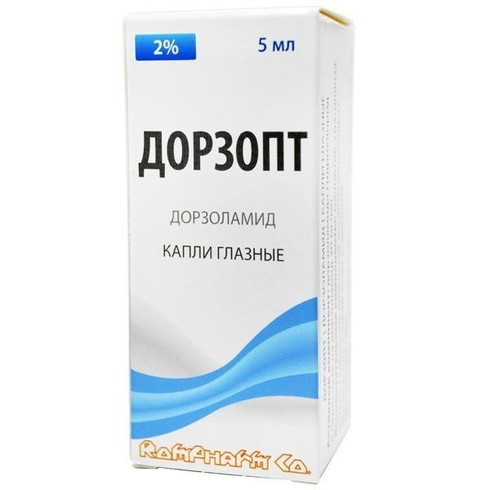
- Dorzolamide was the first topically effective carbonic anhydrase inhibitor, approved in 1994 after a roughly 40-year search; the problem was never potency but getting a sulfonamide with enough corneal permeability and water solubility to reach the ciliary epithelium (PMID 9381367, PMID 9760696).
- It is extremely potent at its target: ChEMBL puts human CA2 IC50 at a median of 2.0 nM and CA12 Ki at 3.5 nM (CHEMBL218490), and that potency is what made a topical route feasible.
- Dorzolamide lowers intraocular pressure by roughly 15-20% as monotherapy, less than a prostaglandin analogue or timolol, which is why it is most often used as an adjunct or in the fixed combination with timolol [1].
- It accumulates in red blood cells by binding to carbonic anhydrase II there, giving it an extremely long terminal elimination half-life of several months, though this red-cell binding is a reservoir rather than a source of toxicity [7].
- Dorzolamide has a genuine ocular blood flow effect independent of pressure lowering, measured in previously untreated glaucoma patients, which is one of the arguments for using it rather than another adjunct in normal-tension glaucoma [2].
- It is a sulfonamide, so the entire sulfonamide adverse-effect class applies even though it is a topical eye drop, including Stevens-Johnson syndrome and blood dyscrasias in rare reports.
Mechanism
It inhibits carbonic anhydrase II in the ciliary epithelium, cutting bicarbonate formation and with it the osmotic gradient that drives aqueous humour secretion, so less fluid is produced. Because carbonic anhydrase also runs the corneal endothelial pump, the drop can tip an already marginal cornea into oedema.
receptor fingerprint
Carbonic anhydrase II (CA2), the dominant cytosolic isozyme of the ciliary epitheliumSulfonamide zinc-binding inhibitor; the primary therapeutic target
Carbonic anhydrase XII (CA12)Inhibitor
Carbonic anhydrase IV (CA4), the membrane-bound ciliary isozymeInhibitor; both CA2 and CA4 must be inhibited for full effect, which is why topical carbonic anhydrase inhibitors needed such high intrinsic potency to work at all
Retinal and optic nerve head blood flowIncreased, independently of the intraocular pressure reduction, via local pH-mediated vasodilation
Corneal endothelial carbonic anhydraseInhibited; endothelial pump function depends on carbonic anhydrase activity
Safetyrisks and cautions, not medical advice
a sulfonamide derived carbonic anhydrase inhibitor; sulfonamide hypersensitivity reactions have been reported even by the topical route, and it can cause corneal decompensation in an already compromised cornea
Subjective profileweighing the evidence above
Glaucoma is diagnosed by pressure readings and visual fields and managed by watching both across years, so the drug is the easy part; buying it without the monitoring gets the easy part right and abandons the part that preserves sight. As a molecule it does its job, though it is the weaker option among topical pressure lowering agents and usually earns its place as an addition rather than a first choice. The specific hazard worth knowing is corneal, because the same enzyme runs the endothelial pump: a marginal cornea, a graft or Fuchs dystrophy can tip into oedema on it. A sulfonamide reaction history is a reason for caution even by the drop route.
Where to buy
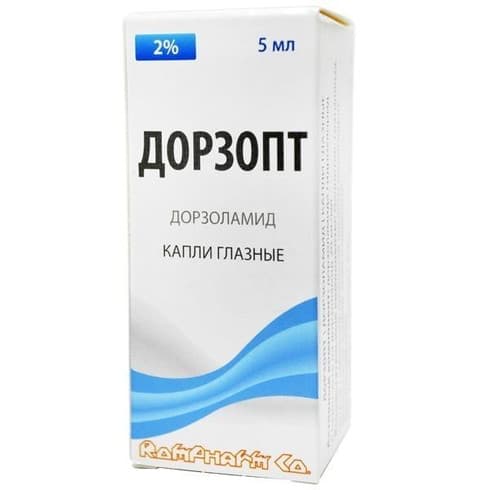
Suppliers
Vendors carrying Dorzolamide, with live product details and codes. Links are affiliate links that support the wiki at no cost to you.
RUPharma🌐
Dorzolamide
Research
- 1996first citedThe efficacy of dorzolamide, a topical carbonic anhydrase inhibitor, in combination with timolo…
- 2009most recentThe safety and efficacy of brinzolamide 1%/timolol 0.5% fixed combination versus dorzolamide 2%…
- 1.The efficacy of dorzolamide, a topical carbonic anhydrase inhibitor, in combination with timolol in the treatment of patients with open-angle glaucoma and ocular hypertension.
- 2.Dorzolamide and ocular blood flow in previously untreated glaucoma patients: a controlled double-masked study.
- 3.A topical or oral carbonic anhydrase inhibitor to control ocular hypertension after cataract surgery.
- 4.The safety and efficacy of brinzolamide 1%/timolol 0.5% fixed combination versus dorzolamide 2%/timolol 0.5% in patients with open-angle glaucoma or ocular hypertension.
- 5.Dorzolamide: development and clinical application of a topical carbonic anhydrase inhibitor.
- 6.Pharmacological and ocular hypotensive properties of topical carbonic anhydrase inhibitors.
- 7.Clinical pharmacokinetics of dorzolamide.
- 8.Influence of dorzolamide on corneal endothelium.
8 listed here; entry last updated August 2026
Reviews
My notesprivate to this device
Notes and cautions
- Dorzolamide has no boxed warning, but it is a sulfonamide, and sulfonamide-class reactions including Stevens-Johnson syndrome, toxic epidermal necrolysis, fulminant hepatic necrosis, agranulocytosis and aplastic anaemia have all been reported after topical ocular use, so it should be stopped at the first sign of a serious reaction.
- The clinically important caution is corneal: because corneal endothelial pump function depends on carbonic anhydrase, dorzolamide can precipitate corneal oedema and decompensation in eyes with an already low endothelial cell count, such as Fuchs dystrophy or a post-transplant cornea, and it should be avoided there (PMID 12738544, PMID 10682965).
- Ocular stinging and a bitter taste are very common and are the usual reason people stop.
- It is not recommended in severe renal impairment (creatinine clearance under 30 mL/min) because of the risk of systemic acidosis, and it should not be combined with an oral carbonic anhydrase inhibitor such as acetazolamide, since the additive systemic effect brings no extra pressure lowering.