
spec sheet11 rows
Bimatoprost is a synthetic prostaglandin analog, specifically a prostamide, used to lower pressure inside the eye. Its main medical role is in treating open-angle glaucoma and ocular hypertension, where it reduces intraocular pressure by increasing the drainage of fluid from the eye [1]. A well-known side effect, longer and darker eyelashes, led to a second approved use as a cosmetic treatment for sparse lashes, marketed as Latisse [3]. It is applied as a once-daily eye drop or, for lashes, as a topical solution, and is sold under brand names including Lumigan.
- Treats open-angle glaucoma and ocular hypertension
- Drops eye pressure by boosting fluid drainage
- Grows longer, fuller, darker lashes; sold as Latisse
- Works when other drops fall short
- One evening drop covers the whole day
- Genuinely effective, and the strongest option for lashes
- The most common effects are eye-related: redness of the conjunctiva, itching, dryness, and a foreign-body sensation [1].
- It can darken the colored part of the eye (the iris) and the skin around the eyelids, and the iris change may be permanent [2].
- Increased growth and darkening of eyelashes is frequent and is the basis for its cosmetic use [3].
Overview
Bimatoprost is a synthetic analog of prostaglandin, classified more precisely as a prostamide, a lipid signaling molecule related to the body's natural prostaglandins [1]. It is structurally similar to other eye-pressure drugs such as latanoprost and travoprost, but it is distinctive in that it does not appear to act through the classical prostaglandin F receptor or other recognized prostaglandin receptors, and its precise molecular target remains debated [1]. It is a lipophilic compound formulated as a clear ophthalmic solution.
The principal use of bimatoprost is in the management of raised pressure within the eye, as occurs in open-angle glaucoma and ocular hypertension; sustained high pressure in these conditions can damage the optic nerve and threaten vision [1]. Applied as a once-daily drop, it lowers intraocular pressure by improving the outflow of aqueous humor, the fluid that fills the front of the eye [1]. A separate, cosmetic use grew out of an observed side effect: because the drug promotes eyelash growth, a topical formulation was developed and approved to treat hypotrichosis of the eyelashes, that is, inadequate or sparse lashes, and it has also been studied for scalp and eyebrow hair loss [3].
Bimatoprost has been compared directly with other pressure-lowering eye drops in clinical trials. In head-to-head studies it lowered intraocular pressure at least as effectively as, and by some measures more than, the prostaglandin analog latanoprost, while both were generally well tolerated [2][3]. Reviews of the prostaglandin analog class have positioned these agents, including bimatoprost, as effective options that match or exceed older treatments such as timolol, and they are often used when other drops do not achieve adequate control [4]. Systematic analysis of prostaglandin analogs for hair loss has likewise found that topical use can significantly increase hair and eyelash length and density compared with placebo [3].
Bimatoprost was developed by Allergan and first approved in the United States in 2001 for glaucoma and ocular hypertension under the brand name Lumigan [1]. In 2008 the same molecule was approved in a separate topical formulation, Latisse, for growing eyelashes, making it one of the few drugs marketed for both a serious eye disease and a cosmetic purpose [3]. It is a prescription-only medicine in the United States, the European Union, and Australia, and is now available in generic form. It remains among the more commonly prescribed eye medications.
The drug is supplied chiefly as eye drops for glaucoma and as a topical solution applied to the lash line for cosmetic use. Treatment is generally well tolerated, with most adverse effects confined to the eye and its surroundings [1]. The same properties that make it useful can produce cosmetic changes that some users find undesirable, including darkening of the iris and of the skin around the eyes, alongside the increased eyelash growth [1][2].
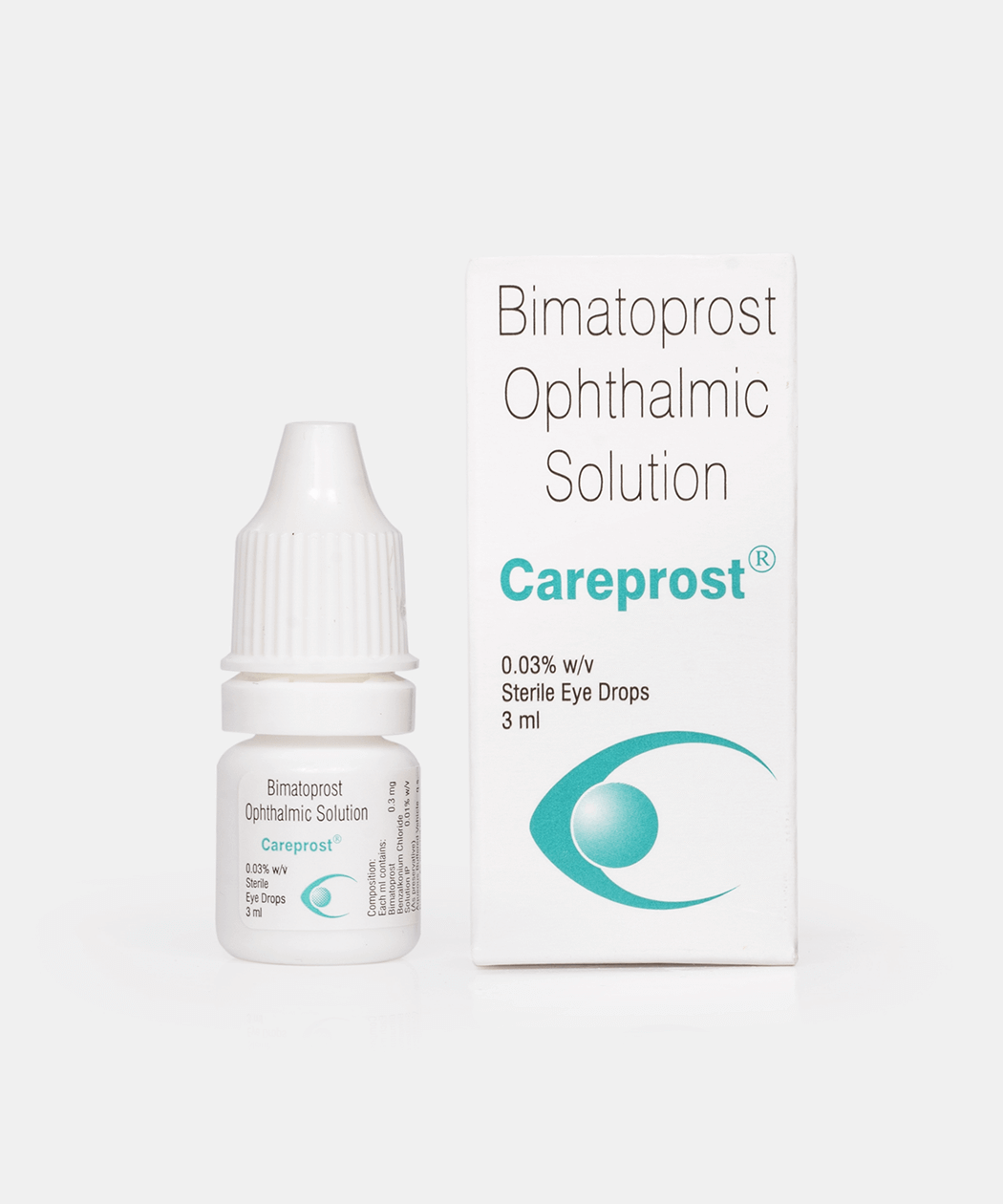
- Latisse, the eyelash treatment, exists because a well-documented side effect of a glaucoma drop was turned into an approved cosmetic indication.
- Bimatoprost lengthens lashes largely by increasing the proportion of follicles in the active growth phase, known as anagen, at any given time.
Mechanism
Bimatoprost lowers pressure inside the eye by increasing the drainage of aqueous humor, the fluid produced within the eye, through both the trabecular meshwork and the uveoscleral outflow pathways; enhancing this outflow reduces the volume of fluid and so the pressure [1]. As a prostamide it mimics naturally occurring lipid mediators, yet unlike the traditional prostaglandin F2-alpha analogs it does not appear to work through the known prostaglandin F receptor, and the exact receptor through which it acts has not been firmly established [1].
Its effect on eyelash and hair growth is attributed to influence on the hair follicle cycle, extending the active growth phase and stimulating follicles, which increases the length, thickness, and pigmentation of lashes [3]. The onset of pressure lowering occurs within a few hours of dosing and the effect persists for a day or more, which allows once-daily use [1].
receptor fingerprint
Prostaglandin F (FP) receptoragonist
Prostamide receptoragonist
Matrix metalloproteinasesactivates
Hair follicle growth phase (anagen)modulates
Dosingtypical ranges, not medical advice
interested in protocols and clinical dosages? make an account to see them! ^_^
Safetyrisks and cautions, not medical advice
Bimatoprost is prescription only. The most common effects are red, itchy eyes (conjunctival hyperemia), eye irritation, and dryness. Two cosmetic changes can be permanent: a gradual, often irreversible browning of the colored part of the eye (iris pigmentation), most noticeable in hazel or mixed-color eyes, and darkening of the eyelid skin. It can also cause a sunken-eye look from fat loss around the eye socket with long use. When used for lashes, the drug running onto skin can grow unwanted hair, and getting it in the eye lowers pressure there too. Rarely it causes macular swelling, so it is used cautiously after eye surgery or in people with a history of eye inflammation.
History
Bimatoprost was developed by Allergan as a prostamide, a synthetic analog related to the prostaglandins, and received United States approval in 2001 under the brand name Lumigan for lowering intraocular pressure in glaucoma and ocular hypertension. During its use for eye pressure, clinicians and patients consistently noticed that the eyelashes grew longer, thicker, and darker. Allergan pursued this observation deliberately, and in December 2008 a topical formulation was approved as Latisse, the first prescription treatment for inadequate or sparse eyelashes. The molecule thus carries a distinctive dual history spanning ophthalmology and cosmetic dermatology.
Reputation
Bimatoprost is well regarded as one of the more effective agents for reducing intraocular pressure, achieving strong once-daily control by enhancing the eye's natural fluid drainage. In its cosmetic role as Latisse it holds a pioneering reputation as the first regulator-approved eyelash growth product, giving a familiar side effect a formal, evidence-supported use. Patients and prescribers appreciate its convenience and reliability, while remaining aware of local effects such as iris and eyelid pigmentation changes and periorbital skin darkening. Its journey from a noticed side effect to an approved therapy is frequently cited as a model of attentive drug development.
Subjective profileweighing the evidence above
Genuinely effective for eye pressure and the strongest thing going for lash growth, but the cosmetic use deserves a hard think first: iris browning can be permanent, the eyelid skin darkens, and long use can hollow the eye socket. Prescription territory, with an eye doctor actually involved.
Where to buy

Suppliers
Vendors carrying Bimatoprost, with live product details and codes. Links are affiliate links that support the wiki at no cost to you.
PCT.Zone
Bimatoprost
Research
- 2002first citedProstaglandin analog treatment of glaucoma and ocular hypertension.
- 2003controlled trialA six-month randomized clinical trial comparing the intraocular pressure-lowering efficacy of b…
- 2023most recentThe efficacy of topical prostaglandin analogs for hair loss: A systematic review and meta-analy…
- 1.Bimatoprost: a review of its use in open-angle glaucoma and ocular hypertension.
- 2.A six-month randomized clinical trial comparing the intraocular pressure-lowering efficacy of bimatoprost and latanoprost in patients with ocular hypertension or glaucoma.
- 3.The efficacy of topical prostaglandin analogs for hair loss: A systematic review and meta-analysis.
- 4.Prostaglandin analog treatment of glaucoma and ocular hypertension.
- 5.Enhancing the growth of natural eyelashes: the mechanism of bimatoprost-induced eyelash growth
5 listed here; entry last updated August 2026
Reviews
My notesprivate to this device
FAQ
Can bimatoprost change my eye color?
Yes. It can gradually and often permanently turn the colored part of the eye more brown, which is most visible in mixed-color eyes.
How does a glaucoma drop grow eyelashes?
The same prostaglandin signaling that increases eye drainage also lengthens the growth phase of lash follicles, which is why it is sold separately as Latisse.
Why take it in the evening?
Evening dosing fits the eye's daily pressure rhythm and is the schedule used in the trials; once daily is best since more often actually works less well.
Do I remove contact lenses first?
Yes, take them out before the drop and wait about 15 minutes before putting them back in, as the preservative can be absorbed by soft lenses.
Is the eyelash growth permanent?
No. If you stop using it, lashes gradually return to their original length and thickness over a few weeks to months.
Adverse effects
- The most common effects are eye-related: redness of the conjunctiva, itching, dryness, and a foreign-body sensation [1].
- It can darken the colored part of the eye (the iris) and the skin around the eyelids, and the iris change may be permanent [2].
- Increased growth and darkening of eyelashes is frequent and is the basis for its cosmetic use [3].
- Serious effects are uncommon; headache and mild systemic complaints are reported rarely [1].