
spec sheet11 rows
Zinc Oxide (Sunscreen) Zinc oxide is an inorganic compound widely used as a mineral, or physical, sunscreen active ingredient. Applied to the skin, it provides broad-spectrum protection against both UVA and UVB ultraviolet light, and it is regarded as one of the most photostable and gentle of the sunscreen filters. The same compound is used in barrier creams for diaper rash and in calamine lotion as a skin protectant.
- broad spectrum shield against both UVA and UVB
- a photostable mineral filter that will not break down
- gentle enough for babies and reactive skin
- will not clog pores on acne prone skin
- protects the instant it goes on, no waiting
- doubles as a soothing skin protectant for irritation
- Inhaling loose zinc oxide powder or spray is best avoided, as with any fine powder
Overview
Zinc oxide (ZnO) is an inorganic, white powdery compound that, in topical products, functions as a mineral sunscreen filter, sometimes called a physical or inorganic sunscreen [1]. It is one of the few sunscreen actives offering genuinely broad-spectrum coverage, absorbing across both the UVB (roughly 280 to 320 nm) and UVA (roughly 320 to 400 nm) bands, and it is highly photostable, meaning it does not readily degrade in sunlight [1]. Because of this profile, dermatologists often regard zinc oxide sunscreens as reliable and well suited to sensitive skin [1][3].
A long-standing practical drawback of zinc oxide is the visible white cast it leaves, a consequence of its ability to scatter visible light. To improve cosmetic appearance, many modern formulations use micronized or nanoparticle zinc oxide, whose smaller particles scatter far less visible light and so appear more transparent while still filtering ultraviolet radiation [1]. This shift prompted study of whether such nanoparticles penetrate the skin; controlled research in human volunteers found that repeatedly applied zinc oxide nanoparticles remained on the skin surface and in surface furrows without passing into the living epidermis or causing local toxicity [3].
Beyond sun protection, zinc oxide is a classic skin protectant. It is a main ingredient of many diaper-rash barrier creams and of calamine lotion (zinc oxide combined with a small amount of iron oxide), and it is used for minor skin irritations; it is generally described as nonirritating, nonallergenic, and non-comedogenic [1]. In the United States, zinc oxide is one of the sunscreen active ingredients the Food and Drug Administration has proposed to recognize as generally safe and effective (GRASE), and it is permitted as a sunscreen active in many other regulatory systems [1].
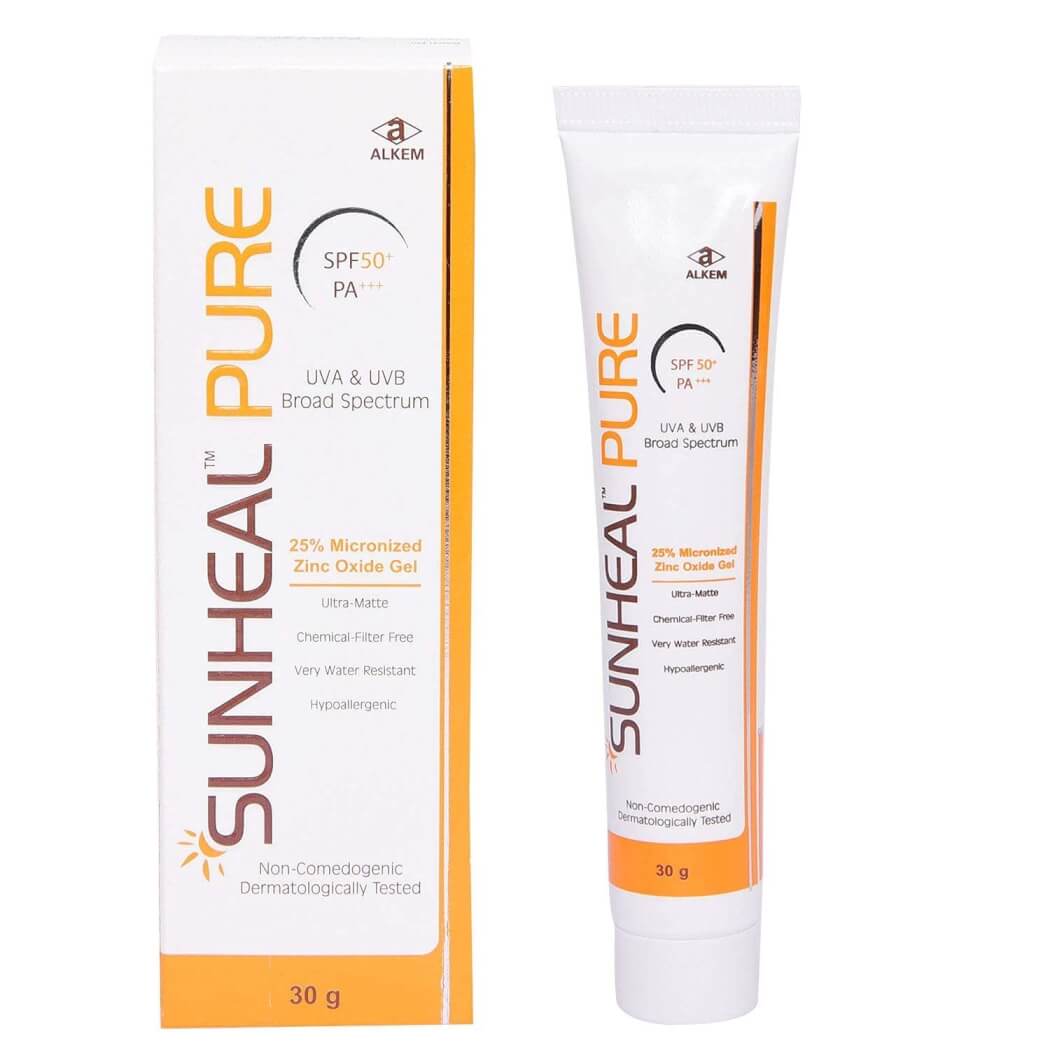
Mechanism
Zinc oxide protects the skin by acting on ultraviolet light before it can damage skin cells. It has traditionally been described as a physical blocker that reflects and scatters UV, but optical measurements show that reflection and scattering account for only a small part of its effect in the UV range; the majority of protection comes from absorption of UV photons across the semiconductor band gap of the material [1][2]. In practical terms, zinc oxide behaves much like the organic (chemical) filters in that it absorbs ultraviolet energy, while also scattering some longer-wavelength light [2].
By intercepting UVA and UVB radiation at the skin surface, zinc oxide reduces the ultraviolet dose reaching the epidermis and dermis, limiting the DNA damage, sunburn, and that drive photoaging and skin cancer risk [1]. Its broad and photostable absorption is why it is used to raise the sun protection factor and to supply UVA coverage in balanced sunscreen formulations [1][2].
The particle size of zinc oxide governs its cosmetic behavior more than its protective mechanism: larger particles scatter visible light and look white, whereas nanoscale particles transmit visible light and appear clear while continuing to absorb UV [1]. Studies of nanoparticle formulations indicate the particles stay in the outermost skin layers; some zinc ions can be released and penetrate slightly, but this has not been shown to cause local toxicity [3]. As a skin protectant, zinc oxide also forms a mild physical barrier that shields irritated skin and helps it retain moisture [1].
receptor fingerprint
UVB radiationblocks
UVA radiationblocks
Skin barrier surfaceactivates
Reactive oxygen and sunburn responseinhibits
Inflammatory skin irritationmodulates
Dosingtypical ranges, not medical advice
interested in protocols and clinical dosages? make an account to see them! ^_^
Safetyrisks and cautions, not medical advice
Zinc oxide is regulated as an over-the-counter sunscreen and is treated by the FDA as generally recognized as safe and effective. It is very well tolerated; the usual complaint is a cosmetic white cast, and irritation is rare and mild. Nano-sized zinc oxide has not been shown to meaningfully penetrate intact skin, so systemic absorption is minimal, but breathing in spray versions is discouraged, so lotions and creams are the better pick for the face. It is considered safe to use during pregnancy and on infants older than 6 months.
Subjective profileweighing the evidence above
About as easy a recommendation as this site gives: broad-spectrum, photostable, non-comedogenic and gentle enough for babies and reactive skin. Apply it generously, since almost everyone uses too little, and pick a lotion or cream over the loose powders and sprays you can inhale.
Where to buy

Suppliers
Vendors carrying Zinc Oxide (Sunscreen), with live product details and codes. Links are affiliate links that support the wiki at no cost to you.
PCT.Zone
Zinc Oxide (Sunscreen)
Research
- 2016first citedMetal oxide sunscreens protect skin by absorption, not by reflection or scattering
- 2019controlled trialSupport for the Safe Use of Zinc Oxide Nanoparticle Sunscreens: Lack of Skin Penetration or Cel…
- 2025most recentExposure of Selected Sunscreens to Artificial Sunlight Generates Persistent Free Radicals.
- 1.Exposure of Selected Sunscreens to Artificial Sunlight Generates Persistent Free Radicals.
- 2.Metal oxide sunscreens protect skin by absorption, not by reflection or scattering
- 3.Support for the Safe Use of Zinc Oxide Nanoparticle Sunscreens: Lack of Skin Penetration or Cellular Toxicity after Repeated Application in Volunteers
3 listed here; entry last updated August 2026
Reviews
My notesprivate to this device
FAQ
Why does zinc oxide leave a white cast?
The mineral particles sit on the surface and reflect light, which shows up as whiteness; tinted or micronized formulas play down the cast on darker skin tones.
Is nano zinc oxide absorbed into the body?
Studies show nano zinc oxide does not meaningfully pass through intact skin, so systemic absorption is minimal; the main caution is not inhaling spray forms.
Can I use it on my baby?
Mineral sunscreen with zinc oxide is generally considered fine for infants over 6 months; for younger babies, shade and clothing are preferred over sunscreen.
How is it different from chemical sunscreen?
Zinc oxide works mainly at the surface and is photostable and gentle, while chemical filters absorb into the top layer of skin; mineral filters tend to suit reactive skin better.
How often should I reapply?
Every 2 hours in the sun, and sooner after swimming, toweling off, or heavy sweating, since no sunscreen lasts all day on its own.
Adverse effects
- Inhaling loose zinc oxide powder or spray is best avoided, as with any fine powder
Notes and cautions
- Can leave a visible white cast on the skin, especially with non-nano formulas
- Very well tolerated; it is considered nonirritating, nonallergenic, and non-comedogenic
- Thick mineral formulas may feel heavy or hard to rub in
- Nanoparticle forms stay on the skin surface and are not shown to penetrate living skin or cause toxicity