
spec sheet13 rows
Brimonidine is a selective alpha-2 adrenergic receptor agonist used mainly as an eye medication. It lowers pressure inside the eye in open-angle glaucoma and ocular hypertension, and in other formulations it reduces facial redness in rosacea and relieves everyday eye redness. It was patented in 1972 and came into medical use in 1996.
- Selective alpha 2 agonist; fast, visible vasoconstriction
- Visibly reduces the facial redness of rosacea
- Lowers pressure inside the eye in open angle glaucoma
- A useful add on when other glaucoma drops fall short
- Once daily on the skin; non greasy gel
- In medical use since 1996 with a long record
- Eye itching, redness, or a burning feeling after drops
- Drowsiness or fatigue
- Lowered blood pressure, of particular concern in young children
Overview
Brimonidine is a synthetic quinoxaline derivative that acts as a highly selective agonist of the alpha-2 adrenergic receptor. It carries a bromine atom in its ring system, which is reflected in its name, and it is most familiar as the active ingredient in eye drops that manage raised pressure inside the eye [1]. The compound was patented in 1972 and entered clinical use in 1996, later becoming a widely prescribed ophthalmic medicine [1].
Its principal medical use is the treatment of open-angle glaucoma and ocular hypertension, where it lowers intraocular pressure and is used both on its own and alongside other pressure-lowering agents [2][3]. Long-term comparison studies found that brimonidine produced sustained reductions in eye pressure comparable to the beta-blocker timolol, with a generally favorable tolerability profile in adults [3]. Beyond glaucoma, a topical gel formulation is approved to reduce the persistent facial redness of rosacea, and a low-concentration solution is sold over the counter to relieve minor eye redness, both applications reflecting the drug's blood-vessel-constricting action [1].
Researchers have also examined whether brimonidine might protect retinal nerve cells independently of its pressure-lowering effect. Laboratory studies have described receptor-linked signaling pathways that the drug activates in retinal cells, but clinical evidence that it protects the optic nerve in people remains inconclusive [3][4].
Brimonidine is available as a prescription ophthalmic solution, often under the brand name Alphagan and as generics, and in fixed-dose combinations such as brimonidine paired with timolol. Lower-strength eye drops and the rosacea gel are marketed under separate brand names. Common formulations include buffered eye drops and a topical facial gel; the medicine is considered contraindicated in young children because of the risk of central nervous system and cardiovascular depression [2][3].
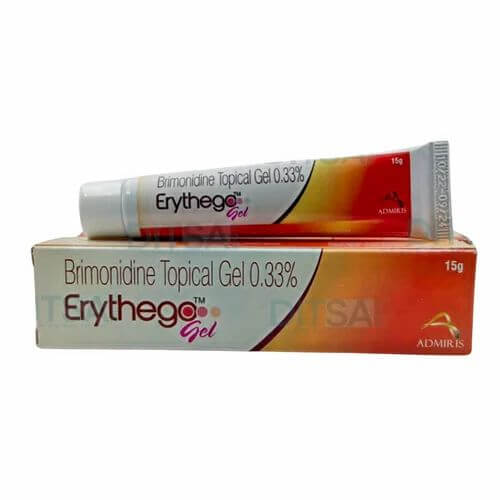
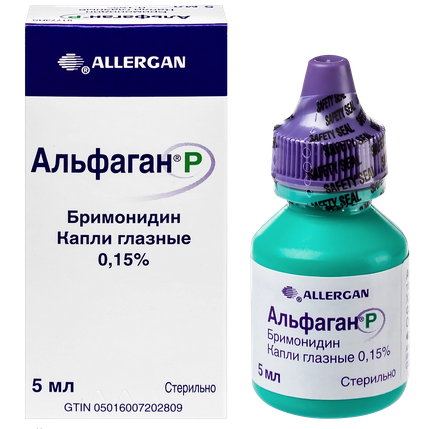
- The very same brimonidine molecule is sold in three different guises; eye drops for glaucoma, a facial gel for rosacea, and low-dose drops to whiten everyday eye redness.
- Brimonidine was patented in 1972 but waited until 1996 to reach patients, and did not gain its rosacea indication until 2013, more than four decades after the original patent.
Mechanism
Brimonidine is a highly selective at alpha-2 receptors [1][2]. In the eye it lowers intraocular pressure through two complementary actions; it reduces the rate at which the ciliary body produces aqueous humor and it increases the outflow of fluid through the uveoscleral drainage pathway [1][3]. Its peripheral alpha-2 activity also narrows small blood vessels, which is the basis for its use in calming redness of the eye and, in a gel form, the facial flushing of rosacea [1]. Cell and animal studies have investigated additional signaling effects and possible protection of retinal neurons, but this neuroprotective role has not been confirmed in people [3][4].
receptor fingerprint
Alpha-2 receptoragonist
Dermal facial arteriolesblocks
Ciliary body aqueous productionblocks
Uveoscleral outflowactivates
Presynaptic releaseinhibits
Dosingtypical ranges, not medical advice
interested in protocols and clinical dosages? make an account to see them! ^_^
Safetyrisks and cautions, not medical advice
Brimonidine gel is prescription only and acts mostly on the surface. The most talked about issue is a rebound flushing, where redness can return worse than before once the gel wears off, along with burning, stinging, and sometimes a paradoxical worsening of rosacea. Applying a thin layer and not overusing it helps. The eye drops can cause red, itchy eyes, dry mouth, drowsiness, and a small drop in blood pressure. It is contraindicated in infants and very young children because it can cross into the brain and cause dangerous sleepiness and slowed breathing, and it should be used cautiously alongside blood pressure medicines and sedatives.
Interactionsdocumented pairs only, not exhaustive
Brimonidine is an alpha-2 adrenergic agonist, and although it is usually given as a drop, enough reaches the circulation for systemic interactions to matter.
Monoamine oxidase inhibitors are the firm contraindication. MAO inhibition can alter brimonidine's metabolism and raise systemic exposure, with hypotension the expected consequence.
The interaction seen most often is additive central depression. Alpha-2 agonists are sedating and hypotensive in their own right, so alcohol, opioids, barbiturates, benzodiazepines and general anesthetics stack with them. The same mechanism explains the apnea, bradycardia and profound somnolence reported when brimonidine reaches small children. Antihypertensives, beta blockers and cardiac glycosides can add to the fall in blood pressure and heart rate for the same reason.
Tricyclic antidepressants blunt the hypotensive response to clonidine, a closely related alpha-2 agonist, by interfering with central alpha-2 signaling. Whether they also blunt brimonidine's pressure lowering effect in the eye has never been established, so that one is theoretical.
Checking a whole stack? Run it through interactions + stacks.
History
Brimonidine was patented in 1972 and emerged from research into selective alpha-2 adrenergic agonists that could lower intraocular pressure without the cardiovascular burden of less selective agents. Its ophthalmic formulation, marketed as Alphagan, received United States approval in 1996 for open-angle glaucoma and ocular hypertension, and a preservative-adjusted version, Alphagan P, followed. In 2013 the same molecule was repurposed as a topical gel, Mirvaso, becoming the first agent approved specifically to reduce the persistent facial redness of rosacea by constricting dilated dermal blood vessels. Over-the-counter drops using low-dose brimonidine were later cleared to relieve everyday eye redness, extending its reach beyond prescription use.
Reputation
Brimonidine is well regarded as a versatile and highly selective molecule that translated a single receptor mechanism into several distinct clinical roles. Ophthalmologists value it as a dependable pressure-lowering agent, while dermatologists appreciate that it offered the first targeted option for the stubborn centrofacial erythema of rosacea, a symptom that had long resisted treatment. Current dermatology guidelines list topical brimonidine among the accepted therapies for persistent redness, reflecting genuine clinical utility. Users should be aware that redness can occasionally rebound after the gel wears off, a nuance that is openly discussed in the literature and helps set realistic expectations.
Subjective profileweighing the evidence above
Fast and genuinely useful for both glaucoma pressure and rosacea redness. The catch with the gel is rebound flushing that can look worse than the redness you started with, so a thin layer and restraint matter, and it must be kept away from young children, where it can drop blood pressure dangerously.
Where to buy

1 other outlet

Suppliers
Vendors carrying Brimonidine, with live product details and codes. Links are affiliate links that support the wiki at no cost to you.
PCT.Zone
Brimonidine
RUPharma🌐
Brimonidine
Research
- 2000first citedThe evolving pharmacotherapeutic profile of brimonidine, an alpha 2-adrenergic agonist, after f…
- 2023most recentBrimonidine
- 1.Brimonidine
- 2.Brimonidine for glaucoma
- 3.The evolving pharmacotherapeutic profile of brimonidine, an alpha 2-adrenergic agonist, after four years of continuous use
- 4.Alpha 2-Adrenergic Receptor Agonist Brimonidine Stimulates ERK1/2 and AKT Signaling via Transactivation of EGF Receptors in the Human MIO-M1 Müller Cell Line.
- 5.Rosacea management: A comprehensive review
- 6.S2k guideline: Rosacea
6 listed here; entry last updated August 2026
Reviews
My notesprivate to this device
FAQ
Does brimonidine cure rosacea?
No; it only masks the redness for several hours at a time and does not treat the underlying rosacea or its bumps and pimples.
Why did my redness come back worse?
Some people get rebound flushing as the gel wears off; using a thinner layer or stopping and reviewing with your doctor usually helps.
Can children use brimonidine?
The gel and drops are not for infants and young children because the drug can reach the brain and cause dangerous drowsiness and slow breathing.
How soon does the redness fade?
Facial redness usually starts to lessen within about 30 minutes and the effect lasts up to roughly 12 hours.
Can I use makeup over the gel?
Yes; let the gel dry fully first, then apply makeup as usual over the top.
Adverse effects
- Eye itching, redness, or a burning feeling after drops
- Drowsiness or fatigue
- Lowered blood pressure, of particular concern in young children
- Ocular allergic reactions with prolonged use
Notes and cautions
- Dry mouth