
spec sheet11 rows
Azelaic acid is a naturally occurring saturated dicarboxylic acid (chemically nonanedioic acid, a nine-carbon molecule) used mainly as a topical treatment in dermatology. It is found in cereal grains such as wheat, rye, and barley and is produced on the skin by Malassezia yeast. Applied to the skin it treats acne, rosacea, and pigmentation problems such as melasma, working through antibacterial, pore-normalizing, anti-inflammatory, and pigment-reducing actions.
- Built for acne, rosacea and dark spots
- Fades melasma and stubborn pigmentation
- Antibacterial and anti inflammatory at once
- Unclogs pores without bleaching skin
- Naturally occurring; found in wheat and rye
- Considered safe to use during pregnancy
- Burning or stinging when first applied
- Itching or tingling
- Dryness or mild peeling
Overview
Azelaic acid is a saturated dicarboxylic acid with nine carbon atoms and a carboxyl group at each end, formally named nonanedioic acid. [1] It occurs naturally in whole grains and is also generated by Malassezia furfur, a yeast that normally lives on human skin. [1] For commercial use it is typically manufactured by the ozonolysis of oleic acid, a fatty acid derived from vegetable oils.
In medicine it is used almost entirely on the skin. It is a well-established topical treatment for mild to moderate acne and for papulopustular rosacea, and it is used off-label for disorders of excess pigmentation such as melasma and post-inflammatory dark spots. [2] A systematic review of randomized trials found azelaic acid more effective than an inactive vehicle for rosacea, acne, and melasma, and broadly comparable to several standard comparator treatments. [2]
Reviews describe azelaic acid as a versatile agent with a favorable safety profile, effective either as a standalone treatment or in combination with other therapies. [3] Because it is minimally absorbed into the body, it is often regarded as one of the safer topical options, including during pregnancy, though medical advice should still be sought.
Its usefulness across different conditions reflects several distinct actions on the skin, including effects on acne-associated bacteria, on the way skin cells shed within pores, and on the pigment-producing enzyme tyrosinase. [1] This combination lets a single agent address the redness of rosacea, the clogged pores and bacteria of acne, and uneven pigmentation.
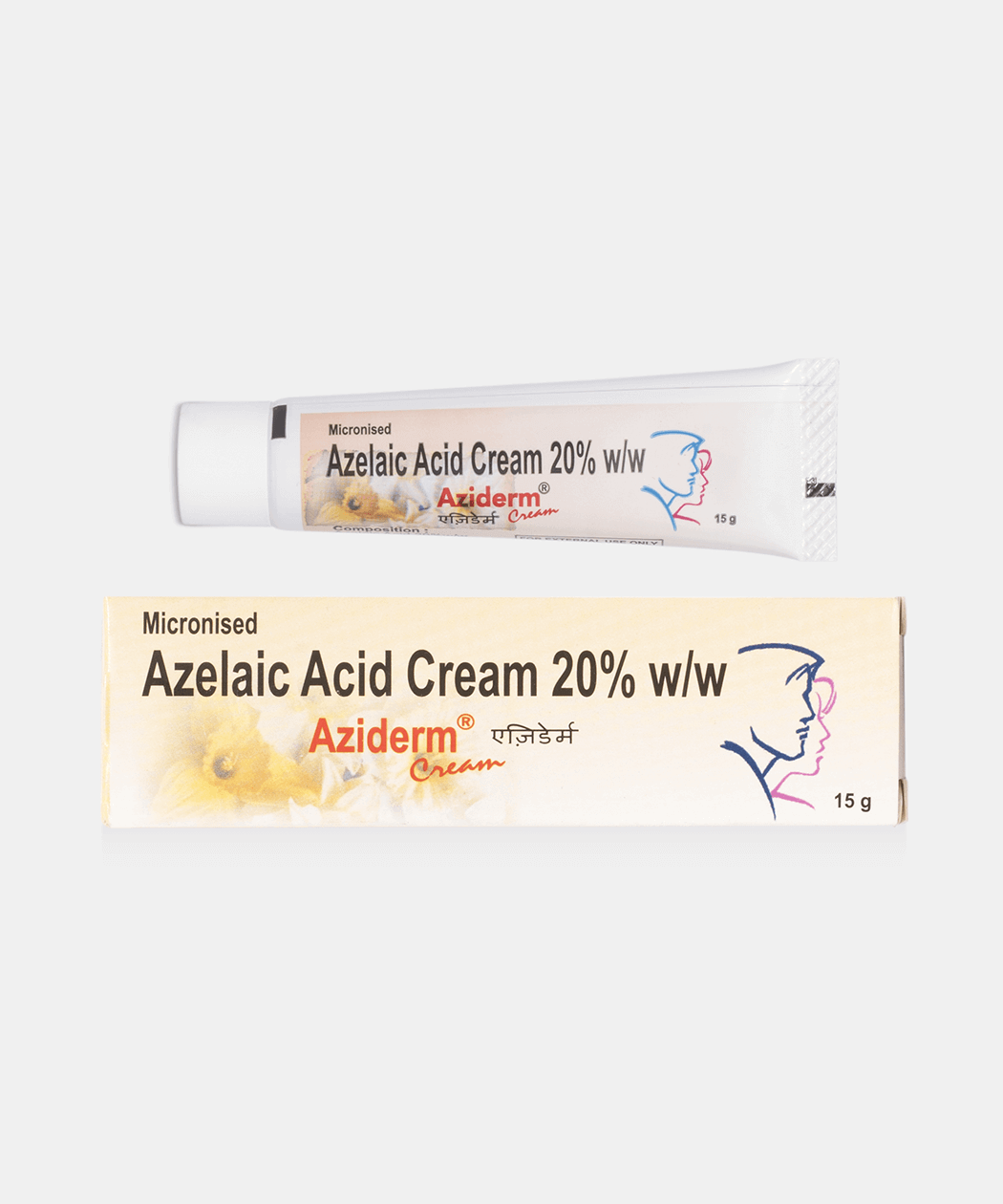
Azelaic acid is sold both as prescription-strength creams, gels, and foams and, at lower concentrations, in over-the-counter skincare products. It is applied directly to the skin, usually once or twice daily, and improvement typically takes several weeks of consistent use.
- The idea to use azelaic acid on skin came from studying a yeast: researchers noticed that Malassezia on the skin makes dicarboxylic acids that block the enzyme responsible for melanin, explaining the pale patches of tinea versicolor.
- Because it targets bacteria, pore blockage, inflammation, and pigment all at once, a single molecule treats acne, rosacea, and melasma; and it is regarded as safe to use in pregnancy.
Mechanism
Azelaic acid acts on the skin through several complementary mechanisms rather than a single target. [1] It is antibacterial against Cutibacterium acnes (formerly Propionibacterium acnes) and other skin bacteria involved in acne, reducing their numbers. [1] It normalizes the shedding of keratinocytes lining the hair follicle, which helps keep pores from becoming blocked, and it has anti-inflammatory and antioxidant effects, lowering reactive oxygen species and the inflammatory signaling that drives the redness of rosacea. [1] It also inhibits tyrosinase, the enzyme that catalyzes melanin production, which is the basis for its use in fading hyperpigmentation and melasma. [1] Because these actions target bacteria, follicular blockage, inflammation, and pigment at once, azelaic acid is effective across several distinct skin conditions. [2]
receptor fingerprint
Tyrosinase enzymeinhibits
Cutibacterium acnesblocks
Follicular keratinizationmodulates
Kallikrein-5 and cathelicidin (LL-37)inhibits
Neutrophil reactive oxygen speciesblocks
Dosingtypical ranges, not medical advice
interested in protocols and clinical dosages? make an account to see them! ^_^
Safetyrisks and cautions, not medical advice
Azelaic acid is available by prescription and in lower strengths over the counter, and it is one of the better tolerated skin treatments. The usual side effects are temporary burning, stinging, itching, tingling, dryness, and redness where it is applied, which tend to settle as the skin adjusts. Rarely it can lighten skin more than intended, something to watch for in people with darker skin tones. It has very little whole body absorption and is generally regarded as safe to use during pregnancy and breastfeeding, unlike many other acne and pigment treatments.
History
The dermatological use of azelaic acid grew out of research in Italy in the 1970s by Marcella Nazzaro-Porro and Siro Passi, who were studying tinea versicolor and observed that the Malassezia yeast on skin produced dicarboxylic acids capable of inhibiting pigment production. That insight led them to develop azelaic acid as a treatment first for pigmentary disorders such as melasma and then for acne. It was subsequently commercialized as topical preparations, with a 20% cream (Azelex/Skinoren) reaching the U.S. market and a 15% gel (Finacea) later approved by the Food and Drug Administration in the early 2000s for rosacea. The molecule itself is a naturally occurring nine-carbon dicarboxylic acid also found in cereal grains.
Reputation
Azelaic acid is well liked in dermatology as a versatile, gentle multitasker, praised for treating acne, rosacea, and hyperpigmentation through a single ingredient with a favorable tolerability profile. It is often recommended for sensitive skin and, notably, is considered a safe option during pregnancy, which sets it apart from many other acne and pigment treatments. Network meta-analyses of papulopustular rosacea rank it among the effective topical therapies. Its reputation for calming redness while fading dark marks has made it a favorite in both prescription and cosmeceutical routines.
Subjective profileweighing the evidence above
One of the best-value actives in a skincare routine: it handles acne, rosacea and pigmentation at once, stays kind to the skin barrier, and is one of the few treatments considered safe in pregnancy. Expect stinging for the first week or two and give it a couple of months to show up.
Where to buy

Suppliers
Vendors carrying Azelaic Acid, with live product details and codes. Links are affiliate links that support the wiki at no cost to you.
PCT.Zone
Azelaic Acid
Research
- 2007first citedAzelaic acid (15% gel) in the treatment of acne rosacea
- 2025most recentThe efficacy and safety of minocycline, metronidazole, ivermectin, and azelaic acid in moderate…
- 1.Azelaic Acid: Mechanisms of Action and Clinical Applications
- 2.A systematic review to evaluate the efficacy of azelaic acid in the management of acne, rosacea, melasma and skin aging
- 3.The versatility of azelaic acid in dermatology
- 4.The efficacy and safety of minocycline, metronidazole, ivermectin, and azelaic acid in moderate-to-severe papulopustular rosacea: A systematic review and network meta-analysis
- 5.Azelaic acid (15% gel) in the treatment of acne rosacea
5 listed here; entry last updated August 2026
Reviews
My notesprivate to this device
FAQ
Can azelaic acid treat more than one thing at once?
Yes, that is its strength; it fights acne bacteria, unclogs pores, calms rosacea redness, and fades dark spots all at the same time.
Is it safe during pregnancy?
It is generally considered one of the safer options in pregnancy because very little is absorbed, but confirm with your doctor first.
Why does it sting at first?
Mild burning, tingling, or itching is common early on and usually eases as your skin gets used to it over a couple of weeks.
How long until I see results?
Improvement in acne, redness, or dark spots usually takes several weeks of steady twice daily use, so be patient.
Can I use it with other acne treatments?
Often yes; it layers reasonably well with treatments like retinoids or benzoyl peroxide, though introduce them gradually to limit irritation.
Adverse effects
- Burning or stinging when first applied
- Itching or tingling
- Dryness or mild peeling
- Temporary redness
- Rare skin lightening around the treated area
Notes and cautions
- Generally very well tolerated