
data + articles · 4 listed
newest 2025spec sheet10 rows
Furosemide + Amiloride Furosemide combined with amiloride is a fixed-dose diuretic preparation that pairs two agents with complementary actions on the kidney, known generically as co-amilofruse and sold under names such as Frumil. Furosemide is a powerful loop diuretic that clears excess fluid but causes the body to lose potassium, while amiloride is a milder potassium-sparing diuretic that counteracts that loss. The combination is used to treat fluid retention, or oedema, as in heart failure, while helping to keep blood potassium from falling too low. Both components appear individually on the World Health Organization's List of Essential Medicines.
- Powerful fluid clearance that takes down swollen ankles and legs
- Amiloride holds on to the potassium furosemide throws away
- Breathing gets easier as fluid overload drains off
- Blood pressure comes down alongside the fluid
- Both components sit on the WHO Essential Medicines list
- One morning tablet, two complementary actions on the kidney
- Blood potassium can rise too high, especially with kidney problems, diabetes, or older age
- Dehydration and low blood pressure from excessive fluid loss
- Other electrolyte disturbances, such as low sodium
Overview
This product is a fixed combination of two diuretics that act at different points along the kidney tubule and are given together to balance each other's effects [1][2]. Furosemide is a loop diuretic, one of the most potent classes of water tablet, which acts on the loop of Henle to flush out large amounts of salt and water; a known consequence of that action is the loss of potassium in the urine [2]. Amiloride is a potassium-sparing diuretic, a much weaker agent on its own, whose main value in the pairing is that it reduces the excretion of potassium and so helps guard against the low potassium levels that loop diuretics tend to cause [1]. The combination is known generically as co-amilofruse and is marketed under brand names including Frumil [1].
Each ingredient has a long independent history [1][2]. Furosemide was introduced in the 1960s and remains among the most widely used diuretics, familiar under the brand name Lasix [2]. Amiloride was approved in the United States in the early 1980s and is sold on its own as Midamor [1]. Both drugs feature on the World Health Organization's List of Essential Medicines, and pairing a loop or thiazide diuretic with amiloride to offset potassium loss is a long-established prescribing approach [1]. Combining them in a single tablet is intended to simplify treatment for people who need the fluid-clearing power of a loop diuretic but are at risk of becoming depleted of potassium [1].
The combination is used chiefly to treat oedema, the build-up of excess fluid in the body seen in heart failure and other conditions, where a strong diuretic effect is wanted without the accompanying fall in potassium [1][2]. By retaining potassium, amiloride can reduce the need for the separate potassium supplements that might otherwise accompany loop diuretic therapy [1]. As with furosemide used alone, the response to the loop component can be somewhat unpredictable because its absorption from the gut is variable and often incomplete [3]. The preparation is taken by mouth as a tablet [1].
The main hazard peculiar to this combination is the reverse of the problem the loop diuretic causes on its own; because amiloride conserves potassium, blood potassium can climb too high, a state called hyperkalaemia, which is especially a concern in people with impaired kidney function, diabetes, or advanced age [1]. For this reason blood chemistry is monitored, and the combination is used cautiously alongside other drugs that raise potassium [1]. The remaining side effects are largely those of the two ingredients individually, including dehydration and low blood pressure from excessive fluid loss, disturbances of other electrolytes such as sodium, and, from the loop component at high exposure, effects on hearing [2][4]. It is supplied only as an oral tablet in fixed ratios of the two drugs [1].

- Furosemide and amiloride act on opposite ends of the kidney's filtering tubule and push potassium in opposite directions, which is exactly why they are combined.
- Both drugs are listed individually on the World Health Organization's List of Essential Medicines.
- The fixed combination carries the tidy generic name co-amilofruse, a contraction of amiloride and frusemide, the older British spelling of furosemide.
Mechanism
The two drugs in this combination act on different segments of the nephron, the filtering unit of the kidney, and their effects on potassium run in opposite directions [1][2]. Furosemide works upstream in the thick ascending limb of the loop of Henle, where it blocks the sodium-potassium-chloride cotransporter that normally reabsorbs salt from the tubular fluid; shutting this carrier down sends a large volume of sodium, chloride, and water out in the urine [2]. A byproduct of delivering all that extra sodium to the end of the nephron is that the downstream tubule exchanges some of it for potassium, so potassium is lost [1][2].
Amiloride acts precisely at that downstream site, in the late distal tubule, connecting tubule, and collecting duct, where it blocks the epithelial sodium channel, known as ENaC, through which sodium would otherwise be reabsorbed [1][4]. Because the reabsorption of sodium there is coupled to the secretion of potassium, closing this channel keeps potassium in the body [1][4]. Placed together, the loop diuretic supplies the strong fluid-clearing effect while the potassium-sparing agent blunts the potassium loss it would otherwise produce, so the pair achieves diuresis with a steadier potassium balance than furosemide gives on its own [1][2].
receptor fingerprint
Na-K-2Cl cotransporter (NKCC2)inhibits
Epithelial sodium channel (ENaC)blocks
Distal tubule potassium secretionmodulates
Renal prostaglandin synthesisactivates
Carbonic anhydraseinhibits
Dosingtypical ranges, not medical advice
interested in protocols and clinical dosages? make an account to see them! ^_^
Safetyrisks and cautions, not medical advice
This is a prescription combination. Common effects include frequent urination, thirst, dizziness and low blood pressure. Electrolytes can shift in either direction, since furosemide lowers potassium, sodium and magnesium while amiloride raises potassium, so periodic blood tests are important. It can raise uric acid and trigger gout, and high doses of furosemide carry a small risk of hearing effects. It should be avoided in people with high potassium, severe kidney impairment or no urine output. Caution is needed with ACE inhibitors, ARBs or potassium supplements (added hyperkalemia risk from amiloride), with NSAIDs (which blunt the diuretic and stress the kidneys), and with lithium (reduced clearance).
History
This combination pairs two diuretics that were each developed independently during the mid-twentieth century golden age of renal pharmacology. Furosemide was synthesized by the German company Hoechst, patented in 1959 and introduced into clinical practice in the mid-1960s, quickly becoming the archetypal loop diuretic for its potent ability to clear excess fluid. Amiloride was developed by researchers at Merck in the 1960s as a potassium-sparing agent that blocks the epithelial sodium channel in the distal nephron.
The pharmacological logic of combining them is that the loop diuretic's strong fluid-clearing action tends to waste potassium, while the potassium-sparing agent offsets that loss, so the two together achieve diuresis with a steadier potassium balance. The fixed-dose preparation is known generically as co-amilofruse and has long been sold in the United Kingdom and elsewhere under brand names such as Frumil. Both furosemide and amiloride appear individually on the World Health Organization's List of Essential Medicines, a mark of their enduring clinical importance.
Reputation
This pairing is a well-established, practical solution to a long-standing clinical problem: how to give the powerful fluid-clearing benefit of a loop diuretic without the troublesome drop in blood potassium it can cause. Clinicians value it for treating fluid retention in conditions such as heart failure, where keeping potassium stable matters for heart rhythm and patient safety. Both components are time-tested, inexpensive, and individually recognized as essential medicines by the World Health Organization, which speaks to the depth of experience behind them.
The fixed-dose format simplifies treatment by combining the two actions in a single tablet. As with any diuretic regimen, it requires monitoring of kidney function and electrolytes, and it is a symptomatic treatment for fluid overload rather than a cure for the underlying condition. Its longevity in everyday practice is a strong testament to how sensibly the two drugs complement each other.
Subjective profileweighing the evidence above
A sensible fixed-dose pairing; amiloride holds on to the potassium furosemide throws away, which is the exact problem the combination was built to solve. The flip side is potassium climbing too high, so it needs periodic blood tests, especially with kidney trouble, diabetes or older age. Prescription only.
Where to buy
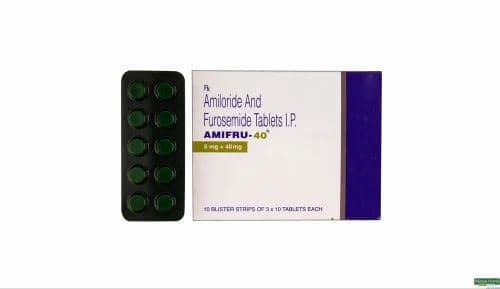
Suppliers
Vendors carrying Furosemide + Amiloride, with live product details and codes. Links are affiliate links that support the wiki at no cost to you.
PCT.Zone
Furosemide + Amiloride
Research
- 1990first citedFurosemide (frusemide). A pharmacokinetic/pharmacodynamic review (Part I)
- 2025most recentManagement of drug-resistant hypertension as a heterogeneous disorder.
- 1.Management of drug-resistant hypertension as a heterogeneous disorder.
- 2.Bartter- and Gitelman-like syndromes: salt-losing tubulopathies with loop or DCT defects.
- 3.Furosemide (frusemide). A pharmacokinetic/pharmacodynamic review (Part I)
- 4.Aldosterone-dependent and -independent regulation of the epithelial sodium channel (ENaC) in mouse distal nephron
4 listed here; entry last updated August 2026
Reviews
My notesprivate to this device
FAQ
Why combine two different diuretics?
Furosemide is powerful but wastes potassium; amiloride is added to hold potassium, so you get strong fluid removal with steadier electrolyte levels.
When should I take it?
In the morning; taking it late in the day can keep you up at night with trips to the bathroom.
Do I need blood tests on it?
Yes; your doctor checks potassium, sodium and kidney function because the two drugs pull potassium in opposite directions.
Can I take potassium supplements with it?
Usually not without medical advice; amiloride already conserves potassium, and adding more can push levels dangerously high.
Does ibuprofen interfere with it?
Yes; NSAIDs can blunt the diuretic effect and put extra strain on the kidneys, so check before combining them.
Adverse effects
- Blood potassium can rise too high, especially with kidney problems, diabetes, or older age
- Dehydration and low blood pressure from excessive fluid loss
- Other electrolyte disturbances, such as low sodium
- Hearing effects are possible from the loop diuretic component