
spec sheet6 rows
Genferon is a Russian suppository and spray combining recombinant interferon alfa-2b with benzocaine and taurine, sold for infections of the urogenital tract.
- Recombinant interferon alfa-2b in a suppository or spray
- Sold for infections of the urogenital tract
- Benzocaine included for immediate local comfort
- Taurine added to the same formulation
- Interferon alfa-2b is a serious molecule
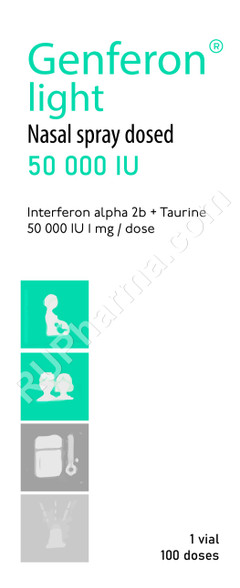
- Genferon is a Russian-market suppository combining recombinant human interferon alpha-2b with taurine and benzocaine; it has no FDA or EMA approval.
- PubMed indexes only five records naming Genferon, all Russian-language, none placebo-controlled, none in a journal with international peer-review standing.
- A 150-patient open randomised comparison in acute bronchitis reported faster regression of fever and intoxication with interferon suppositories added to usual care, with no placebo arm [1].
- In children with infectious mononucleosis, genferon light and cycloferon showed equivalent efficiency, neither compared against placebo [3].
- The only oncology report combines genferon with cycloferon in 60 basal cell carcinoma patients, so no effect can be attributed to genferon alone [4].
Mechanism
Interferon alfa-2b binds the type I interferon receptor and switches on interferon stimulated genes that interfere with viral replication and raise natural killer and T cell activity. Whether a suppository delivers enough to do any of that systemically is the open question; benzocaine is present for local pain and taurine as an antioxidant excipient.
receptor fingerprint
Type I interferon receptor (IFNAR1/IFNAR2)The recombinant interferon alpha-2b component is an IFNAR agonist driving JAK/STAT signalling and interferon-stimulated gene transcription
Voltage-gated sodium channels (benzocaine component)Benzocaine blocks Nav channels in mucosal sensory nerve endings
Taurine (no defined receptor)Included as an osmolyte and antioxidant said to stabilise the interferon component; no receptor or enzyme target identified
Safetyrisks and cautions, not medical advice
contains a recombinant cytokine and a local anaesthetic; benzocaine can cause methaemoglobinaemia, and no regulator outside the CIS has assessed this combination by this route
Subjective profileweighing the evidence above
Interferon alfa-2b is a serious molecule and a suppository is a strange place to put one; whether enough reaches the circulation by that route to do what interferon does is the open question, and no independent work answers it. Benzocaine is the ingredient most able to cause actual harm, since it produces methaemoglobinaemia often enough that the FDA has warned about it repeatedly, and here it sits inside a product bought for something else. The anaesthetic also makes the product hard to read, because local numbing feels like improvement and improvement is not the same as an infection resolving. No regulator outside the CIS has assessed this combination by this route.
Where to buy

Suppliers
Vendors carrying Genferon, with live product details and codes. Links are affiliate links that support the wiki at no cost to you.
RUPharma🌐
Genferon
Research
- 2011first cited[Modern possibilities of the pharmacotherapy of acute bronchitis].
- 2016most recent[Prolonged interferon papillomavirus infection treatment].
- 1.[Modern possibilities of the pharmacotherapy of acute bronchitis].
- 2.[Prolonged interferon papillomavirus infection treatment].
- 3.[Comparative analysis of the effectiveness of antiviral therapy of children with infectious mononucleosis].
- 4.[Aproaches to immunotherapy in different immunophenotypes of cutaneous basal cell carcinoma].
4 listed here; entry last updated August 2026
Reviews
My notesprivate to this device
Notes and cautions
- No Genferon trial in PubMed reports adverse events against a placebo comparator, so the safety profile is effectively uncharacterised by international standards.
- Systemic interferon alfa carries a boxed warning for fatal or life-threatening neuropsychiatric, autoimmune, ischaemic and infectious disorders, and that class risk should be assumed until suppository-specific data exist.
- Benzocaine is an established cause of methaemoglobinaemia and the FDA has warned against benzocaine products in children under 2 years.