
spec sheet7 rows
Diphtheria and Tetanus Toxoid (adsorbed) Adsorbed diphtheria and tetanus toxoid is a vaccine; it contains formaldehyde-inactivated bacterial toxins bound to an aluminium adjuvant and produces antitoxic immunity against diphtheria and tetanus.
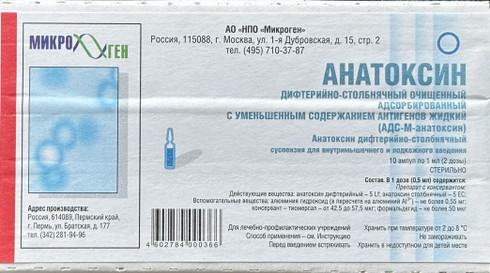
- DT (paediatric, full-strength diphtheria toxoid) and Td (adult, reduced-antigen diphtheria toxoid) are aluminium-adsorbed inactivated toxoid vaccines; the lower-case 'd' denotes the reduced diphtheria antigen content used from age 7 onward to limit reactogenicity.
- Seroprotection is defined by antitoxin concentration rather than by clinical endpoint: 0.1 IU/mL is the conventional threshold for both diphtheria and tetanus, and every trial above reports against it.
- Revaccination 10 years after a prior dose produced strong anamnestic responses with acceptable reactogenicity in a randomized adult trial [1], supporting the decennial booster interval.
- Tdap formulations are immunologically non-inferior to plain Td for the diphtheria and tetanus components while adding pertussis coverage [2], which is why Td has largely been displaced by Tdap in adult schedules.
- Protection is antibody-mediated and toxin-directed only: the vaccine neutralises the toxins and does not prevent colonisation by C. diphtheriae or wound contamination by C. tetani.
Mechanism
Formaldehyde treatment destroys the catalytic activity of the two exotoxins while leaving their antigenic surface intact, so the immune system raises neutralising antitoxin without the toxin causing damage. The aluminium hydroxide adjuvant slows antigen release at the injection site and recruits antigen-presenting cells, which is what turns a soluble protein into a durable memory response. Protection against both organisms is entirely antitoxic; neither vaccine prevents colonisation.
receptor fingerprint
Diphtheria toxin (Corynebacterium diphtheriae exotoxin, fragment A ADP-ribosyltransferase)Formaldehyde-inactivated toxin presented as an immunogen; elicits neutralising IgG antitoxin that blocks the toxin before it can ADP-ribosylate eEF-2
Tetanus neurotoxin (Clostridium tetani TeNT, a zinc metalloprotease cleaving VAMP/synaptobrevin)Formaldehyde-inactivated toxin presented as an immunogen; elicits neutralising IgG that binds circulating toxin before retrograde axonal transport
Aluminium salt adjuvant (aluminium hydroxide or phosphate) acting on NLRP3 inflammasome and antigen depot formationAdsorbs the toxoids, prolongs antigen presentation and recruits innate immune cells to the injection site
Memory B cells and long-lived plasma cells in bone marrowBooster doses recall pre-existing memory, producing a rapid anamnestic antitoxin rise within days
Safetyrisks and cautions, not medical advice
a vaccine; cold chain integrity cannot be verified on an imported ampoule, and immunisation belongs in a clinical setting with anaphylaxis cover and a record
Subjective profileweighing the evidence above
Toxoid immunisation is one of the genuine triumphs of medicine, and the refusal here is not about the vaccine at all. It is about the ampoule; an imported vial has an unverifiable cold chain, no anaphylaxis cover at the moment of injection and no entry in any record, and a tetanus history that exists only in somebody's memory is the one that fails in an emergency department years later. Both diseases are covered free or nearly free by public programmes almost everywhere, which makes the import route risky and pointless at the same time. The page is documentation.
Resources
No suppliers are provided for compounds like this. This entry is here for reference.
Research
- 1999first citedThe immunogenicity and safety of a new combined diphtheria, tetanus and poliomyelitis booster v…
- 2019most recentRandomized Controlled Trial of the Safety and Immunogenicity of Revaccination With Tetanus-Diph…
- 1.Randomized Controlled Trial of the Safety and Immunogenicity of Revaccination With Tetanus-Diphtheria-Acellular Pertussis Vaccine (Tdap) in Adults 10 Years After a Previous Dose
- 2.A randomised, double-blind, non-inferiority clinical trial on the safety and immunogenicity of a tetanus, diphtheria and monocomponent acellular pertussis (TdaP) vaccine in comparison to a tetanus and diphtheria (Td) vaccine when given as booster vaccinations to healthy adults
- 3.Booster vaccination of adults with reduced-antigen-content diphtheria, tetanus and pertussis vaccine: immunogenicity 5 years post-vaccination
- 4.Safety and immunogenicity of a single intramuscular dose of a tetanus-diphtheria toxoid (Td) vaccine (BR-TD-1001) in healthy Korean adult subjects
- 5.The immunogenicity and safety of a new combined diphtheria, tetanus and poliomyelitis booster vaccine (Td-eIPV)
- 6.Immunogenicity and safety of a second booster dose of an acellular pertussis vaccine combined with reduced antigen content diphtheria-tetanus toxoids 10 years after a first booster in adolescence: An open, phase III, non-randomized, multi-center study
6 listed here; entry last updated August 2026
Reviews
My notesprivate to this device
Notes and cautions
- The dominant adverse events are local: injection-site pain, erythema and induration in a large minority of recipients, increasing with the number of prior doses.
- The most important specific contraindication is a history of an Arthus-type hypersensitivity reaction after a previous tetanus- or diphtheria-toxoid-containing vaccine, in which case boosters should be deferred for at least 10 years.
- Rare but recognised events include brachial neuritis (historically estimated at roughly 0.5 to 1 per 100,000 doses of tetanus toxoid) and Guillain-Barre syndrome, both of which appear in the US Vaccine Injury Table.
- Encephalopathy within 7 days of a pertussis-containing vaccine is a contraindication to further pertussis components but not to DT or Td.