
spec sheet6 rows
Broncho-Munal is an oral capsule of killed bacterial fragments taken to reduce the frequency of recurrent respiratory infections.
- A registered medicine, not a tissue extract with a story
- Killed bacterial fragments in a simple oral capsule
- Fewer respiratory episodes across a whole season
- Engages innate receptors in the Peyer's patches
- Raised secretory IgA at the airway surface
- Trained innate immunity with a coherent mucosal mechanism
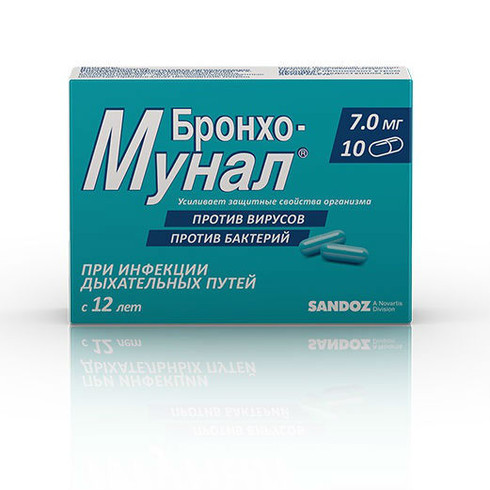
- Broncho-Munal is a trade name for OM-85 BV, an oral standardised lysate of 21 respiratory bacterial strains made by OM Pharma; it is sold as Broncho-Vaxom, Broncho-Munal and Ismigen depending on the market, so the whole OM-85 literature applies directly to it.
- It is licensed in Europe, Latin America and much of Asia for the prevention of recurrent respiratory tract infections, and has never been approved by the FDA in the United States.
- The 2010 pooled analysis of paediatric trials found recurrent respiratory infection (three or more in six months) in 32% of OM-85-treated children versus 58.2% on placebo (p<0.001), with the effect largest in the children most prone to infection [1].
- A 2019 placebo-controlled phase 4 trial confirmed the effect with a 3-month course given as three 10-day series, and found no additional benefit from extending to 6 months [2].
- OM-85 does not interfere with inactivated influenza vaccine immunogenicity in children with recurrent respiratory infection [6], which matters because these are the same children who most need vaccination.
- A 2024 critical appraisal of the existing systematic reviews is the most important caveat: the evidence base is heterogeneous, largely manufacturer-associated, and the certainty of the effect estimate is lower than the raw numbers suggest [4].
Mechanism
The lysate is absorbed across the gut-associated lymphoid tissue in the Peyer's patches, where bacterial pattern molecules engage innate receptors on dendritic cells; the activated cells then traffic to the airway mucosa. The result is described as trained innate immunity and increased secretory IgA rather than antigen-specific protection against a named pathogen.
receptor fingerprint
Toll-like receptors on gut-associated lymphoid tissue (Peyer's patch dendritic cells)Bacterial lysate components from 21 respiratory pathogen strains engage pattern-recognition receptors in the gut, priming a systemic and mucosal immune response
Secretory IgA production at respiratory mucosaIncreases mucosal IgA, providing first-line neutralisation of inhaled pathogens
Bronchial epithelial complement C1q receptor and beta-defensin (via Erk1/2 MAPK and )OM-85 upregulates C1q-R and beta-defensin and reduces rhinovirus-induced ICAM-1 expression in primary human bronchial epithelial cells
ACE2 and TMPRSS2 transcription in airway epitheliumDownregulates both SARS-CoV-2 entry factors in vitro, reducing spike binding and pseudovirus entry
Influenza-specific CD8+ T cells in airwayPre-treatment increased virus-specific CD8+ T-cell proportion and reduced lung viral load in a mouse model
Safetyrisks and cautions, not medical advice
A registered oral immunostimulant rather than a supplement; deliberately raising immune activity is not neutral in autoimmune disease, and recurrent chest infection needs a diagnosis first.
Subjective profileweighing the evidence above
Of the immune products in this catalogue this one stands on the most respectable footing: a registered medicine with a coherent mucosal mechanism, rather than a tissue extract with a story attached. Bacterial lysates engage innate receptors in the Peyer's patches, and what is described is trained innate immunity, so the realistic claim is fewer episodes across a season and not an infection prevented on demand. The caveat usually skipped is that recurrent chest infection is a symptom; anyone getting them repeatedly needs the reason found before anything is prescribed. Raising immune tone deliberately is also not neutral in autoimmune disease.
Where to buy
Suppliers
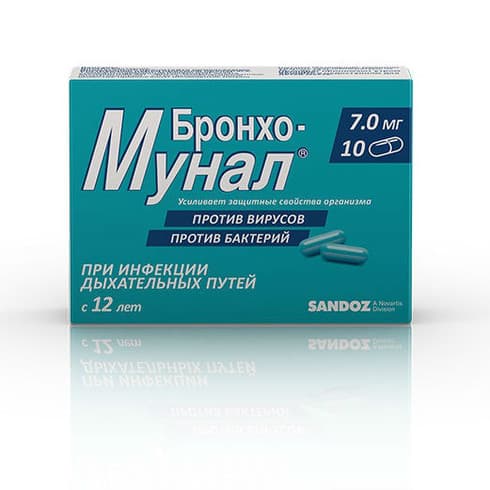
Vendors carrying Broncho-Munal, with live product details and codes. Links are affiliate links that support the wiki at no cost to you.
RUPharma🌐
Broncho-Munal
Research
- 2006first citedOral purified bacterial extracts in acute respiratory tract infections in childhood: a systemat…
- 2010meta-analysisOM-85 BV, an immunostimulant in pediatric recurrent respiratory tract infections: a systematic…
- 2024most recentA critical analysis of the effect of OM-85 for the prevention of recurrent respiratory tract in…
- 1.OM-85 BV, an immunostimulant in pediatric recurrent respiratory tract infections: a systematic review
- 2.A randomized, placebo-controlled, double-blinded, single-centre, phase IV trial to assess the efficacy and safety of OM-85 in children suffering from recurrent respiratory tract infections
- 3.Oral purified bacterial extracts in acute respiratory tract infections in childhood: a systematic quantitative review
- 4.A critical analysis of the effect of OM-85 for the prevention of recurrent respiratory tract infections or wheezing/asthma from systematic reviews with meta-analysis
- 5.OM-85 BV for primary prevention of recurrent airway infections: a pilot randomized, double-blind, placebo-controlled study
- 6.Impact of a mixed bacterial lysate (OM-85 BV) on the immunogenicity, safety and tolerability of inactivated influenza vaccine in children with recurrent respiratory tract infection
- 7.Broncho Vaxom (OM-85) modulates rhinovirus docking proteins on human airway epithelial cells via Erk1/2 mitogen activated protein kinase and cAMP
- 8.The OM-85 bacterial lysate inhibits SARS-CoV-2 infection of epithelial cells by downregulating SARS-CoV-2 receptor expression
8 listed here; entry last updated August 2026
Reviews
My notesprivate to this device
Notes and cautions
- OM-85 has a benign safety profile across the trial literature, with gastrointestinal upset, nausea and mild rash the most commonly reported events and no consistent serious adverse-event signal.
- It should not be started during an acute infection or fever and is generally deferred until the acute episode resolves.
- Because it is an immunostimulant, it is conventionally avoided in autoimmune disease and in immunosuppressed patients, although this is a precautionary rather than evidence-driven restriction.
- The bigger honest caveat for a reader is not toxicity but evidence quality: much of the supporting trial base is manufacturer-associated and of mixed methodological rigour [4], so the drug should be presented as plausibly modestly effective rather than established.