
spec sheet7 rows
Derinat is a Russian preparation of low molecular weight sodium salt of DNA extracted from sturgeon milt, sold as a nasal spray and an injection for immune support and mucosal repair.
- Sodium salt of DNA extracted from sturgeon milt
- Sold as a nasal spray for immune support and mucosal repair
- TLR9 genuinely reads nucleic acids, so the aim is reasonable
- Mucosal immunity is a sensible place to aim
- Available as a spray and as an injectable form
- A long established Russian preparation with wide domestic use
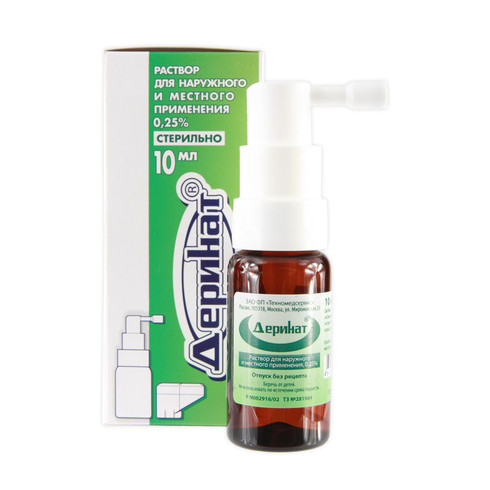
- Derinat is sodium deoxyribonucleate, a high-molecular-weight DNA preparation extracted from sturgeon milt, registered in Russia as an immunomodulator and reparative agent and sold as nasal drops, an oral spray and an injection; it has no FDA, EMA or MHRA approval.
- Unlike Allohol and Biotredin there IS an indexed literature, but every one of the papers is preclinical: cell culture and rodent models of UV-B damage, pressure ulcer, acute lung injury, radiation injury and stress. There is no randomised controlled trial of Derinat in any indexed journal.
- Much of the recent Derinat work comes from Taiwanese laboratories rather than Russian ones, which is unusual and worth noting when assessing the literature's independence (PMID 26569211, PMID 30360946, PMID 36642990).
- No molecular target has ever been identified for Derinat. Its 'immunomodulator' designation describes an observed effect in animal models, not a mechanism.
- The common consumer use, intranasal Derinat for prevention and treatment of colds and influenza in children, has no supporting randomised evidence in indexed literature whatsoever.
- Because Derinat is a biological extract rather than a defined chemical entity, batch-to-batch composition is not controlled the way a small-molecule drug's would be, which limits what any single study can be taken to establish.
Mechanism
The proposed mechanism is engagement of nucleic acid sensing receptors on mucosal and immune cells, chiefly TLR9, together with a supply of nucleotide building blocks for tissue repair. What is actually established in humans is thin. The clinical literature is Russian-language, largely uncontrolled and mostly from the manufacturer's own network, and no independent group has replicated any of it. The page should say that rather than describe the proposed mechanism as if it were demonstrated.
receptor fingerprint
No defined molecular target; Derinat is a high-molecular-weight sodium salt of DNA extracted from sturgeon milt, not a defined chemical entityMarketed as an immunomodulator and reparative agent; no receptor, enzyme or transporter interaction has been demonstrated
Innate immune and inflammatory signalling ( profile in animal models)Shifts cytokine balance toward an anti-inflammatory profile in rodent acute lung injury and pressure ulcer models
Oxidative and UV-B-induced cellular damage in skinProtective effect in cultured cells and mouse skin exposed to UV-B
Nucleic-acid sensing pathways (TLR9, cGAS-STING) proposed as the mechanism for exogenous DNA immunomodulationProposed but not demonstrated for Derinat specifically
Safetyrisks and cautions, not medical advice
Derinat is a biological preparation in the immunomodulator class. A full adverse effect profile has not been compiled for this entry yet, so nothing here should be read as evidence that it is well tolerated; the absence is missing work rather than a finding. What is documented is what the compound is and what it is used for.
Subjective profileweighing the evidence above
A nasal spray of fish DNA is not automatically absurd, since TLR9 genuinely does read nucleic acids and mucosal immunity is a reasonable place to aim. What is missing is any reason to believe this particular preparation does it in a person, because the entire literature is Russian-language, uncontrolled and produced inside the manufacturer's network, and nobody outside has reproduced a line of it. The injectable form is the part that should give pause, because provoking innate immune sensors by injection on the strength of unreplicated reports is not a low stakes thing to do. Best treated as a hypothesis with a marketing budget attached.
Where to buy

Suppliers
Vendors carrying Derinat, with live product details and codes. Links are affiliate links that support the wiki at no cost to you.
RUPharma🌐
Derinat
Research
- 2010first citedStress-induced changes in the functional activity of the neuroendocrine system: the modulatory…
- 2023most recent[Antiviral and virucidal activity of sodium deoxyribonucleate and its complex with iron against…
- 1.Derinat Protects Skin against Ultraviolet-B (UVB)-Induced Cellular Damage.
- 2.Effects of Derinat on ischemia-reperfusion-induced pressure ulcer mouse model.
- 3.Derinat has an immunomodulatory and anti-inflammatory effect on the model of acute lung injury in male SD rats.
- 4.Experimental Study of the Efficacy of Sodium Deoxyribonucleate Used in Combination with Co-Transplantation of Mesenchymal and Hematopoietic Stem Cells after Exposure to γ-Radiation.
- 5.[Antiviral and virucidal activity of sodium deoxyribonucleate and its complex with iron against viruses of different kingdoms and families].
- 6.Stress-induced changes in the functional activity of the neuroendocrine system: the modulatory activity of derinat.
6 listed here; entry last updated August 2026
Reviews
My notesprivate to this device
Notes and cautions
- Derinat is not approved by any Western regulator and has never been tested in a randomised controlled trial in the indexed literature, so no efficacy claim for it can be supported.
- As an injectable biological extract from fish milt it carries a theoretical risk of hypersensitivity and anaphylaxis, and it should be avoided in anyone with fish or seafood allergy.
- Because it is described as an immunostimulant, its use is questionable in autoimmune disease and in transplant recipients on immunosuppression, and there are no interaction data at all.
- The realistic harm is substitution and delay: using intranasal Derinat for a child's respiratory illness in place of assessment can postpone the diagnosis of bacterial infection, and using it in place of influenza vaccination or antiviral treatment leaves real risk unaddressed.