
spec sheet13 rows
Rapamycin, also known as sirolimus, is a macrolide compound isolated from a soil bacterium found on Easter Island (Rapa Nui), where it was first identified as an antifungal. It inhibits the mTOR pathway, a central regulator of cell growth and autophagy, giving it immunosuppressant and antiproliferative properties used clinically to prevent transplant rejection, to coat coronary stents, and to treat certain rare diseases. It has drawn wide scientific interest as the only drug shown to extend lifespan in every model species tested, an effect that is dose- and sex-dependent, and a short course of mTOR inhibition has even been reported to rejuvenate the aging immune system in older adults.
- the only drug shown to extend lifespan in every species tested
- switches on autophagy, the cell's own clean up system
- a short course has been reported to rejuvenate aging immunity
- an established clinical drug, not a research chemical
- the most evidence backed longevity candidate available
- found in Easter Island soil; still the benchmark for mTOR work
- Mouth sores or ulcers
- Swelling in the limbs (peripheral edema)
- Impaired wound healing
Overview
Rapamycin, marketed as sirolimus, is a naturally occurring macrocyclic lactone that inhibits the mechanistic target of rapamycin (mTOR) and has both immune-suppressing and cell-growth-suppressing effects [1][3]. It was isolated in the 1970s from Streptomyces hygroscopicus, a bacterium recovered from a soil sample on Easter Island, known to its inhabitants as Rapa Nui, from which the compound takes its name [1]. First described as an antifungal agent, it was later found to have powerful effects on the immune system and on cell growth [1].
The compound was approved at the end of the 1990s to help prevent rejection of transplanted organs, particularly kidneys, where it offers the advantage of being less toxic to the kidney than the calcineurin inhibitors. It is additionally used to coat coronary stents so as to keep arteries from renarrowing after they are opened, and to treat several rare disorders, including the lung disease lymphangioleiomyomatosis and certain abnormal vascular growths. In these settings its ability to restrain cell proliferation and immune activity is central to its usefulness.
Beyond these approved uses, rapamycin has become one of the most intensively studied molecules in the biology of aging. Suppressing the mTOR pathway lengthens lifespan in yeast, roundworms, and fruit flies, and in 2009 a landmark experiment showed that rapamycin extended both median and maximum lifespan in genetically varied mice even when treatment was begun late in life [2]. Later research showed that prolonged dosing can worsen glucose tolerance by disrupting a second protein assembly called mTORC2, though the same study indicated that reduced signaling through the first complex, mTORC1, could extend lifespan independently of these metabolic changes [3]. Interest in the drug's potential to influence age-related disease continues, while its immune-suppressing and metabolic effects temper enthusiasm for broad use [3].
Sirolimus is a prescription-only medicine supplied as an oral solution and tablets, with related formulations used for specific indications. Its discovery from a single soil sample illustrates how the screening of natural products has yielded compounds of lasting scientific and medical importance [1].
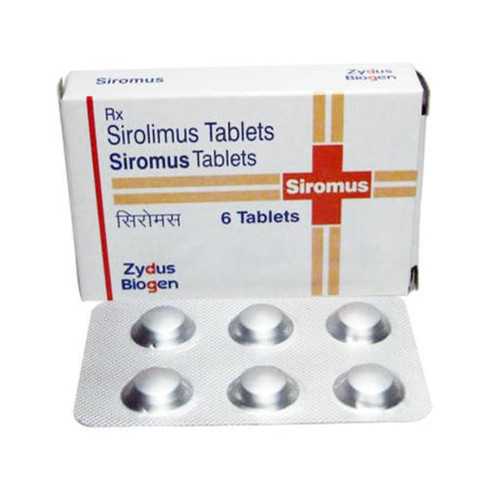
- Rapamycin is named after Rapa Nui, the Polynesian name for Easter Island, where the soil bacterium that produces it was first collected.
- It is often cited as the only drug shown to extend lifespan in every model species in which it has been carefully tested, from yeast and worms to flies and mice.
- In a placebo-controlled study in older adults, low-dose rapamycin reduced p21, a marker of DNA-damage-induced senescence, in immune cells, pointing to a role in protecting genome stability.
Mechanism
Rapamycin works by first binding an intracellular protein called FKBP12; the resulting complex then attaches to and inhibits complex 1 (mTORC1), a central regulator of cell growth, protein synthesis, and metabolism [3]. By blocking mTORC1 the drug interrupts the -driven signals that activate immune T and B cells, which produces its immunosuppressant action, and it slows the proliferation of many cell types, which underlies its antiproliferative and stent-coating uses [3]. The same restraint of nutrient and growth sensing is thought to account for its ability to extend lifespan in laboratory organisms, although prolonged exposure can also disrupt a second complex, mTORC2, and thereby impair action [2][3].
receptor fingerprint
mTORC1inhibits
FKBP12binds
Immune cell proliferationsuppresses
activates
Cellular senescencemodulates
Dosingtypical ranges, not medical advice
interested in protocols and clinical dosages? make an account to see them! ^_^
Safetyrisks and cautions, not medical advice
As an immunosuppressant it can raise infection risk, impair wound healing, and cause mouth sores, and continuous high dosing can worsen blood lipids and blood sugar. Intermittent low-dose protocols used for longevity aim to reduce these risks, but long-term safety for that use is not established. It interacts with many drugs and should only be used under medical supervision.
Interactionsdocumented pairs only, not exhaustive
Rapamycin is metabolized primarily by cytochrome P450 3A (CYP3A), and its blood levels change substantially when combined with other drugs that inhibit or induce this enzyme. CYP3A inhibitors increase rapamycin exposure significantly; when combined with voriconazole, used for fungal infections, rapamycin levels can rise, and patients require dose reductions and close monitoring of blood concentrations to prevent toxicity [19].
Conversely, CYP3A enzyme inducers like rifampin and certain anticonvulsants decrease rapamycin exposure substantially; in one study, rifampin reduced the active metabolite of temsirolimus (a rapamycin derivative) by 56 to 67 percent, necessitating higher doses to maintain therapeutic levels [20]. This is a pharmacokinetic interaction where one drug changes the blood concentration of the other through enzyme effects. Understudied pairings include rapamycin with most oral antibiotics, antihistamines, and non-enzyme-modulating antifungal agents; the interaction risk with most antivirals and cardiovascular drugs remains unclear.
Checking a whole stack? Run it through interactions + stacks.
History
Rapamycin, also known as sirolimus, was isolated in the early 1970s from Streptomyces hygroscopicus, a soil bacterium recovered from Easter Island, known to its inhabitants as Rapa Nui, during a bioprospecting effort by researchers at the pharmaceutical company Ayerst. The compound is closely associated with the scientist Suren Sehgal, who characterized and championed it after it was first noticed for antifungal activity.
Attention soon shifted to its powerful immunosuppressant and antiproliferative properties, and in 1999 the United States Food and Drug Administration approved it as Rapamune to prevent rejection in kidney transplantation; it was later used to coat coronary stents and to treat rare conditions such as lymphangioleiomyomatosis. The identification of its molecular target, the mTOR pathway, opened an entire field of research into cellular growth and metabolism. A pivotal 2009 study showing that rapamycin extended the lifespan of mice even when begun late in life transformed it into one of the most studied compounds in the biology of aging.
Reputation
Rapamycin occupies a singular place in modern biomedicine, respected both as an established transplant and stent medicine and as arguably the most compelling pharmacological candidate in the science of longevity. It is frequently described as the only drug shown to extend lifespan in every model organism in which it has been rigorously tested, an effect that is notably dose- and sex-dependent.
Its reputation in aging research rests on a robust and growing literature: reviews highlight strong evidence for benefits on cardiac function, the nervous system, cellular senescence, and immune aging in mice, and short courses of low-dose mTOR inhibition have been reported to rejuvenate aspects of the aging immune system in older adults. Researchers are appropriately measured about translating this promise; prolonged high-dose exposure can impair insulin action and immune defense through effects on a second complex, mTORC2. Even so, its combination of a defined mechanism and reproducible lifespan effects gives rapamycin a uniquely optimistic standing in geroscience.
Subjective profileweighing the evidence above
The most evidence-backed longevity candidate we have, but it's a serious drug used off-label for aging; not something to treat casually.
Where to buy

1 other outlet
Suppliers
Vendors carrying Rapamycin, with live product details and codes. Links are affiliate links that support the wiki at no cost to you.
RUPharma🌐
Sirolimus
PCT.Zone
Rapamycin
Research
- 1975first citedRapamycin (AY-22,989), a new antifungal antibiotic. I. Taxonomy of the producing streptomycete…
- 2005most active year3 papers
- 2007controlled trialPharmacokinetic profile of temsirolimus with concomitant administration of cytochrome p450-indu…
- 2026most recentRapamycin Exerts Its Geroprotective Effects in the Ageing Human Immune System by Enhancing Resi…
- 1.Rapamycin (AY-22,989), a new antifungal antibiotic. I. Taxonomy of the producing streptomycete and isolation of the active principle
- 2.Rapamycin fed late in life extends lifespan in genetically heterogeneous mice
- 3.Rapamycin-induced insulin resistance is mediated by mTORC2 loss and uncoupled from longevity
- 4.Rapamycin-mediated lifespan increase in mice is dose and sex dependent and metabolically distinct from dietary restriction
- 5.mTOR inhibition improves immune function in the elderly
- 6.Influence of rapamycin on safety and healthspan metrics after one year: PEARL trial results
- 7.The hyperfunction theory of aging: three common misconceptions
- 8.The mammalian target of rapamycin signaling network and gene regulation
- 9.Signaling by target of rapamycin proteins in cell growth control
- 10.mTOR as Regulator of Lifespan, Aging, and Cellular Senescence: A Mini-Review
- 11.Autophagy and cardiovascular aging: lesson learned from rapamycin
- 12.Sirolimus in transplantation
20 listed here; entry last updated August 2026
Reviews
My notesprivate to this device
FAQ
Why is rapamycin studied for aging?
Inhibiting mTOR extends lifespan across many species, making it a leading longevity candidate.
Is it approved for anti-aging?
No; that use is off-label and not proven in long-term human trials.
How is longevity dosing different?
People typically use lower, intermittent doses to limit immunosuppression, but the ideal regimen isn't established.
Is it safe to take on my own?
No; it's an immunosuppressant with many drug interactions and needs medical supervision.
Adverse effects
- Mouth sores or ulcers
- Swelling in the limbs (peripheral edema)
- Impaired wound healing
- Increased susceptibility to infections
Notes and cautions
- Elevated blood cholesterol and triglycerides