
spec sheet11 rows
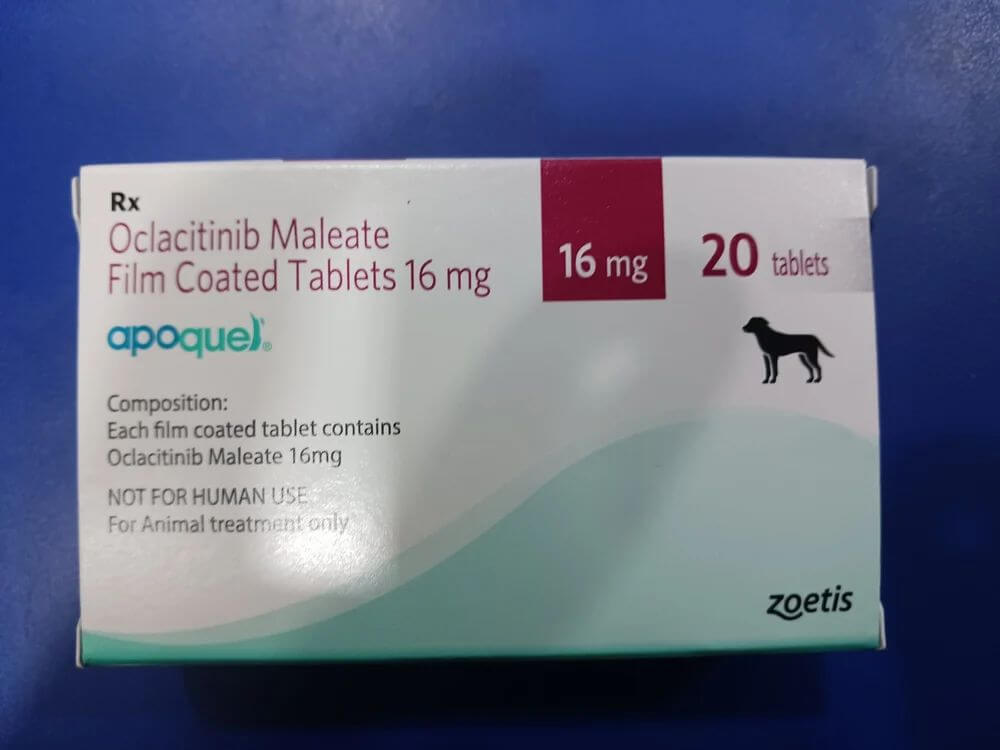
Oclacitinib is a Janus kinase (JAK) inhibitor used in veterinary medicine to control itching in dogs. Sold under the brand name Apoquel, it is given by mouth to relieve the pruritus of allergic dermatitis and to manage atopic dermatitis in dogs at least a year old. Developed by the animal-health company Zoetis, it was approved in the United States in 2013 and works by dampening the cell-signaling pathways that carry itch and inflammation, including those driven by the cytokine interleukin-31. It is a prescription veterinary medicine and is not approved for use in humans.
- Relieves the itch of allergic dermatitis in dogs
- Works within hours, not days
- Steroid free control of atopic dermatitis in dogs
- Targets the interleukin 31 itch signal directly
- Given by mouth, flexible daily dosing
- Generally well tolerated by dogs a year and older
- Digestive upset such as diarrhea, vomiting, or reduced appetite
- Lethargy
- Because it dampens immune signaling, a possible increased susceptibility to skin and other infections
Overview
Oclacitinib is a small-molecule Janus kinase inhibitor developed specifically for dogs, and it is regarded as relatively selective for the JAK1 enzyme [2][4]. It is dispensed as the salt oclacitinib maleate in film-coated tablets and is best known by its trade name, Apoquel [2]. Its arrival marked one of the first applications of the JAK-inhibitor drug class, better known from human autoimmune medicine, to companion-animal dermatology.
The medicine was brought to market by the animal-health company Zoetis and was approved by the United States Food and Drug Administration in 2013 for the control of pruritus associated with allergic dermatitis and for the control of atopic dermatitis in dogs at least twelve months of age, with European Union approval following in 2023 [2]. It is intended only for dogs; occasional off-label use in cats has been described but is not established [1].
Clinically, oclacitinib is valued for how quickly it calms itching, with relief often beginning within hours of a dose [4]. Controlled studies support this rapid action: in a canine model of flea-allergy dermatitis, a single oral dose reduced itching markedly within a few hours and repeated dosing lessened redness and skin lesions [4]. Experimental itch models in which the cytokine interleukin-31 is injected into the skin likewise show that oclacitinib blunts the resulting scratching, underscoring that its benefit is tied to interruption of specific itch-signaling cytokines [3].
After oral administration the drug is well absorbed and reaches peak blood levels quickly, has a short elimination half-life, and is cleared mainly by the liver; in practice it is typically given twice daily for an initial period and then once daily for maintenance [1]. Because it dampens immune signaling, oclacitinib carries the theoretical concerns common to immunomodulating drugs, such as a possible increased susceptibility to infections.
Extensive safety monitoring has accumulated since approval [2]. The adverse events most often reported are digestive upsets and lethargy, and a large pharmacovigilance program together with a matched cohort study found that long-term use under label directions has a favorable benefit-risk balance and was not associated with an increased incidence of tumors compared with other systemic therapies [2]. Oclacitinib is a prescription veterinary medicine and is not authorized for human use [2].
- Apoquel was in such demand after its 2013 launch that Zoetis had to ration supply to veterinary clinics.
- It can begin easing a dog's itch within hours, often within a single day.
- It was the first Janus kinase inhibitor ever approved for use in companion animals.
Mechanism
Oclacitinib works inside the Janus kinase and signal transducer and activator of transcription (JAK-STAT) pathway, the relay system that many cytokines use to pass their signals from the cell surface into the nucleus [4]. By inhibiting the JAK1 enzyme in particular, oclacitinib interrupts the signaling of a group of cytokines that drive allergy, inflammation, and itch, including interleukin-2, interleukin-4, interleukin-6, interleukin-13, and, importantly, interleukin-31 [4].
Interleukin-31 is a principal itch-inducing in canine atopic dermatitis, acting on sensory nerves in the skin to generate the sensation of pruritus; by preventing its message from being transmitted, oclacitinib can quiet itching rapidly, an effect demonstrated in models where injected interleukin-31 provokes scratching that the drug then suppresses [3][4]. The broader blockade of allergy-related cytokines also reduces the inflammatory component of dermatitis, helping to lessen redness and skin lesions over time [4]. Because the drug is relatively selective for JAK1 rather than acting broadly across all Janus kinases, it is intended to target the itch and inflammation pathways while limiting effects on other systems [2].
receptor fingerprint
JAK1 kinaseinhibits
Interleukin-31 (IL-31) signalingblocks
JAK-STAT pathwayinhibits
IL-4 and IL-13 (Th2) signalingmodulates
JAK2 kinaseinhibits
Dosingtypical ranges, not medical advice
interested in protocols and clinical dosages? make an account to see them! ^_^
Safetyrisks and cautions, not medical advice
Oclacitinib is a veterinary prescription medicine. It is generally well tolerated, with the most common side effects being vomiting, diarrhea, and lethargy. Because it dampens the immune response, it can make dogs more prone to infections of the skin, ears, or urinary tract, can allow demodex mites to flare, and has rarely been linked to the appearance or worsening of tumors such as lymphoma with long-term use. It is not given to dogs under 12 months of age, to breeding or pregnant dogs, or to animals with serious existing infections or cancer, and periodic blood count checks are advised during ongoing treatment.
History
Oclacitinib was developed by the animal-health division of Pfizer, which became the independent company Zoetis, as a targeted therapy for allergic itch in dogs. It received United States approval in 2013 and was marketed as Apoquel, becoming the first Janus kinase inhibitor licensed for use in companion animals. Its design capitalized on the discovery that the cytokine interleukin-31 is a principal driver of pruritus in canine atopic dermatitis, and that interrupting JAK1-dependent signaling could quiet itch rapidly. Demand on release was so strong that supply initially struggled to keep pace, and the drug was rationed to veterinarians for a period. Its arrival marked a shift in veterinary dermatology away from broad immunosuppression, such as corticosteroids and ciclosporin, toward more selective modulation of cytokine pathways.
Reputation
Among veterinarians and dog owners, oclacitinib is widely regarded as a breakthrough for the miserable, relentless itch of canine allergic skin disease. Its great appeal is speed and precision; it can calm scratching within hours, often faster than older options, while sparing dogs the broad side effects of long-term steroids. Demand was so strong after its 2013 launch that supply initially could not keep pace. Reviews and randomized trials support both its efficacy and a generally favorable safety profile, though honesty requires noting that it manages rather than cures allergy, that signs typically return if treatment stops, and that its immune-modulating action calls for veterinary monitoring. For many itchy dogs and their families, it has been genuinely transformative.
Subjective profileweighing the evidence above
A genuinely good drug for dogs with allergic itch, working within hours and without steroids. It is a veterinary prescription dosed by weight, and because it dampens immune signaling it raises the risk of skin and ear infections and demodex flares. It is not for people.
Where to buy
Suppliers
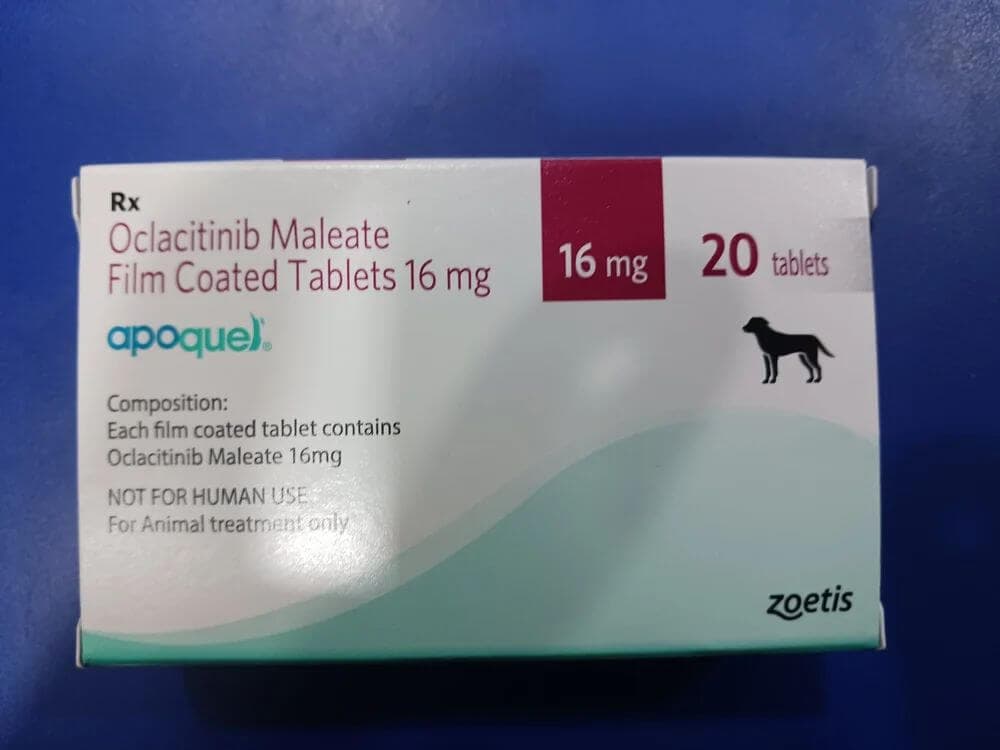
Vendors carrying Oclacitinib, with live product details and codes. Links are affiliate links that support the wiki at no cost to you.
PCT.Zone
Oclacitinib
Research
- 2022first citedWhat can we learn from treating atopic itch in dogs?
- 2025most recentSafety of the Selective JAK1 Inhibitor Oclacitinib in Dogs.
- 1.Oclacitinib (APOQUEL) is a selective Janus kinase 1 inhibitor with efficacy in a canine model of flea allergic dermatitis.
- 2.Safety of the Selective JAK1 Inhibitor Oclacitinib in Dogs.
- 3.Establishment of an Intradermal Canine IL-31-Induced Pruritus Model to Evaluate Therapeutic Candidates in Atopic Dermatitis.
- 4.What can we learn from treating atopic itch in dogs?
- 5.Comparative efficacy and safety of ilunocitinib and oclacitinib for the control of pruritus and associated skin lesions in dogs with atopic dermatitis
5 listed here; entry last updated August 2026
Reviews
My notesprivate to this device
FAQ
What is Apoquel used for?
It is used in dogs to control the itch and inflammation of allergic and atopic skin disease so they stop scratching and their skin can heal.
How fast does oclacitinib work?
It often begins easing itch within about 4 hours and brings scratching under control within a day.
Is oclacitinib a steroid?
No; it is a JAK inhibitor that targets itch signaling, so it avoids the broad hormonal effects of corticosteroids.
What are the risks of long-term use?
Because it calms the immune system it can raise the chance of infections and, rarely, tumors, so vets monitor with periodic checkups and blood counts.
Can puppies take oclacitinib?
No; it is not approved for dogs younger than 12 months of age.
Adverse effects
- Digestive upset such as diarrhea, vomiting, or reduced appetite
- Lethargy
- Because it dampens immune signaling, a possible increased susceptibility to skin and other infections
Notes and cautions
- Not intended for dogs younger than twelve months or those with serious infections
- A prescription veterinary medicine for dogs; it is not approved for humans