
spec sheet6 rows
Lenalidomide is an immunomodulatory drug used in multiple myeloma, in myelodysplastic syndrome with deletion 5q, and in some lymphomas.
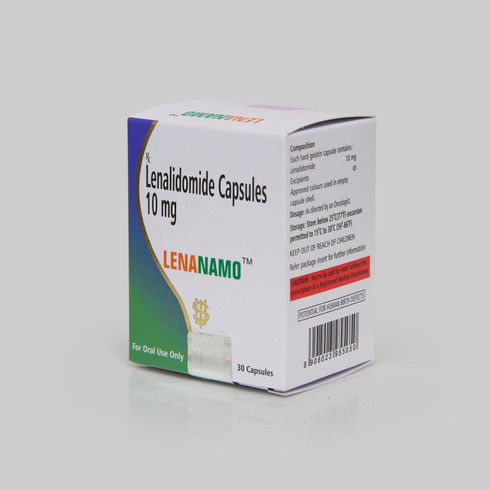
- Lenalidomide (Revlimid) is a thalidomide analogue FDA-approved in 2005 for del(5q) MDS and in 2006 for multiple myeloma; it is a molecular glue degrader, the first drug class of its kind to reach the clinic.
- In the MDS-003 study of del(5q) myelodysplastic syndrome, patients achieved a median haemoglobin rise of 5.4 g/dL from their pre-transfusion nadir, with 62 of 85 evaluable patients showing cytogenetic improvement and 38 achieving complete cytogenetic remission [1].
- MAIA established daratumumab plus lenalidomide and dexamethasone as a standard for transplant-ineligible newly diagnosed myeloma: 30-month progression-free survival 70.6% versus 55.6%, hazard ratio 0.56 (95% CI 0.43 to 0.73) [3].
- A 2022 Lancet Haematology meta-analysis of 38 trials found that lenalidomide-induced second primary malignancies appear to occur essentially only in multiple myeloma, both with and without transplant, and not in other indications [6].
- Venous thromboembolism risk with immunomodulatory therapy is high enough that routine thromboprophylaxis is standard of care [7].
- Lenalidomide is not restricted to myeloma: the RELEVANCE trial established rituximab plus lenalidomide as chemotherapy-free first-line therapy for follicular lymphoma [5].
Mechanism
It binds cereblon and redirects an E3 ubiquitin ligase to destroy the transcription factors IKZF1 and IKZF3, which kills myeloma cells while simultaneously activating T cells and natural killer cells. That molecular glue mechanism is also what makes the thalidomide family teratogenic, and the drug raises venous thromboembolism risk enough that prophylaxis is standard.
receptor fingerprint
Cereblon (CRBN), substrate receptor of the CUL4-RBX1-DDB1-CRBN E3 ubiquitin ligaseMolecular glue: binds the CRBN tri-tryptophan pocket and remodels its surface to recruit neosubstrates that CRBN does not normally bind
IKZF1 (Ikaros) and IKZF3 (Aiolos) zinc-finger transcription factorsRecruited as neosubstrates and targeted for ubiquitination and proteasomal degradation
CK1alpha (CSNK1A1, encoded in the commonly deleted 5q region)Degraded as a neosubstrate; haploinsufficient del(5q) cells have only one CSNK1A1 allele and are selectively killed
NK-cell and T-cell effector function (downstream of IKZF degradation)Increases IL-2 production and NK-mediated antibody-dependent cellular cytotoxicity
Safetyrisks and cautions, not medical advice
a thalidomide analogue that is severely teratogenic and is dispensed only under a controlled distribution programme with mandatory pregnancy testing, alongside routine thromboprophylaxis
Subjective profileweighing the evidence above
This is a genuinely important drug, and that is exactly why the sourcing question is closed: severe teratogenicity is why it is dispensed only through a controlled distribution programme with mandatory pregnancy testing. Redirecting cereblon to destroy IKZF1 and IKZF3 is elegant pharmacology, and it is the same molecular glue behaviour that made the thalidomide family notorious. Myeloma treatment also means thromboprophylaxis, response monitoring and dose changes, and a parcel in the post supplies none of that.
Resources
No suppliers are provided for compounds like this. This entry is here for reference.
Research
- 2006first citedLenalidomide in the myelodysplastic syndrome with chromosome 5q deletion
- 2022meta-analysisSecond primary malignancies in patients with haematological cancers treated with lenalidomide:…
- 2023most recentDaratumumab, Bortezomib, Lenalidomide, and Dexamethasone for Multiple Myeloma
- 1.Lenalidomide in the myelodysplastic syndrome with chromosome 5q deletion
- 2.Lenalidomide and dexamethasone in transplant-ineligible patients with myeloma
- 3.Daratumumab plus Lenalidomide and Dexamethasone for Untreated Myeloma
- 4.Daratumumab, Bortezomib, Lenalidomide, and Dexamethasone for Multiple Myeloma
- 5.Rituximab plus Lenalidomide in Advanced Untreated Follicular Lymphoma
- 6.Second primary malignancies in patients with haematological cancers treated with lenalidomide: a systematic review and meta-analysis
- 7.Rates of venous thromboembolism in multiple myeloma patients undergoing immunomodulatory therapy with thalidomide or lenalidomide: a systematic review and meta-analysis
7 listed here; entry last updated August 2026
Reviews
My notesprivate to this device
Notes and cautions
- Revlimid carries a boxed warning with three parts: embryo-fetal toxicity (lenalidomide is a thalidomide analogue and is presumed teratogenic, requiring the REMS pregnancy-prevention programme with two forms of contraception and regular pregnancy testing), haematologic toxicity (grade 3-4 neutropenia and thrombocytopenia requiring frequent blood counts), and venous and arterial thromboembolism (deep vein thrombosis, pulmonary embolism, myocardial infarction and stroke, mandating thromboprophylaxis).
- Second primary malignancies, both haematological and solid, are increased specifically in the multiple myeloma setting and warrant ongoing surveillance [6].
- Tumour lysis syndrome and tumour flare reaction occur, particularly in CLL and mantle cell lymphoma.
- Dose must be reduced for renal impairment because lenalidomide is renally cleared.