
spec sheet6 rows
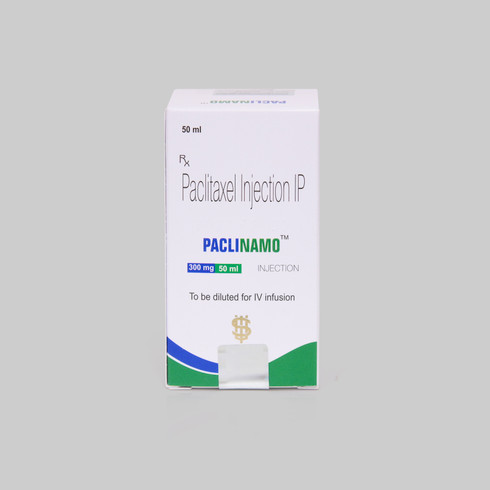
Paclitaxel is an intravenous taxane cytotoxic used in breast, ovarian, lung and pancreatic cancer.
- Schiff, Fant and Horwitz's 1979 Nature paper showed taxol uniquely promotes microtubule assembly and stabilises microtubules against cold and calcium, establishing an entirely new class of antimitotic mechanism [1].
- GOG-111 (McGuire, NEJM 1996) replaced cyclophosphamide with paclitaxel alongside cisplatin in advanced ovarian cancer and improved median survival from 24 to 38 months, making paclitaxel the backbone of ovarian cancer therapy [3].
- E1199 (Sparano, NEJM 2008) showed weekly paclitaxel improved disease-free and overall survival over three-weekly paclitaxel in adjuvant breast cancer, changing the standard schedule [4].
- The MPACT trial established nab-paclitaxel plus gemcitabine as a first-line regimen in metastatic pancreatic cancer, improving median overall survival from 6.7 to 8.5 months [5].
- Peripheral neuropathy is the dose-limiting toxicity for taxanes: a cumulative, dose-dependent, length-dependent stocking-and-glove sensory neuropathy that often persists after treatment ends, and albumin-bound paclitaxel does not avoid it [6].
- Severe hypersensitivity reactions to conventional paclitaxel are largely attributable to the polyoxyethylated castor oil (Cremophor EL) vehicle, which is why premedication is mandatory and why albumin-bound formulations were developed [2].
Mechanism
It binds beta tubulin and stabilises microtubules so they cannot depolymerise, which freezes the mitotic spindle and arrests dividing cells; it is the mirror image of the vinca alkaloids, which prevent assembly instead. The conventional formulation is dissolved in polyoxyethylated castor oil, and most acute hypersensitivity reactions are to that solvent rather than to the drug.
receptor fingerprint
Beta-tubulin (TUBB), taxane binding site on the inner luminal surface of the microtubuleBinder and polymerisation promoter; stabilises microtubules against depolymerisation
Microtubule dynamic instabilitySuppressed at low nanomolar concentrations, below those needed to increase polymer mass
P-glycoprotein (ABCB1) and CYP2C8/CYP3A4Substrate
Spindle assembly checkpoint and mitotic arrest at the G2/M transitionActivated and sustained
BCL2 (phosphorylation and inactivation)Induced downstream of prolonged mitotic arrest
Safetyrisks and cautions, not medical advice
an intravenous cytotoxic with a high rate of acute hypersensitivity to its solvent, requiring steroid and antihistamine premedication and resuscitation facilities
Subjective profileweighing the evidence above
Few drugs have a cleaner mechanistic story: it locks microtubules in place so the spindle cannot come apart, the exact mirror of how the vinca alkaloids kill the same cells. None of that makes it something a person can obtain, and the site will not help anyone try. The conventional formulation rides in a castor oil solvent that provokes acute hypersensitivity often enough that steroid premedication and resuscitation equipment are simply assumed, which is a description of a hospital rather than of a delivery.
Resources
No suppliers are provided for compounds like this. This entry is here for reference.
Research
- 1979first citedPromotion of microtubule assembly in vitro by taxol
- 2019most recentDoes nab-paclitaxel have a higher incidence of peripheral neuropathy than solvent-based paclita…
- 1.Promotion of microtubule assembly in vitro by taxol
- 2.Clinical toxicities encountered with paclitaxel (Taxol)
- 3.Cyclophosphamide and cisplatin compared with paclitaxel and cisplatin in patients with stage III and stage IV ovarian cancer
- 4.Weekly paclitaxel in the adjuvant treatment of breast cancer
- 5.Increased survival in pancreatic cancer with nab-paclitaxel plus gemcitabine
- 6.Does nab-paclitaxel have a higher incidence of peripheral neuropathy than solvent-based paclitaxel? Evidence from a systematic review and meta-analysis
6 listed here; entry last updated August 2026
Reviews
My notesprivate to this device
Notes and cautions
- Conventional (solvent-based) paclitaxel carries a BOXED WARNING: it should be administered only under the supervision of a physician experienced in cancer chemotherapy; anaphylaxis and severe hypersensitivity reactions characterised by dyspnoea and hypotension requiring treatment, angio-oedema and generalised urticaria have occurred in 2 to 4 percent of patients, with fatal reactions despite premedication, so all patients must be pretreated with a corticosteroid, diphenhydramine and an H2 antagonist and must not be re-challenged after a severe reaction; and it should not be given to patients with baseline neutrophils below 1,500/mm3 (below 1,000/mm3 for Kaposi sarcoma), with frequent blood counts required.
- Albumin-bound paclitaxel (nab-paclitaxel) carries its own boxed warning against substituting for or with other paclitaxel formulations, since they are not interchangeable on a milligram basis, and against use with neutrophils below 1,500/mm3.
- Cumulative sensory peripheral neuropathy is the dose-limiting toxicity and is frequently incompletely reversible.
- Bradycardia and other cardiac conduction abnormalities, mucositis, alopecia, and rare pneumonitis and severe cutaneous reactions also occur; paclitaxel is embryo-fetal toxic.