
spec sheet6 rows
Sunitinib is an oral multikinase inhibitor used in renal cell carcinoma, in imatinib resistant gastrointestinal stromal tumour and in pancreatic neuroendocrine tumours.
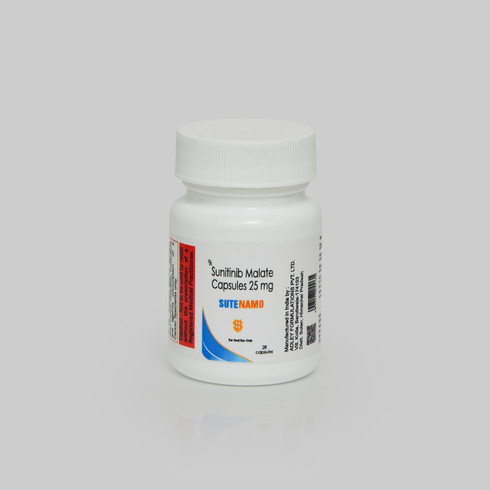
- Sunitinib (Sutent) received accelerated FDA approval in January 2006 for both imatinib-resistant GIST and advanced renal cell carcinoma, the first time the FDA approved a drug for two indications simultaneously.
- The pivotal renal trial showed median progression-free survival of 11 months versus 5 months for interferon alfa, hazard ratio 0.42 (95% CI 0.32 to 0.54), with response rates of 31% versus 6% and significantly better patient-reported quality of life [1][6].
- In imatinib-refractory GIST, sunitinib was the first agent to show a randomized benefit, establishing the second-line standard for over a decade [2].
- S-TRAC showed adjuvant sunitinib after nephrectomy significantly prolonged disease-free survival in high-risk clear-cell disease, but at a real cost: grade 3 events in 48.4% versus 15.8% and discontinuation in 28.1% versus 5.6% [4]. Adjuvant use remains contested for this reason.
- Sunitinib has since been displaced as first-line renal therapy by immune-checkpoint combinations; CheckMate 214 showed nivolumab plus ipilimumab superior in intermediate and poor-risk disease [5], and CLEAR showed lenvatinib plus pembrolizumab superior overall.
Mechanism
It inhibits VEGFR, PDGFR, KIT, FLT3 and RET, which covers both angiogenesis and the KIT driver mutation behind most gastrointestinal stromal tumours. Hypothyroidism develops in a large minority on treatment and is easy to miss, because the fatigue it causes gets attributed to the cancer.
receptor fingerprint
VEGFR1, VEGFR2 and VEGFR3 (FLT1, KDR, FLT4)ATP-competitive inhibitor of the receptor tyrosine kinase domain, blocking VEGF-driven endothelial proliferation and tumour angiogenesis
PDGFR-alpha and PDGFR-betaATP-competitive inhibition, disrupting pericyte support of tumour vasculature and stromal signalling
KIT (CD117)Inhibits both wild-type and several imatinib-resistant KIT mutants, notably exon 13 and exon 14 secondary mutations
FLT3Inhibits FLT3 including internal tandem duplication forms
RETInhibits RET kinase signalling
Safetyrisks and cautions, not medical advice
an oral antineoplastic requiring blood pressure, thyroid, cardiac and liver monitoring, with cardiotoxicity among its recognised effects
Subjective profileweighing the evidence above
The detail worth carrying away is the hypothyroidism: it develops in a large minority on treatment and gets missed constantly, because the fatigue it causes looks exactly like the fatigue of the cancer, and a thyroid panel is the cheapest quality of life intervention in the whole regimen. Beyond that this is a supervised antineoplastic with cardiac, hepatic and blood pressure monitoring built into its schedule. It is documented rather than sourced because kinase inhibitors get matched to a tumour and its genotype by an oncologist; in gastrointestinal stromal tumour after imatinib resistance it is close to irreplaceable, and that is not a decision anyone makes from a product page.
Resources
No suppliers are provided for compounds like this. This entry is here for reference.
Research
- 2006first citedEfficacy and safety of sunitinib in patients with advanced gastrointestinal stromal tumour afte…
- 2007controlled trialSunitinib versus interferon alfa in metastatic renal-cell carcinoma
- 2018most recentNivolumab plus Ipilimumab versus Sunitinib in Advanced Renal-Cell Carcinoma
- 1.Sunitinib versus interferon alfa in metastatic renal-cell carcinoma
- 2.Efficacy and safety of sunitinib in patients with advanced gastrointestinal stromal tumour after failure of imatinib: a randomised controlled trial
- 3.Sunitinib malate for the treatment of pancreatic neuroendocrine tumors
- 4.Adjuvant Sunitinib in High-Risk Renal-Cell Carcinoma after Nephrectomy
- 5.Nivolumab plus Ipilimumab versus Sunitinib in Advanced Renal-Cell Carcinoma
- 6.Patient-reported outcomes in a phase III, randomized study of sunitinib versus interferon-alpha as first-line systemic therapy for patients with metastatic renal cell carcinoma in a European population
6 listed here; entry last updated August 2026
Reviews
My notesprivate to this device
Notes and cautions
- Sutent carries a boxed warning for hepatotoxicity: hepatic failure including fatal cases has occurred, and liver function tests must be checked before each cycle and whenever clinically indicated, with permanent discontinuation for severe injury.
- Cardiovascular toxicity is prominent, comprising hypertension in a large fraction of patients, declines in left ventricular ejection fraction, and QT prolongation with torsades de pointes.
- Hypothyroidism develops in a substantial minority and requires periodic TSH monitoring, and adrenal insufficiency, osteonecrosis of the jaw, thrombotic microangiopathy, proteinuria, gastrointestinal perforation and severe hand-foot skin reaction are all labelled risks.
- Sunitinib is a CYP3A4 substrate, so strong inhibitors and inducers require dose adjustment.