
spec sheet7 rows
Lenvatinib is an oral multikinase inhibitor used in radioiodine refractory thyroid cancer, advanced hepatocellular carcinoma, renal cell carcinoma and endometrial cancer.
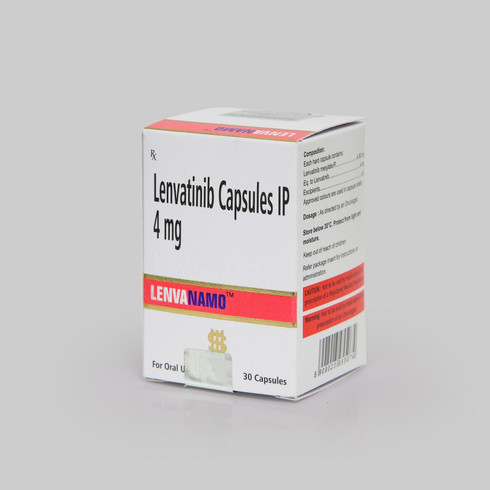
- Lenvatinib (Lenvima) was FDA-approved in February 2015 for radioiodine-refractory differentiated thyroid cancer, then for renal cell carcinoma, hepatocellular carcinoma and endometrial carcinoma; it inhibits VEGFR1-3, FGFR1-4, PDGFR-alpha, RET and KIT [1].
- SELECT: median progression-free survival 18.3 months versus 3.6 months on placebo in radioiodine-refractory thyroid cancer, hazard ratio 0.21 (99% CI 0.14 to 0.31), with a 64.8% response rate versus 1.5% [1].
- REFLECT: lenvatinib was non-inferior to sorafenib as first-line therapy for unresectable hepatocellular carcinoma, median overall survival 13.6 versus 12.3 months, hazard ratio 0.92 (95% CI 0.79 to 1.06) [2]. This made it the first agent in a decade to match sorafenib in that setting.
- CLEAR: lenvatinib plus pembrolizumab beat sunitinib in advanced renal cell carcinoma on both progression-free survival (hazard ratio 0.39) and overall survival (hazard ratio 0.66, 95% CI 0.49 to 0.88); lenvatinib plus everolimus did not improve overall survival [3].
- KEYNOTE-775: lenvatinib plus pembrolizumab in advanced endometrial cancer gave median overall survival 18.3 versus 11.4 months against chemotherapy, hazard ratio 0.62 (95% CI 0.51 to 0.75), at the cost of grade 3 or higher adverse events in 88.9% of patients [4].
- Toxicity is dose-limiting and near-universal: in SELECT, hypertension affected 67.8%, diarrhoea 59.4% and fatigue 59.0%, and 14.2% discontinued for adverse effects [1].
Mechanism
It inhibits VEGFR1 to 3, FGFR1 to 4, PDGFR alpha, KIT and RET, so it blocks tumour angiogenesis and several growth signalling routes at once. Hypertension appears in most people who take it and is the first toxicity to manage; proteinuria, hand foot skin reaction and arterial thromboembolism follow from the same VEGF blockade.
receptor fingerprint
VEGFR1, VEGFR2 and VEGFR3 (FLT1, KDR, FLT4)Type V ATP-competitive inhibitor with a distinctive binding mode that occupies both the ATP site and an adjacent allosteric pocket, giving rapid and durable kinase inhibition
FGFR1, FGFR2, FGFR3 and FGFR4Inhibits fibroblast growth factor receptor signalling, a major escape pathway from pure VEGF blockade
RETInhibits RET kinase, including oncogenic fusion and point-mutant forms
PDGFR-alpha (PDGFRA)Inhibits platelet-derived growth factor receptor alpha, affecting pericyte recruitment and vessel stabilisation
KITInhibits stem-cell factor receptor signalling
Safetyrisks and cautions, not medical advice
an oral antineoplastic that causes hypertension in most people who take it and requires blood pressure, proteinuria and thyroid monitoring from the first weeks
Subjective profileweighing the evidence above
Most people who take this become hypertensive, and that is not a side note to the treatment; watching blood pressure, proteinuria and thyroid function from the first weeks is part of the treatment. Hitting VEGFR, FGFR, PDGFR alpha, KIT and RET at once is what makes it work across thyroid, liver, kidney and endometrial cancer, and that same breadth is why the toxicity arrives early and in several systems. An oral cancer drug needing that much supervision belongs in an oncology clinic, and the site documents it without going anywhere near a purchase link.
Resources
No suppliers are provided for compounds like this. This entry is here for reference.
Research
- 2015first citedLenvatinib versus placebo in radioiodine-refractory thyroid cancer
- 2022most recentLenvatinib plus Pembrolizumab for Advanced Endometrial Cancer
- 1.Lenvatinib versus placebo in radioiodine-refractory thyroid cancer
- 2.Lenvatinib versus sorafenib in first-line treatment of patients with unresectable hepatocellular carcinoma: a randomised phase 3 non-inferiority trial
- 3.Lenvatinib plus Pembrolizumab or Everolimus for Advanced Renal Cell Carcinoma
- 4.Lenvatinib plus Pembrolizumab for Advanced Endometrial Cancer
- 5.REFLECT; a phase 3 trial comparing efficacy and safety of lenvatinib to sorafenib for the treatment of unresectable hepatocellular carcinoma: an analysis of Japanese subset
- 6.Lenvatinib: A Review in Hepatocellular Carcinoma
6 listed here; entry last updated August 2026
Reviews
My notesprivate to this device
Notes and cautions
- There is no boxed warning, but the toxicity burden is heavy and requires active management rather than observation.
- Hypertension occurs in about two-thirds of patients and must be controlled before starting and monitored weekly for the first two months; uncontrolled hypertension is the leading cause of dose interruption.
- Cardiac dysfunction, arterial thromboembolic events, haemorrhage including fatal tumour-related bleeding, gastrointestinal perforation and fistula formation, hepatotoxicity, proteinuria with nephrotic syndrome, QT prolongation, hypocalcaemia and posterior reversible encephalopathy syndrome are all labelled warnings.
- In SELECT, 6 of 20 on-treatment deaths were considered drug-related [1].
- Lenvatinib impairs exogenous thyroid hormone suppression, so TSH must be monitored monthly in thyroid-cancer patients, and it is embryo-fetal toxic.