
spec sheet6 rows
Sorafenib is an oral multikinase inhibitor used in advanced hepatocellular carcinoma, advanced renal cell carcinoma and radioiodine refractory thyroid cancer.
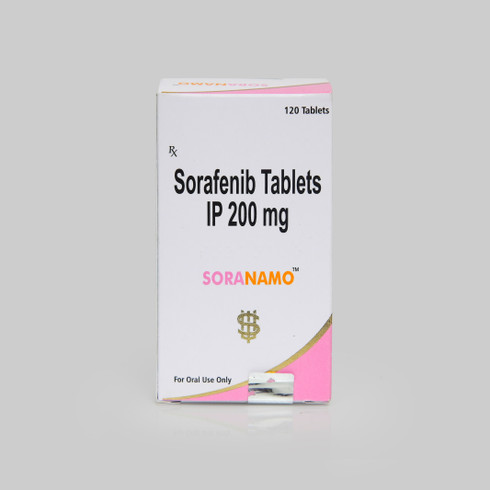
- The SHARP trial (602 patients) gave median overall survival of 10.7 months with sorafenib vs 7.9 months with placebo in advanced hepatocellular carcinoma (HR 0.69, 95% CI 0.55-0.87, P<0.001), making it the first systemic therapy ever to extend survival in HCC [2].
- The Asia-Pacific trial replicated the benefit in a predominantly hepatitis-B population, confirming the effect was not confined to Western hepatitis-C-driven disease [3].
- In advanced clear-cell renal cell carcinoma (TARGET), sorafenib doubled median progression-free survival from 2.8 to 5.5 months (PMID 17215530; note this record carries an erratum).
- DECISION established sorafenib in radioactive-iodine-refractory differentiated thyroid cancer, a setting where no systemic option previously existed [5].
- Sorafenib is a multikinase inhibitor by design, not by accident: one molecule hits RAF1, BRAF, VEGFR-1/2/3, PDGFR-beta, FLT3, RET and KIT, which is both why it works and why its toxicity is broad [1].
- Sorafenib has been displaced from first-line HCC by lenvatinib and by atezolizumab-bevacizumab, so it is now mostly a comparator and a second-line option rather than standard of care [7].
Mechanism
It inhibits the RAF kinases in the tumour cell's own proliferation pathway and, separately, VEGFR and PDGFR on the tumour vasculature, so it acts on the cancer and its blood supply at once. Hand foot skin reaction, diarrhoea and hypertension are the toxicities that most often force a dose reduction.
receptor fingerprint
RAF1 / c-Raf (serine-threonine kinase)ATP-competitive inhibitor
BRAF, including the V600E mutantInhibitor
VEGFR-2 (KDR)Inhibitor
PDGFR-betaInhibitor
FLT3 and KIT receptor tyrosine kinasesInhibitor
Safetyrisks and cautions, not medical advice
an oral antineoplastic with hand foot skin reaction, hypertension and bleeding risk that routinely force dose reduction under supervision
Subjective profileweighing the evidence above
Documented because it exists, not because a reader should be obtaining it. Cancer drugs are chosen against a biopsy, a stage and a list of alternatives, and the standing of this one in liver and kidney cancer has shifted more than once as newer combinations arrived. Its toxicities are the ordinary reason it is supervised: hand foot skin reaction severe enough to stop someone walking, hypertension that itself needs treating, and bleeding risk, all usually handled by cutting the dose rather than stopping, which is a judgement nobody should be making alone.
Resources
No suppliers are provided for compounds like this. This entry is here for reference.
Research
- 2004first citedBAY 43-9006 exhibits broad spectrum oral antitumor activity and targets the RAF/MEK/ERK pathway…
- 2008controlled trialSorafenib in advanced hepatocellular carcinoma.
- 2018most recentLenvatinib versus sorafenib in first-line treatment of patients with unresectable hepatocellula…
- 1.BAY 43-9006 exhibits broad spectrum oral antitumor activity and targets the RAF/MEK/ERK pathway and receptor tyrosine kinases involved in tumor progression and angiogenesis.
- 2.Sorafenib in advanced hepatocellular carcinoma.
- 3.Efficacy and safety of sorafenib in patients in the Asia-Pacific region with advanced hepatocellular carcinoma: a phase III randomised, double-blind, placebo-controlled trial.
- 4.Sorafenib in advanced clear-cell renal-cell carcinoma.
- 5.Sorafenib in radioactive iodine-refractory, locally advanced or metastatic differentiated thyroid cancer: a randomised, double-blind, phase 3 trial.
- 6.Sorafenib (BAY 43-9006, Nexavar), a dual-action inhibitor that targets RAF/MEK/ERK pathway in tumor cells and tyrosine kinases VEGFR/PDGFR in tumor vasculature.
- 7.Lenvatinib versus sorafenib in first-line treatment of patients with unresectable hepatocellular carcinoma: a randomised phase 3 non-inferiority trial.
- 8.Management of sorafenib-related adverse events: a clinician's perspective.
8 listed here; entry last updated August 2026
Reviews
My notesprivate to this device
Notes and cautions
- Sorafenib is a cytotoxic-class oncology drug, not a supplement, and belongs only under oncology supervision.
- Hand-foot skin reaction affects a large minority of patients and is often dose-limiting; other important risks are hypertension, arterial and venous thrombotic events including myocardial infarction, haemorrhage, gastrointestinal perforation, QT prolongation, drug-induced hepatitis and impaired wound healing, plus a high rate of diarrhoea and weight loss (PMID 18650514, PMID 24576654).
- It is embryo-fetal toxic and effective contraception is required.
- Sorafenib is a CYP3A4 substrate and a UGT1A1/UGT1A9 inhibitor, so strong CYP3A4 inducers such as St John's wort, rifampicin and carbamazepine can substantially reduce exposure.