
spec sheet13 rows
Metoprolol succinate is the extended-release salt form of the cardioselective beta-1 blocker metoprolol, sold under the brand name Toprol-XL. Formulated to release slowly for once-daily dosing, it produces steady round-the-clock blockade of beta-1 adrenergic receptors, slowing the heart and lowering blood pressure. It is used for high blood pressure, angina, and, notably, chronic heart failure, where extended-release metoprolol has been shown to improve survival; it is distinguished from the immediate-release tartrate salt, and the two are not interchangeable.
- Proven to improve survival in chronic heart failure
- Smooth once daily coverage; steady protection around the clock
- Brings blood pressure down and keeps it there
- Fewer angina attacks; the chest tightness eases
- Settles a racing or irregular heartbeat
- Guards the heart in the years after a heart attack
- Fatigue, dizziness, and a slow heart rate
- Cold hands and feet
- Sleep disturbances such as vivid dreams
Overview
Metoprolol succinate is one of the two salt forms of metoprolol, a selective beta-1 adrenergic blocker of the beta-blocker class [1][2]. It pairs the metoprolol molecule with succinic acid and is manufactured as an extended-release, or controlled-release, tablet, in contrast to metoprolol tartrate, which is the immediate-release form [1]. Because the succinate is released gradually, it maintains more even drug levels over the day and is taken once daily, whereas the tartrate acts faster and is usually taken more than once a day [1][2]. The two salts are approved for somewhat different indications and are not directly interchangeable dose for dose [1].
Metoprolol itself was developed in 1969 by researchers at the Swedish firm Hassle, which became part of AstraZeneca, as a beta blocker selective for the heart [1]. The immediate-release tartrate salt reached the United States market as Lopressor in 1978, and the extended-release succinate formulation was introduced later under the brand name Toprol-XL, with a United States patent for it issued in the 1990s [1]. Metoprolol succinate is now available generically [1].
Metoprolol succinate is used for high blood pressure, angina, and the long-term control of certain heart rhythm disorders, and its once-daily, steady action makes it particularly suited to chronic conditions [1][2]. Its best-known role is in chronic heart failure with reduced ejection fraction; the large MERIT-HF trial found that controlled-release metoprolol succinate reduced total mortality and hospitalizations and improved symptoms and quality of life in such patients when added to standard therapy [3]. This evidence helped establish the extended-release succinate as a standard beta blocker for heart failure, a setting in which the immediate-release tartrate is generally not used [1][3]. Like all forms of metoprolol, it is cleared largely by the liver enzyme CYP2D6, and inherited differences in that enzyme affect individual drug levels [4].
As a form of an essential medicine, metoprolol succinate is a prescription drug available generically as extended-release tablets [1]. Its side effects are those of metoprolol generally, including fatigue, dizziness, a slow heart rate, cold extremities, and sleep disturbances [1]. It should be tapered rather than stopped suddenly, because abrupt withdrawal of a beta blocker can worsen angina or trigger a fast heart rate, and it can blunt the warning signs of low blood sugar in people with diabetes [1]. Its slow-release design is intended to smooth out these effects across the day compared with the shorter-acting tartrate [1][2].
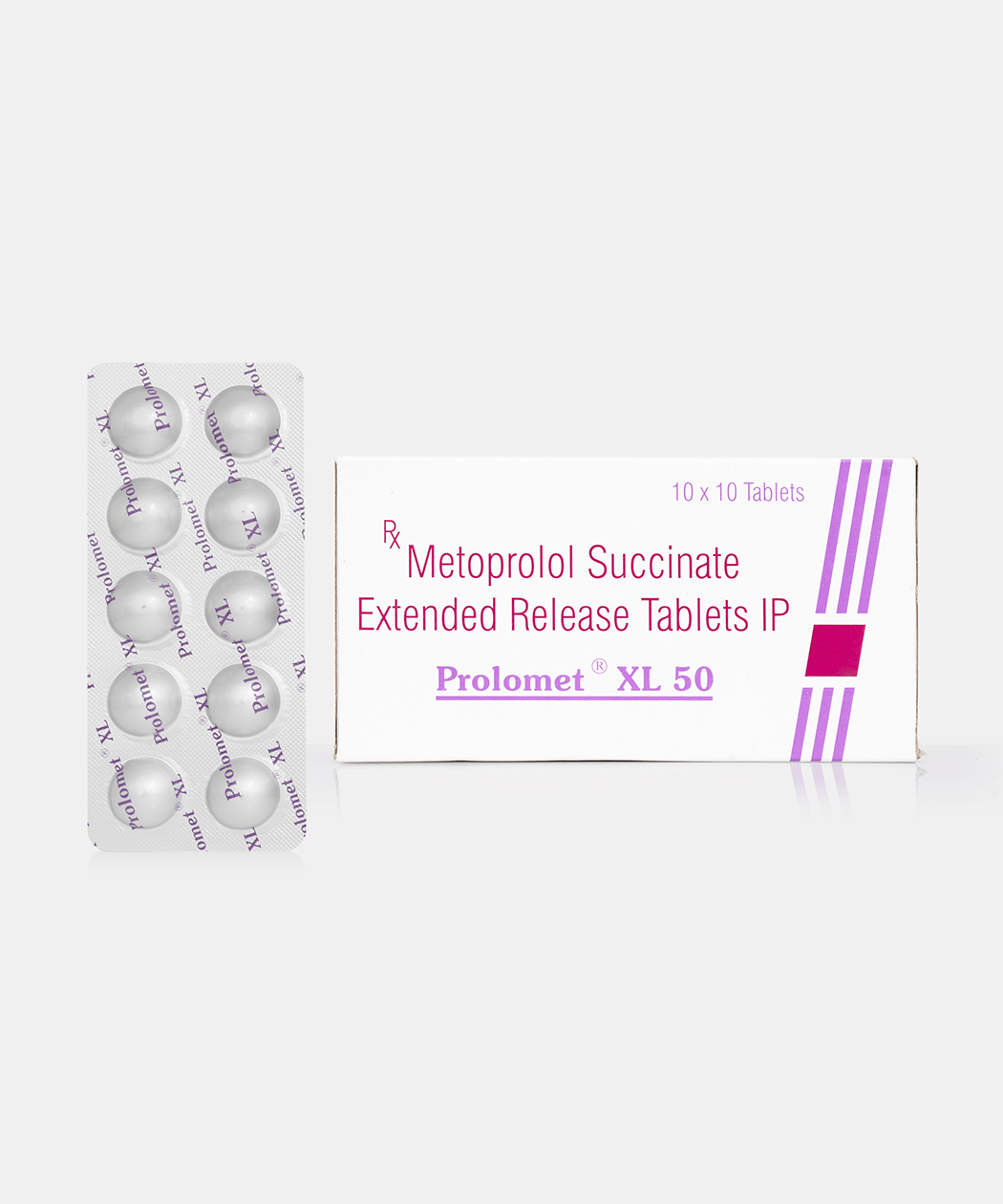
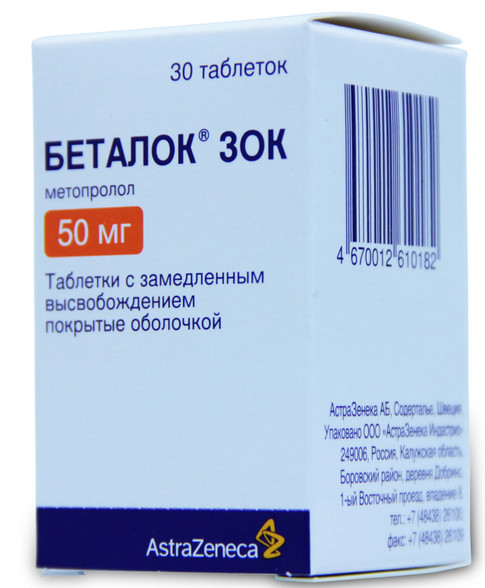
- The famous MERIT-HF survival trial used the succinate extended-release form specifically, which is why this salt, and not the immediate-release version, carries the heart-failure survival evidence.
- Metoprolol succinate and metoprolol tartrate are not interchangeable dose-for-dose; the extended-release succinate is dosed once daily while the tartrate is typically taken more than once a day.
- The tablet is built to release its active drug slowly and evenly, producing steady beta-1 blockade for a full twenty-four hours from a single dose.
Mechanism
Metoprolol succinate delivers the same active beta blocker as the other forms of the drug, differing mainly in how the medicine is released and absorbed [1][2]. Once absorbed, metoprolol selectively binds beta-1 receptors in the heart and blocks the stimulating effect of adrenaline and noradrenaline, so the heart beats more slowly and with less force; this lowers blood pressure and reduces the heart's oxygen demand [1][2].
The extended-release succinate formulation is engineered to dissolve gradually, providing a steady, prolonged concentration of drug and therefore round-the-clock beta-1 blockade from a single daily dose, which avoids the peaks and troughs of the immediate-release form [1][2]. In heart failure, this sustained, gentle reduction in sympathetic drive on the heart is thought to protect the failing muscle over time, in keeping with the survival benefit seen in clinical trials [3]. As with all metoprolol, metabolism occurs mainly through the liver enzyme CYP2D6 [4].
receptor fingerprint
Beta-1 receptor (heart)blocks
Cardiac contractilityinhibits
Sympathetic overdrive in heart failureblocks
Renin release (kidney beta-1)inhibits
AV node conductionmodulates
Dosingtypical ranges, not medical advice
interested in protocols and clinical dosages? make an account to see them! ^_^
Safetyrisks and cautions, not medical advice
Metoprolol succinate is prescription only. Expected effects include a slower heart rate, lower blood pressure, tiredness, cold hands and feet, and sometimes dizziness; it can mask the racing-heart warning sign of low blood sugar in people with diabetes. It should not be stopped suddenly, because abrupt withdrawal can trigger a rebound of chest pain, high blood pressure, or even a heart attack, so doses are tapered. It is used cautiously in asthma since high doses can lose their heart selectivity and tighten airways, and it is avoided in severe bradycardia or certain heart block without a pacemaker. In heart failure it is started at a low dose and increased slowly to avoid worsening symptoms early on.
Interactionsdocumented pairs only, not exhaustive
CYP2D6 inhibitor drugs significantly increase metoprolol levels through a pharmacokinetic mechanism. Strong inhibitors like paroxetine and fluoxetine increase metoprolol exposure up to 8-fold, mimicking the pharmacokinetics of poor CYP2D6 metabolizers and causing reduced heart rate and blood pressure [6]. Moderate inhibitors such as amiodarone raise metoprolol levels 2- to 3-fold; fedratinib, a weak CYP2D6 inhibitor, increases metoprolol area under the curve 1.77-fold [7].
These interactions are pharmacokinetic; the other drug inhibits the cytochrome enzyme that metoprolol depends on for elimination, so metoprolol accumulates. Severe adverse events including bradycardia and hypotension have occurred with strong inhibitors, particularly in patients with existing cardiovascular disease. What is not well studied; the magnitude of interaction with other moderate or weak CYP2D6 inhibitors not yet formally evaluated, or potential interactions with CYP2D6 inducers that would lower metoprolol levels.
Checking a whole stack? Run it through interactions + stacks.
History
Metoprolol succinate is the extended-release salt form of metoprolol, the cardioselective beta-1 blocker first developed by the Astra group in Sweden in the 1970s; the succinate formulation was engineered later to dissolve gradually and deliver steady, round-the-clock drug levels from a single daily dose. It was introduced under the brand name Toprol-XL and reached the United States market in the 1990s, offering an alternative to the immediate-release tartrate salt that avoided the peaks and troughs of more frequent dosing.
Its defining moment came with the MERIT-HF trial published in 1999, which used precisely this controlled-release form and showed a significant reduction in mortality among patients with chronic heart failure, establishing the succinate as a survival-improving therapy. That result distinguished it sharply from the immediate-release tartrate, and the two salts are formally regarded as not interchangeable. Like all forms of the drug, it is metabolized principally by the liver enzyme CYP2D6.
Reputation
Metoprolol succinate enjoys a special standing because it is the exact formulation that proved beta-blockade could prolong life in heart failure, a distinction that sets it apart from ordinary blood-pressure medicines. Its once-daily, slow-release design provides a smooth and continuous easing of the heart's workload, which is thought to protect the failing heart muscle gently over time rather than in abrupt swings.
Cardiologists value it as a foundational drug for chronic heart failure with reduced ejection fraction, and its steady profile also makes it a convenient choice for hypertension and angina. It is worth stressing an honest and clinically important point: the succinate and the immediate-release tartrate are not simply swappable milligram-for-milligram, and confusing them is a recognized source of dosing error. For the patients who benefit most, however, this extended-release form represents one of the genuine success stories of modern cardiovascular therapy.
Subjective profileweighing the evidence above
A workhorse prescription drug with something few blood pressure medicines can claim: an actual survival benefit in chronic heart failure, delivered in smooth once-daily coverage. Fatigue, cold hands and vivid dreams are the usual price, and it must never be stopped abruptly because rebound can trigger chest pain or worse.
Where to buy
1 other outlet
Suppliers
Vendors carrying Metoprolol Succinate, with live product details and codes. Links are affiliate links that support the wiki at no cost to you.
PCT.Zone
Metoprolol Succinate
RUPharma🌐
Metoprolol Succinate
Research
- 1999first citedEffect of metoprolol CR/XL in chronic heart failure: Metoprolol CR/XL Randomised Intervention T…
- 2025most recentUnderstanding variation in metoprolol response: CYP2D6, drug interactions, and phenoconversion.
- 1.Role of Metoprolol Succinate in the Treatment of Heart Failure and Atrial Fibrillation: A Systematic Review.
- 2.Clinical pharmacokinetics of metoprolol: a systematic review
- 3.Effects of controlled-release metoprolol on total mortality, hospitalizations, and well-being in patients with heart failure: the Metoprolol CR/XL Randomized Intervention Trial in congestive heart failure (MERIT-HF). MERIT-HF Study Group.
- 4.Clinical Pharmacogenetics Implementation Consortium Guideline (CPIC) for CYP2D6, ADRB1, ADRB2, ADRA2C, GRK4, and GRK5 Genotypes and Beta-Blocker Therapy.
- 5.Effect of metoprolol CR/XL in chronic heart failure: Metoprolol CR/XL Randomised Intervention Trial in Congestive Heart Failure (MERIT-HF).
- 6.Understanding variation in metoprolol response: CYP2D6, drug interactions, and phenoconversion.
- 7.Assessment of effects of repeated oral doses of fedratinib on inhibition of cytochrome P450 activities in patients with solid tumors using a cocktail approach.
7 listed here; entry last updated August 2026
Reviews
My notesprivate to this device
FAQ
What is the difference between succinate and tartrate?
Succinate is the extended-release form taken once daily and used in heart failure, while tartrate is immediate-release and usually taken twice a day.
Can I stop taking it if I feel fine?
No; stopping suddenly can cause rebound chest pain, spikes in blood pressure, or a heart attack, so it must be tapered under guidance.
Why start such a low dose for heart failure?
A failing heart can worsen briefly when first blocked, so the dose is started low and raised slowly over weeks to let the heart adjust.
Is it safe if I have asthma?
It is cardioselective, but at higher doses that selectivity fades and airways can tighten, so it is used cautiously and sometimes avoided in significant asthma.
Can I split the tablet?
The extended-release tablet can be divided but should not be crushed or chewed, which would dump the whole dose at once.
Adverse effects
- Fatigue, dizziness, and a slow heart rate
- Cold hands and feet
- Sleep disturbances such as vivid dreams
Notes and cautions
- Should be tapered rather than stopped abruptly
- Not interchangeable dose for dose with metoprolol tartrate