
spec sheet14 rows
Metoprolol is a cardioselective beta-1 adrenergic antagonist that slows heart rate and reduces myocardial contractility and workload, lowering blood pressure and cardiac oxygen demand. It is among the most rigorously validated beta-blockers: the MERIT-HF trial demonstrated a significant mortality reduction in chronic heart failure, and, as a lipophilic agent, it reduces sudden cardiac death after myocardial infarction, an effect linked to central penetration and preservation of vagal tone. Its limits are equally well documented; the large POISE trial showed that routine perioperative use lowered myocardial infarction but increased stroke and total mortality, tempering enthusiasm for prophylactic beta-blockade. It is also effective for migraine prevention, and its metabolism by the polymorphic enzyme CYP2D6 contributes to marked interindividual variability now addressed by pharmacogenetic guidelines. It is available as the immediate-release tartrate and extended-release succinate salts.
- Proven to improve survival in chronic heart failure
- Protects the heart after a heart attack
- Brings down high blood pressure and fast heart rates
- Relieves angina by cutting the heart's oxygen demand
- Also a proven migraine preventive
- One of the most rigorously trialed drugs in cardiology
- Tiredness, dizziness, and a slow heart rate
- Sleep disturbances such as vivid dreams and insomnia
Overview
Metoprolol is a beta blocker, a class of drugs that oppose the action of adrenaline and related hormones on the heart, and it is described as cardioselective because it acts mainly on the beta-1 receptors that predominate in cardiac tissue rather than the beta-2 receptors of the lungs and blood vessels [1][2]. It has no intrinsic sympathomimetic activity, meaning it purely blocks these receptors [1]. The drug is a racemic mixture of two mirror-image forms and is moderately fat-soluble, a property that lets it enter the brain and may account for some of its central side effects [1]. It comes as two different salts, metoprolol tartrate and metoprolol succinate, formulated for immediate and extended release respectively, which are not simply interchangeable [1].
Metoprolol was developed in 1969 by researchers at the Swedish company Hassle, part of what became AstraZeneca, during the effort to create beta blockers that spared the lungs [1]. The immediate-release tartrate salt was approved in the United States in 1978 under the name Lopressor, and an extended-release succinate formulation, Toprol-XL, followed in the 1990s [1]. It is now a generic medicine and one of the most frequently prescribed drugs in the United States [1].
Metoprolol is used for a broad range of cardiovascular problems, including high blood pressure, angina, and abnormal heart rhythms, and it is given during and after a heart attack to improve outcomes [1]. In chronic heart failure with reduced pumping function, the extended-release form was shown in a large randomized trial to lower mortality and hospitalizations and to improve symptoms and well-being [3]. Beyond the heart, it is used to prevent migraine headaches and as an adjunct in managing an overactive thyroid [1][2]. Its clearance depends heavily on the liver enzyme CYP2D6, and genetic differences in that enzyme can markedly change how much drug a person is exposed to and how their heart rate responds [4].
Metoprolol is a prescription medicine on the World Health Organization's Model List of Essential Medicines, available generically as tablets and injectable solution [1]. Common side effects include tiredness, dizziness, slow heart rate, cold hands and feet, and, because the drug crosses into the brain, sleep disturbances such as vivid dreams and insomnia [1]. It should not be stopped abruptly, since sudden withdrawal can worsen angina or provoke a rapid heart rate, and it can mask the warning signs of low blood sugar in people with diabetes [1]. It is also banned in certain precision sports because slowing the heart and steadying tremor can improve performance [1].
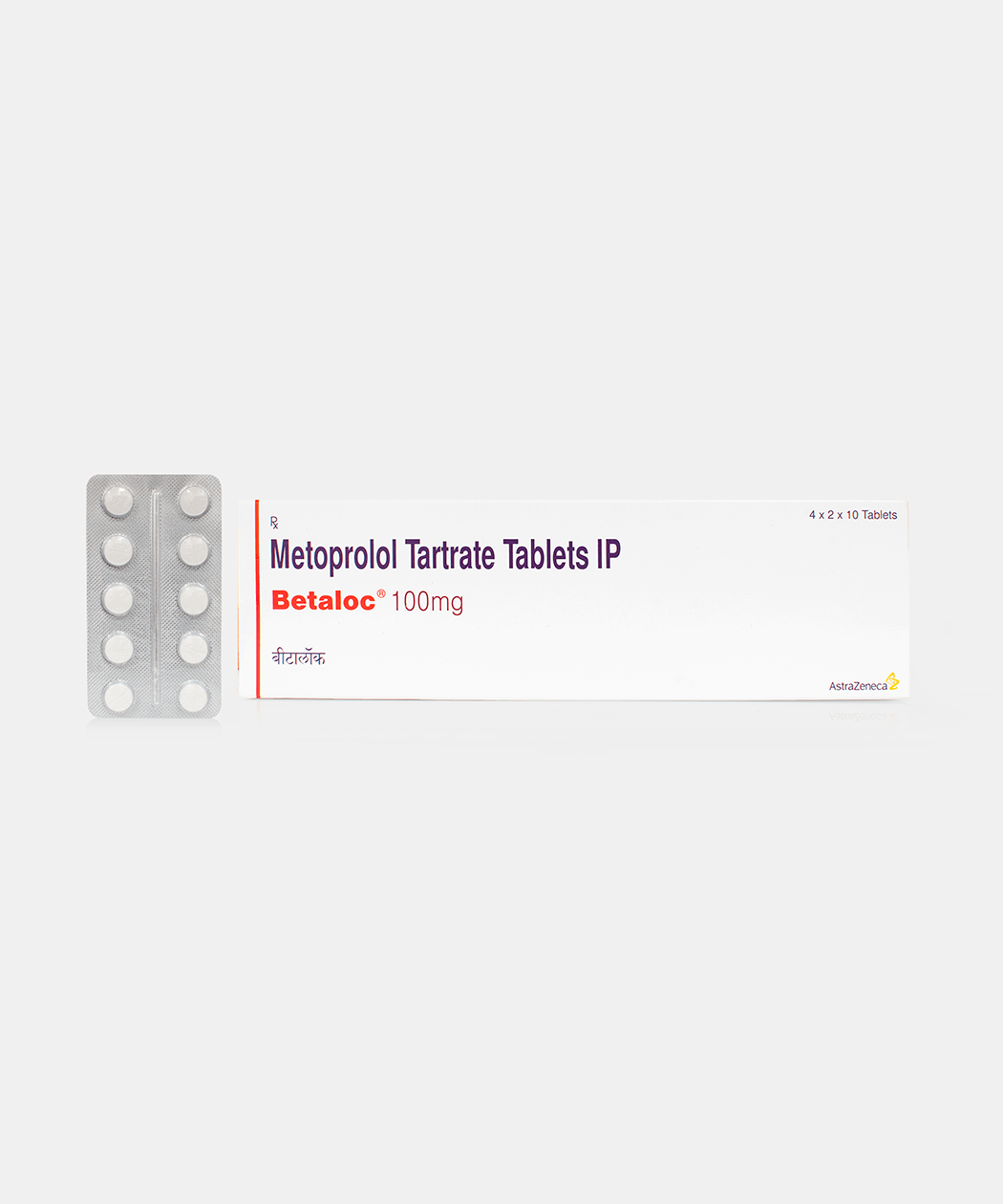

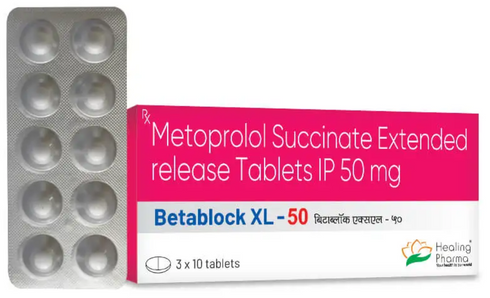
- Because metoprolol is fat-soluble and crosses into the brain, it doubles as one of the most commonly used medications for preventing migraines, an effect unrelated to its heart action.
- The MERIT-HF trial was actually stopped early on the recommendation of its independent safety committee because the survival benefit was already so clear.
- How well an individual responds can depend on their genes: metoprolol is broken down by the enzyme CYP2D6, whose activity varies widely from person to person, and pharmacogenetic guidelines now address this.
Mechanism
Metoprolol acts by selectively binding to and blocking beta-1 receptors, which are concentrated in the heart [1][2]. Normally adrenaline and noradrenaline stimulate these receptors to speed the heartbeat and increase the force of each contraction; by occupying them, metoprolol produces the opposite, slowing the heart rate and reducing contractile force, which together lower blood pressure and cut the heart's demand for oxygen [1][2]. Slowing the heart also lengthens the time the heart muscle spends relaxing and filling and calms overactive electrical impulses, which underlies its use in angina and arrhythmias [1].
Because the block is selective for beta-1 receptors, at usual doses it has relatively little effect on the beta-2 receptors that widen the airways, making it better tolerated than non-selective beta blockers in people with breathing problems, though this selectivity fades at higher doses [1][2]. The drug is broken down in the liver chiefly by the enzyme CYP2D6, so inherited variation in that enzyme influences its blood levels and its effect [4].
receptor fingerprint
Beta-1 receptorantagonist
Myocardial oxygen demandmodulates
Juxtaglomerular renin releaseinhibits
AV node conductionblocks
Beta-2 receptorantagonist
Dosingtypical ranges, not medical advice
interested in protocols and clinical dosages? make an account to see them! ^_^
Safetyrisks and cautions, not medical advice
Metoprolol is a prescription medicine. Common side effects include tiredness, a slow heart rate, cold hands and feet, dizziness, low blood pressure, vivid dreams, and low mood; some people notice reduced exercise tolerance or sexual difficulties. It should not be stopped abruptly because that can trigger rebound rapid heart rate, chest pain, or even a heart attack; the dose is tapered instead. It is avoided in very slow heart rates, high-degree heart block, decompensated heart failure, and cardiogenic shock, and used cautiously in asthma. Combining it with verapamil or diltiazem can slow the heart dangerously, and it can mask the warning signs of low blood sugar in people on insulin.
Interactionsdocumented pairs only, not exhaustive
Metoprolol is cleared almost entirely by CYP2D6, which makes it unusually sensitive to inhibition of that enzyme. In a crossover study of healthy volunteers, paroxetine raised metoprolol exposure roughly three to four fold and roughly doubled its half life, with measurably deeper and longer beta blockade. Fluoxetine, bupropion, quinidine and terbinafine do the same thing, and poor CYP2D6 metabolizers behave as though they were permanently on an inhibitor.
Combining metoprolol with verapamil or diltiazem stacks negative chronotropic and inotropic effects at the AV node; severe bradycardia, heart block and cardiac decompensation have followed. Digoxin, amiodarone and other rate-slowing agents carry the same additive risk.
Stopping clonidine while beta blockade is running can produce rebound hypertension, because unopposed alpha stimulation meets blocked beta vasodilation. Epinephrine given during beta blockade can likewise drive a pressor response with reflex bradycardia. In people using insulin, beta blockade masks the adrenergic warning signs of hypoglycemia, although sweating survives.
Checking a whole stack? Run it through interactions + stacks.
History
Metoprolol was developed in the early 1970s by the Swedish company AB Hassle, part of the Astra group, as part of the search for a beta-blocker that would act selectively on the heart and spare the airways, improving on the non-selective propranolol and the problematic earlier cardioselective agent practolol. It reached the market later in that decade, sold as Lopressor and Betaloc, and became one of the most widely prescribed cardiovascular drugs in the world.
Its reputation was cemented by a series of major clinical trials, most notably MERIT-HF in 1999, which demonstrated that the extended-release form significantly reduced mortality in chronic heart failure, and by evidence that as a lipophilic agent it lowers sudden cardiac death after heart attack. The large POISE trial later tempered enthusiasm for routine perioperative use by showing a trade-off of fewer heart attacks but more strokes and deaths. Metabolized chiefly by the genetically variable liver enzyme CYP2D6, metoprolol is now available in immediate-release tartrate and extended-release succinate salt forms and remains a cornerstone of cardiology.
Reputation
Metoprolol stands among the most rigorously validated and widely trusted drugs in all of cardiovascular medicine, a beta-blocker whose benefits have been tested in some of the largest trials ever conducted. Its landmark achievement is the MERIT-HF trial, which showed that adding extended-release metoprolol to standard therapy meaningfully improved survival in chronic heart failure, an effect that transformed how the condition is treated. Because it is fat-soluble and penetrates the brain, it is uniquely useful beyond the heart, serving as an effective and inexpensive option for migraine prevention.
Clinicians respect it as a versatile, well-tolerated agent for high blood pressure, angina, and arrhythmias, though its story is refreshingly honest about limits: the POISE trial revealed that giving it routinely around surgery reduced heart attacks but increased strokes and overall mortality, and genetic variation in CYP2D6 metabolism means people respond differently. That blend of proven benefit and clearly mapped boundaries is exactly what has kept it a first-choice drug for decades.
Subjective profileweighing the evidence above
One of the best-validated drugs in cardiology, with genuine mortality data in heart failure and after a heart attack behind it. The tiredness and vivid dreams are common and usually livable; the rule that matters is never stopping it abruptly, because rebound can be dangerous.
Where to buy
2 other outlets

Suppliers
Vendors carrying Metoprolol, with live product details and codes. Links are affiliate links that support the wiki at no cost to you.
| supplier | size | price | $/mg |
|---|---|---|---|
| PCT.Zonelowest | 100MG | $2.65 | $0.026/mg |
| PCT.Zone | 50MG | $7.28 | $0.146/mg |

PCT.Zone
Metoprolol
PCT.Zone
Metoprolol
RUPharma🌐
Metoprolol
Research
- 1987first citedClassic migraine: effective prophylaxis with metoprolol.
- 2013meta-analysisA meta-analysis of CYP2D6 metabolizer phenotype and metoprolol pharmacokinetics.
- 2024most recentClinical Pharmacogenetics Implementation Consortium Guideline (CPIC) for CYP2D6, ADRB1, ADRB2,…
- 1.A meta-analysis of CYP2D6 metabolizer phenotype and metoprolol pharmacokinetics.
- 2.Clinical pharmacokinetics of metoprolol: a systematic review
- 3.Effects of controlled-release metoprolol on total mortality, hospitalizations, and well-being in patients with heart failure: the Metoprolol CR/XL Randomized Intervention Trial in congestive heart failure (MERIT-HF). MERIT-HF Study Group.
- 4.Clinical Pharmacogenetics Implementation Consortium Guideline (CPIC) for CYP2D6, ADRB1, ADRB2, ADRA2C, GRK4, and GRK5 Genotypes and Beta-Blocker Therapy.
- 5.Effect of metoprolol CR/XL in chronic heart failure: Metoprolol CR/XL Randomised Intervention Trial in Congestive Heart Failure (MERIT-HF).
- 6.MERIT-HF mortality and morbidity data.
- 7.Effects of extended-release metoprolol succinate in patients undergoing non-cardiac surgery (POISE trial): a randomised controlled trial.
- 8.Effects on mortality during five years after early intervention with metoprolol in suspected acute myocardial infarction.
- 9.Effects of beta blockade on sudden cardiac death during acute myocardial infarction and the postinfarction period.
- 10.Classic migraine: effective prophylaxis with metoprolol.
- 11.Acupuncture versus metoprolol in migraine prophylaxis: a randomized trial of trigger point inactivation.
- 12.Impact of CYP2D6 polymorphisms on clinical efficacy and tolerability of metoprolol tartrate.
13 listed here; entry last updated August 2026
Reviews
My notesprivate to this device
FAQ
What is the difference between metoprolol tartrate and succinate?
Tartrate is short-acting and usually taken twice a day, while succinate is extended-release and taken once daily; succinate is the form proven to help in heart failure.
Can I stop metoprolol suddenly?
No; stopping abruptly can cause a rebound in heart rate and blood pressure and even chest pain, so the dose should be lowered gradually under medical guidance.
Does metoprolol make you tired?
It can, especially at first, because it slows the heart; the fatigue often eases over a few weeks as your body adjusts.
Can people with asthma take metoprolol?
It is used cautiously because at higher doses it can affect the airways; a doctor weighs the benefit against the risk and monitors breathing.
When is the best time to take metoprolol?
With or just after food at the same time each day; the extended-release form is usually taken once in the morning.
Adverse effects
- Tiredness, dizziness, and a slow heart rate
- Sleep disturbances such as vivid dreams and insomnia
Notes and cautions
- Cold hands and feet
- Should not be stopped abruptly
- Can mask the warning signs of low blood sugar in diabetes